Thailand

Thailand

From great kingdoms of the past to becoming a newly industrialized country today, Thailand is a place of fascination and delight. On this virtual voyage through Thailand, learn about the country’s past, present and future.

Exploring Thailand

Thailand is a traveler’s dream with its picturesque beaches, forested mountains, ancient ruins and ornate temples. The nation is only about twice the size of the U.S. state of Wyoming, but it’s packed with memorable destinations.

The appeal brings millions of visitors to its shores each year, making the capital Bangkok the most visited city in the world in 2021. That same year U.S. News and World Report ranked Thailand as being one of the best countries on the planet for adventure, food, scenery and culture.

This variety gives students many opportunities to experience aspects of life they won’t see elsewhere.

Thailand Country Facts At-a-Glance

Geography: Located in Southeast Asia, Thailand is bordered by Myanmar (Burma) to the northwest, Laos to the northeast, Cambodia to the southeast, and Malaysia to the south. The country has a diverse landscape, including mountainous regions, fertile plains, and extensive coastlines along the Andaman Sea and the Gulf of Thailand.

Capital City: Bangkok

Population: 71.6 million (2023 est.)

Languages: Thai is the official language, though dozens of hill tribe languages and dialects are spoken throughout the country.

Religions: Buddhist 93.5%, Muslim 5.4%, Christian 1.1% (2015 est.)

Ethnic Groups: Thai 97.5%, Burmese 1.3%, other 1.2% (2023 est.)

Life Expectancy: 77 years

Literacy Rate: 96.7% (2023 est.)

Government: Constitutional monarchy

Suffrage: 18 years of age; universal and compulsory

Current Head of State: King Maha Vajiralongkorn (Rama X) (since December 1, 2016). The late King Bhumibol Adulyadej died on October 13, 2016, after reigning since June 1946, making him the longest-reigning monarch in Thai history.

Current Head of Government: Prime Minister Prayut Chan-o-cha (since August 24, 2014, re-elected in 2019 and 2023)

Independence: 1238 (Thailand’s founding date. Thailand is the only country in Southeast Asia that has never been colonized.)

Currency: Thai baht (THB)

GDP per Capita: $19,000 (2023 est.)

Unemployment Rate: 1.0% (2023 est.)

GDP – Composition by Sector:

  • Agriculture 8.6% — rice, cassava, rubber, corn, sugarcane, coconuts, palm oil, pineapple, livestock, fish products
  • Industry 33.4% — tourism, textiles and garments, agricultural processing, beverages, tobacco, cement, light manufacturing such as jewelry and electric appliances, computers and parts, furniture, plastics, automobiles, and automotive parts
  • Services 58.0%

Source: CIA World Factbook

Country Basics

Thailand has a population of about 69 million people and is bordered by Laos, Myanmar, Cambodia, and Malaysia. The country includes about 1,430 islands and was known as Siam until 1939 when the name was changed.

Brief History of Thailand

Historians believe that the Thai people migrated from southeastern China nearly 1,500 years ago. Over the centuries Thai people founded several remarkable kingdoms, including Sukhothai in the north and Ayutthaya in what is now central Thailand. The Ayutthaya kingdom thrived until the Burmese invaded in 1787, at which time the capital city moved to Bangkok.

During the colonial era, as Western powers began to influence the region, Thailand served as neutral territory between British-controlled Burma and Malaysia and the French-dominated Indochina (Laos, Cambodia, and Vietnam). The political skill of Thai monarchs is often cited as the reason why Thailand was able to avoid colonization.

During World War II, the Japanese invaded Thailand and the two nations became allies. In the wake of the Japanese defeat, the Thai military held control of the country for the decades between 1947 and 1992. This period of military rule was punctuated by coups, coup attempts, and popular protests.

In the late 1980s and early 1990s, Thailand experienced incredible economic growth. However, as the GDP grew, so did the gap between the wealthy urban elite and the rural poor. The economic collapse of 1997 put the country temporarily on its heels, but Thailand has rebounded to become one of the strongest economies in the region.

Why It’s Called the Land of Smiles

Thailand is called the “Land of Smiles” for a reason. Smiles are used as a subtle form of communication throughout the country. There are names for at least a dozen different kinds of smiles in Thai, including the gleeful smile, the teasing one, and the “I disagree with you” smile. Travelers often can’t tell the difference, but overall, the Thai people are very welcoming and will show it with a smile.

Cultural Expectations

While in Thailand, you can expect…
to be treated with kindness and respect. Thais are very courteous people, and they will go out of their way to make outsiders feel welcome. Thailand is known as “The Land of Smiles” for a reason!

While in Thailand, locals will expect you…
to be respectful of Buddhist customs and the Thai monarchy. Greet people with a traditional wai (bow), dress appropriately in temples, and be mindful and considerate of your surroundings. Personal belongings and books should not be placed on the floor, you should never step over any part of another person or touch the head of someone older than you. It is also considered impolite to point the soles of your feet at someone. Also while in Thailand, you should never speak badly about the King or the Royal Family.

Cultural Icon:
Thai people have great respect for their King and Queen, the longest reigning king in the world. King Phumiphon Adunyadet (Bhumibol Adulyadej) was born in Cambridge, Massachusetts.

Social Norms

There are a few social norms to keep in mind while traveling in Thailand:

  • Clothing – It’s important to respect the conservative culture, particularly when entering temples. Don’t bring low-cut shirts, short shorts or skin tight clothing. Instead pack loose-fitting pants and shorts that cover just above the knees (think basketball length). Also bring t-shirts that cover your shoulders.
  • Removing shoes – Thai people usually remove their shoes when entering homes, temples and even some shops. Therefore, you should pack some crocs, flip flops or other easy-to-remove shoes.
  • Gestures/Body Language – Be careful about gestures or touching people. The head is sacred in Thailand, so do not touch people’s heads. Meanwhile, the feet are considered lowly and dirty, so you shouldn’t put your feet up or move things with your feet. You also should avoid pointing or summoning people with a hand gesture.
  • Greetings – Thai people generally don’t shake hands. Instead, they do a ‘wai.’ This involves putting your hands together in front of you in a prayer pose and lifting them towards your face while lowering your head. The higher your hands, the higher the level of respect. This gesture can also be used to say thank you and goodbye.
  • Forbidden speech – Never say anything negative about the King or the Royal Family. It is highly rude and illegal.
  • National anthem – The country plays its national anthem twice a day, and you should stand still when you hear it.
  • General respect – Overall, it’s crucial to be respectful of Buddhist customs and other cultural norms. Your program leader will be your guide if you have any questions.

Language

Thai is the official language. It includes 76 characters, though four of them are not in regular use. 44 of the characters are consonants. The language is hard to learn because it has five tones that change the meaning of words. The vocal tones are high, mid, low, rising and falling.

When addressing people, “khun” is often used before a given name as a sign of respect. It’s the Western equivalent of titles like Mr. and Mrs., but khun is used regardless of someone’s marital status or gender.

Aside from Thai, dozens of hill tribe languages and dialects are also spoken throughout the country. In Bangkok and other parts of Thailand, there are many people who speak English. The program staff can help with translations if there are any language barriers.

Here’s some Thai to get you started:

Greetings

  • Hello Sawadee kap/ka
  • How are you? Sabaidee mai kap/ka?
  • Good Sabaidee
  • Good morning Sawad dee donchao
  • Good afternoon Sawad dee donbai
  • Good evening Sawad dee donyen
  • Good night Ratree sawad
  • Welcome Yiindee donraab
  • Goodbye Laa korn

Etiquette

  • Please Karunaa
  • Thank you Korp kun kap/ka
  • Excuse me Kho tod kap/ka
  • Sorry Kho tod kap/ka

Pronouns

  • I Phom/chaan
  • You Koon
  • He/she Khao
  • We Rao
  • You (plural) Puak koon
  • They Puak khao

Conversational

  • What is your name? Kun chu a-rai kap/ka?
  • My name is ___. Phom/Chaan cheu ___.
  • Where are you from? Koon maa jaak tee nai ka/kap?
  • I am from ___. Phom/Chaan maa jaak ___.
  • How old are you? Koon ayuu tao rai ka/kap?
  • I am ___ years old. Phom/Chaan aayuu ___ bpii.
  • Do you speak English? Koon pood pasa Ungrit dai mai?
  • I speak a little Thai. Phom/Chaan phuut phasa thai dai nit nooi.
  • Could you repeat that please? Pood eak tee dai mai?
  • How do you say ___ in Thai? ___ pasa thai pood waa yang-ngai?
  • I don’t understand. Phom/Chaan mai khao jai.
  • I want to go to ___. Phom/Chaan yaak pai ___.
  • Where is ___? Tee nai ___?
  • I would like ___. Phom/Chaan chawp ___.
  • How much is it? An-nee ra-ka tao rai kap/ka?

Present tense

  • I want Phom/Chaan yak dai
  • You want Koon yak dai
  • He/she wants Khao/Ther yaak

Feelings

I am ___. Phom/Chaan ___.

  • cold nao
  • hot rawn
  • sleepy ouang nawn
  • hungry hiu
  • happy mee kuam sook

Food

Thai people use spoons and forks for most meals. They use the spoon for cutting and scooping and the fork to push food onto the spoon.

Expect lots of delicious rice in Thailand. It’s estimated that there are about 5,000 varieties of rice in the country. Jasmine rice is one of the most common, and it’s the rice that the country primarily exports.

Thais eat almost no frozen food and generally don’t do much home cooking. Eating out is inexpensive and a number of dwellings don’t have a stove or oven.

When in Thailand, you will feast on…

  • Pad Thai – stir-fried noodles with egg, tofu, spring onions, and peanuts
  • Khao niao mamuang – mango with sweet sticky rice
  • Khao pad – Thai style fried rice
  • Gai phad met mamuang – chicken stir-fried with cashew nuts
  • Som tam – spicy papaya salad
  • Tom yum – spicy herbal soup
  • Green, yellow, and red curries
  • Cha yen – Thai iced tea
  • Gai yaang – barbecue chicken
  • Maybe some maeng kee noon – fried beetles!

Weather

It’s warm and humid in Thailand from June-August. Summer in Southeast Asia is the rainy season with many brief and refreshing showers. You can prepare for the weather by considering the average weather conditions:

June July August
High Temperature 93 F 91 F 91 F
Low Temperature 79 F 78 F 78 F
Monthly Rainfall 6.2 inches 7 inches 8.7 inches
Monthly Rainy Days 16 days 18 days 20 days

Currency

The currency is the Thai baht (THB). One baht is worth about three U.S. cents. This makes for tough mental math conversions. Generally one U.S. dollar is about equivalent to 34 Thai bahts, depending on the exchange rate.

Religion

About 93% of the population is Buddhist and five percent are Muslim. One percent are Christians. The remaining members of the population are followers of other religions, such as Hinduism or traditional belief systems like animism, or are nonreligious. Across the country there are about 35,000 temples.

Ethnic Groups

There are about 70 ethnic groups in Thailand. The largest are the Tais, which are people who speak Tai languages including Thai. There also are a large number of people who are Chinese, Malay, Khmer and Karen, along with Burmese refugees from neighboring Myanmar.

Hot Topics in Thailand

  • Refugee Situation: Thailand currently hosts approximately 91,000 registered Burmese refugees, along with an estimated 70,000 unregistered asylum seekers in nine main camps along the Thai-Myanmar border. Most of these refugees belong to ethnic-minority groups escaping persecution by the Myanmar army. If caught outside the camps, refugees face arrest and deportation. Many seek third-country resettlement in nations like the United States, Australia, Canada, and other accepting countries.
  • Women’s Rights: Over the past several decades, women’s rights in Thailand have improved significantly. In 1995, the Thai parliament ratified a law to promote gender equality, a protection upheld in the 2007 constitution. In 2005, Thai women gained the right to choose their family name, and in 2007, the Civil Code was amended to provide women and men equal grounds for divorce. Thailand elected its first female prime minister, Yingluck Shinawatra, in 2011. Despite these advancements, women’s participation in leadership and decision-making remains low, with women holding only 17 percent of seats in parliament and less than 10 percent of locally elected positions.
  • Elephant Conservation: Elephants have long been revered in Thailand and remain a national symbol. Unfortunately, as their natural habitat decreases in the face of rapid population growth, deforestation, and the skyrocketing ivory trade, Asian elephants today face a harder existence than ever. There are currently about 3,500 elephants remaining in Thailand, down from 100,000 elephants at the dawn of the twentieth century. Awareness of the challenges facing elephants is at an all-time high, yet these amazing creatures still need all the help we can provide for them.

Sources: UNHCR, CIA World Factbook, World Bank.

Other Fun Facts About Thailand

  •  There are over 5,000 varieties of rice in the Royal Kingdom.
  • The islands of southern Thailand are home to world-class rock climbing, snorkeling, and scuba diving. Lucky divers who catch it right may have the chance to see a whale shark — the world’s largest fish — which are native to the region.
  • The ceremonial name for Bangkok holds the Guinness World Record as the longest name for a place. It is Krung Thep Mahanakhon Amon Rattanakosin Mahinthara Yuthaya Mahadilok Phop Noppharat Ratchathani Burirom Udomratchaniwet Mahasathan Amon Piman Awatan Sathit Sakkathattiya Witsanukam Prasit. Wow! That’s long.
  • Most meals are served with a spoon and fork (chopsticks are only used for noodle soups), fish sauce is used instead of salt, and Thais eat almost no frozen food!
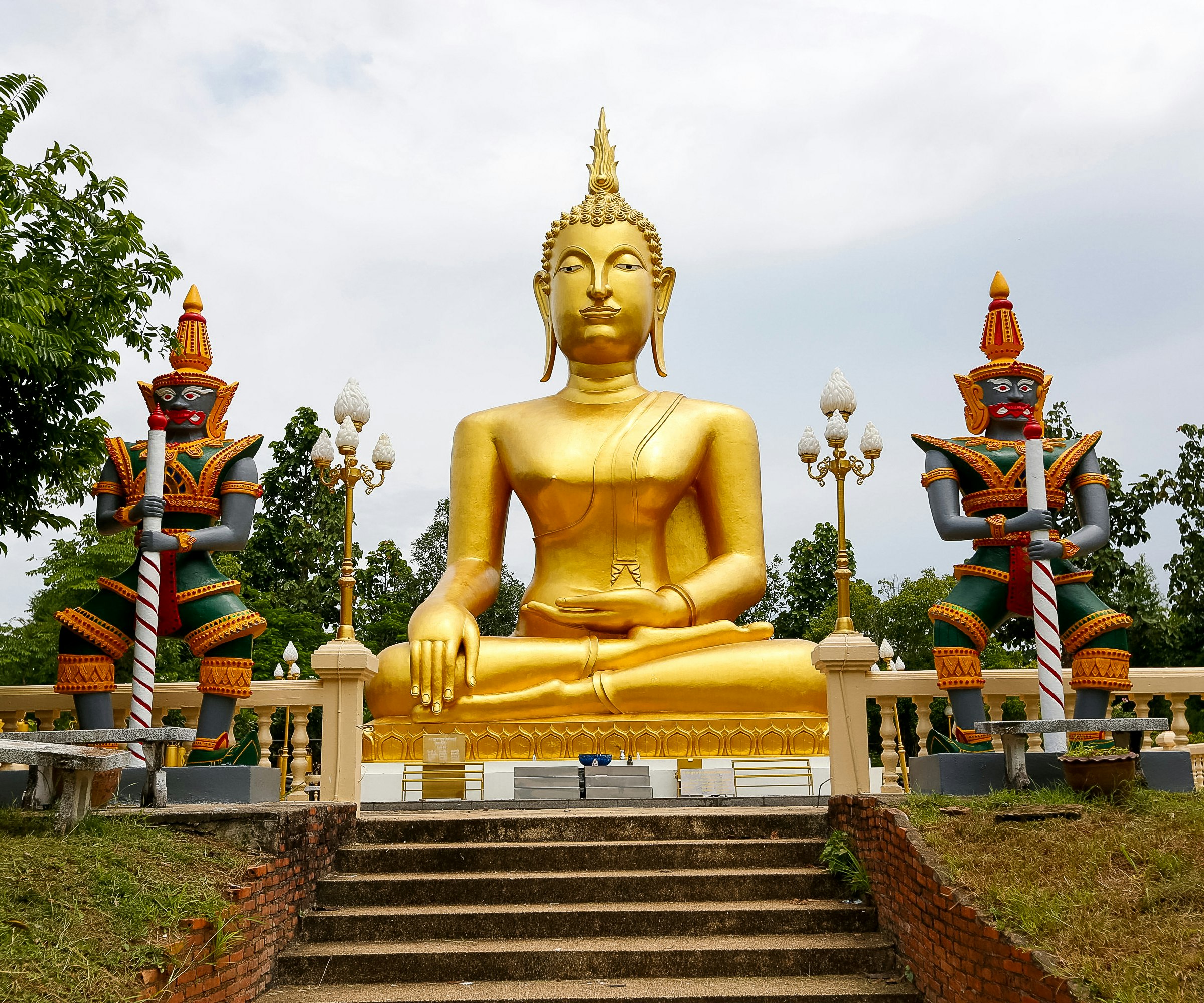
  • Thailand is home to the world’s largest golden Buddha, the largest crocodile farm, the largest restaurant, the longest single-span suspension bridge, and the world’s tallest hotel.
  • A century ago, northern Thailand was covered with dense forests, but today only one-quarter of the country is covered by mature forest.
  • Thailand is the only country in Southeast Asia that has never been colonized. The country’s name in the Thai language – Prathet Thai – means “land of the free.”
  • Elephants have long been revered in Thailand and have endured as a national symbol. Due to habitat loss, their numbers declined dramatically in the 20th century, so it’s a national priority to preserve the remaining population.
  • Thailand banned logging in all natural forests in 1989.
  • There are more than 1500 orchid species in the nation and more than a 1000 bird species.
  • Most Thais have a nickname that is chosen by the parents at birth based on its meaning.
  • Around 20% of Thais are employed in the tourism industry.

Rustic Pathways in Thailand

The Ultimate Animal Conservation Program: Saving Elephants in Thailand

The Thai Elephant Conservation Project offers students a unique experience to learn about elephant behavior and the lives of local indigenous caretakers. The program addresses the historical challenges faced by elephants in Thailand while providing hands-on lessons in elephant care and biodiversity conservation.

Traveling to Thailand for an Outdoor Adventure

The Southeast Asian Adventurer program is an action-packed experience. It has a little bit of everything – adrenaline-pumping thrills, conservation lessons, cultural activities, and plenty of time outdoors with animals and nature.

Why Teens Who Love Marine Conservation Will Want to Take This Trip

Thailand offers a unique opportunity for conservation enthusiasts! The Marine and Rainforest Conservation program combines beachfront exploration, mountain adventures, and marine ecosystem experiences, giving students a hands-on insight into environmental conservation.

Why Students Picked a Trip that Challenges Them to Pack Virtually Nothing

Would you travel to villages in northern Thailand with nothing but a small backpack and the clothes on your back? Find out what students think about embarking on this ‘Come with Nothing’ adventure!

Thailand Travel: Updates from the Ultimate Service and Adventure Programs

Thailand has always been a perfect country for students looking for adventure, service and cultural immersion. Learn about some of the activities on various summer programs!

Student Stories

A 2008 Thailand Adventure Launches a Life of Travel

Kristen grew up in a rural community where stories about international travel weren’t common. She would change that when she journeyed to Thailand for a trip that was both quite different and yet remarkably similar to the travel programs of today.

Making Lifelong Friends Far from Home

Piper recalls her transformative 16-day journey through Thailand, filled with memorable moments and immersing in the local culture. She formed lasting friendships with fellow travelers and left the country with a broader perspective of the world.

Eat

Quick + Easy Thai Basil Chicken

Krapao Gai, also known as Thai basil chicken, is a popular Thai stir-fry dish among both locals and tourists. The dish is known for its aromatic and savory aroma, thanks to the fragrant Thai holy basil used, which is different from sweet basil commonly found in Western cuisine.

Thai Pumpkin Curry

Thai Pumpkin Curry, also known as Gaeng Fak Thong in Thai, is a delicious and aromatic dish that is a part of Thailand’s rich culinary tradition. Savory, spicy, with a touch of sweetness, this curry is hearty and perfect for dinner.

Thai Som Tam

Som tam, or green papaya salad, is one of the most popularly eaten dishes in Thailand. It’s characterized by the fresh crunch of green papaya, the tanginess of the dressing, and the heat of thai chilies. Perfectly refreshing on a hot summer day!

Watch and Listen

Street Food in Bangkok

Episode 1 on Netflix Street Food: Asia showcases street food in Bangkok, Thailand. Watch a street food chef make tom yum soup and crab omelets.

Top 100 Thai Songs

This Spotify playlist updates yearly and has the best mix of Thai music.

Learn Before You Go

Q&A: Going to Thailand with Rustic Pathways

Our Thailand Country Manager answers the most frequently asked questions about travel to Thailand.

Travel Guide for Beginners

Learn the basics if you’re an individual traveling to Thailand for the first time.