
Impact at Rustic Pathways is the measured change in student growth, community development, and responsible travel practices, assessed across 10 Student Learning Outcomes (SLOs) using pre-program, post-program, and 6-month delayed evaluations.
In Rustic Pathways’ 2016 internal evaluation, a significant number of the 150 matched pre-program and six-month follow-up respondents showed growth in 9 of 10 measured outcomes; Grit was the exception.
This three-phase system is Rustic Pathways’ internal Student Impact Evaluation.
Since 1983, Rustic Pathways has operated in 38 countries, served 155,829 alumni, and contributed 1.3 million service hours to community-led projects sustained by the Rustic Pathways Foundation.
The data below come from Rustic Pathways’ own parent survey (900+ responses), its 2025 internal alumni survey (n=548), and internal SLO assessments.
Cumulative Impact Since 2013
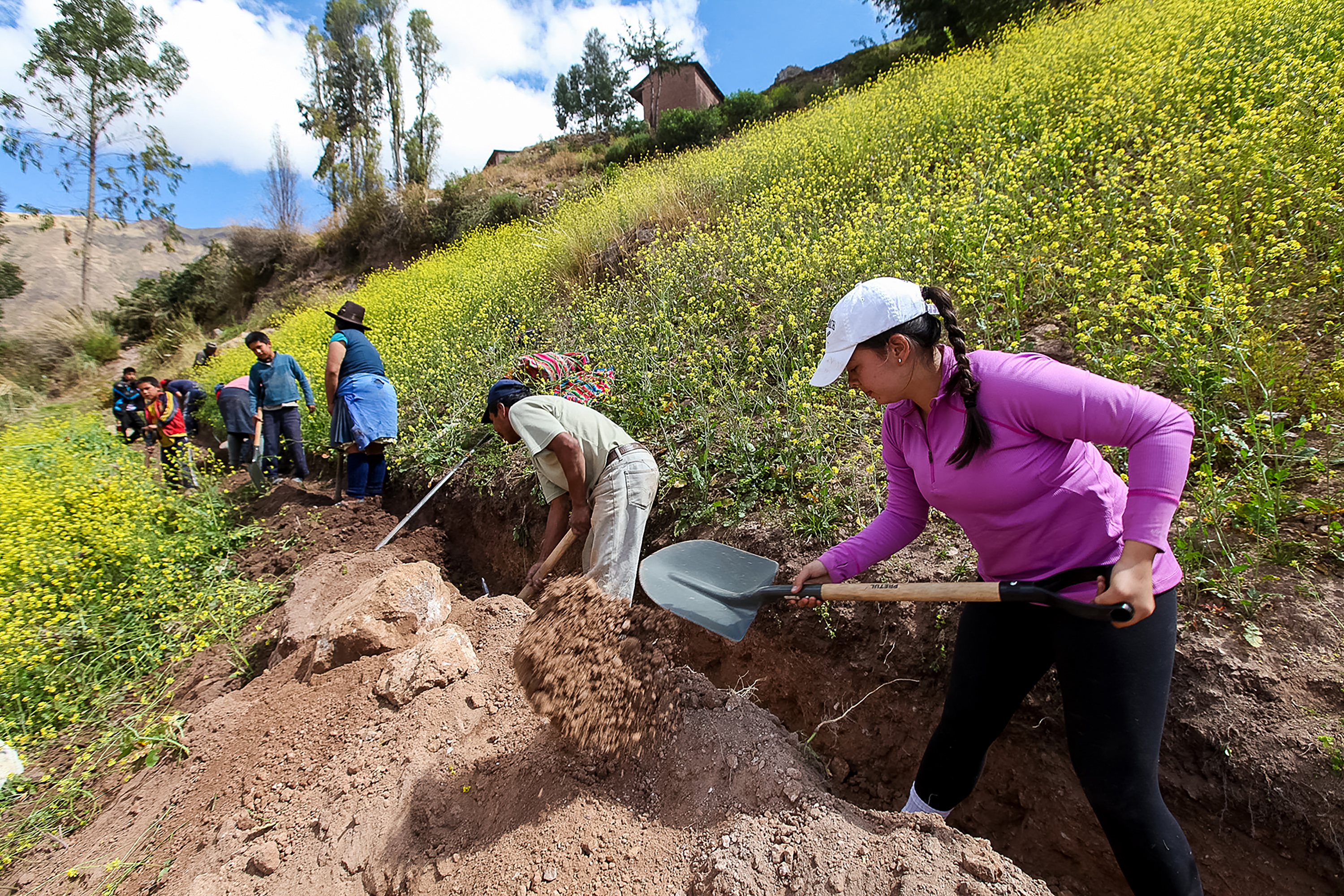
Rustic Pathways’ cumulative community impact since 2013 spans eight measured categories across 38 countries.
| Metric | Total |
|---|---|
| In-Country Spending | $89M+ |
| Scholarships Awarded | $3.6M |
| Service Hours | 1,327,000 |
| Lives Impacted | 299,000 |
| Houses Built | 143 |
| Houses Repaired | 959 |
| Trees Planted | 100,000+ |
| Beach Cleaned | 360 km |
For every dollar Rustic Pathways spends delivering a program, about 95 cents stays in the host community, paid to local guides, host families, drivers, cooks, and project partners. Since 2013, that adds up to $89M+ in local spending, and 92% of our seasonal program staff are hired locally.
These aggregate numbers represent 13 years of measured outcomes. The methodology behind them starts with 10 Student Learning Outcomes.
What Are Rustic Pathways’ 10 Student Learning Outcomes?
Rustic Pathways’ 10 Student Learning Outcomes are a research-backed measurement system that tracks student growth in non-cognitive skills before, during, and after program participation. Each SLO is assessed at three points: pre-program baseline, post-program, and 6 months after return.
Response counts differ by wave. In the 2016 evaluation, 1,025 students completed the pre-program survey, 946 the post-program survey and 230 the 6-month follow-up.
The table reports that evaluation. The pre-to-post column is the share of 340 matched respondents with a higher rounded score after travel. The 6-month column is the share of 150 matched respondents with a higher score at follow-up than before travel, so it measures growth from the baseline. The parent column is the share of 900+ parent survey responses that mentioned each outcome, a measure the report calls less robust than the student survey.
| Student Learning Outcome | Pre-to-Post Growth | Sustained at 6 Months | What Parents Notice |
|---|---|---|---|
| Desire to Positively Impact Lives of Others (DTPILO) | 44.8% | 30.0% | 8% |
| Wonderment | 40.6% | 34.1% | 1% |
| Shared Humanity | 39.7% | 36.7% | 6% |
| Self-Awareness | 39.1% | 37.3% | 6% |
| Intercultural Competence | 34.8% | 28.6% | 15% |
| Openness | 30.9% | 32.1% | 12% |
| Humility | 30.9% | 21.3% | 15% |
| Empathy | 28.3% | 16.0% | 5% |
| Independence | 25.8% | 26.0% | 33% |
| Grit | 18.5% | 20.1% | 2% |
Desire to Positively Impact Lives of Others (DTPILO)
Pre-to-Post Growth: 44.8%
Sustained at 6 Months: 30.0%
What Parents Notice: 8%
Wonderment
Pre-to-Post Growth: 40.6%
Sustained at 6 Months: 34.1%
What Parents Notice: 1%
Shared Humanity
Pre-to-Post Growth: 39.7%
Sustained at 6 Months: 36.7%
What Parents Notice: 6%
Self-Awareness
Pre-to-Post Growth: 39.1%
Sustained at 6 Months: 37.3%
What Parents Notice: 6%
Intercultural Competence
Pre-to-Post Growth: 34.8%
Sustained at 6 Months: 28.6%
What Parents Notice: 15%
Openness
Pre-to-Post Growth: 30.9%
Sustained at 6 Months: 32.1%
What Parents Notice: 12%
Humility
Pre-to-Post Growth: 30.9%
Sustained at 6 Months: 21.3%
What Parents Notice: 15%
Empathy
Pre-to-Post Growth: 28.3%
Sustained at 6 Months: 16.0%
What Parents Notice: 5%
Independence
Pre-to-Post Growth: 25.8%
Sustained at 6 Months: 26.0%
What Parents Notice: 33%
Grit
Pre-to-Post Growth: 18.5%
Sustained at 6 Months: 20.1%
What Parents Notice: 2%
Key findings from the 2016 internal evaluation:
- Among 340 matched respondents, 44.8% had a higher rounded Desire to Positively Impact Lives of Others score after travel, the largest share of the 10 outcomes.
- A significant number of the 150 matched pre-program and six-month follow-up respondents showed growth in 9 of 10 measured outcomes; Grit was the exception. Results are self-reported and the study had no comparison group.
- 900+ parent surveys confirm 91% of parents reported their child showed growth in self-confidence, gratitude, and self-awareness.
Independence is what parents notice most (33% mention it unprompted), but it shows the lowest measured growth. Students arrive already somewhat independent, so the measurement ceiling is lower. The growth parents see is qualitative: their child comes home different.
The highest single-outcome growth, 44.8% in DTPILO, reflects Rustic Pathways’ core mission of empowering students to positively impact lives and communities around the world.
How Rustic Pathways evaluates student growth through pre-post-delayed assessment design
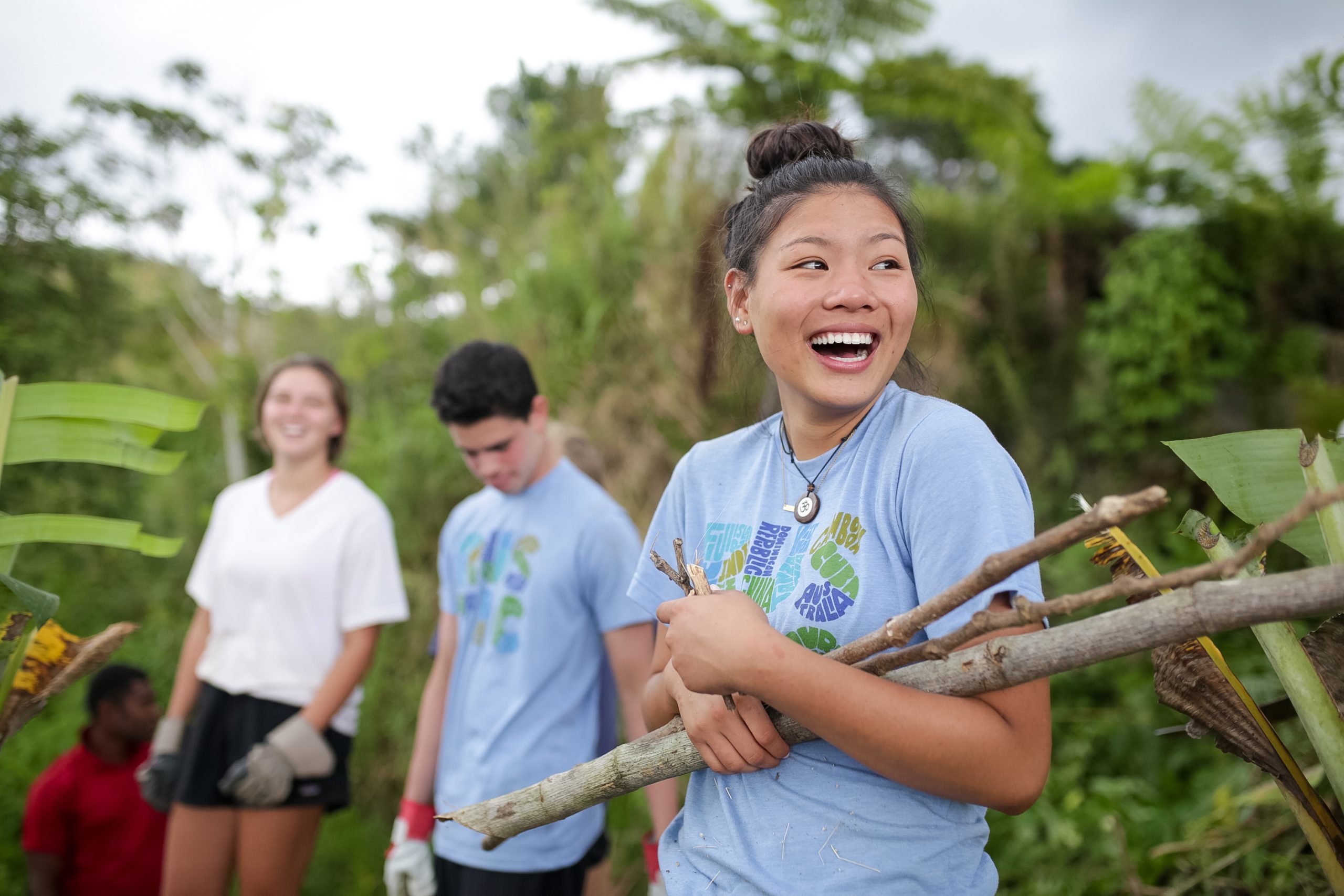
How Does the Boston College Research Partnership Validate Rustic Pathways’ Impact?
The Boston College Purpose Development Lab, led by Dr. Belle Liang, published a peer-reviewed study on Rustic Pathways’ Climate Leaders Fellowship (CLF) in the journal Adolescents (February 2024, DOI: 10.3390/adolescents4010007).
The study used directed content analysis of semi-structured interviews with CLF participants across five countries.
Key findings from the peer-reviewed publication:
- CLF engagement is associated with civic purpose development, not just skill-building but the formation of sustained commitment to contribution.
- Participants experienced civic reflection, motivation, and action as a three-part developmental arc.
- Program structure and peer accountability were identified as central to converting motivation into completed projects.
- Self-efficacy increased through mastery experiences in community-based settings.
Dr. Liang’s 4 P’s of Purpose Framework (People, Propensities, Passion, and Prosociality) underpins the CLF curriculum design. The study disclosed that Rustic Pathways partially funded the research, but Boston College maintained full editorial independence over design, execution, interpretation, and writing.
The strength of this research foundation shapes how Rustic Pathways approaches community investment over time.
What Is the 13-Year Track Record of Rustic Pathways Community Impact?
Rustic Pathways publishes annual community impact data across eight categories. The table below covers every year from 2013 through 2025, including the COVID-19 contraction (2020 to 2022) and recovery.
| Year | In-Country Spending | Scholarships | Service Hours | Lives Impacted | Houses Built | Houses Repaired | Trees Planted | Beach Cleaned |
|---|---|---|---|---|---|---|---|---|
| 2025 | $3,054,084 | $291,453 | 44,200 | 13,000 | 6 | 55 | 4,200 | 21 km |
| 2024 | $2,662,863 | $79,209 | 41,140 | 12,100 | 5 | 52 | 3,900 | 19 km |
| 2023 | $3,982,234 | $476,226 | 37,492 | 11,000 | 5 | 50 | 3,700 | 18 km |
| 2022 | $2,156,047 | $117,881 | 30,600 | 9,000 | 3 | 30 | 2,500 | 12 km |
| 2021 | $2,156,047 | $1,125,530 | 17,000 | 5,000 | 2 | 20 | 1,500 | 8 km |
| 2020 | $474,023 | $0 | 5,100 | 1,500 | 0 | 5 | 500 | 2 km |
| 2019 | $13,244,965 | $355,000 | 150,757 | 35,000 | 25 | 60 | 5,398 | 25 km |
| 2018 | $13,113,947 | $285,000 | 187,192 | 40,000 | 18 | 151 | 17,469 | 20 km |
| 2017 | $12,530,301 | $250,000 | 186,000 | 38,000 | 16 | 156 | 18,432 | 95 km |
| 2016 | $11,691,044 | $200,000 | 170,000 | 37,491 | 14 | 140 | 12,000 | 50 km |
| 2015 | $9,202,377 | $180,000 | 160,000 | 41,973 | 12 | 100 | 12,000 | 40 km |
| 2014 | $8,068,000 | $150,000 | 152,379 | 30,000 | 27 | 80 | 10,000 | 30 km |
| 2013 | $6,650,000 | $120,000 | 145,000 | 25,000 | 10 | 60 | 8,000 | 20 km |
2025
In-Country Spending: $3,054,084
Scholarships: $291,453
Service Hours: 44,200
Lives Impacted: 13,000
Houses Built: 6
Houses Repaired: 55
Trees Planted: 4,200
Beach Cleaned: 21 km
2024
In-Country Spending: $2,662,863
Scholarships: $79,209
Service Hours: 41,140
Lives Impacted: 12,100
Houses Built: 5
Houses Repaired: 52
Trees Planted: 3,900
Beach Cleaned: 19 km
2023
In-Country Spending: $3,982,234
Scholarships: $476,226
Service Hours: 37,492
Lives Impacted: 11,000
Houses Built: 5
Houses Repaired: 50
Trees Planted: 3,700
Beach Cleaned: 18 km
2022
In-Country Spending: $2,156,047
Scholarships: $117,881
Service Hours: 30,600
Lives Impacted: 9,000
Houses Built: 3
Houses Repaired: 30
Trees Planted: 2,500
Beach Cleaned: 12 km
2021
In-Country Spending: $2,156,047
Scholarships: $1,125,530
Service Hours: 17,000
Lives Impacted: 5,000
Houses Built: 2
Houses Repaired: 20
Trees Planted: 1,500
Beach Cleaned: 8 km
2020
In-Country Spending: $474,023
Scholarships: $0
Service Hours: 5,100
Lives Impacted: 1,500
Houses Built: 0
Houses Repaired: 5
Trees Planted: 500
Beach Cleaned: 2 km
2019
In-Country Spending: $13,244,965
Scholarships: $355,000
Service Hours: 150,757
Lives Impacted: 35,000
Houses Built: 25
Houses Repaired: 60
Trees Planted: 5,398
Beach Cleaned: 25 km
2018
In-Country Spending: $13,113,947
Scholarships: $285,000
Service Hours: 187,192
Lives Impacted: 40,000
Houses Built: 18
Houses Repaired: 151
Trees Planted: 17,469
Beach Cleaned: 20 km
2017
In-Country Spending: $12,530,301
Scholarships: $250,000
Service Hours: 186,000
Lives Impacted: 38,000
Houses Built: 16
Houses Repaired: 156
Trees Planted: 18,432
Beach Cleaned: 95 km
2016
In-Country Spending: $11,691,044
Scholarships: $200,000
Service Hours: 170,000
Lives Impacted: 37,491
Houses Built: 14
Houses Repaired: 140
Trees Planted: 12,000
Beach Cleaned: 50 km
2015
In-Country Spending: $9,202,377
Scholarships: $180,000
Service Hours: 160,000
Lives Impacted: 41,973
Houses Built: 12
Houses Repaired: 100
Trees Planted: 12,000
Beach Cleaned: 40 km
2014
In-Country Spending: $8,068,000
Scholarships: $150,000
Service Hours: 152,379
Lives Impacted: 30,000
Houses Built: 27
Houses Repaired: 80
Trees Planted: 10,000
Beach Cleaned: 30 km
2013
In-Country Spending: $6,650,000
Scholarships: $120,000
Service Hours: 145,000
Lives Impacted: 25,000
Houses Built: 10
Houses Repaired: 60
Trees Planted: 8,000
Beach Cleaned: 20 km
This sustained community investment record shapes how the Rustic Pathways Foundation structures long-term project funding.
How Rustic Pathways partners with local communities for long-term, foundation-funded projects
How Does the Rustic Pathways Foundation Fund Community Projects?
The Rustic Pathways Foundation is a registered 501(c)(3) nonprofit (EIN: 020776291) that has raised and donated $1.14 million to community projects since 2017.
This funding structure separates student tuition from project funding. Parent payments cover travel logistics, safety infrastructure, and program delivery.
Community service projects are sustained by the Foundation independently, ensuring communities receive year-round support regardless of student enrollment cycles.
| Year | Foundation Contributions |
|---|---|
| 2025 | $77,080 |
| 2024 | $14,345 |
| 2023 | $17,815 |
| 2022 | $5,812 |
| 2021 | $60,827 |
| 2020 | $76,529 |
| 2019 | $304,821 |
| 2018 | $449,970 |
| 2017 | $141,944 |
| Total | $1.14M |
2025
Foundation Contributions: $77,080
2024
Foundation Contributions: $14,345
2023
Foundation Contributions: $17,815
2022
Foundation Contributions: $5,812
2021
Foundation Contributions: $60,827
2020
Foundation Contributions: $76,529
2019
Foundation Contributions: $304,821
2018
Foundation Contributions: $449,970
2017
Foundation Contributions: $141,944
Total
Foundation Contributions: $1.14M
Source: IRS filings. EIN: 02-0776291
The Foundation funds the Education Through Travel Scholarship, which provides financial aid for underserved students who would not otherwise access experiential travel.
Five project categories receive Foundation support: Health, Economic Development, Education, Environment, and Infrastructure.
Since 2020, Rustic Pathways has directed $14.5M+ in community investment through local spending.
Long-term partnerships average 3+ years of continuous engagement. Rustic Pathways has operated in Fiji since 1995, Thailand since 1999, and Costa Rica since 2003.
This sustained community presence separates Rustic Pathways from short-term voluntourism models where projects end when students leave. Rustic Pathways volunteer abroad programs are structured around these long-term partnerships, not single-trip interventions. These partnerships produce the specific, measurable case studies that demonstrate Rustic Pathways’ approach in practice.
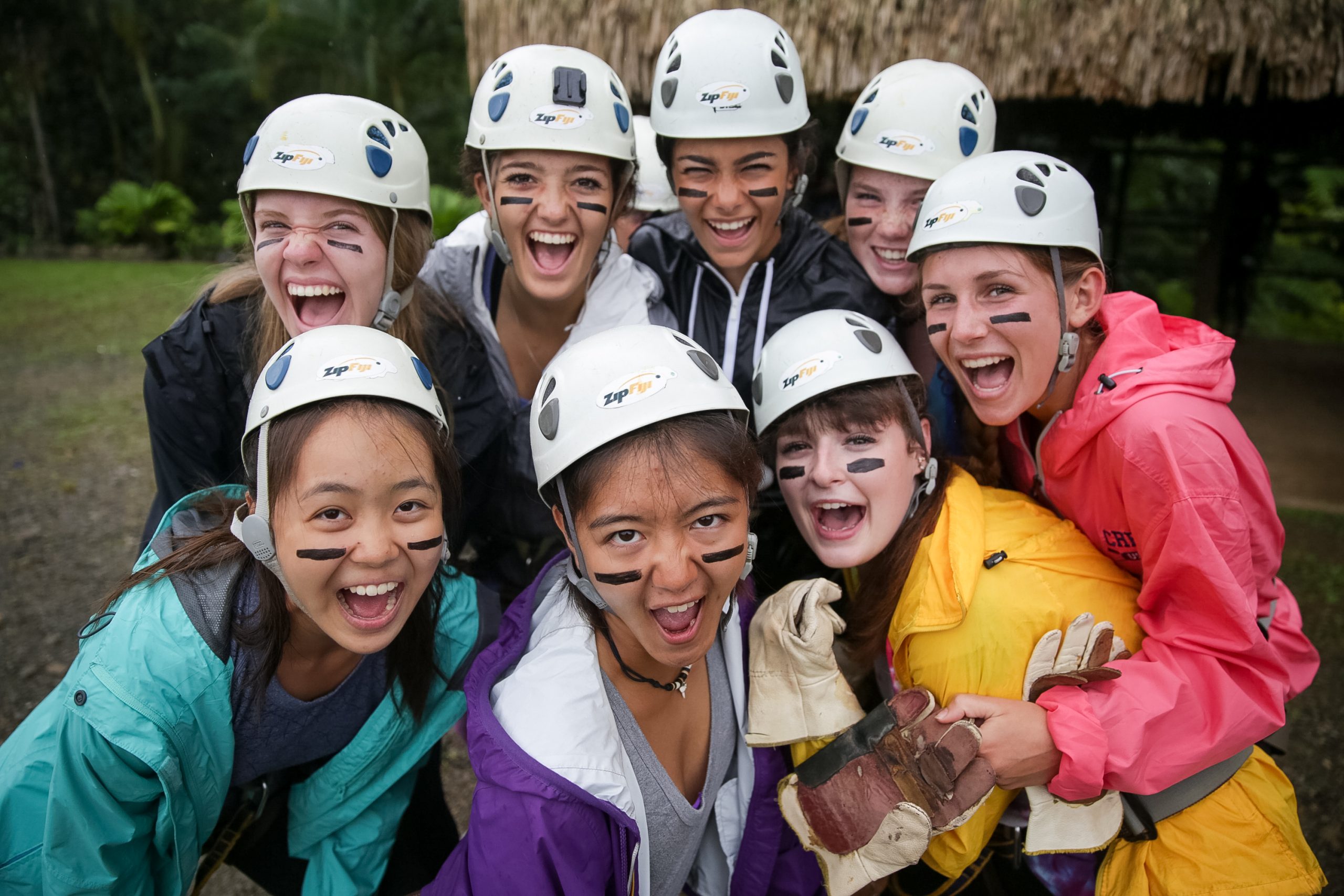
How Does Rustic Pathways Plan Community Projects?
Rustic Pathways’ sustainable-travel policy calls for community partnerships with shared goals and jointly developed service plans. The agreements describe responsibilities and the work each partner will undertake.
The policy requires consideration of a visiting group’s effects on local services, livelihoods and resources. It calls for projects to be monitored and reviewed.
What Do Rustic Pathways Community Projects Look Like in Practice?
Four case studies illustrate how Foundation funding, local partnerships, and student service hours combine to produce documented community outcomes.
Sacred Valley Project, Peru (2018)
18 rural Andean communities served. 48 student beneficiaries received 1,000 tutoring hours. 100% senior graduation rate among participants.
Bribri Aqueduct, Costa Rica (2018)
$30,000 raised through program contributions. Clean water infrastructure delivered to 200+ people in an indigenous Bribri community that previously relied on untreated river water.
Monte Coca Batey, Dominican Republic (2014 to 2018)
13 homes built over four years of sustained partnership. 50 people housed in a sugar cane worker community. Multi-year engagement allowed construction to match community-identified priorities rather than volunteer availability.
Cyclone Winston Relief, Fiji (2016)
$33,719 raised within weeks of a Category 5 cyclone. 700+ people fed through emergency distribution coordinated with local Fijian partners Rustic Pathways had worked with since 1995.
Each project reflects Rustic Pathways’ model: community-identified needs, multi-year commitment, Foundation funding independent of enrollment, and local leadership. These community experiences shape the reflective narratives that Rustic Pathways alumni bring to college applications and career decisions.
What College and Career Outcomes Do Rustic Pathways Alumni Report?
A 2025 internal Rustic Pathways alumni study tracked 2,292 college acceptances across 548 survey respondents. The participants had traveled with Rustic Pathways during the summers of 2023, 2024, and 2025.
| Outcome | Percentage |
|---|---|
| Said program enhanced college applications | 91% |
| Pursued international careers | 67% |
| Volunteer regularly as adults | 78% |
| Maintain program friendships | 89% |
| Study abroad in college (vs. 10% national average) | 89% |
Said program enhanced college applications
Percentage: 91%
Pursued international careers
Percentage: 67%
Volunteer regularly as adults
Percentage: 78%
Maintain program friendships
Percentage: 89%
Study abroad in college (vs. 10% national average)
Percentage: 89%
157 unique colleges are represented in tracked acceptances. All eight Ivy League schools appear: Cornell (9), UPenn (9), Brown (7), Columbia (6), Harvard (5), Dartmouth (4), Yale (1), Princeton (1).
Service academies include West Point, Naval Academy, Air Force Academy, and Coast Guard Academy. International universities include Oxford, Edinburgh, ETH Zurich, Bocconi, and McGill.
After college:
- 89% study abroad (vs. 10% of typical U.S. undergraduates)
- 67% pursue internationally-focused careers
- 78% maintain active volunteer involvement
- 89% maintain friendships from their programs
- 15+ nonprofit organizations founded by alumni
According to Rustic Pathways CEO Shayne Fitz-Coy, “Top colleges seek students who demonstrate grit, intercultural fluency, and leadership beyond extracurricular lists.” Rustic Pathways programs provide the reflective, cross-cultural experiences that strengthen applications.
The Student Learning Outcome data provides students with concrete evidence of personal growth to reference in application essays.
These student outcomes are amplified by programs that extend Rustic Pathways’ reach beyond traditional travel, starting with the Climate Leaders Fellowship.
How Rustic Pathways alumni translate program experiences into college acceptance and career outcomes
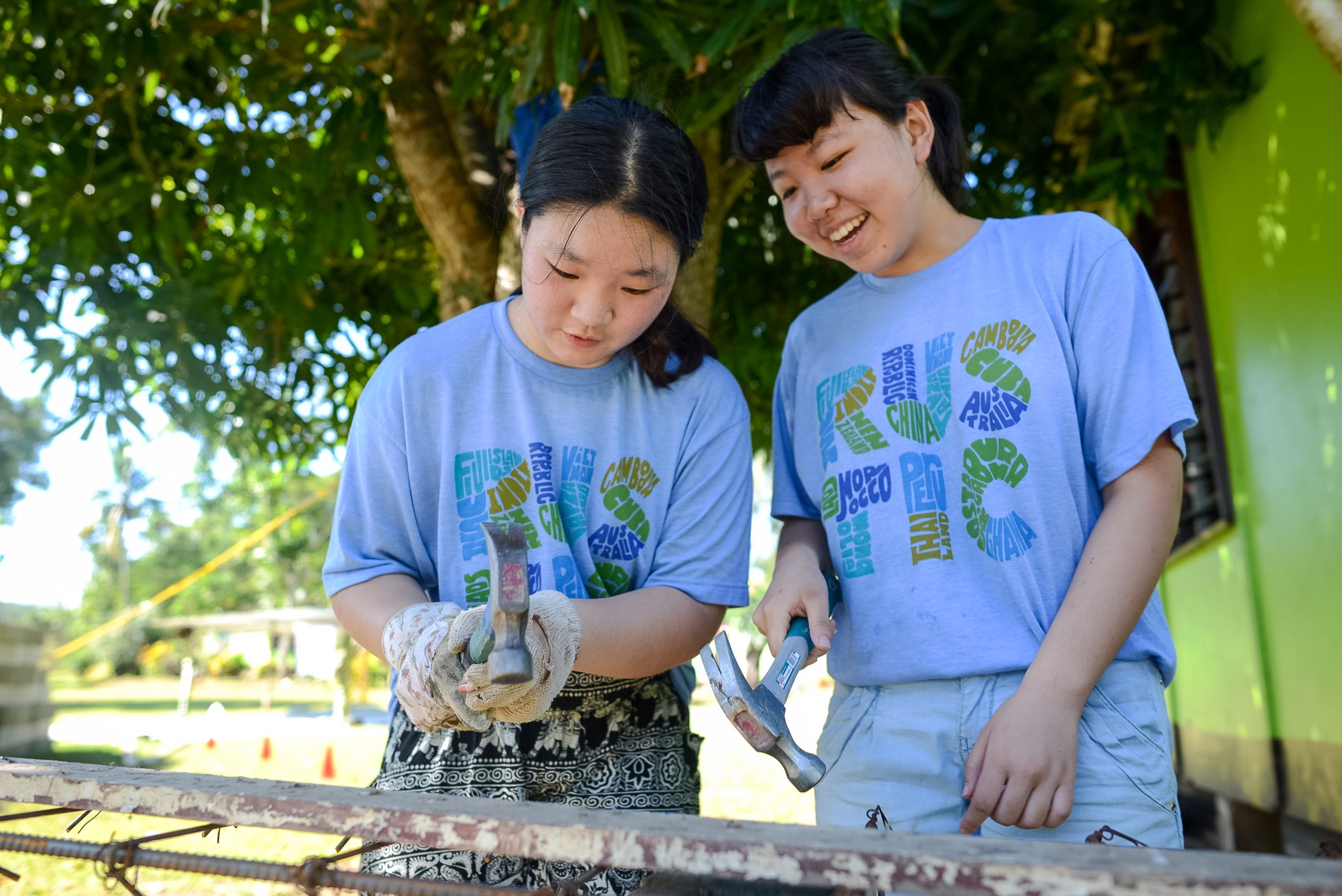
What Is the Climate Leaders Fellowship?
The Climate Leaders Fellowship (CLF) is a partnership between Rustic Pathways and Stanford University Deliberative Democracy Lab, operating since 2021. The CLF is the program studied in Boston College’s peer-reviewed publication on civic purpose development.
| CLF Metric | Value |
|---|---|
| Total Participants | 4,000+ |
| Countries Represented | 61 |
| Cumulative Service Hours | 47,500+ |
| Pricing Model | Pay What You Want, no upfront cost |
| 2026 Summit Location | Boston |
Total Participants
Value: 4,000
Countries Represented
Value: 61
Cumulative Service Hours
Value: 47,500+
Pricing Model
Value: Pay What You Want, no upfront cost
2026 Summit Location
Value: Boston
The Pay What You Want model removes financial barriers to climate education. Participants set their own price, including zero. PVSA certification provides participants with a federally recognized service credential.
The CLF demonstrates Rustic Pathways’ capacity to operate at scale beyond traditional enrollment-based programs. 4,000+ participants across 61 countries represent broader geographic reach than any single-season program portfolio.
This global scope connects directly to Rustic Pathways’ alignment with the UN Sustainable Development Goals.
How Do Rustic Pathways Programs Align With UN Sustainable Development Goals?
Rustic Pathways community service projects align with six United Nations Sustainable Development Goals. Each alignment is sustained through Foundation funding and multi-year local partnerships rather than single-trip interventions.
| UN SDG | Rustic Pathways Alignment | Example |
|---|---|---|
| SDG 3: Good Health & Well-Being | Health screenings, wellness education, medical education | Thailand community health program (since 2012) |
| SDG 4: Quality Education | Tutoring, school construction, curriculum support, service learning, scholarships | Sacred Valley Project, Peru (see case studies above) |
| SDG 6: Clean Water & Sanitation | Water system installation, sanitation education | Bribri Aqueduct, Costa Rica (see case studies above) |
| SDG 8: Decent Work & Economic Growth | Local economic spending, fair wages, local staff hiring | In-country spending and staffing totals in cumulative impact table above |
| SDG 10: Reduced Inequalities | Education Through Travel Scholarship, global peer mixing | Scholarship totals in Foundation section above |
| SDG 13: Climate Action | Climate Leaders Fellowship, conservation, reforestation, marine restoration | 4,000+ CLF participants across 61 countries; 100,000+ trees planted, 360 km of beach cleaned |
SDG 3: Good Health & Well-Being
Rustic Pathways Alignment: Health screenings, wellness education, medical education
Example: Thailand community health program (since 2012)
SDG 4: Quality Education
Rustic Pathways Alignment: Tutoring, school construction, curriculum support, service learning, scholarships
Example: Sacred Valley Project, Peru (see case studies above)
SDG 6: Clean Water & Sanitation
Rustic Pathways Alignment: Water system installation, sanitation education
Example: Bribri Aqueduct, Costa Rica (see case studies above)
SDG 8: Decent Work & Economic Growth
Rustic Pathways Alignment: Local economic spending, fair wages, local staff hiring
Example: In-country spending and staffing totals in cumulative impact table above
SDG 10: Reduced Inequalities
Rustic Pathways Alignment: Education Through Travel Scholarship, global peer mixing
Example: Scholarship totals in Foundation section above
SDG 13: Climate Action
Rustic Pathways Alignment: Climate Leaders Fellowship, conservation, reforestation, marine restoration
Example: 4,000+ CLF participants across 61 countries; 100,000+ trees planted, 360 km of beach cleaned
Responsible travel is the operational philosophy that connects Rustic Pathways’ student outcomes to community impact. This philosophy shapes every program, from service trips for teens to conservation expeditions and cultural immersion experiences.
Rustic Pathways’ full responsible travel policy and 10-point sustainability code
What Does Responsible Travel Mean at Rustic Pathways?
Responsible travel at Rustic Pathways is governed by a 10-point Responsible Travel Code of Conduct. Oversight sits with the Global Operations Management Team, Community Impact Director, and Country Sustainability Teams, with quarterly reporting.
The 10 commitments:
- Use locally owned, responsible vendors whenever possible.
- Build collaborative and mutually beneficial community partnerships.
- Actively support poverty alleviation and environmental protection.
- Employ staff from destinations at all levels. 92% of seasonal staff are local hires.
- Respect local culture and customs.
- Minimize negative impacts on people and environments.
- Teach students responsible travel practices.
- No vendors or activities that exploit people or animals.
- Manage risk and ensure safety.
- Continuously evaluate and improve.
Rustic Pathways maintains specific environmental commitments: base house waste, water, and energy monitoring with reduction targets; bottled water reduction where health permits; recycling and upcycling systems; and renewable energy adoption. The Wildlife Tourism Policy permits only experiences that support conservation, provide meaningful education, and assure animal welfare.
The responsible travel code provides the ethical infrastructure. The explicit positions below define where Rustic Pathways draws lines that other operators do not.
What Ethical Positions Does Rustic Pathways Hold?
Rustic Pathways treats ethics as a constraint on impact, not a marketing claim. The company maintains five non-negotiable ethical positions.
No orphanage tourism. Rustic Pathways does not send students to visit orphanages for the “experience.” The Lumos Foundation and Better Volunteering Better Care network document that orphanage tourism incentivizes family separation and institutionalization of children.
No poverty tourism. Communities are partners, not exhibits. Programs are co-designed with local leaders, not structured around observation of hardship.
Ethical wildlife only. Only experiences that support conservation and animal welfare qualify. No elephant riding, no tiger temples, no captive animal entertainment.
No students under 12. Developmental readiness and duty of care set the floor, not market demand.
No adult travel programs. Rustic Pathways operates teen experiential education exclusively. That singular focus is the reason Rustic Pathways can maintain the depth of measurement, community partnership, and safety infrastructure described on this page.
Decision hierarchy (when priorities conflict):
- Student safety, always first
- Legal compliance
- Ethical responsibility
- Financial impact, never the primary driver
These positions are not aspirational statements. They are operational constraints that have cost Rustic Pathways revenue. Programs have been declined, partnerships have been ended, and destinations have been exited when ethical standards could not be maintained.
Rustic Pathways’ student travel safety framework, the foundation that makes ethical impact possible
Does Rustic Pathways Offer College Credit?
Rustic Pathways does not offer college credit. Programs focus on non-cognitive skill development measured through 10 Student Learning Outcomes rather than academic credit transfer. Students earn verified service hours (40 to 80 per program) and may qualify for PVSA certification through the Climate Leaders Fellowship.
Is Rustic Pathways Accredited?
Rustic Pathways is accredited by the Better Business Bureau, with an A+ rating, and is a full member of the WYSE Travel Confederation.
Explore the Rustic Pathways Impact Network
| Resource | What It Contains |
|---|---|
| Student Learning Outcomes | Full SLO framework with per-outcome growth data and parent survey results |
| Learning Outcomes Research | Methodology: pre/post/delayed assessment design, instrument validation |
| Student Impact Evaluation | How Rustic Pathways uses SLO data to refine program design annually |
| Service Learning Statistics | Peer-reviewed findings and Boston College partnership publications |
| Community Projects | Active projects across 38 countries with Foundation funding details |
| Global Community Impact | Three Pillars of Impact: Responsible Travel, Community Service, Foundation |
| Sustainable Travel Policy | 10-point code, environmental commitments, wildlife tourism standards |
| Community Service Hours | How students earn 40 to 80 verified service hours per program |
| Certifications & Service | PADI, wilderness first aid, PVSA, and other earned credentials |
| Partnership-Based Service | How Rustic Pathways co-designs projects with 3+ year community partners |