Costa Rica · Summer 2027
Teen travel programs to Costa Rica
On Rustic Pathways teen travel programs to Costa Rica, students patrol a sea turtle nesting beach, learn to surf on the Pacific, serve near Arenal Volcano or live with a Spanish-speaking host family.
- 6 programs
- 8 or 15 days
- Ages 14–18
- From $2,495 Program Tuition


From $2,495 Program Tuition6 programs · Ages 14–18 · 21 departures
See the programs- Operating in Costa Rica
- Since 2003
- Local language
- Spanish
- Getting there
- Optional chaperoned group flights from Los Angeles, plus Newark or Miami by date
Six Costa Rica programs for summer 2027
Rustic Pathways offers six Costa Rica teen travel programs for summer 2027, ranging from 8 to 15 days, including a dedicated middle school program for ages 12–14.

![Smiling students in work gloves hold shovels on a forest trail service project in Costa Rica]() For service and adventure
For service and adventurePura Vida Service
8 days · $2,495 · 16 service hoursView program→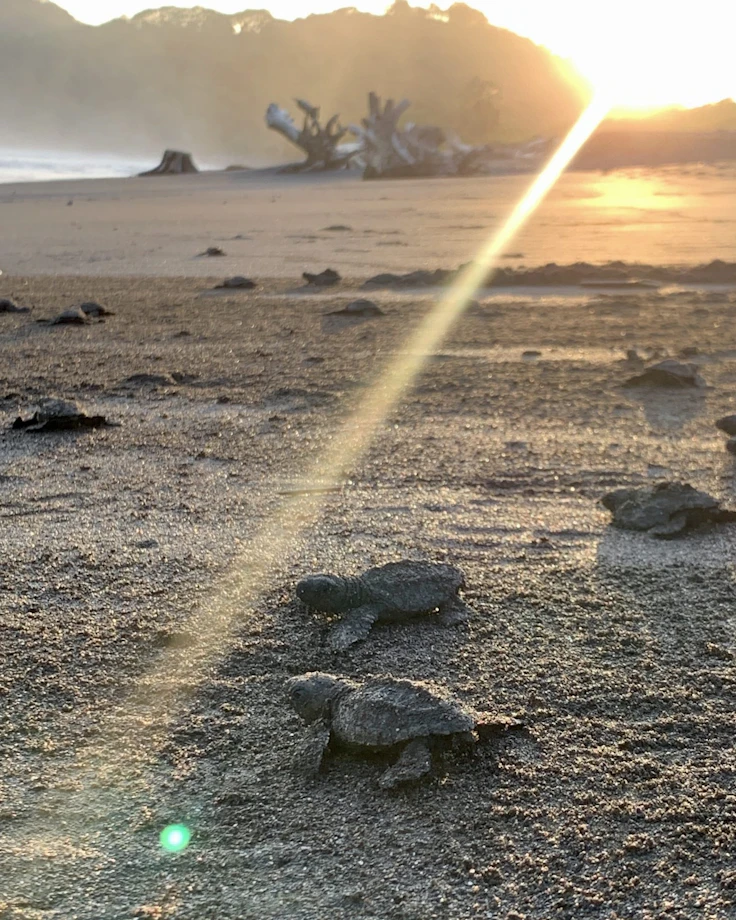
![Newly hatched sea turtles gather in a hatchery basket at Camaronal Wildlife Refuge in Costa Rica]() For wildlife work
For wildlife workTurtle Conservation Project
8 days · $2,895 · 26 service hoursView program→
![Students ride small waves on surfboards off Playa Avellanas in Costa Rica]() To learn to surf
To learn to surfSurf and Service
8 days · $3,495 · 12 service hoursView program→
![A student smiles across a desk during a Spanish class in Costa Rica]() To practice Spanish
To practice SpanishSpanish Language Immersion
15 days · $4,495 · 40 hours of Spanish classesView program→
![Students play soccer with local children on a field in Costa Rica]() To lead a summer camp
To lead a summer campSummer Camp Leadership
15 days · $5,745 · a six-day camp to runView program→
![Arenal Volcano rises above rainforest and green pasture near La Fortuna, Costa Rica]() For middle school students
For middle school studentsPura Vida Service (Middle School)
8 days · $2,495 · 16 service hoursView program→


Compare the Costa Rica programs
The six Costa Rica programs vary by length, Program Tuition, where students stay and what they do.
Show program
| Pura Vida Service$2,495 | Turtle Conservation Project$2,895 | Surf and Service$3,495 | Spanish Language Immersion$4,495 | Summer Camp Leadership$5,745 | Pura Vida Service (Middle School)$2,495 | |
|---|---|---|---|---|---|---|
| Choose this if… | Your teen wants service and adventure near Arenal Volcano. | Your teen wants hands-on wildlife work with sea turtles. | Your teen wants to learn to surf, with environmental service. | Your teen wants to practice Spanish while living with a host family. | Your teen wants to plan and run a summer camp for local children. | Your teen is a middle school student, ages 12 to 14, who wants service and adventure. |
| Length | 8 days | 8 days | 8 days | 15 days | 15 days | 8 days |
| Program Tuition | $2,495 | $2,895 | $3,495 | $4,495 | $5,745 | $2,495 |
| Where students stay | A Rustic Pathways base house in La Fortuna, near Arenal Volcano | A beachside field station at Camaronal Wildlife Refuge, on the Pacific coast | A surf bungalow near Playa Avellanas, on the Nicoya Peninsula | A host family in Turrialba, two students to a family | Locally operated lodging in La Fortuna, then the coast | A Rustic Pathways base house in La Fortuna, near Arenal Volcano |
| Service or learning | 16 service hours: infrastructure work, environmental conservation and a language exchange at a local school | 26 service hours: night turtle patrols, hatchery work and beach cleanups | 12 service hours with the Clean Wave Foundation: cleanups and reforestation | 40 hours of Spanish classes, grouped by ability | Designing and running a six-day summer camp for local children | 16 service hours: infrastructure work, environmental conservation and a language exchange at a local school |
| Adventure | Zip lining, rafting the Sarapiquí River, volcanic hot springs | A surf lesson, a boat ride to spot dolphins, Sámara town | Daily surf lessons, a sunset catamaran, zip lining | Whitewater rafting on the Pacuare River | Rafting the Pacuare River, zip lining, kayaking, hot springs | Zip lining, rafting the Sarapiquí River, natural hot springs |
| See dates→ | See dates→ | See dates→ | See dates→ | See dates→ | See dates→ |
Prices are in U.S. dollars. Program Tuition is not the total cost. Flights to and from the program, the enrollment fee, medical insurance (required), travel insurance (optional) and personal expenses are separate.


Which Costa Rica program fits your teen?
Match your teen’s interest to a program, then check the dates below.
Choose in Costa Rica…
- For service and adventure near a volcano: Pura Vida Service.
- For wildlife work with sea turtles: Turtle Conservation Project.
- To learn to surf: Surf and Service.
- To practice Spanish with a host family: Spanish Language Immersion.
- To lead children at a summer camp: Summer Camp Leadership.
- If your teen is a middle school student, ages 12 to 14: Pura Vida Service (Middle School).
Look beyond Costa Rica if…
- Your teen wants rainforest, reef and up-close wildlife in one week: Belize.
- You want lower tuition: the Dominican Republic, at $1,995.
- Your teen does not have a passport yet: Hawaii.
What Costa Rica Program Tuition includes
Costa Rica Program Tuition ranges from $2,495 to $5,745 for 8 or 15 days, including accommodations, scheduled meals, ground transportation, airport transfers within designated windows, and planned activities.
Included
- Accommodation for every program night
- Breakfast, lunch, and dinner, from the first meal after airport pickup through the last meal before airport drop-off
- Airport transfers within the published arrival and departure windows
- Ground transportation during the program
- All scheduled activities, excursions and entrance fees listed in the program itinerary
- Gratuities and donations, so students never need to bring money to give away
- Program Leader supervision throughout the program
- 24/7 emergency support line for families
Not included
- Flights to and from the program, including the optional chaperoned group flight
- A one-time enrollment fee, starting at $100 when you enroll early and rising closer to departure
- Medical insurance with coverage in Costa Rica (required)
- Travel insurance (optional, and strongly recommended)
- Personal expenses, such as spending money, laundry and phone data
Summer 2027 teen travel departure dates by program
Rustic Pathways’ six Costa Rica programs depart between June 8 and August 3, 2027 (21 departures). Compare these dates program by program in the timeline below.
Students can extend their summer with consecutive Costa Rica programs. Where one program ends on the day another begins, students continue straight into the next.
Calendar tip: Each bar runs from the day a program starts to the day it ends. Select one to view that departure.
The sample starts with Surf and Service on June 8, continues with Pura Vida Service on June 15 and finishes with Turtle Conservation Project on June 22. An Admissions Counselor can help plan your program sequence.
Costa Rica vs. Belize, the Dominican Republic and Hawaii
Costa Rica differs from Belize, the Dominican Republic and Hawaii by offering six programs, from 8-day service programs to 15-day Spanish homestays. Belize pairs rainforest and reef experiences in an English-speaking country; the Dominican Republic offers community service at the lowest tuition; and Hawaii keeps students in the U.S.
Costa Rica vs.
| This pageCosta Rica$2,495–$5,745 | Belize$2,795 | Dominican Republic$1,995 | Hawaii$3,395 | |
|---|---|---|---|---|
| Choose this if… | Your teen wants a choice: service, turtles, surf, Spanish, camp leadership or a middle school week. | Your teen wants rainforest, reef and up-close wildlife in one week. | Your teen wants community service and the lowest tuition. | Your teen wants tropical adventure without leaving the U.S. |
| Length | 8 or 15 days | 8 days, 7 nights | 8 days, 7 nights | 8 days, 7 nights |
| Program Tuition | $2,495–$5,745 | $2,795 | $1,995 | $3,395 |
| Local language | Spanish | English | Spanish | English |
| Time difference in July1 | 2 hours behind U.S. Eastern | 2 hours behind U.S. Eastern | Same as U.S. Eastern | 6 hours behind U.S. Eastern |
| Travel time from New York2 | 5 hr 17 min nonstop | 6 hr 28 min, 1 stop | 3 hr 52 min nonstop | 12 hr 25 min, 1 stop |
| Travel time from Los Angeles | 6 hr 7 min nonstop | 6 hr 48 min, 1 stop | 8 hr 27 min, 1 stop | 5 hr 38 min nonstop |
| Travel time from Miami | 2 hr 50 min nonstop | 2 hr 18 min nonstop | 2 hr 19 min nonstop | 12 hr 20 min, 1 stop |
| Travel time from London | 14 hr 5 min, 1 stop | 21 hr 55 min, 2 stops | 12 hr 25 min, 1 stop | 18 hr 4 min, 1 stop |
| Travel time from Hong Kong | 22 hr 45 min, 1 stop | 25 hr 10 min, 2 stops | 24 hr 10 min, 1 stop | 16 hr 24 min, 2 stops |
| Getting there | Passport. Optional chaperoned group flights from Los Angeles, plus Newark or Miami by date. | Passport. Optional chaperoned group flight from Miami. | Passport. Optional chaperoned group flight from Miami. | Domestic flight to Kona; no passport for U.S. students. |
| Land vs. water | Volcano and rainforest, a turtle beach, a surf coast or a homestay town, by program. | 4 days rainforest, 3 days island and reef. | Service inland, then reef snorkeling and a surf lesson. | Surfing, snorkeling from a catamaran, Mauna Kea stargazing. |
| Service | Schools, trails, turtles or beaches, 12 to 26 hours on the 8-day programs | Conservation service, 22 hours | Public health projects, 15 hours | Gardens and a food bank, 12 hours |
| 2027 departures | 21 across six programs | 3: Jun 29, Jul 6, Jul 27 | 2: Jun 22, Jul 20 | 2: Jul 6, Jul 13 |
| See the Costa Rica programs↑ | View Belize programs→ | View Dominican Republic programs→ | View Hawaii programs→ |
Prices are in U.S. dollars. Program Tuition is not the total cost. Flights to and from the program, the enrollment fee, medical insurance (required), travel insurance (optional) and personal expenses are separate.
Is teen travel to Costa Rica safe?
Yes, teen travel to Costa Rica is safe on a supervised Rustic Pathways program. The U.S. State Department rates Costa Rica Level 2 for crime,3 and July and August bring less rain on the Pacific side, where the surf and turtle programs are based.4
Rustic Pathways has run programs in Costa Rica since 2003, with Program Leaders housed on site and available overnight at every shared base and a 24/7 emergency support line.


Why book Costa Rica with Rustic Pathways
Booking with Rustic Pathways brings a chaperoned flight option, the MyRustic portal and an advisor you can call.


In Costa Rica since 2003
Rustic Pathways has run programs in Costa Rica since 2003, with bases in La Fortuna and Playa Avellanas and a long-standing partnership with the staff of Camaronal Wildlife Refuge. Rustic Pathways has operated student travel since 1983.


Chaperoned group flights
U.S. students can join an optional chaperoned group flight to San José from Los Angeles, plus Newark or Miami depending on the date. Neither the chaperoned group flight nor independent flights are included in Program Tuition.


MyRustic portal
MyRustic (myrustictrip.com) is Rustic Pathways’ free, web-based parent and student portal. It holds enrollment forms, billing, the full itinerary, travel logistics and a moderated daily photo feed.


A travel advisor to call
Scott Ingram, Director of Admissions, and Emily Green, Admissions Counselor, answer Costa Rica questions before you enroll. Call +1 440-975-9691 or schedule a call.
Costa Rica in their words: student takeovers
After the program, students take over the Rustic Pathways Instagram with their own photos and stories. Here are three from Costa Rica programs in summer 2026.
“It helped me get out of my comfort zone, become more independent, and see things from a different perspective.” Gonzalo P., on Instagram
“Costa Rica was an amazing experience and definitely a trip I’ll never forget. 🇨🇷
It helped me get out of my comfort zone, become more independent, and see things from a different perspective. I also met great people and shared some unforgettable moments along the way.
Big shoutout to all the friends I made and to our Program Leaders for making the trip so much fun! 🌎🙌”
Gonzalo P., Costa Rica: Pura Vida Service, summer 2026
“Surfing was so much fun! At first, I thought it would be quite easy, but as soon as we went out into the bigger waves, I realised how difficult it actually was.” Alina R., on Instagram
“Hi, my name is Alina, I’m from Finland🇫🇮, and I participated in the Costa Rica Surf & Serve camp🏄♀️🇨🇷 this summer. It was an experience I will remember for the rest of my life.
I’ll be honest, I struggled a little in the beginning. It was my first time traveling so far from home alone, being away from my family and friends, speaking another language and experiencing a completely new culture and climate. But everyone was so kind and welcoming, and I quickly made friendships that I hope will last a lifetime.💕
I learned an incredible amount in such a short time, both about myself and about many other things. Surfing was so much fun! At first, I thought it would be quite easy, but as soon as we went out into the bigger waves, I realised how difficult it actually was. It was amazing to see how quickly everyone improved and became really good at surfing.🌊🤩
Throughout the trip, our whole group grew together and we became like a family.✨
I also want to give a special shoutout to the program leaders, who took such great care of us throughout the whole trip. They made me feel safe, welcomed and at home. I’m really grateful for all the support, encouragement and kindness they showed us.🫶
I’m so grateful for this experience, for all the wonderful people I met, and for the beautiful memories I’m taking with me.❤️”
Alina R., Costa Rica: Surf and Service, summer 2026
“It was a dream come true to be able to interact with sea turtles and participate in projects to help them.” Jordan E., on Instagram
“Hey, I’m Jordan and I did the Turtle Conservation Project in Costa Rica with Rustic Pathways in June! It was a dream come true to be able to interact with sea turtles and participate in projects to help them.
We spent a lot of our time on the beach doing different service projects, swimming, and doing night walking to look for turtles laying their eggs. We also left the refuge on some days to explore Costa Rica and do things like a boat tour and take surfing lessons. My favorite memory was taking an art class with local female artists one day. I had the best time talking to the artists and exploring the beautiful town of Islita.
Our group also had the most amazing people and it was so much fun to get to know everyone! I loved hanging out together every night together playing uno and watching movies. We also had amazing Program Leaders (Shout out Emily, Andreanna, and Josh).”
Jordan E., Costa Rica: Turtle Conservation Project, summer 2026
Costa Rica teen travel FAQ
How is Costa Rica different from other countries for teen travel?
Costa Rica stands out from other countries for teen travel through its tropical wildlife, volcanoes, Pacific beaches and Spanish-speaking culture. Rustic Pathways offers separate programs in turtle conservation, surfing, community service, Spanish immersion and leadership.
Which Costa Rica program is best for a first international program?
Pura Vida Service is the lowest-tuition Costa Rica option for a first international program, at $2,495 for 8 days of service and adventure near Arenal Volcano. Turtle Conservation Project and Surf and Service also last 8 days; two other programs last 15 days. For ages 12–14, Pura Vida Service (Middle School) offers a separate 8-day, $2,495 program.
Can students attend more than one Costa Rica program in the same summer?
Yes, students can take Costa Rica programs back to back when one ends on the day the next begins. For example, Surf and Service on June 8, Pura Vida Service on June 15 and Turtle Conservation Project on June 22 form three consecutive weeks. An Admissions Counselor can help plan compatible dates.
Do students need to speak Spanish?
No, students do not need to speak Spanish on Costa Rica programs. Spanish Language Immersion accepts complete beginners and groups students by ability.
What is the weather like in Costa Rica in summer?
Summer weather in Costa Rica is rainy, though the Pacific side gets less rain in July and August. The rainy season runs roughly May to November across the country, with rain mostly in the afternoon and early evening; the Pacific coast tends to be drier than inland areas such as Turrialba and La Fortuna.5
The Caribbean side has no defined dry season. Pacific rainfall peaks in September and October, after the final 2027 session ends August 10.
What do students need to travel to Costa Rica?
Students need a passport and medical insurance valid in Costa Rica. U.S. citizens do not need a visa for these summer programs; other nationalities may. Travel insurance is optional but strongly recommended. Review the CDC’s Costa Rica travel health guidance before departure.


Footnotes
- Time differences are for July, from the IANA time zone database. None of the four observes daylight saving time. ↩
- Fastest one-way flight, including layovers, on the days students fly in 2027 (Google Flights, October 2026). Not the chaperoned group flight. ↩
- Advisory level as of October 2026. Check travel.state.gov for the current level before travel. ↩
- Pacific-side rainfall: Costa Rica’s National Meteorological Institute, climate regions of Costa Rica. ↩
- Costa Rica climate regions, rainy seasons and rainfall timing: Costa Rica’s National Meteorological Institute. ↩
Costa Rica has 21 summer 2027 departures across six programs.
Compare the six programs