School Trips to Washington DC

Explore Congress and the national memorials, compare Smithsonian collections, or follow art, language, and science across Washington, DC.
Choose a 3- to 7-day school trip based in Washington or extending to Philadelphia, New York, Baltimore, and Williamsburg. Five- to seven-day Program Tuition is $2,010–$3,255 per student, excluding airfare; shorter programs need a quote.
No commitment, and no sales call unless you ask for one.
4.9on Trustpilot and Google
- $2,010–$3,255
- per student for six priced routes; airfare excluded
- 3–7 days
- across nine itineraries
- One school
- your classmates, teachers, and chosen dates
- 1 free teacher place
- per eight paying students; airfare, travel insurance and medical insurance separate
- 321 schools
- partners since 2012, each counted once

Washington DC School Travel Itineraries
Choose a short civics visit, a five-day subject focus, or a route connecting Washington with another city. Compare the programs, then open an itinerary to read each day.
Compare the 9 itineraries side by side
| Itinerary | DC in Three Days | DC Essentials | DC Civic Leadership | Washington DC: Government, History and Monuments | DC–New York: Citizenship and Immigration | Philadelphia–DC: Founding Ideals and Government Today | Williamsburg, Baltimore and Washington | DC: Science, Space and Conservation | DC: Art, Language and Diplomacy |
|---|---|---|---|---|---|---|---|---|---|
| Length | 3 days | 4 days | 4 days | 5 days | 6 days | 6 days | 7 days | 5 days | 5 days |
| Price per student | Request pricing | Request pricing | Request pricing | $2,325 | $2,790 | $2,790 | $3,255 | $2,325 | $2,010 |
| Learning focus | Government & Civics · US History | Government & Civics · US History | Government & Civics · US History | Government & Civics · US History · Social Studies | Government & Civics · US History · Social Studies | Government & Civics · US History | US History · Government & Civics · Social Studies | Science & Engineering · Environmental Science | Visual Arts & Language · History & Diplomacy |
| Route | Washington DC · Capitol Hill · National Mall · Arlington | Washington DC · Capitol Hill · one Smithsonian museum · National Mall · Arlington | Washington DC · Capitol Hill · National Archives · National Mall · Arlington | Washington DC · National Mall · Capitol Hill · Arlington | Washington DC · Capitol Hill · Arlington · New York City · Ellis Island | Philadelphia · Independence Hall · Washington DC · Capitol Hill · Arlington | Williamsburg · Jamestown · Baltimore · Washington DC · Capitol Hill · Arlington | Washington DC · National Mall · Chantilly · National Zoo | Washington DC · National Gallery · L’Enfant Plaza · Dupont Circle · Georgetown |
| Overnight bases | Washington or Arlington (2) | Washington or Arlington (3) | Washington or Arlington (3) | Washington DC (4) | Washington or Arlington (3) · New York City (2) | Philadelphia (2) · Washington DC (3) | Williamsburg (2) · Baltimore (2) · Washington or Arlington (2) | Washington or Arlington (4) | Washington (4) |
| Physical profile | moderate: 2 days · high: 1 day | low: 2 days · moderate: 1 day · high: 1 day | low: 2 days · moderate: 1 day · high: 1 day | moderate: 3 days · high: 1 day · low: 1 day | low: 2 days · moderate: 2 days · high: 1 day · long travel: 1 day | low: 2 days · moderate: 2 days · long travel: 1 day · high: 1 day | low: 2 days · moderate: 3 days · long travel: 1 day · high: 1 day | low: 2 days · moderate: 3 days | low: 2 days · moderate: 3 days |
| On-program flights | None on program: the group arrives and departs the same agreed Washington DC gateway | None on program: the group arrives and departs the same agreed Washington DC gateway | None on program: the group arrives and departs the same agreed Washington DC gateway | None on program: the group arrives and departs a Washington DC gateway and travels locally | None on program: the group arrives at a Washington DC gateway, departs a New York gateway, and travels overland between them | None on program: the group arrives Philadelphia (PHL) and departs a Washington DC gateway, and travels overland between them | None on program: the group arrives Richmond (RIC) and departs a Washington DC gateway, and travels overland between them | None; arrive and depart an agreed Washington-area gateway | None; arrive and depart an agreed Washington-area gateway |
| Learning approach | A three-day introduction to Congress, memorials, and Arlington | National institutions and public memory | Structured civic inquiry and deliberation | Federal institutions and national memory | Government set against immigration and belonging | Founding texts tested against the institutions they created | The republic traced from its colonial ground to the institutions it built | Engineering evidence and environmental decisions | Interpretation, persuasion, and diplomacy |
| Best for | Schools that can only release students for three days, or that are adding Washington to a longer term plan and want the institutions without the museum depth. | A compact first visit focused on national institutions, for grades 6 to 10 on a four-day calendar. | Structured civic inquiry and student deliberation in one DC base, for grades 8 to 12, with a Sunday arrival so the Capitol day falls on a weekday. | Best first Washington DC trip when the department has five days and wants the memorials, the museums, and the institutions in one week. | Grades 7–12 studying citizenship at Congress and immigration at Liberty and Ellis islands, with a full day for the city transfer. | Six days for founding documents, Congress, and a facilitated committee hearing. | A full week connecting colonial government, the War of 1812, industrial history, and national institutions. | Secondary-school groups ages 12 and up connecting aerospace, climate evidence, and conservation, with three full learning days. | Grades 7–12 exploring how art, language, and intelligence shape public understanding; all four nights stay in Washington. |

DC in Three Days
Three days and two nights in Washington or Arlington, with a reserved Capitol visit, one Smithsonian museum, the Mall memorials, and Arlington National Cemetery. This route requires an arrival early enough for the memorial walk and a late departure after Arlington.
Choose this programYour three-day itinerary
-
Day 1
Arrival and the Mall memorials
After an early-afternoon arrival, transfer to the hotel and explore the western National Mall. The flight window matters on this short itinerary.
MorningArrival at the agreed Washington gateway and the meeting with both Program Leaders.AfternoonTransfer and check-in, then compare the Washington Monument exterior and World War II Memorial.EveningDinner and the Lincoln Memorial, using Martin Luther King Jr.’s “I Have a Dream” speech to compare an event with the place where it happened.- Route
- Arrival gateway to the hotel, then the western National Mall.
- Travel
- Private group transfer
- Overnight
- Program-approved hotel in Washington or Arlington; twin student rooms, teacher singles.
- Meals
- All meals are included from the moment the group is met; earlier meals are funded when the arrival schedule requires them.
- Physical demand
- Moderate effort; a 1½–2-mile memorial walk after arrival, with breaks.
- Learning outcome
- Use a memorial’s inscription and design to explain whom it commemorates and which ideas it emphasizes.
- Customization
- Plan to reach the hotel by about 3 p.m. A later arrival requires a shorter agreed route or an added night; the Jefferson and King memorials remain choices on longer programs.
-
Day 2
Congress and one museum
Visit Congress in the morning and spend the afternoon with one Smithsonian collection. Examine the Supreme Court exterior while on Capitol Hill.
MorningReserved Capitol Visitor Center tour, then a short Supreme Court exterior discussion. The Capitol’s standard tour generally includes the Crypt, Rotunda, and National Statuary Hall; chamber galleries need separate access.AfternoonLunch, then the National Museum of American History or another agreed Smithsonian museum. At American History, connect the original Star-Spangled Banner with the War of 1812.EveningDinner and a discussion of what the day's documents can and cannot establish.- Route
- Capitol Hill to the National Mall museum district. The White House is a separate optional stop, not on this walking route.
- Travel
- On foot and by Metro
- Overnight
- Program-approved hotel in Washington or Arlington; twin student rooms, teacher singles.
- Meals
- All meals are included, with drinking water.
- Physical demand
- Moderate effort, about three miles with long standing periods and a security queue.
- Learning outcome
- Identify Congress’s legislative role and distinguish it from the executive and judicial branches.
- Customization
- Capitol tours run Monday–Saturday. If no reservation is available, agree a Congress-focused visit to the Visitor Center’s Exhibition Hall and public exterior study before booking.
-
Day 3
Arlington and departure
Visit Arlington National Cemetery during its morning opening hours, then transfer for a late flight. The departure time is agreed before families book travel.
MorningArlington National Cemetery from about 8:30 a.m.: the Tomb of the Unknown Soldier and, where the group’s pace permits, the John F. Kennedy gravesite and Eternal Flame.AfternoonLunch, then the airport transfer with the airline’s check-in allowance protected.EveningDeparture. No group hotel night.- Route
- Coach to Arlington’s visitor entrance; walk or use an arranged accessible tram inside, then transfer to the airport.
- Travel
- On foot and private transfer
- Overnight
- None on program: the group departs on day 3.
- Meals
- All meals are included up to departure, with a packed meal when the flight timing requires one.
- Physical demand
- Higher effort: Arlington is the longest stretch on foot, partly on hills and with little shade.
- Learning outcome
- Students separate an act of remembrance from a claim about policy.
- Customization
- A departure after about 4 p.m. is preferred; BWI, international flights, and individual support needs may require later. Cemetery trams and accessibility arrangements are confirmed in advance. An early flight requires a revised itinerary.

DC Essentials
Four days and three nights in Washington or Arlington, with a reserved Capitol tour, one Smithsonian museum, the memorials, and Arlington. Arrival and departure days leave time for travel and rest.
Choose this programYour four-day itinerary
-
Day 1
Arrive and orient
The group lands at the agreed Washington or Arlington gateway and settles in. Nothing on day one depends on an early arrival.
MorningArrival at the agreed Washington or Arlington gateway, with breakfast or lunch included if the timing requires them.AfternoonPrivate group transfer, hotel check-in, and a short walk around the block if the clock allows it.EveningIncluded dinner, an expectations conversation, room checks, and an early night.- Route
- Arrival gateway to the hotel, with an optional short hotel-neighborhood walk.
- Travel
- Private group transfer
- Overnight
- Program-approved hotel in Washington or Arlington; twin student rooms, teacher singles.
- Meals
- All meals required by the arrival and departure timing are included, with drinking water.
- Physical demand
- Low effort, with a short orientation walk only if timing allows.
- Learning outcome
- Identify the hotel meeting point and group boundaries during arrival orientation.
- Customization
- A late arrival goes directly to the hotel and dinner. DCA, IAD, and BWI have different transfer times; use the agreed airport window.
-
Day 2
Government and the national story
A reserved Capitol tour in the morning, one substantial Smithsonian museum chosen with the teacher in the afternoon, and a compact memorial walk after dinner.
MorningReserved Capitol public tour, or a disclosed Congress-focused substitute. No official meeting is promised.AfternoonIncluded lunch, then one substantial Smithsonian museum chosen with the teacher.EveningDinner and a compact Lincoln, Vietnam, and Korean memorial walk with breaks.- Route
- Capitol Hill and the National Mall, with stops grouped and walked between.
- Travel
- Charter transport and on foot
- Overnight
- Program-approved hotel in Washington or Arlington; twin student rooms, teacher singles.
- Meals
- All meals are included, with drinking water.
- Physical demand
- Moderate effort, with long standing periods indoors and a security queue.
- Learning outcome
- Use one museum object and its label to support a claim about American history.
- Customization
- If the Capitol tour is not granted, the Congress-focused substitute is disclosed in writing before sale.
-
Day 3
Remembrance and civic responsibility
Arlington with a guide in the morning, then a teacher-selected museum or a National Archives reservation and a leader-led discussion of the sources.
MorningArlington National Cemetery with a guide, including the Tomb of the Unknown Soldier and agreed accessible routing.AfternoonLunch, then a teacher-selected museum or a self-guided National Archives visit to the Declaration of Independence, Constitution, and Bill of Rights. Students compare a founding claim with evidence from Arlington.EveningFarewell dinner and the Rustic Ties reflection. No ticketed entertainment is assumed.- Route
- Arlington, then back across the river for the afternoon visit.
- Travel
- Charter transport and on foot
- Overnight
- Program-approved hotel in Washington or Arlington; twin student rooms, teacher singles.
- Meals
- All meals are included, with drinking water.
- Physical demand
- Higher effort: Arlington is the longest stretch on foot, partly on hills and with little shade.
- Learning outcome
- Students say what a document establishes and what it cannot.
- Customization
- Confirm the group’s Arlington walking route, rest stops, and any accessible tram seats before booking.
-
Day 4
Pack and fly home
Breakfast, packing, and one takeaway each before the gateway transfer. Nothing timed is scheduled.
MorningBreakfast, packing, and a takeaway from each student.AfternoonThe gateway transfer, with lunch or a packed meal as the flight timing requires.EveningDeparture. Dinner is provided if the group is still on program.- Route
- Hotel to the agreed Washington gateway.
- Travel
- Private gateway transfer
- Overnight
- None on program: the group departs on day 4.
- Meals
- All meals required by the arrival and departure timing are included, with drinking water.
- Physical demand
- Low effort.
- Customization
- No essential timed visit is scheduled on departure day.

DC Civic Leadership
Four days and three nights in Washington or Arlington, with Congress, the National Archives, and paid civic facilitation. Students prepare testimony in a hired classroom and test it in a 90-minute committee-hearing simulation.
Choose this programYour four-day itinerary
-
Day 1
Arrive and meet the week's question
The group lands at the agreed Washington or Arlington gateway, checks in, and is briefed on the question the week will argue.
MorningArrival at the agreed Washington or Arlington gateway; meals are included where the timing requires them.AfternoonPrivate group transfer and hotel check-in, then the teacher and leaders set out the civic question the week works on.EveningIncluded dinner, room checks, and an early night before the Capitol day.- Route
- Gateway to the Washington or Arlington hotel by private transfer.
- Travel
- Private group transfer
- Overnight
- Program-approved hotel in Washington or Arlington; twin student rooms, teacher singles.
- Meals
- All meals required by the arrival and departure timing are included, with drinking water.
- Physical demand
- Low effort.
- Learning outcome
- Identify a policy question, the people it affects, and the evidence needed to answer it.
- Customization
- A late arrival goes straight to dinner and the briefing moves to breakfast.
-
Day 2
From evidence to legislation
Trace Congress’s powers at the Capitol, examine founding documents at the National Archives, then prepare testimony with a paid educator.
MorningA reserved Capitol tour focused on Article I and how a bill becomes law; allow screening and group check-in time.AfternoonLunch and a 60–90-minute self-guided National Archives visit, then 60 minutes of testimony preparation with the paid educator in a hired room.EveningDinner and rest. Use short excerpts from Lincoln and Martin Luther King Jr. to revise a claim for tomorrow’s hearing.- Route
- Capitol Hill to the National Archives and the hired classroom.
- Travel
- Charter transport and on foot
- Overnight
- Program-approved hotel in Washington or Arlington; twin student rooms, teacher singles.
- Meals
- All meals are included, with drinking water.
- Physical demand
- Moderate effort, with long standing periods and two security queues.
- Learning outcome
- Support testimony with a founding document and explain its relevance to the bill under discussion.
- Customization
- The core Archives visit is self-guided. Its staff-led school programs have separate weekday slots and group limits. If document-gallery access is unavailable, the paid educator uses the Archives’ public primary-source materials in the classroom.
-
Day 3
Citizenship and public memory
Compare remembrance at Arlington with arguments made in a public hearing. The afternoon gives teams time to listen, question, and revise.
MorningArlington National Cemetery, with the Tomb of the Unknown Soldier and respectful interpretation.AfternoonLunch, then a 90-minute paid committee-hearing simulation in a hired room. Teams question competing, source-supported proposals.EveningDinner and a focused Lincoln Memorial and Martin Luther King, Jr. Memorial visit, with rest and seated reflection.- Route
- Arlington to the hired room, then the Lincoln and King memorials.
- Travel
- Charter transport and on foot
- Overnight
- Program-approved hotel in Washington or Arlington; twin student rooms, teacher singles.
- Meals
- All meals are included, with drinking water.
- Physical demand
- Higher effort: Arlington is the longest stretch on foot, with little shade.
- Learning outcome
- Each team argues a position it can source, then revises it or explains why it stands.
- Customization
- Students take ordinary policy roles and work from disclosed evidence; no student is asked to impersonate an oppressed group. A focused Smithsonian collection can replace part of the memorial block only if opening hours and the agreed pace allow.
-
Day 4
Close the hearing and travel home
Breakfast and packing, then each team says what it would tell the committee if it went back. The transfer follows.
MorningBreakfast, packing, and a last word from each team on its proposal.AfternoonThe gateway transfer, with lunch or a packed meal as the flight timing requires.EveningDeparture. Dinner is provided if the group is still on program.- Route
- Hotel to the agreed Washington gateway.
- Travel
- Private gateway transfer
- Overnight
- None on program: the group departs on day 4.
- Meals
- All meals required by the arrival and departure timing are included, with drinking water.
- Physical demand
- Low effort.
- Customization
- No essential timed visit is scheduled on the departure day.

Washington DC: Government, History and Monuments
Five days and four nights in Washington, DC, with African American history, the three branches of government, Arlington, and the Tidal Basin memorials. Study American History collections and Holocaust evidence on day 4; arrival-day sightseeing depends on the flight time.
Choose this programYour five-day itinerary
-
Day 1
Arrival and the National Mall
Arrive at the agreed Washington gateway, meet the Program Leaders, and settle into the hotel. A short Mall walk follows only if arrival timing permits.
MorningArrival at the gateway and the meeting with the Program Leaders.AfternoonTransfer, hotel check-in, and an orientation to the week and the city.EveningDinner and a short western Mall walk to the Washington Monument exterior and World War II Memorial, if the arrival time allows.- Route
- Gateway airport to the hotel by private vehicle, then a walking loop of the western Mall.
- Travel
- Private airport transfer
- Overnight
- Program-approved hotel in Washington DC, shared rooms.
- Meals
- All meals are included from the moment the group is met; earlier meals are funded when the arrival schedule requires them.
- Physical demand
- Moderate effort on the optional Mall walk; mostly level paved ground, with rest after travel. A late arrival stays at the hotel.
- Learning outcome
- If the walk goes ahead, compare how the Washington Monument and World War II Memorial commemorate people and events.
- Customization
- A late arrival goes directly to the hotel. The core memorial comparisons take place on day 3; departure day stays free of required visits.
-
Day 2
Museums and the seat of government
Use a substantial visit to the National Museum of African American History and Culture to examine slavery, Reconstruction, segregation, and the Civil Rights Movement. Then locate the three branches of government.
MorningReserved, teacher-led National Museum of African American History and Culture visit, allowing about three hours and an agreed selection of galleries.AfternoonLunch and a coach-assisted exterior study of the White House, United States Capitol, and Supreme Court. These are separate stops with walking and traffic allowances.EveningDinner and an age-appropriate Nationals game when the team is at home, or a confirmed local show.- Route
- NMAAHC to the White House public viewing area and Capitol Hill by coach and on foot.
- Travel
- Local coach and walking
- Overnight
- Program-approved hotel in Washington DC, shared rooms.
- Meals
- All meals are included, with drinking water.
- Physical demand
- Moderate effort, about three miles on foot with long standing periods indoors.
- Learning outcome
- Connect the legislative, executive, and judicial branches with the powers exercised at the three institutions.
-
Day 3
Arlington, and the Tidal Basin memorials
Visit Arlington in the morning, then compare presidential and civil-rights memorials around the Tidal Basin.
MorningArlington National Cemetery, the Tomb of the Unknown Soldier, and the John F. Kennedy gravesite with its Eternal Flame. Observe the Changing of the Guard if the ceremony schedule and group pace align.AfternoonIncluded lunch at Westpost at National Landing, formerly Pentagon Row, then the Thomas Jefferson, Franklin Delano Roosevelt, and Martin Luther King, Jr. memorials around the Tidal Basin.EveningDinner and a seated comparison: whose words and experiences does each memorial place in public?- Route
- Arlington visitor entrance to Westpost and the Tidal Basin; coach between districts, on foot within them.
- Travel
- On foot and by private coach
- Overnight
- Program-approved hotel in Washington DC, shared rooms.
- Meals
- All meals are included, with drinking water.
- Physical demand
- Higher effort: about three and a half miles, some of it on hills, with little shade.
- Learning outcome
- Students distinguish an act of remembrance from a claim about policy.
- Customization
- The cemetery opens 8 a.m.–5 p.m. Visitor coaches do not tour inside; arrange any accessible tram seats in advance. Shorten the Tidal Basin walk to two memorials if needed. The Marine Corps War Memorial can replace part of that walk with an added local transfer.
-
Day 4
The Smithsonian and the Holocaust Memorial Museum
Study American history through objects in the morning, then examine Holocaust evidence at the United States Holocaust Memorial Museum. Teachers prepare students for the material and lead a quiet debrief.
MorningA focused National Museum of American History visit, including the Star-Spangled Banner and selected presidential artifacts or American inventions.AfternoonReserved Holocaust Memorial Museum exhibition visit. From January 2027, request Auschwitz. Not long ago. Not far away.; the existing Permanent Exhibition closes for renovation from January 2027 through 2029.EveningDinner, quiet paired reflection on one piece of evidence and the question it raises, then Rustic Ties.- Route
- The Mall museums on foot, all within the museum district.
- Travel
- On foot
- Overnight
- Program-approved hotel in Washington DC, shared rooms.
- Meals
- All meals are included, with drinking water.
- Physical demand
- Moderate effort, about two and a half miles with long indoor standing periods.
- Learning outcome
- Describe what one artifact or testimony establishes, while recognizing the limits of that individual account.
- Customization
- The new Auschwitz exhibition opens January 4, 2027; reservations begin October 5, 2026. Confirm tickets and age-appropriate scope before booking. For an unavailable slot, agree another current museum exhibition and teacher-led source study.
-
Day 5
Return home
Pack and transfer to the agreed airport. A short final visit is optional only with a sufficiently late departure and any required admission already confirmed.
MorningBreakfast and check-out. For a late flight, choose the Marine Corps War Memorial or a reserved National Air and Space Museum visit, allowing for luggage and airport travel.AfternoonThe gateway transfer and goodbyes from the Program Leaders.EveningOnward travel home.- Route
- Hotel to the gateway airport by private vehicle.
- Travel
- Private airport transfer
- Overnight
- None on program: the group departs on day 5.
- Meals
- All meals are included up to departure, with a packed meal when the flight timing requires one.
- Physical demand
- Low effort, about one mile.
- Customization
- No essential content is scheduled today. Air and Space on the Mall requires timed entry; airport transfer and airline check-in take priority.

DC–New York: Citizenship and Immigration
Six days and five nights: three nights in Washington studying citizenship, Congress, and public memory, then two nights in New York with Liberty Island, Ellis Island, and Broadway. A full coach-transfer day connects the cities.
Choose this program- Washington or Arlington3 nights
- New York City2 nights
Your six-day itinerary
-
Day 1
Land in Washington
The group lands in Washington to begin a week that ends in New York. The first evening is orientation and rest.
MorningArrival at the agreed Washington gateway, with meals included where the timing requires them.AfternoonPrivate group transfer and hotel check-in, with a short orientation to the neighborhood.EveningIncluded dinner and an early night; the group is told how the two cities connect.- Route
- Gateway to the Washington or Arlington hotel by private transfer.
- Travel
- Private group transfer
- Overnight
- Program-approved hotel in Washington or Arlington; twin student rooms, teacher singles.
- Meals
- All meals required by the arrival and departure timing are included, with drinking water.
- Physical demand
- Low effort.
- Learning outcome
- Frame a question about citizenship to investigate at Congress and Ellis Island.
- Customization
- A late arrival goes straight to dinner.
-
Day 2
Institutions and citizenship
A reserved Capitol tour with a security allowance, then one substantial Smithsonian history visit tied to citizenship, and a focused memorial walk after dinner.
MorningReserved Capitol public tour with a security allowance.AfternoonLunch and one substantial Smithsonian history visit connected to citizenship, then rest.EveningDinner and focused Lincoln and Martin Luther King Jr. memorial interpretation.- Route
- Capitol Hill and the National Mall, grouped and walked between.
- Travel
- Charter transport and on foot
- Overnight
- Program-approved hotel in Washington or Arlington; twin student rooms, teacher singles.
- Meals
- All meals are included, with drinking water.
- Physical demand
- Moderate effort, with long standing periods and a security queue.
- Learning outcome
- Students see what citizenship is supposed to guarantee before they see who was excluded from it.
- Customization
- The afternoon includes one museum and a rest interval.
-
Day 3
Public memory and civic choices
Arlington and a discussion of service and remembrance, then a paid facilitator runs a source-based hearing in a hired room drawing on the museums and monuments.
MorningArlington visit and a discussion of service and remembrance.AfternoonLunch, then a paid facilitator leads a source-based hearing or civic workshop in a hired room, drawing on the museums and monuments.EveningDinner, packing, and a reflection on whose stories become national stories.- Route
- Arlington, then the hired room. Packing happens tonight for tomorrow's transfer.
- Travel
- Charter transport and on foot
- Overnight
- Program-approved hotel in Washington or Arlington; twin student rooms, teacher singles.
- Meals
- All meals are included, with drinking water.
- Physical demand
- Higher effort: Arlington is the longest stretch on foot, with little shade.
- Learning outcome
- Students name whose account a national memorial does not carry.
- Customization
- Mobility support at Arlington is arranged in planning, and the hearing runs indoors regardless of weather.
-
Day 4
Washington to New York
Travel by private coach from Washington to New York, allowing six to eight hours with lunch, rest stops, and traffic. Check-in and dinner follow.
MorningBreakfast and check-out, then the private coach direct to New York City.AfternoonContinue the six-to-eight-hour journey, including lunch and rest stops. Check in and orient to the hotel neighborhood.EveningDinner and rest. No timed admission and no show.- Route
- Washington DC to New York City by direct private coach.
- Travel
- Private intercity coach
- Overnight
- Program-approved hotel in New York City; twin student rooms, teacher singles.
- Meals
- All meals are included, with drinking water.
- Physical demand
- Long travel day; 6–8 hours seated on the coach, with lunch and rest stops.
- Customization
- The transfer has no timed admission. Heavy Northeast Corridor traffic can extend the planning allowance.
-
Day 5
Immigration and belonging
Take an early reserved ferry to Liberty Island and Ellis Island. Examine the Statue of Liberty’s symbolism and immigrant arrival records, with the daytime schedule reserved for the two islands.
MorningReserved early ferry to Liberty Island and Ellis Island. Security, the ferry, and the museum are the main event.AfternoonIncluded lunch and protected immigration interpretation, then return and rest. No second indoor museum.EveningEarly dinner and one included age-appropriate Broadway show, only where the ferry schedule leaves a full rest interval.- Route
- Lower Manhattan, the ferry, Liberty Island, and Ellis Island.
- Travel
- Ferry and on foot
- Overnight
- Program-approved hotel in New York City; twin student rooms, teacher singles.
- Meals
- All meals are included, with drinking water.
- Physical demand
- Moderate effort, with queuing, a ferry boarding, and standing time in the museum.
- Learning outcome
- Students set an arrival record against the citizenship they studied in Washington.
- Customization
- Reserve an early screening time, allowing both islands, ferry queues, and a full rest interval before the included show. The ticket time is entry to security, not ferry departure. Students visit in groups of up to 10 with an adult aged 21+. If the islands and show cannot fit, agree a revised daily sequence before booking. An added night requires a revised quote.
-
Day 6
Leave from New York
Breakfast and packing in New York, with a closing comparison of the citizenship studied in Washington and the arrival records at Ellis Island.
MorningBreakfast, packing, and a closing takeaway across both cities.AfternoonThe New York gateway transfer, with lunch or a packed meal as the flight timing requires.EveningDeparture. Dinner is provided if the group is still on program.- Route
- Hotel to the agreed New York gateway.
- Travel
- Private gateway transfer
- Overnight
- None on program: the group departs on day 6.
- Meals
- All meals required by the arrival and departure timing are included, with drinking water.
- Physical demand
- Low effort.
- Customization
- No essential timed visit is scheduled on the departure day.

Philadelphia–DC: Founding Ideals and Government Today
Students read the founding documents where they were written, carry a question to Washington, and argue it in a facilitated committee hearing before revising it against the memorials. Six days and five nights, two nights in Philadelphia and three in Washington DC, joined by one direct coach transfer.
Choose this program- Philadelphia2 nights
- Washington DC3 nights
Your six-day itinerary
-
Day 1
Arrival in Philadelphia
The group lands in Philadelphia, transfers to the hotel, and settles in, with a short Old City walk if the timing allows and no museum on arrival day.
MorningArrival at Philadelphia (PHL) and the group transfer to the hotel.AfternoonCheck-in, recovery time, and orientation to the week's question.EveningA short Old City walk if timing allows, dinner, and a five-minute private note.- Route
- Philadelphia's airport to the Old City hotel by private vehicle, with a short evening walk.
- Travel
- Private airport transfer
- Overnight
- Program-approved hotel in Philadelphia, shared rooms.
- Meals
- All meals are included from the moment the group is met; earlier meals are funded when the arrival schedule requires them.
- Physical demand
- Low effort, with a short walk on level ground.
- Learning outcome
- Choose a right to investigate through Philadelphia’s founding documents.
- Customization
- A late landing goes straight to dinner and the note, with no walk scheduled.
-
Day 2
Independence Hall and the Constitution Center
Visit Independence Hall, the Liberty Bell, and the President’s House site, then connect the founding debates with a National Constitution Center education visit.
MorningReserved Independence Hall tour with at least 30 minutes for screening; the Liberty Bell and President’s House site follow in the same district. Liberty Bell access does not require a ticket.AfternoonLunch and rest, then a prebooked National Constitution Center school visit, with its constitutional exhibits and a confirmed educational program.EveningA student constitutional hearing, dinner, and fifteen minutes of paired reflection.- Route
- The Independence National Historical Park district and the Constitution Center, all on foot.
- Travel
- On foot
- Overnight
- Program-approved hotel in Philadelphia, shared rooms.
- Meals
- All meals are included, with drinking water.
- Physical demand
- Moderate effort, all on level paved ground, with long standing periods and a screening queue.
- Learning outcome
- Students connect one source to a claim and name whose experience that source cannot establish.
- Customization
- The school approves the constitutional question and source packet. Independence Hall’s school-only request route must not be used as a commercial-operator booking exemption; confirm the applicable group channel.
-
Day 3
Philadelphia to Washington DC
Travel from Philadelphia to Washington by private coach, allowing four to five hours with lunch, a rest stop, and traffic.
MorningBreakfast, check-out, and departure by private coach.AfternoonThe four-to-five-hour transfer south, including lunch and a rest stop. Longer congestion may delay check-in.EveningHotel check-in, dinner, and a short Lincoln Memorial visit only if time and traffic permit.- Route
- Direct private coach from Philadelphia to Washington DC, with a lunch and rest stop.
- Travel
- Private intercity coach
- Overnight
- Program-approved hotel in Washington DC, shared rooms.
- Meals
- All meals are included, with drinking water.
- Physical demand
- Long travel day; 4–5 hours seated on the coach, with lunch and a rest stop.
- Learning outcome
- Students turn a reading question into a question for a lawmaker.
- Customization
- Heavy traffic moves the Lincoln Memorial visit to day 5; there is no compulsory activity on the coach.
-
Day 4
Congress and the committee hearing
A reserved Capitol Visitor Center tour focused on Congress, a Smithsonian American History focus tied to citizenship, and a facilitated committee hearing on the evidence gathered in Philadelphia.
MorningThe reserved Capitol Visitor Center tour, or a substitute disclosed in writing before sale.AfternoonLunch, then a two-hour Smithsonian American History focus tied to citizenship.EveningA paid facilitator runs a balanced committee hearing for sixty to seventy-five minutes, then dinner.- Route
- Capitol Hill and the Mall museum district, on foot with Metro between them.
- Travel
- On foot and by Metro
- Overnight
- Program-approved hotel in Washington DC, shared rooms.
- Meals
- All meals are included, with drinking water.
- Physical demand
- Moderate effort, about three miles with long standing periods and a security queue.
- Learning outcome
- Each team states the strongest objection to its own proposal before the hearing closes.
- Customization
- Students take ordinary policy roles and work from disclosed evidence; no meeting with an elected official is promised.
-
Day 5
Arlington, the memorials, and the revision
Arlington in the morning with realistic access arrangements, a focused memorial walk in the afternoon, and teams presenting and revising the proposal they argued the day before.
MorningArlington National Cemetery with respectful interpretation and realistic walking arrangements.AfternoonLunch, then a focused Lincoln, Vietnam, and Korean memorial walk with breaks and selected sites only.EveningRest, then teams present and revise a civic proposal, followed by the farewell dinner.- Route
- Coach to Arlington’s visitor entrance, then return to the western Mall for the Lincoln, Vietnam Veterans, and Korean War Veterans memorials.
- Travel
- On foot and by private coach
- Overnight
- Program-approved hotel in Washington DC, shared rooms.
- Meals
- All meals are included, with drinking water.
- Physical demand
- Higher effort: about three and a half miles, some on hills, with little shade.
- Learning outcome
- Students revise one proposal or explain why it stands, and separate respectful remembrance from evidence for a policy.
- Customization
- Confirm an accessible Arlington tram or walking route in advance, then shorten the memorial walk if needed. Coaches stay outside the cemetery.
-
Day 6
Departure
Breakfast, check-out, and the gateway transfer, with no required program content on departure day.
MorningBreakfast, check-out, and bag storage.AfternoonThe gateway transfer, with the DC gateway and flight window fixed in the contract.EveningOnward travel home.- Route
- Hotel to the contracted Washington DC gateway by private vehicle.
- Travel
- Private airport transfer
- Overnight
- None on program: the group departs on day 6.
- Meals
- All meals are included up to departure, with a packed meal when the flight timing requires one.
- Physical demand
- Low effort.
- Learning outcome
- Students record what changed, what did not, and what they would need to learn next.
- Customization
- No airport presentation is required; the closing note can be written or recorded as a voice memo.

Williamsburg, Baltimore and Washington
Seven days and six nights: two in Williamsburg on colonial government and labor, two in Baltimore on the War of 1812 and industry, then two in Washington on national institutions and memory.
Choose this program- Williamsburg2 nights
- Baltimore2 nights
- Washington or Arlington2 nights
Your seven-day itinerary
-
Day 1
Arrival in Williamsburg
The group lands at Richmond and transfers to Williamsburg. The evening sets out the question the week works on.
MorningArrival at Richmond (RIC) and the meeting with both Program Leaders.AfternoonPrivate coach to Williamsburg, hotel check-in, and time to unpack.EveningDinner, then the teacher and leaders set out the week's question.- Route
- Richmond International Airport to Williamsburg; allow 1–1½ hours by coach, plus baggage collection and loading.
- Travel
- Private group transfer
- Overnight
- Program-approved hotel in Williamsburg; twin student rooms, teacher singles.
- Meals
- All meals are included from the moment the group is met; earlier meals are funded when the arrival schedule requires them.
- Physical demand
- Low effort.
- Learning outcome
- Frame a question about political rights and labor to investigate in Williamsburg, Baltimore, and Washington.
- Customization
- A late landing moves the briefing to breakfast.
-
Day 2
The colonial capital and who ran it
A full day in Colonial Williamsburg's historic area, with the trade shops and the Capitol, and an afternoon on the enslaved people whose labor the town ran on.
MorningReserved Colonial Williamsburg admission and a school-group visit to the Capitol, Courthouse, and selected trade shops, subject to the daily operating schedule.AfternoonLunch, then a prearranged program on slavery and labor in the colonial capital, delivered by Colonial Williamsburg’s own interpreters.EveningDinner and fifteen minutes of paired reflection on whose account each site carries.- Route
- The Williamsburg historic area, walked end to end.
- Travel
- On foot
- Overnight
- Program-approved hotel in Williamsburg; twin student rooms, teacher singles.
- Meals
- All meals are included, with drinking water.
- Physical demand
- Moderate effort, most of the day on foot on unpaved lanes.
- Learning outcome
- Students name whose experience a restored building can and cannot establish.
- Customization
- Confirm a full-day school product and the slavery interpretation appropriate to the cohort; only Colonial Williamsburg interpreters present inside its exhibition buildings. The proposal names the accepted program.
-
Day 3
Jamestown, then north
Examine early English settlement at Jamestown, then use the afternoon for the transfer to Baltimore.
MorningA roughly two-hour self-guided school visit to Jamestown Settlement, including English, Powhatan, and West Central African perspectives; Historic Jamestowne’s archaeological site is a separately booked alternative.AfternoonLunch and departure for Baltimore by about noon. Allow five to six hours by coach with a rest stop; Washington-area congestion can make it longer.EveningCheck-in and dinner in Baltimore.- Route
- Williamsburg to Jamestown, then north to Baltimore.
- Travel
- Private intercity coach
- Overnight
- Program-approved hotel in Baltimore; twin student rooms, teacher singles.
- Meals
- All meals are included, with drinking water.
- Physical demand
- Long travel day; about two hours on foot at Jamestown, then 5–6 hours seated with a rest stop.
- Learning outcome
- Compare the settlement established in 1607 with the later colonial capital at Williamsburg.
- Customization
- Jamestown Settlement lists sold-out morning guided-tour periods in 2026–27; the core uses confirmed self-guided admission. Choose Historic Jamestowne before booking if archaeology better suits the curriculum.
-
Day 4
Baltimore harbor and 1814
Fort McHenry in the morning for the bombardment that produced the anthem, then the harbor and its industrial history.
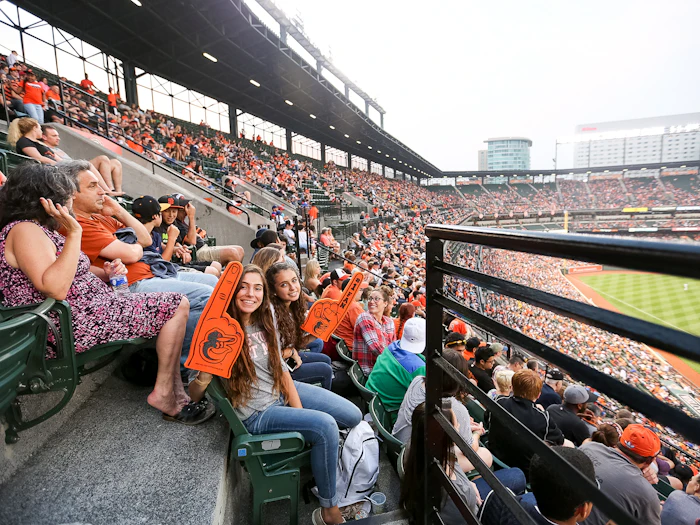
MorningPrearranged school visit to Fort McHenry National Monument and Historic Shrine. Use a teacher/leader-led flag and War of 1812 activity; attend a posted public ranger talk only if its schedule fits.AfternoonLunch at the Inner Harbor, then a prebooked school visit to the Baltimore Museum of Industry or the National Museum of Railroad History & Innovation, formerly the B&O Railroad Museum.EveningDinner, and an evening at Camden Yards when the Orioles are at home.- Route
- Fort McHenry, the Inner Harbor, and one museum, with the coach between them.
- Travel
- On foot and by private coach
- Overnight
- Program-approved hotel in Baltimore; twin student rooms, teacher singles.
- Meals
- All meals are included, with drinking water.
- Physical demand
- Moderate effort, with exposed ground at the fort.
- Learning outcome
- Students read a national anthem as a document of one night's shelling.
- Customization
- Fort McHenry’s school notification form does not reserve an on-demand ranger program. The Orioles game at Camden Yards depends on confirmed tickets and the home schedule; an Inner Harbor walk is the agreed alternative.
-
Day 5
Baltimore to Arlington and the Mall
Leave Baltimore after breakfast and visit Arlington before its afternoon closing. The western Mall memorials follow after check-in and rest.
MorningCheck out and travel to Arlington, allowing 1½–2 hours with traffic. Visit Arlington National Cemetery and the Tomb of the Unknown Soldier from late morning.AfternoonLunch, hotel check-in, and rest, then a focused Lincoln, Vietnam Veterans, and Korean War Veterans memorial walk.EveningDinner and a comparison of national remembrance with the colonial accounts studied earlier.- Route
- Baltimore to Arlington’s visitor entrance, then the Washington or Arlington hotel and western Mall.
- Travel
- Private intercity coach
- Overnight
- Program-approved hotel in Washington or Arlington; twin student rooms, teacher singles.
- Meals
- All meals are included, with drinking water.
- Physical demand
- High effort; roughly 3–3½ miles across Arlington’s hills and the Mall, with little shade. An arranged tram and shorter memorial walk can reduce the distance.
- Learning outcome
- Students compare what each of the three cities chose to memorialise.
- Customization
- Arlington closes at 5 p.m.; it is not an evening stop. Arrange any accessible tram or shorter cemetery route in advance. Heavy traffic shortens the later Mall walk, with remaining memorials available on day 6.
-
Day 6
Congress and African American history
Connect Congress’s powers with the National Museum of African American History and Culture, then close the week with a discussion of representation.
MorningReserved Capitol Visitor Center tour focused on Congress, or a disclosed substitute.AfternoonLunch, then a reserved teacher-led National Museum of African American History and Culture visit, allowing roughly three hours.EveningFarewell dinner and a short memorial visit only if the group wants to finish the previous day’s walk.- Route
- Capitol Hill and the National Mall museum district.
- Travel
- On foot, Metro, and private coach
- Overnight
- Program-approved hotel in Washington or Arlington; twin student rooms, teacher singles.
- Meals
- All meals are included, with drinking water.
- Physical demand
- Moderate effort; museum standing and local walks on mostly paved ground, with seated breaks.
- Learning outcome
- Compare Congress’s powers and the founding promises studied in Williamsburg with evidence of who could exercise those rights.
- Customization
- Reserve NMAAHC school-group entry for the actual cohort and date; it is self-guided. Museum and Capitol reservation times determine the final order. Arlington is on day 5, during opening hours.
-
Day 7
Synthesis and departure
Breakfast, packing, and a closing takeaway across the three cities, then the gateway transfer.
MorningBreakfast, packing, and a final takeaway from each student.AfternoonThe Washington gateway transfer, with a packed meal where the flight timing requires one.EveningDeparture. No group hotel night.- Route
- Hotel to the agreed Washington gateway.
- Travel
- Private gateway transfer
- Overnight
- None on program: the group departs on day 7.
- Meals
- All meals are included up to departure, with a packed meal when the flight timing requires one.
- Physical demand
- Low effort.
- Learning outcome
- Students say what changed between Williamsburg and Capitol Hill.
- Customization
- No timed visit is scheduled on departure day.

DC: Science, Space and Conservation
Compare early flight and spacecraft, read fossils and ocean evidence, and investigate animal conservation. Five days and four nights in Washington or Arlington include the Udvar-Hazy Center in Virginia and a leader-facilitated disaster-resilience exercise.
Choose this programDay by day
- Day 1
Arrive and frame a science question
Meet the Program Leaders and settle into the hotel. Each student chooses a question about flight, climate, or conservation to investigate during the week.
MorningTravel to the agreed Washington-area airport or Union Station.AfternoonGroup transfer, hotel check-in, and rest.EveningDinner and a short evidence-versus-opinion activity using the students’ questions.- Route
- Arrival gateway to the hotel.
- Travel
- Private arrival transfer
- Overnight
- Washington or Arlington hotel; individual student beds and private teacher rooms.
- Meals
- Breakfast, lunch, and dinner while on program; packed meals when the travel schedule requires.
- Physical demand
- Low effort; a short hotel-area walk if timing permits.
- Learning outcome
- State a question that museum evidence could help answer.
- Customization
- No timed admission on arrival day.
- Day 2
Flight, oceans, and deep time
At two Smithsonian museums, compare engineering choices with evidence of a changing planet. Teachers select a small number of galleries at each stop.
MorningA reserved National Air and Space Museum visit on the Mall: the Wright brothers’ early flight and Apollo 11 provide evidence for a teacher-led comparison of atmospheric drag, flight, and orbital motion.AfternoonLunch, then the National Museum of Natural History: Sant Ocean Hall and the fossil hall, Deep Time, connect biodiversity, climate, and geological time. Gems and minerals provide a short materials comparison.EveningIncluded dinner in Penn Quarter or Chinatown, followed by paired explanations of one exhibit’s evidence.- Route
- Air and Space to Natural History across the National Mall.
- Travel
- Local transfer and walking
- Overnight
- Washington or Arlington hotel; individual student beds and private teacher rooms.
- Meals
- Breakfast, lunch, and dinner while on program; packed meals when the travel schedule requires.
- Physical demand
- Moderate effort; allow about 2–3 miles of walking and indoor standing, with seated breaks.
- Learning outcome
- Use an observed object or exhibit to support a claim about technology or environmental change.
- Customization
- The Mall Air and Space Museum requires timed entry and still has phased gallery openings. Reserve roughly 2–2½ hours there and 2½–3 hours at Natural History; this is teacher-led inquiry, not a booked museum laboratory.
- Day 3
Aircraft and spacecraft at Udvar-Hazy
Spend the main part of the day at the Steven F. Udvar-Hazy Center in Chantilly, Virginia, comparing aircraft designed for very different jobs.
MorningCoach to the Udvar-Hazy Center, allowing 60–90 minutes from central Washington before entry. Study the SR-71 Blackbird and its speed and materials requirements.AfternoonLunch and the space hangar, including Space Shuttle Discovery. Student teams sketch how a design choice changes payload, heat protection, or landing.EveningReturn to the hotel and dinner; students explain one tradeoff using their sketches.- Route
- Washington or Arlington to Chantilly and back.
- Travel
- Private coach; allow 60–90 minutes each way, longer in congestion
- Overnight
- Washington or Arlington hotel; individual student beds and private teacher rooms.
- Meals
- Breakfast, lunch, and dinner while on program; packed meals when the travel schedule requires.
- Physical demand
- Moderate effort; extensive hangar walking and standing with rest stops.
- Learning outcome
- Explain an engineering tradeoff using a named aircraft or spacecraft.
- Customization
- Udvar-Hazy has no timed-entry admission pass, but educational programs need separate reservations. The core visit is teacher-led; no simulator ride or private engineering workshop is assumed.
- Day 4
Conservation and community resilience
Observe animals at the National Zoo, then work through a flood-response scenario using LabX’s Extreme Event materials.
MorningReserved Smithsonian National Zoological Park admission, approached from the Woodley Park area. Observe giant-panda behavior and use public conservation interpretation; sightings vary.AfternoonLunch, then a 60–90-minute Extreme Event game in a reserved meeting room. Teachers and Program Leaders facilitate decisions about limited resources and community resilience.EveningDinner and a team debrief: which decision helped the whole community, and what evidence changed it?- Route
- National Zoo to the hotel meeting room.
- Travel
- Local coach and walking
- Overnight
- Washington or Arlington hotel; individual student beds and private teacher rooms.
- Meals
- Breakfast, lunch, and dinner while on program; packed meals when the travel schedule requires.
- Physical demand
- Moderate effort; the Zoo has hills and outdoor exposure. Plan hydration, seating, and a shorter accessible route before travel.
- Learning outcome
- Distinguish animal observations from conservation claims, then explain a disaster-response choice.
- Customization
- LabX grew from the former Marian Koshland Science Museum. This is a teacher/leader-run game, not a visit to that closed museum or a LabX-hosted workshop. The game is for ages 12+ and 12–48 players; adults can join a 10-student group, and larger groups need parallel rooms and facilitators. Zoo group entry and bus arrangements are reserved separately.
- Day 5
Share findings and depart
Each student answers the question chosen on arrival using an exhibit or observation from the trip.
MorningBreakfast, packing, and a short evidence presentation.AfternoonTransfer to the agreed airport or Union Station, with a packed meal when needed.EveningTravel home.- Route
- Hotel to departure gateway.
- Travel
- Private departure transfer
- Overnight
- No program hotel night.
- Meals
- Breakfast, lunch, and dinner while on program; packed meals when the travel schedule requires.
- Physical demand
- Low effort; no required museum visit.
- Learning outcome
- Connect a first-hand observation to a claim and its limits.
- Customization
- Flights are arranged around the agreed group departure window.

DC: Art, Language and Diplomacy
Read artworks, investigate persuasive language, and test competing intelligence reports. Five days and four nights in Washington combine Smithsonian and National Gallery collections, the International Spy Museum, Planet Word, and the diplomatic neighborhoods.
Choose this programDay by day
- Day 1
Arrive and read the city
Settle in, then use a nearby public space to ask how buildings and monuments communicate a message.
MorningArrival at the agreed Washington-area gateway.AfternoonGroup transfer, hotel check-in, and rest.EveningDinner and a short neighborhood observation, if arrival timing permits.- Route
- Arrival gateway to the Washington hotel.
- Travel
- Private arrival transfer
- Overnight
- Washington hotel; individual student beds and private teacher rooms.
- Meals
- Breakfast, lunch, and dinner while on program; packed meals when the travel schedule requires.
- Physical demand
- Low effort; optional short walk.
- Learning outcome
- Identify an audience and a message in a public space.
- Customization
- No museum or performance reservation on arrival day.
- Day 2
Art and whose stories are displayed
Compare the National Gallery of Art’s East and West Buildings, then investigate how the National Museum of the American Indian presents Native histories and living cultures.
MorningA teacher-led National Gallery visit, selecting works from the West Building and modern art in the East Building. Students compare how two artworks express identity.AfternoonLunch, then the National Museum of the American Indian. Small groups examine how an exhibition uses objects and first-person perspectives.EveningDinner, followed by students writing and comparing a 60-word gallery label.- Route
- National Gallery of Art to the National Museum of the American Indian on the eastern Mall.
- Travel
- Walking and local transfer
- Overnight
- Washington hotel; individual student beds and private teacher rooms.
- Meals
- Breakfast, lunch, and dinner while on program; packed meals when the travel schedule requires.
- Physical demand
- Moderate effort; about 2–3 miles across galleries and the Mall, with seated breaks.
- Learning outcome
- Explain how selection and labeling shape a visitor’s understanding.
- Customization
- Allow about 2½ hours at the Gallery and 2 hours at the American Indian museum. Both core visits are self-guided with teachers; museum-led school sessions are separate requests. American Indian currently offers no formal school-group tours.
- Day 3
Intelligence, words, and persuasion
Work from incomplete intelligence at the International Spy Museum in L’Enfant Plaza, then explore the spoken and written word at Planet Word.
MorningReserved Spy Museum galleries and a grade-appropriate school workshop. Minute by Minute: Cuban Missile Crisis asks grades 7–12 to weigh incomplete evidence and recommend a response.AfternoonLunch and transfer to Planet Word for a 90-minute self-guided visit on language, reading, and persuasion.EveningIncluded dinner and a short debate: what makes evidence reliable, and when could intelligence gathering infringe privacy?- Route
- L’Enfant Plaza to Planet Word near Franklin Square.
- Travel
- Local coach and walking
- Overnight
- Washington hotel; individual student beds and private teacher rooms.
- Meals
- Breakfast, lunch, and dinner while on program; packed meals when the travel schedule requires.
- Physical demand
- Moderate effort; indoor standing and short outdoor transfers.
- Learning outcome
- Separate persuasion from evidence, and acknowledge uncertainty in a recommendation.
- Customization
- Allow about 3 hours at Spy, including its 60-minute workshop. School workshops run weekdays and cap at 35 students; larger cohorts require accepted parallel sessions. Planet Word is closed Tuesdays, requires group booking for 20+, and asks at least five weeks’ notice. Its Wordshops are not included.
- Day 4
Embassies, Georgetown, and cultural diplomacy
Read Embassy Row from public sidewalks around Dupont Circle, then explore Georgetown’s campus streets and waterfront.
MorningA leader-led Embassy Row walk along Massachusetts Avenue: compare diplomatic buildings and consider how a country represents itself. No embassy interior appointment is included.AfternoonLunch and Georgetown neighborhood study. Eligible high-school groups can request a Georgetown University tour; otherwise use the university’s self-guided campus route where public access permits.EveningGeorgetown Waterfront dinner and a view toward the John F. Kennedy Center for the Performing Arts. Students discuss the role of a national arts institution in cultural diplomacy.- Route
- Dupont Circle and Embassy Row to Georgetown and the waterfront.
- Travel
- Local coach and walking
- Overnight
- Washington hotel; individual student beds and private teacher rooms.
- Meals
- Breakfast, lunch, and dinner while on program; packed meals when the travel schedule requires.
- Physical demand
- Moderate effort; Georgetown has hills, uneven paving, and campus stairs. Agree the accessible route in advance.
- Learning outcome
- Support an interpretation of cultural diplomacy with observed architecture and public space.
- Customization
- Georgetown guided group tours require at least 15 current high-school students and no more than 50 people total, on eligible weekdays at 10 a.m. or 3:30 p.m.; school-affiliated contacts must participate in booking. The core includes no Kennedy Center interior tour, workshop, or performance; any dated alternative needs confirmed access and a revised quote.
- Day 5
Present an interpretation and travel home
Students share a short curatorial proposal: one object, phrase, or public building, its audience, and a reason it belongs in a national collection.
MorningBreakfast, packing, and paired presentations.AfternoonThe agreed airport or Union Station transfer, with a packed meal when needed.EveningTravel home.- Route
- Washington hotel to departure gateway.
- Travel
- Private departure transfer
- Overnight
- No program hotel night.
- Meals
- Breakfast, lunch, and dinner while on program; packed meals when the travel schedule requires.
- Physical demand
- Low effort; no required timed activity.
- Learning outcome
- Defend a curatorial choice with evidence from the week.
- Customization
- No performance or museum admission competes with the departure window.
More ways to study Washington
Library and courts
Replace a Smithsonian afternoon with 2½–3 hours on Capitol Hill: self-guided study of the Library of Congress’s Thomas Jefferson Building and the Supreme Court exterior. The Library opens Tuesday–Saturday; its group form is for 20+ people, with one adult per eight students. School groups cannot join the Main Reading Room walk-through. Use public sidewalks; a Capitol–Library tunnel is not promised. A Supreme Court lecture is a separate weekday option, subject to the Court’s calendar and public access. Confirm reservations and any price change.
Mount Vernon and Alexandria
Add a full day at George Washington’s Mount Vernon to examine the presidency and enslaved people’s lives. Allow 3–4 hours at the estate and 1–1½ hours of road travel each way from Washington, with an Alexandria meal or short Old Town walk if timing permits. Reserve the applicable school-group visit and agree the extra night, transport, and price.
Pentagon remembrance or tour
The outdoor National 9/11 Pentagon Memorial can replace a 45–60-minute local block near Arlington, with a coach transfer added. A Pentagon building tour is a separate half-day substitution requiring an accepted advance request and the Department’s current citizenship, residency, identification, and security rules. Electronics are prohibited inside. Confirm eligibility, dates, and any price change before adding it; public memorial access does not grant building access.
Institutions and representation
A 30–45-minute exterior study of the Smithsonian Castle can accompany a Mall walk: students consider why a national institution collects knowledge. The Castle’s temporary 2026 opening ended September 7; no interior visit is included during renovation. An elected-official meeting needs a separate congressional-office request; allow a replacement block and agree any revised price if a meeting is accepted.
Local meals and reflection
On an Arlington base, Rosslyn or Crystal City offers an included dinner near the hotel; an Alexandria base needs longer city transfers. Union Station’s food court is a supervised meal choice near Capitol Hill. Meal allowances remain included, with group boundaries and dietary arrangements agreed in advance.
Planning details
- Rooms
- Individual beds in gender-separated student rooms; private teacher rooms.
- Washington gateways
- DCA is closest to central Washington. Allow roughly 30–60 minutes by coach from DCA, 60–90 from IAD, or 75–120 from BWI, plus baggage collection and loading. These planning allowances vary with traffic; airline check-in time is additional. Union Station is a rail alternative. The three-day route needs a late departure.
How much does a school trip to Washington DC cost?
Five- to seven-day school trips to Washington, DC cost $2,010–$3,255 per student in Program Tuition, excluding airfare. The three- and four-day programs need a separate quote.
Program Tuition covers lodging, meals, ground transport, scheduled activities, guides, and admissions, with one complimentary teacher place per eight paying students.
$2,010–$3,255
per student, excluding airfare.
3 to 7 days
program length across nine itineraries.
Group quote
for the school’s dates, group size, and selected route.
| Included | What it covers |
|---|---|
| Travel | Every program night’s lodging, meals and drinking water, agreed airport transfers, local and intercity transport, scheduled activities, guides, entrance fees, and tips. |
| Staff and support | At least two trained Program Leaders, including both a male and a female leader, pre-departure planning, and school documentation. |
| Chaperones | One complimentary Program Tuition place per eight paying students. Chaperone airfare, travel insurance and medical insurance are separate. |
Not included: Airfare and home-to-airport travel, travel insurance, medical insurance, personal spending, and separately quoted optional additions or substitutions.
| Choice | What it affects |
|---|---|
| Dates | Peak spring dates and cherry-blossom weeks can affect hotel and ticket availability. |
| Route | Added days, changed cities, optional admissions, and special program bookings. |
| Group | Room choices, student numbers, and adults beyond the complimentary teacher places. |
Payment and cancellation
Schools can pay as a group, or families can enroll and pay individually. Group Travel monthly installments are available for eligible enrollments more than 90 days before departure, with a deposit at enrollment. Cancellation charges depend on notice and ticketed airfare; review the current Group Travel payment and cancellation terms before committing.
What do students learn on a Washington DC school trip?
Students use objects, documents, and public places as evidence, then explain a claim and consider a competing interpretation.
Government, history, and rights
At the Capitol, National Archives, and memorials, students compare founding principles with decisions about citizenship and representation. NMAAHC and the Holocaust Memorial Museum connect evidence with civil rights and human dignity.
Science and conservation
The Air and Space museums, Natural History, and National Zoo connect engineering, climate, and biodiversity. Teams use observations and LabX’s disaster-resilience exercise to explain a decision under uncertainty.
Art, language, and diplomacy
National Gallery and American Indian collections, Planet Word, the Spy Museum, and Embassy Row let students compare how objects, words, and institutions persuade an audience.

What makes Rustic Pathways educational trips different?
A Rustic Pathways school trip is one private group on your school's own dates, one bed per student, and an itinerary built to your curriculum.
- 01No mixed groups. Just your school
- 02One student, one bed
- 03Your school picks the dates
- 04Monthly payment plans available
- 05No tipping; scheduled activities are included in Program Tuition
- 06Aligned to your curriculum
How is safety managed on a school trip to Washington DC?
Program Leaders manage local operations and safety procedures alongside school chaperones. Across 13 years of published incident data from every Rustic Pathways program worldwide, 87% of reports were GREEN, the minor tier where the group stays intact.
What the team plans for
Walking days
Long walks, standing, and hills at Arlington and Georgetown; agree daily distances, rests, and accessible routing before booking.
Security screening
Queues at the Capitol Visitor Center, the Holocaust Memorial Museum, and the Smithsonian, with a screening allowance built into the day plan
City and intercity transport
Local Metro or coach transfers, plus longer travel days on the Philadelphia, New York, and Williamsburg–Baltimore routes.
Crowded public spaces
Group movement through the Mall and the museum district at the busiest times of the school-trip year
Heat and exposure
Little shade at Arlington and along the western Mall; leaders plan water, rest, and shade stops and shorten outdoor sessions when heat requires it
Controls built into every trip
Written risk plan. A score above 5 requires new controls, reassessment, or cancellation.
Two-Deep Leadership. A single staff member is never alone with students, and at least two trained Program Leaders, including both a male and a female leader, support each School Group Travel trip.
Assessed activity vendors. The National Constitution Center education visit, the paid civics facilitator and every other named vendor are reviewed before use, every one to two years, and on site when high risk.
Medical readiness. Dr. William R. Smith, whose Medical Director responsibilities include medical protocols and health planning, has held the role since 2015. See his emergency-medicine background.
Is Rustic Pathways the right partner for your school trip to Washington DC?
Rustic Pathways runs each Washington, DC trip for one school, on its chosen dates. Students stay with their classmates and teachers. Students traveling individually can explore United States teen travel programs.
A strong fit
- You want one private group with your dates and your teachers.
- You can travel for anything from 3 to 7 days.
- You have 10 or more students.
- You want to read the day-by-day before you commit.
Talk with us first
- A student has significant mobility, medical, sensory, mental-health, dietary, or religious support needs.
- You have fewer than 10 students.
- Your route includes Arlington’s hills or other substantial walking, and the group needs an agreed accessible route.
- You need specific Capitol or museum reservations; confirm the accepted visit or named alternative before booking.
- Your group is traveling in April or May. Those are the busiest weeks on the National Mall, and lodging and timed museum passes are hardest to hold.
Probably not a fit
- You are an individual student or parent looking for open enrollment teen travel programs in the United States.
- You want your group merged with another school.
- You want a meeting with an elected official. No itinerary promises one.
Questions about school trips to Washington DC
What should schools budget for a Washington DC trip?
Schools should budget $2,010–$2,325 per student for the five-day routes, $2,790 for either six-day city combination, or $3,255 for seven-day Williamsburg–Baltimore–Washington. Three- and four-day programs need separate quotes. Airfare, travel insurance, and medical insurance are extra.
Added days or substitutions need a revised quote.
When is the best time for a school trip to Washington DC?
The best time for a school trip to Washington DC is April–May or September–October, when the weather suits walking between Washington’s memorials and museums. Spring school visits and cherry-blossom weeks are busy, so reserve timed admissions early.
Summer needs heat breaks; winter needs shorter outdoor sessions. Venue opening days also determine the order of visits.

Have a question before you ask for a proposal?
Patrick Ziemnik answers Washington DC school-trip questions with the school travel team.
Send your group size, dates, trip length, and what you want students to learn. I’ll reply within 1 business day and send you options within 48 hours, and no sales call unless you ask for one.
Get your Washington DC school-trip proposal
Start your Washington DC trip proposal with your travel dates, group size, and learning goals. Receive a reply within 1 business day and customized trip options within 48 hours.
Or reach a person directly: +1 440-975-9691 or groups@rusticpathways.com
Need approval or funding first?
Certificate of insurance, risk management plans, and fundraising templates for families, on request.


Destinations related to Washington DC
United StatesBrowse all school trip destinations- Rustic Pathways has operated student travel since 1983. Recent industry recognition:
- 2026 GoAbroad Innovation AwardsInnovation in Adventure-Based Programming · Global Adventure Learning Model
- 2025 International Travel AwardsBest Group Tour Operator
- 2024 Skift IDEA AwardsIndustry Innovators – Tour Operators
- 4x WYSETC Best Youth Tour Operator2015, 2017, 2018, 2019
- BBB A+ RatingBetter Business Bureau profile
- NESA Affiliate OrganizationNear East South Asia Council of Overseas Schools
- 2025 World Travel AwardsUnited States’ Leading Tour Operator