Is Greece safe for teenagers?
Yes. Greece is one of Europe’s safest destinations with low crime rates and a strong tourism infrastructure. Rustic Pathways has operated programs in Greece for years with established local partnerships, vetted accommodations, and trained staff providing 24/7 support. Students stay in small-group settings with constant supervision.
Where is Kefalonia Island?
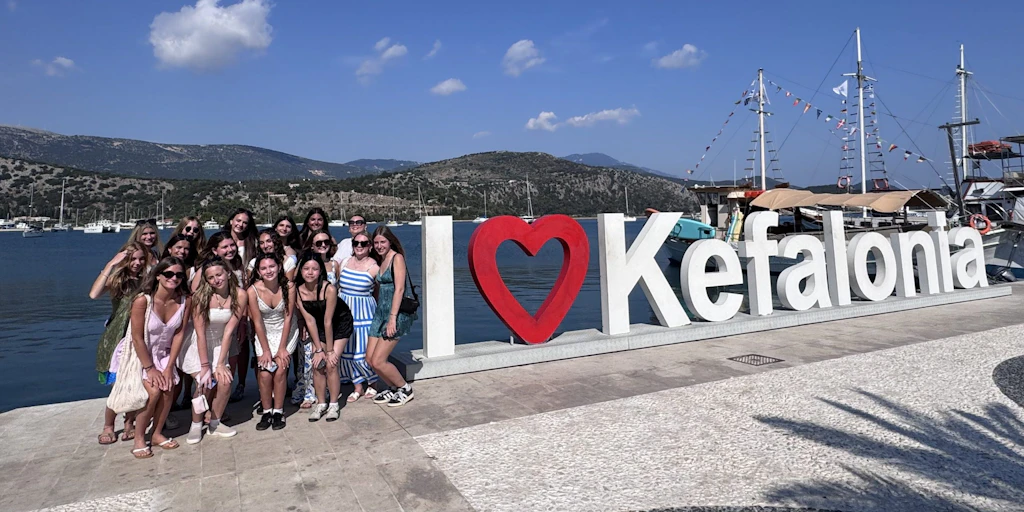
Kefalonia is the largest of the Ionian Islands, located off Greece’s western coast in the Mediterranean Sea. The island sits between the Greek mainland and Italy, a 45-minute flight from Athens. Unlike crowded Santorini or Mykonos, Kefalonia remains relatively undeveloped, making it ideal for conservation work and authentic Greek island experiences.
Is Greece safe for teenage girls?
Absolutely. Greece is very welcoming to female travelers. Our programs maintain appropriate staff ratios and accommodation arrangements. Students explore together in supervised groups, and Greek culture is notably hospitable to visitors. Our female Program Leaders provide additional perspective and support.
Do students need to speak Greek?
No. English is widely spoken in Greek tourist areas and by our local partners. Students will learn a few Greek phrases as part of the cultural experience, but language barriers are minimal.
What’s the accommodation like?
Students live in comfortable shared hotel rooms (2-5 per room) at Sunset Apartments near the beach. Rooms include private bathrooms, air conditioning, and access to common areas. The beachside location provides easy access to restaurants, program activities, and the harbor where turtles feed.
How physically demanding are the programs?
Moderately active. Students should be comfortable swimming and snorkeling, walking on beaches, and handling early morning wake-ups (5:30 AM for nesting surveys). No prior experience required, training is provided.
What if my teen can’t swim well?
All students complete a swim test before snorkeling activities. Non-swimmers or weak swimmers can participate in beach-based surveys, harbor monitoring, and all non-water activities. Please discuss specific concerns with our admissions team.
What conservation experience do students need?
None required. Programs include comprehensive training on all survey techniques, species identification, and data collection protocols. Enthusiasm matters more than experience.
Is the service work meaningful?
Yes. Students contribute to ongoing research monitored by Mediterranean conservation organizations. Data collected on turtle populations, nest locations, and seagrass health feeds into multi-year studies. This is real science, not make-work.
Do students visit Athens?
Students fly through Athens and spend their final night there before departure. The program focuses on Kefalonia Island, where the conservation work takes place. Students wanting extensive Athens sightseeing should consider other options.
What about the multi-country programs?
The 16-day Italy & Greece program begins in Northern Italy (Verona, Venice) with cultural immersion and pasta-making before traveling to Kefalonia for sea turtle conservation. The 30-day Europe Odyssey adds Portugal and Spain, starting with Atlantic surfing before continuing through all four countries. Both end with Kefalonia turtle conservation.
What’s included in the program cost?
Lodging, ground transportation, meals, activities, domestic flights within Greece, conservation training, and 24/7 staff support. Not included: international airfare, personal snacks, souvenirs.
What are the age requirements?
Programs serve students ages 14-18. The Italy & Greece combo and Europe Odyssey programs may have slightly different age groupings, check specific program pages.
When are the 2026 travel dates?
Greece: Island Turtle Conservation
- June 16-24, 2026 (Limited)
- July 28-August 5, 2026 (Available)
- August 4-12, 2026 (Available)
- August 11-19, 2026 (Available)
Italy & Greece: Cultural Immersion and Turtles
- June 16-July 1, 2026 (Limited)
- June 23-July 8, 2026 (Limited)
- June 30-July 15, 2026 (Available)
- July 14-29, 2026 (Very Limited)
Europe Odyssey: Portugal, Spain, Italy & Greece
- June 16-July 15, 2026 (Available)
- June 30-July 28, 2026 (Available)
Can this count for school credit or volunteer hours?
Students receive documentation of 20-36 service hours (depending on program) that most schools accept for community service requirements. Some schools grant academic credit check with your counselor before enrolling.
What is a typical day like?
A typical day begins with early morning conservation work either 5:30 AM beach surveys or harbor monitoring followed by breakfast and a marine biology workshop. Afternoons include snorkeling, cultural activities, or excursions. Evenings feature group dinners at local tavernas, reflection time, and supervised free time exploring the island.