Country Basics
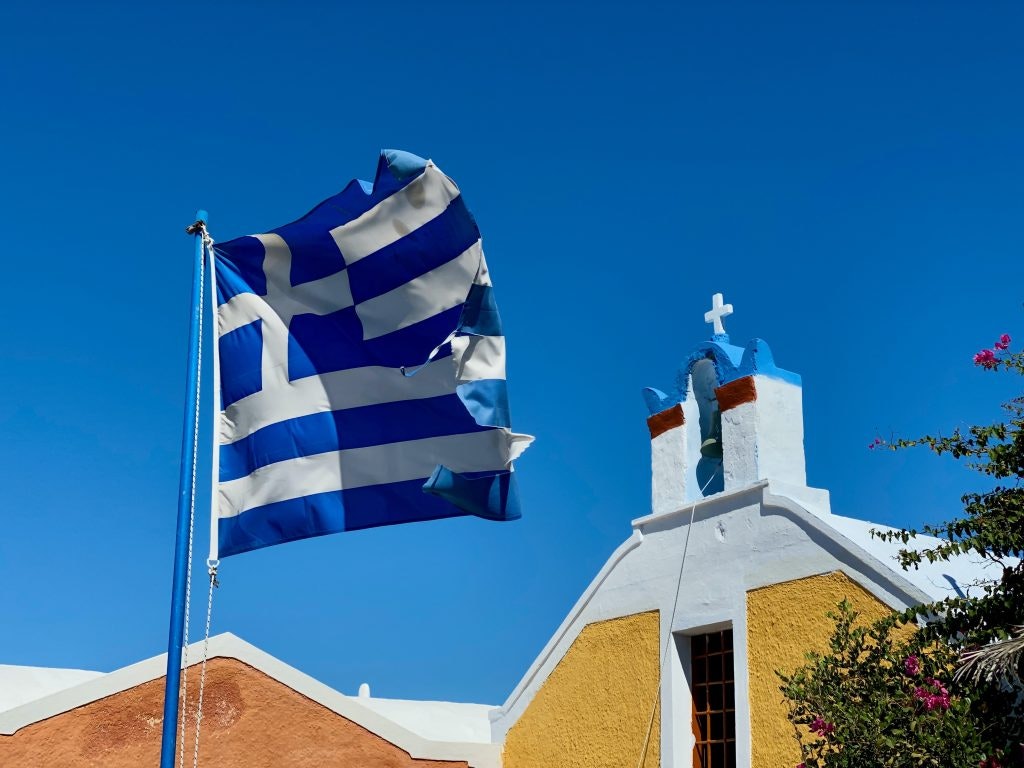
Greece is the southernmost country in Europe and has the longest coastline. About one-fifth of the country consists of islands and overall Greece is comparable in size to the U.S. state of Alabama. The mainland and islands are home to about 10.3 million people.

To the north and northeast, Greece borders four countries – Albania, Bulgaria, North Macedonia, and Turkey. Three main seas surround the mainland – the Ionian Sea to the west, Mediterranean Sea to the south and the Aegean Sea to the east.
The mainland is mountainous with Mount Olympus being its highest peak. The ancient Greeks considered this mountain to be the home of the gods.
The country’s number of islands is debatable. Greece’s tourism officials say there are 6,000 islands and islets. The number of inhabited islands is generally considered to be 227.
Greece has been part of the European Union since 1981. Before the modern age, the nation developed across millions of years and numerous ages. The Classical period in the 5th and 4th centuries BC is when Western civilization’s foundation was laid. Other periods range from the Stone Age to the Roman, Byzantine and Ottoman eras. Since 1975, the country has been a parliamentary republic.
Language
Greek is the official language of Greece and is spoken by 99% of the population. It’s one of the oldest written languages still in use. The alphabet has 24 letters that can look different depending on whether they are lower or upper case.
The language includes several dialects, such as Cypriot Greek and Pontic Greek. Minority languages in the country include Macedonian, Turkish and Albanian.
English is widely spoken in the country, particularly among young people and in tourist areas. Still, it’s helpful to know a few Greek phrases, particularly if you are traveling off the beaten track. Here are few phonetic examples to get you started:
- Hello & Goodbye: Yah su for one person, Yah sas for a group
- Good morning: Kalimera
- Good night: Kalinichta
- Please/You’re Welcome: Parakalo
- Thank you: Efharisto
- Yes: Neh
- No: O’hee
- Excuse me: Signomi
- Do you speak English? Milate Agglika?
- How much is this? Poso kani?
- Where is the bathroom? Pú íne to bánio?
- What is your name? Pos se leneh? My name is ___. Me leneh ___.
- Nice to meet you: Harika
Social Norms & Expectations
Greek people are warm and friendly and love hosting guests. Many of their social norms are similar to what you’d see in the United States. They shake hands when meeting someone for the first time, use continental table manners with the fork in the left hand and begin eating after the hostess starts.
Still there are some differences, so here are some social norms to keep in mind in the country:
- Like some other Mediterranean countries, lunch is the biggest meal of the day and is often eaten a bit later in the afternoon, around 2pm-3pm.
- Being 30 minutes or so late for scheduled events is common in Greece.
- Bringing a small gift is nice when you’re invited into a home
- Finishing everything on your plate is a compliment to the chef so come to meals hungry.
- Accepting whatever your host offers is considered polite and asking for something different, like beef to be cooked a particular way, is uncommon.
- Complimenting hospitality is grand but avoid compliments about particular possessions so a hostess doesn’t feel pressure to give them to you!
- Crossing your legs should be avoided in formal situations
- Nepotism is not a negative concept in Greece and relatives often work for the same company.
- Yes or no nods may not be understood. Greeks incline their heads slightly forward for a yes and do a more vigorous backwards nod for a no.

Food & Drink
Many Greek foods have spread in popularity across the globe, but it’s hard to match what you’ll eat while visiting the country. Granted, some meals may be simple. For example, boiled eggs at breakfast time is common in many Greek places. Still, there are many other dishes to tempt your taste buds while eating other meals. Here are some foods you may encounter in Greece:
- Greek yogurt – Protein packed, thick and creamy yogurt
- Moussaka – Iconic oven-baked dish with eggplant, potatoes, and beef or lamb, topped with a creamy béchamel sauce and often including spices like cinnamon.
- Souvlaki – Skewered pork often served on chopped tomatoes and onions in pita bread with tzatziki sauce
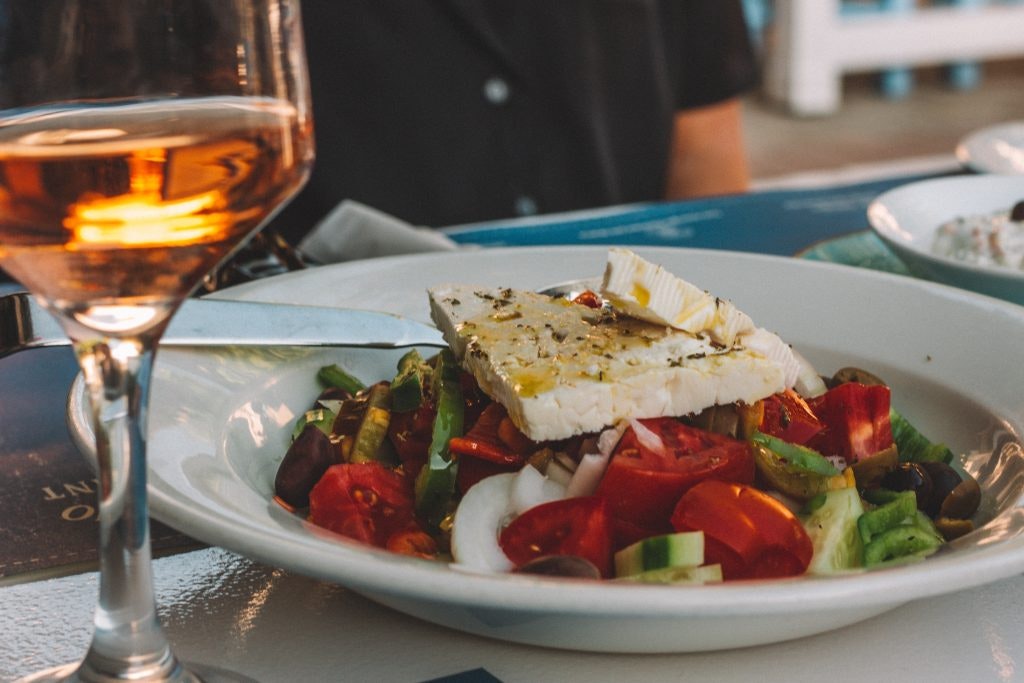
- Greek salad – A famous salad that includes two things Greece is really known for – feta cheese and olives
- Fresh fish – In a country with so much water, this is a given!
- Spanakopita – Spinach pie
- Dolmades – Grape leaves stuffed with rice, herbs, and sometimes minced meat
- Baklava – Pastry with honey and ground nuts