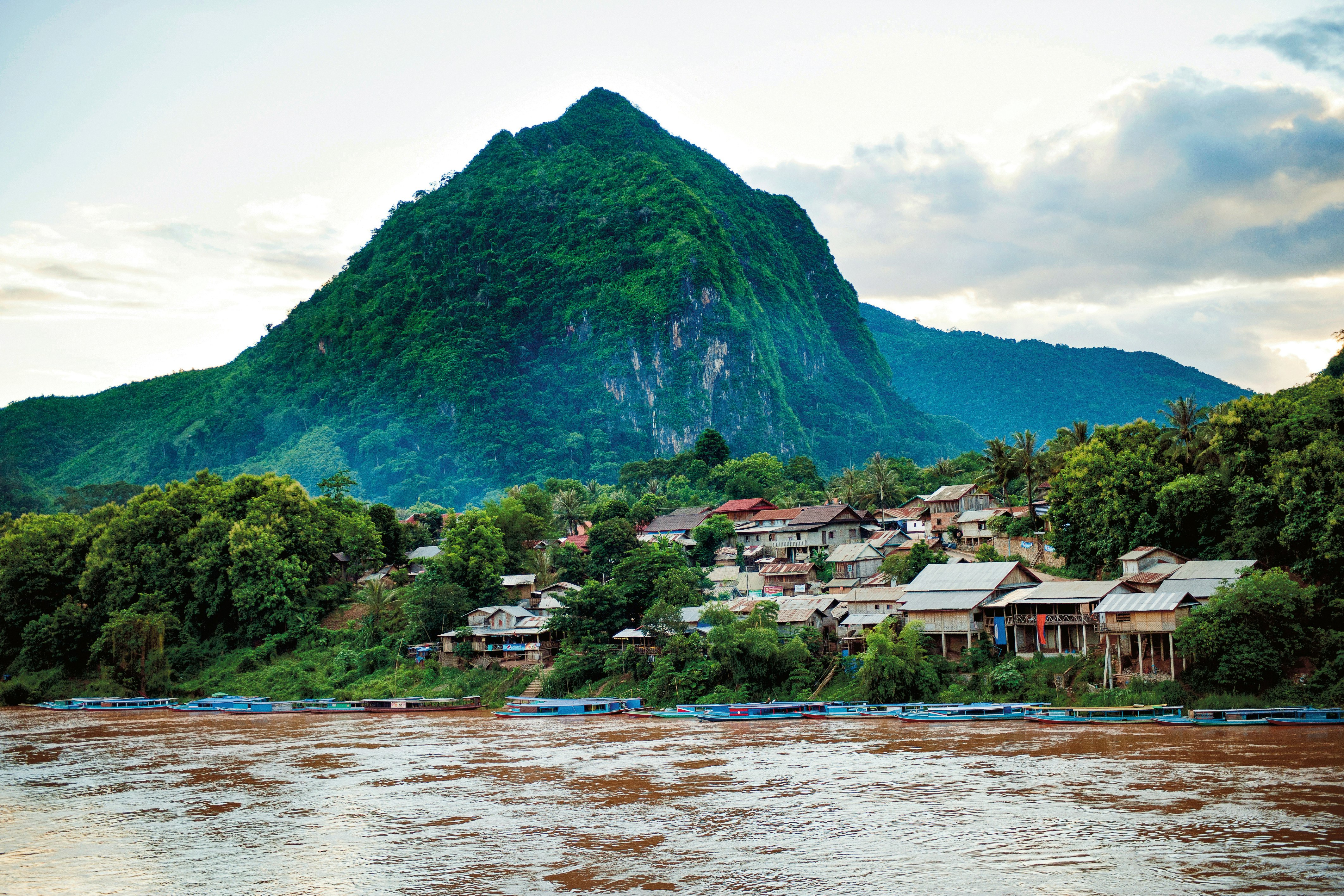
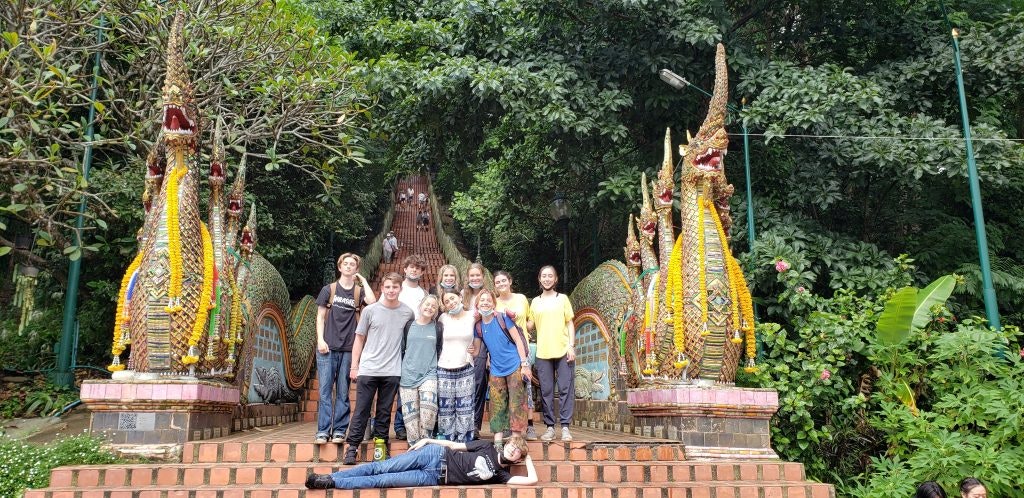
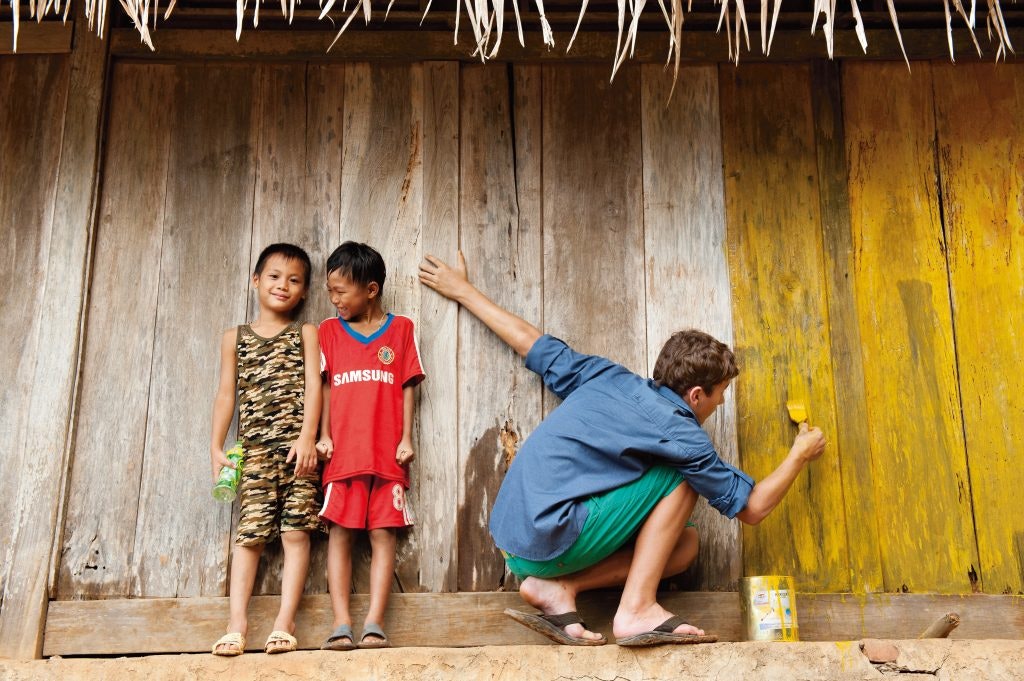
From the tropical plains of Chitwan National Park to the snow capped Himalayan peaks, Nepal is an adventurer’s wonderland. It’s a magical country rich in ethnic and geographic diversity. Each Himalayan valley is an island of culture and language.
On this virtual voyage through Nepal, learn about the country’s past, present and future.
From the tropical plains of Chitwan National Park to the snow capped Himalayan peaks, Nepal is an adventurer’s wonderland. It’s a magical country rich in ethnic and geographic diversity. Each Himalayan valley is an island of culture and language.
Geography: Nepal is located in Southern Asia, between Tibet (an autonomous region of China) to the north and India to the south. With Tibet, it shares the Himalayas, which feature some of Earth’s highest peaks. The highest is Mount Everest at 8,848 meters, or 29,029 feet.
Capital City: Kathmandu
Population: 30.03 million (2023 est.)
Languages: Nepali 44.6%, Maithali 11.7%, Bhojpuri 6%, Tharu 5.8%, Tamang 5.1%, Newar 3.2%, Magar 3%, Bajjika 3%, Urdu 2.6%, Avadhi 1.9%, Limbu 1.3%, Gurung 1.2%, other 10.4%, unspecified 0.2%. While Nepali is the official language, many people in government and business speak English.
Religions: Hindu 81.3%, Buddhist 9%, Muslim 4.4%, Kirant 3.1%, Christian 1.4%, other 0.5%, unspecified 0.2% (2011 est.)
Ethnic Groups: Chhettri 16.6%, Brahman-Hill 12.2%, Magar 7.1%, Tharu 6.6%, Tamang 5.8%, Newar 5%, Kami 4.8%, Muslim 4.4%, Yadav 4%, Rai 2.3%, Gurung 2%, Damai/Dholii 1.8%, Thakuri 1.6%, Limbu 1.5%, Sarki 1.4%, Teli 1.4%, Chamar/Harijan/Ram 1.3%, Koiri/Kushwaha 1.2%, other 19%
Life Expectancy: 71.5 years
Literacy Rate: 67.9% (2021 est.)
Government: Federal Parliamentary Republic
Suffrage: 18 years of age; universal
Current Head of State: President Ram Chandra Poudel (since March 13, 2023)
Current Head of Government: Prime Minister Pushpa Kamal Dahal (since December 26, 2022)
Independence: 1768
Currency: Nepalese rupee (NPR)
GDP per Capita: $1,260 USD (2023 est.)
Unemployment Rate: 5.1% (2022 est.)
GDP – Composition by Sector:
Source: CIA World Factbook
Nepal is located in Southern Asia, between Tibet (an autonomous region of China) to the north and India to the south. With Tibet, it shares the Himalayas, which feature some of Earth’s highest peaks. The highest is Mount Everest at 8,848 meters, or 29,029 feet.
Modern Nepal can trace its roots to 1768 when Gorkha ruler Prithvi Narayan Shah conquered Kathmandu. The king and his successors had ambitious expansion plans that were halted by the Chinese in Tibet in 1792 and ultimately by the British when a rivalry between Nepal and the East India Company led to the Anglo-Nepalese War in 1814. That conflict ended with a treaty in 1816 that established Nepal’s permanent borders. Another treaty with Britain in 1923 affirmed Nepal’s independence.
In 1953, Edmund Hillary of New Zealand and Sherpa Tenzing Norgay of Nepal became the first to reach the summit of Mount Everest. It became an obsession among climbers trying to ascend the world’s tallest mountain (456 climbers summited Everest in 2016) and a major part of Nepal’s tourism industry.
Around that time, the Nepali government ended a century-old hereditary monarchy and instituted a cabinet system that created political parties, which lasted until 1960 when they were banned. Parties were reinstated in 1990. Maoist insurgents started a 10-year civil war in 1996, which dissolved the democratic government and returned the country to an absolute monarchy in 2002, though only briefly. The government reached a peace deal with the Maoists in 2006, paving the way for Nepal to become a Federal Democratic Republic. The country elected Ram Baran Yadav, its first president, in 2008.
Nepali is the country’s official language with almost 45-percent of the population speaking the language. 123 languages were reported as mother tongue in 2021 national census. Many in government and business also speak English.
Greetings
Etiquette
Pronouns
Conversational
Useful
Present Tense
Feelings
I am ___: Ma ___ chu.
When in Nepal, you can expect to feast on momo. These steamed Nepalese dumplings filled with meat, vegetables, or cheese have become a delicacy in Nepal. Local foods vary by region, but many were influenced by Chinese, Indian, and Tibetan cuisine such as Nepalese chow mein. Dal bhat is the national dish made up of rice and lentils. If you’re lucky enough to travel during a festival or holiday, you’ll try sel roti. And when eating in Nepal, remember to use only your right hand.
Over 81%, of the population follow Hinduism. The remaining population breakdown is as follows: 8.2 percent Buddhist, 5.1 percent Muslim, 3.2 percent Kirat, 1.8 percent Christian and 0.5 percent other.
141 caste/ethnic groups were reported in the 2021 national census.
The country breakdown is as follows: 16.5-percent Chhettri, 11.3-percent Brahman-Hill, 6.9-percent Magar, 6.2-percent Tharu, 5.6-percent Tamang, 5-percent Bishwokarma, 4.9-percent Musalman, 4.6-percent Newar, 4.2-percent Yadav and many ethnicities.
While in Nepal, you can expect…
to eat LOTS of dal bhat, the national dish of rice and lentils, and chai, a sweet tea served black or with milk. Expect to be welcomed with smiling faces and big “Namaste”s when interacting with Nepalis— from street vendors to professional rafting guides—and to bargain at street markets.
While in Nepal, locals will expect you…
to respect their customs and values. Ask questions, smile, say “Namaste” and be open to talking about a variety of topics. Be curious and interested in their country. Also, remember to use two hands when giving and receiving anything and to keep your knees and shoulders covered.
Visiting Nepal: What Students Learn While Trekking in the Himalayas
Learn about the country’s culture and history, local language and foods.
Finding Peace and Purpose in the Mountains
Krish describes the magnificent the views and unforgettable memories during his travels in Nepal on the Himalayan Trekking and Temples program.
Trek to Annapurna Range, Himalayas
Breathtaking first-person view of the trek to the Annapurna base camp in the Himalayas. The Annapurna massif includes the Annapurna I Main– the 10th highest mountain in the world at 8,091 meters above sea level with only 191 successful ascents.
Lonely Planet’s Brief History of Nepal
Explore the timeline of Nepal’s beginnings in the Kathmandu Valley, the role of Hinduism and Buddhism in the nation’s prominent historical moments, and the effects of the various ruling dynasties.
Sky Caves of Nepal
Visit the Sky Caves of Nepal with archaeologist Mark Aldenderfer. Learn about the Tibetan plateau and artifacts left behind that tell a story of Nepal’s early history and the region’s connection to the Silk Road.
How to make MOMO!
Learn how to make Chicken Momo, famous Nepali dumplings.
Music: Jerusha Rai Spotify Artist Profile
Jerusha Rai is a Nepali-American musician based in Texas. Rai’s style could be described as Indie-electro-folk, with inspiration drawn from traditional Nepali instruments and rituals.
Movie: Pashupati Prasad
When a man named Pashupati loses his parents in an earthquake, he travels to Kathmandu with the goal of paying his father’s debt. Once he arrives in Kathmandu, he faces new conflicts and roadblocks he could have never imagined.
Costa Rica | Dominican Republic | Ecuador | Guatemala | Peru | Puerto Rico | United States
Cambodia | China | India | Japan | South Korea | Laos | Mongolia | Nepal | Thailand | Vietnam
Australia | Balkans | Belize | Cambodia | China | Costa Rica | Denmark | Dominican Republic | Ecuador | Fiji Islands
France | Germany | Greece | Guatemala | India | Italy | Mongolia | Morocco | Nepal | Panama
Peru | Portugal | Puerto Rico | South Africa | South Korea | Spain | Tanzania | Thailand | United States | Vietnam