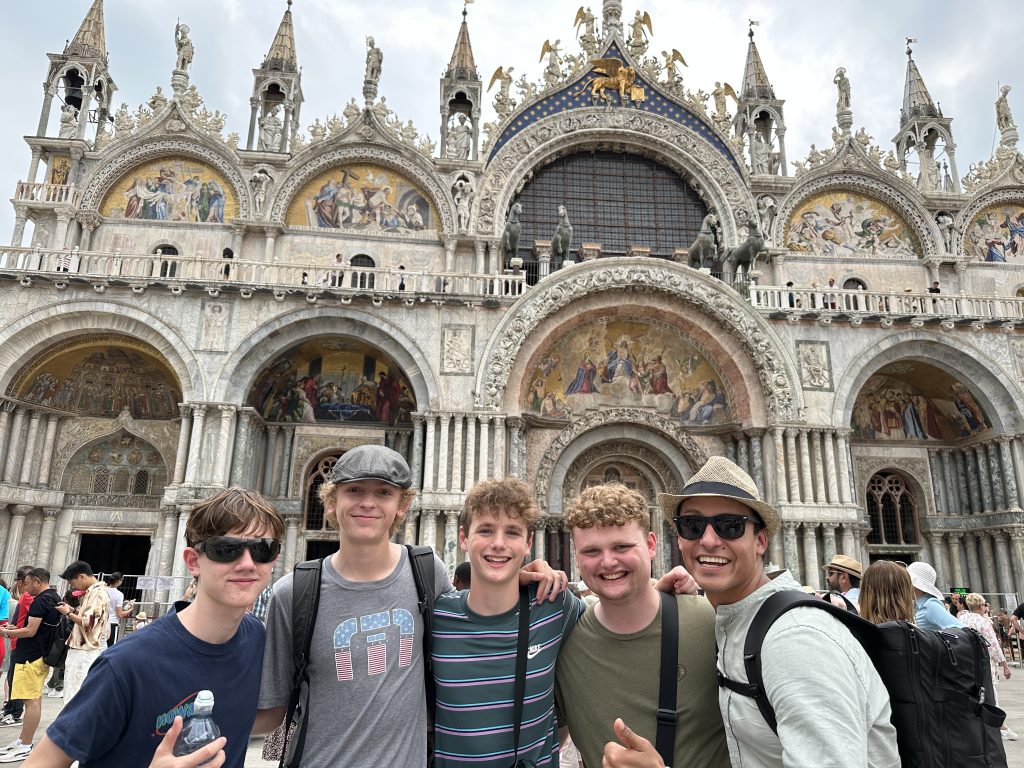
Which European Student Tours Match Your Age Group?
Age-specific itineraries match supervision levels and activities to developmental needs since a 13-year-old requires different pacing than a 17-year-old:
Age-specific design matters because:
- Younger travelers need more structured downtime and check-ins
- Older students benefit from increased autonomy and decision-making opportunities
- Rustic Pathways’ Progressive Independence Model adjusts supervision as students demonstrate readiness
Beyond age, trip duration is another important consideration as it affects the depth of experience and time away from home.
How long are student tours in Europe?
European student programs range from 8 days to 4+ weeks. Duration affects depth of immersion, cost, and skill development:
| Duration |
Programs |
Best For |
Price Range |
| 8-9 days |
Northern Italy Adventure
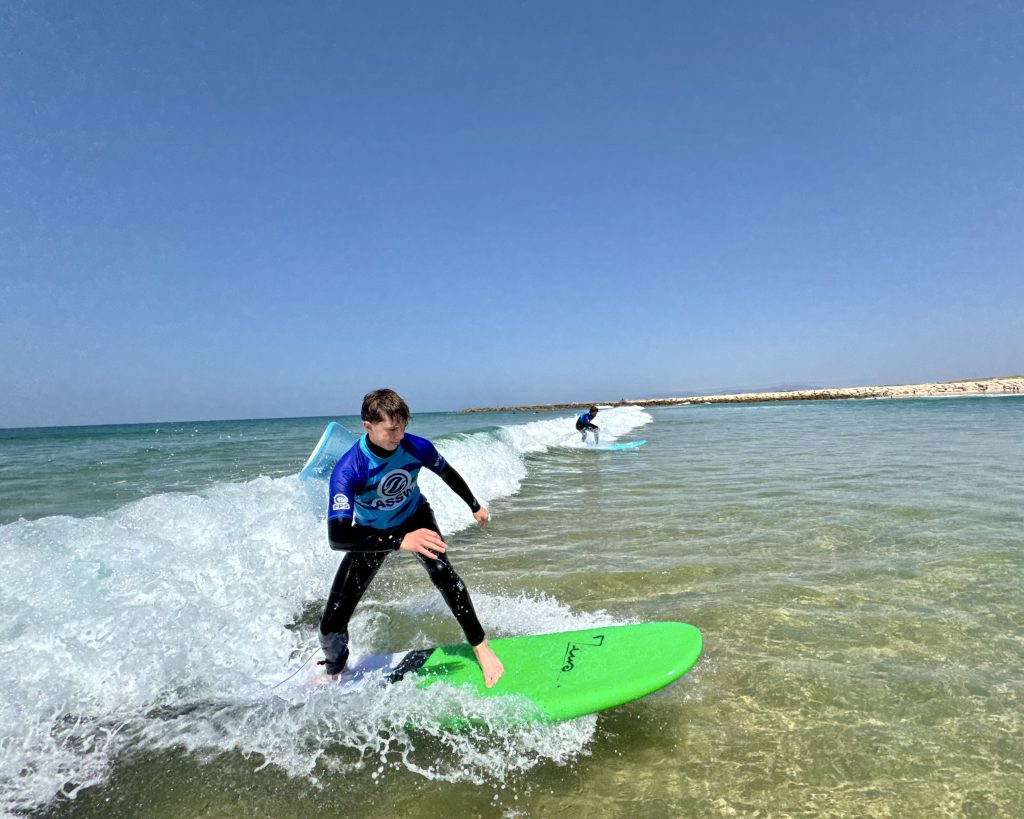
Portugal: Lisbon & Surf Culture
Spain: Tapas, Service & Sea
Greece: Island Turtle Conservation |
First-time travelers, focused experiences |
~ $3,495 |
| 15-16 days |
Italy & Greece
Portugal & Spain |
Multi-country exposure, balanced depth |
~ $6,890 |
| 30 days+ |
Europe Odyssey (Portugal, Spain, Italy, Greece)
Gap Year Options |
Deep immersion, maximum transformation |
$13,680+ |
Duration guidance:
- First-time international travelers: Start with 8 days
- Students with prior travel experience: 2-week programs offer value-to-depth ratio
- Gap year or serious cultural immersion: 30+ days
Student tours have different cost structures depending on the destination, length, and itinerary.
What do European student tours cost?
Rustic Pathways European programs range from $3,395 to $13,680 (plus airfare). Here’s what each price tier includes:
Under $4,000
Programs: Northern Italy Adventure ($3,395), Portugal: Lisbon & Surf Culture ($3,395), Greece: Island Turtle Conservation ($3,495), Spain: Tapas, Service & Sea
Includes: 8-9 days, single-country focus, accommodations, meals, activities, supervision, travel insurance
Best for: Budget-conscious families, first-time travelers, focused experiences
$6,000-$8,000
Programs: Italy & Greece ($6,890), Portugal & Spain ($6,790)
Includes: 14-18 days, two-country itineraries, all above, plus inter-country transport
Best for: Students wanting multi-country exposure without the month-long commitment
$10,000+
Programs: Europe Odyssey: Portugal, Spain, Italy & Greece ($13,680)
Includes: 30 days, four countries, comprehensive cultural immersion, conservation work, maximum transformation potential
Best for: Serious travelers, gap year students, families prioritizing depth over cost
What’s NOT included: International airfare (typically $800-$1,500 round-trip), spending money ($200-$400 recommended), travel visa fees if applicable.
Beyond cost, families should consider student interests when booking a Europe teen tour.
What types of European student tours are available?
Rustic Pathways organizes European programs by primary focus. Most programs blend multiple themes, but here’s the dominant emphasis:
Adventure & Sports
Programs: Portugal: Lisbon & Surf Culture, Germany & Austria: Winter Ski & Snow,
Activities: Surfing, skiing, snowboarding, hiking, water sports
Student fit: Active travelers, athletes, those who learn by doing
Conservation & Service
Programs: Greece: Island Turtle Conservation, Italy & Greece: Cultural Immersion and Turtles
Activities: Sea turtle monitoring, beach patrols, habitat restoration, wildlife education
Student fit: Environmentally-minded students, future marine biologists, service-oriented travelers
Culture & History
Programs: Northern Italy Adventure, Europe Odyssey, Portugal & Spain: Surf, Culture & Culinary Traditions
Activities: Museum visits, cooking classes, historical sites, local family interactions, language practice
Student fit: History enthusiasts, foodies, students seeking academic enrichment
Multi-Country Exploration
Programs: Europe Odyssey (4 countries), Portugal & Spain, Italy & Greece
Activities: Cross-border travel, comparative cultural study, diverse landscapes
Student fit: Students wanting breadth, future study abroad candidates, curious generalists
Regardless of which country or program you choose, several experiential factors make Europe a popular destination for student travel.

A group of students working on a turtle conservation project on a beach in Kefalonia, Greece
Why Is Europe a Top Destination for Student Travel?
Europe ranks as a top student travel destination because its compact geography, cultural density, and safety infrastructure create ideal conditions for educational travel.
- Europe is accessible: Compact geography allows multi-country trips. Trains, buses, and budget-airlines make it easy to visit multiple countries in a single trip.
- Europe brings history to life: Visitors to Europe can explore ancient towns, castles, and renowned history museums.
- Europe offers cultural diversity: Each locale has its particular traditions and customs formed over centuries. Learn flamenco in Spain or discover local customs on the French Riviera. Participating in cultural exchange programs is a great way to experience local traditions.
- European travel enhances language skills: An educational tour means travelers can practice speaking a language in real-world situations, improving their fluency. Language immersion programs help students practice and improve their language skills.
- Europe’s art and architecture: Visitors admire works in the Sistine Chapel, the Louvre, and Gaudí’s creations in Barcelona. Medieval castles and modern structures in Budapest highlight Europe’s variety.
- In Europe, food is culture: Eat Italian pasta, French pastries, or Greek souvlaki.
- Europe inspires personal growth: Exploring new environments builds independence and problem-solving skills.
These conditions create an ideal environment for students to learn and develop while traveling.
What Do Students Gain From Traveling Europe?
Student travel programs in Europe deliver more than unforgettable memories:
- Language confidence through real-world immersion
- Cultural intelligence from living and learning locally
- Independence & resilience through guided exploration
- Global awareness that shapes academic and career paths
These outcomes explain why Europe consistently attracts curious student travelers.