
Student travel is organized educational travel that takes students ages 14 to 18 abroad to learn through service, adventure, conservation, and cultural immersion. A student travel program pairs a destination with structured supervision, real work in a host community, and learning outcomes that a sightseeing trip cannot provide.
Rustic Pathways has run student travel since 1983 and has served 155,829 alumni across 38 countries. This page explains the main program types, what each costs, who can go, safety, and how families can choose the right program.

What are the main types of student travel?
The main types of student travel fall into six categories, defined by length, program structure, and who they are best for.
| Type | What it is | Typical length | Best for |
|---|---|---|---|
| Teen tours | Guided group programs across 38 countries combining service, adventure, and cultural immersion | 8 to 30 days | Ages 14–18 wanting a structured first or repeat trip |
| Service trips | Community projects paired with cultural immersion and verified service hours | 1 to 3 weeks | Students who want service hours for school or college |
| Volunteer abroad | Longer placements embedded in one community at a 4.37:1 staff ratio | 2 to 8 weeks | Students ready for a deeper, longer commitment |
| Gap year | Structured travel for recent high school graduates before college | Quarter, semester, or year | Graduates building skills before university |
| Summer programs | Programs that fill the summer break, friendly to first-time travelers | 1 to 4 weeks | High schoolers planning a summer abroad |
| School group travel | Custom trips built for schools, IB coordinators, and youth organizations | Set by the school | Educators bringing their own group |
Students unsure of where to start can take the two-minute program finder quiz, which matches age and interests to a specific program. The six types all have one thing in common that separates student travel from ordinary trips.
What is student travel?
Student travel is travel built around education and service. A student travel program places a group of students in a host community with trained Program Leaders, a fixed itinerary, and a service project or learning objective.
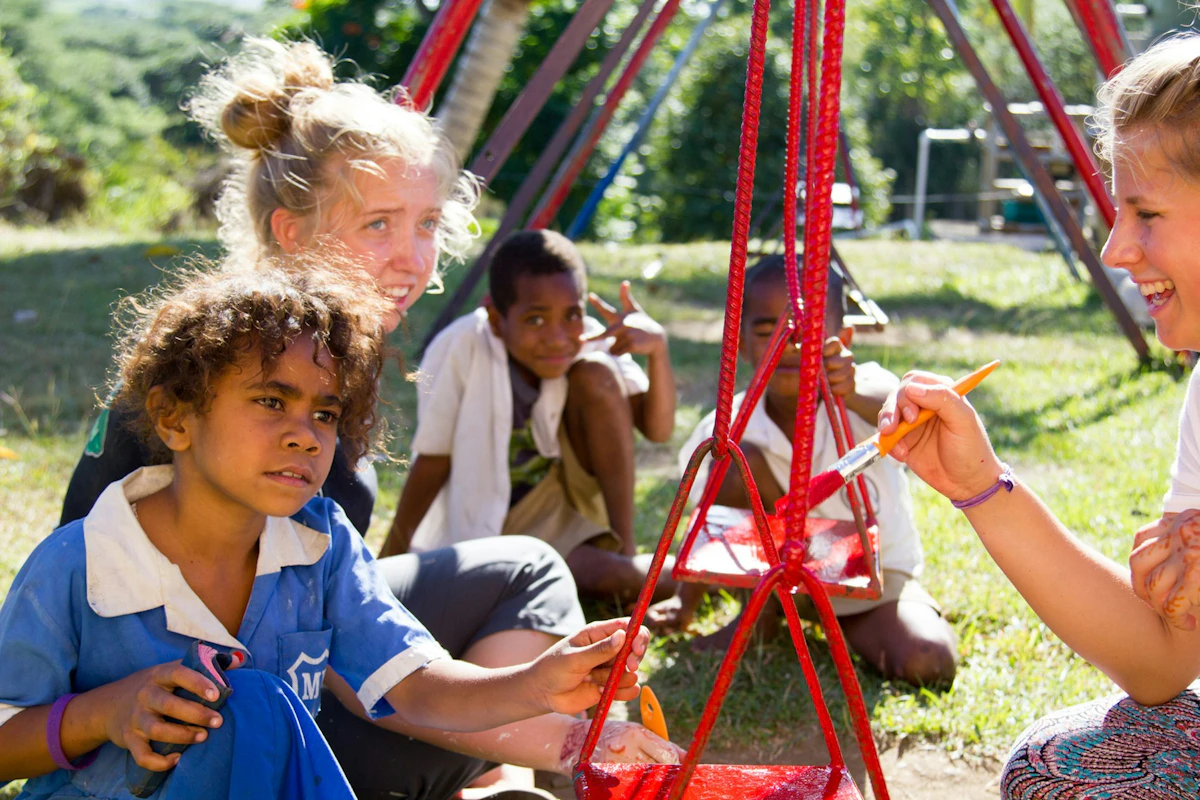
Students live in base houses or with local families, work on community-led projects, and follow a daily structure that builds independence throughout the program. Student involvement, supervision, and learning outcomes separate student travel from a family vacation or a school sightseeing tour.
Students do real work alongside community members instead of watching from a bus. Supervision is continuous and credentialed, with a published student-to-staff ratio, and the experience targets measurable growth that Rustic Pathways tracks through 10 Student Learning Outcomes.
That structure and support carry a cost, which varies by program.
How much do student travel programs cost?
Rustic Pathways student travel programs cost $1,995 to $13,680, depending on destination, duration, and program type. Tuition covers accommodations, meals, in-country transportation, activities, and 24/7 supervision. International airfare is not included.
Program cost depends on trip duration and travel distance more than anything else. A short program in Costa Rica costs less than a multi-week program in Thailand. The full pricing breakdown, refund deadlines, payment plans, scholarships, and fundraising options are published on the student travel program costs page.
What a family pays also depends on the trip duration and who is traveling.
Who is student travel for?
Student travel is for students aged 14 to 18, with a small number of programs each year for graduates (18+), and programs for younger travelers (ages 12 to 14) under enhanced supervision. Rustic Pathways groups students by age, so a 14-year-old travels with peers aged 14 to 17, not with 18-year-olds.
Student travel fits several kinds of families. First-time travelers do well on shorter, highly structured summer programs and summer camps for teens. Students who want deeper immersion choose longer volunteer placements, and recent graduates use a gap year to build skills before college.
For college-bound students, some programs also offer academic credit.
How safe is student travel?
Student travel safety depends on the operator’s staff ratio, vetting, and medical oversight, not on the destination alone. Rustic Pathways builds every program on the S·I·T Framework: Safety, Impact, and Transformation.
Programs maintain a median of one staff member per 4.37 students (4.37:1), with no program exceeding 7 students per staff member (7:1). This is 56% fewer students per staff member than the ACA’s 10:1 teen overnight standard.
The average parent notification time after any incident is 27 minutes. And in 2025, 87.7% of all incidents were classified as GREEN (minor or below), with 11.1% as YELLOW and 0.6% as RED.
Rustic Pathways is one of the few student travel operators that publishes a supervision ratio, an average notification time, and a full incident-severity breakdown. Most companies in the industry do not publish incident data.
Medical oversight at Rustic Pathways is led by Dr. William R. Smith, a board-certified emergency physician, who has served as Medical Director since 2015. Every Program Leader passes background screening and completes 40+ hours of in-person preparation. The complete year-by-year incident data is published on the Rustic Pathways safety page.
With safety as the constant, the remaining decision is which program fits.
How do families choose a student travel program?
Families choose a student travel program by deciding what kind of experience fits the student, then narrowing by destination, length, and cost.
Starting with the type of experience works better than starting with the country, because the same destination can host a one-week service program and a four-week immersion.
Decide whether the goal is service hours, adventure, a longer immersion, or a gap year, then set a length and a budget and compare two or three programs that fit. The student travel company comparison shows staff ratios, safety records, and all-in pricing side by side so families can check one operator against another.
Once a program is chosen, families can begin planning.
How does Rustic Pathways help families plan student travel?
Rustic Pathways helps families plan student travel from program selection through pre-departure preparation. After a family enrolls, the Rustic Pathways team handles medical forms, travel documents, group flight options, and packing guidance.
The how-to-plan guide walks through timing, decisions, and a sample day hour by hour, and points to the parent guide and flight support that follow enrollment. Trip preparation is backed by Rustic Pathways’s extensive track record.
Why Rustic Pathways for student travel
Rustic Pathways is an educational travel company founded in 1983 that has sent 155,829 students abroad across 38 countries. Rustic Pathways’s student outcomes have been studied by Boston College’s Purpose Lab, and the advisory board includes Stanford GSB faculty. More than 321 schools and institutions partner with Rustic Pathways.
Two outside signals support the record. Rustic Pathways holds strong independent ratings: 4.8 on Google, 4.9 on Trustpilot and GoOverseas, and 4.7/5 on GoAbroad. Rustic Pathways also publishes its staff ratio, full incident data, and complete pricing, which most operators don’t disclose.
More information on the company’s history and leadership is available on the about page.
Explore student travel
Every part of the student travel guide is grouped by what families need next.
Start here: what student travel is, the benefits of student travel, student travel program types, how to choose a program, and what to expect day to day.
Cost and budget: student travel program costs, the student travel budget hub, and where alumni go to college.
Prepare for the trip: the preparation guide, the application process, the visa guide, homestays, language and culture, and language immersion.
On the trip: teen life on a program, traveling with teens, volunteering on student travel, and what service learning is.
By audience: the parent guide, middle school summer travel, high school volunteer travel, best summer programs for high schoolers, and educational student travel.
Compare and learn more: compare student travel options, why choose Rustic Pathways, the history of student travel, student travel statistics and trends, and the student travel FAQ.
Also useful: need-based scholarships, the fundraising guide, most affordable programs, flights and travel support, and the best destinations for teens.