School Trips to Seattle–Olympic
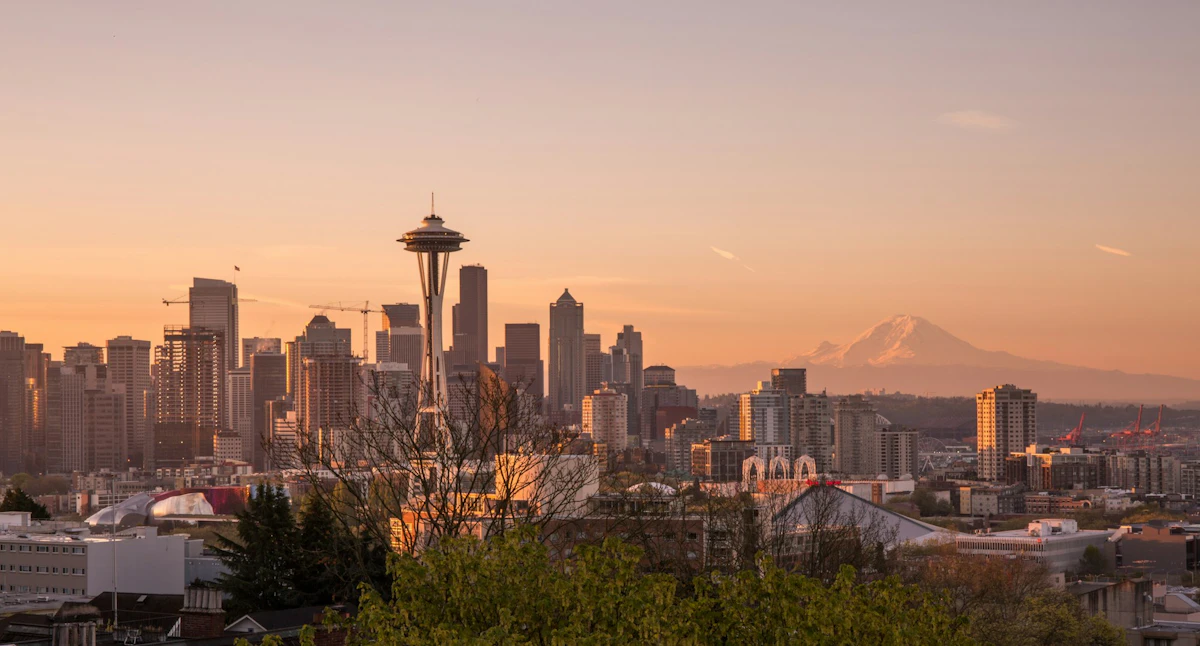
Explore Pacific Northwest forests, aviation, marine ecosystems, or Seattle’s art and history with one school group on your dates.
Choose a 5–7-day program from $2,010–$3,255 per student, excluding airfare.
No commitment, and no sales call unless you ask for one.
4.9on Trustpilot and Google
- $2,010–$3,255
- per student, excluding airfare
- 5–7 days
- four itineraries
- Your school’s dates
- curriculum and travel window
- 1 free teacher spot
- for every 8 paying students
- 321 schools
- have partnered since 2012, each counted once

Compare school trips to Seattle and the Olympic Peninsula
Choose a Seattle base for museums and Puget Sound, or travel to Port Angeles for Olympic National Park fieldwork.
Compare the four itineraries side by side
| Itinerary | Pacific Northwest Forests and Watersheds | Seattle Aviation and Science | Puget Sound Marine and Coastal Ecology | Seattle Arts, History and Design |
|---|---|---|---|---|
| Length | 7 days | 6 days | 5 days | 5 days |
| Price per student | $3,255, excluding airfare | $2,410, excluding airfare | $2,010, excluding airfare | $2,010, excluding airfare |
| Learning focus | Forest ecology and watershed restoration | Aviation, engineering, and marine science | Marine ecology and Coast Salish heritage | Art, immigration history, and architecture |
| Overnight bases | Seattle 2 · Port Angeles 3 · Seattle 1 | Seattle 5 nights | Seattle 4 nights | Seattle 4 nights |
| Best for | Grades 6–12; July–early September for outdoor fieldwork | Grades 6–12; city learning across the school year | Grades 6–12; spring–early autumn with wet-weather alternatives | Grades 6–12; museum visits throughout the school year |
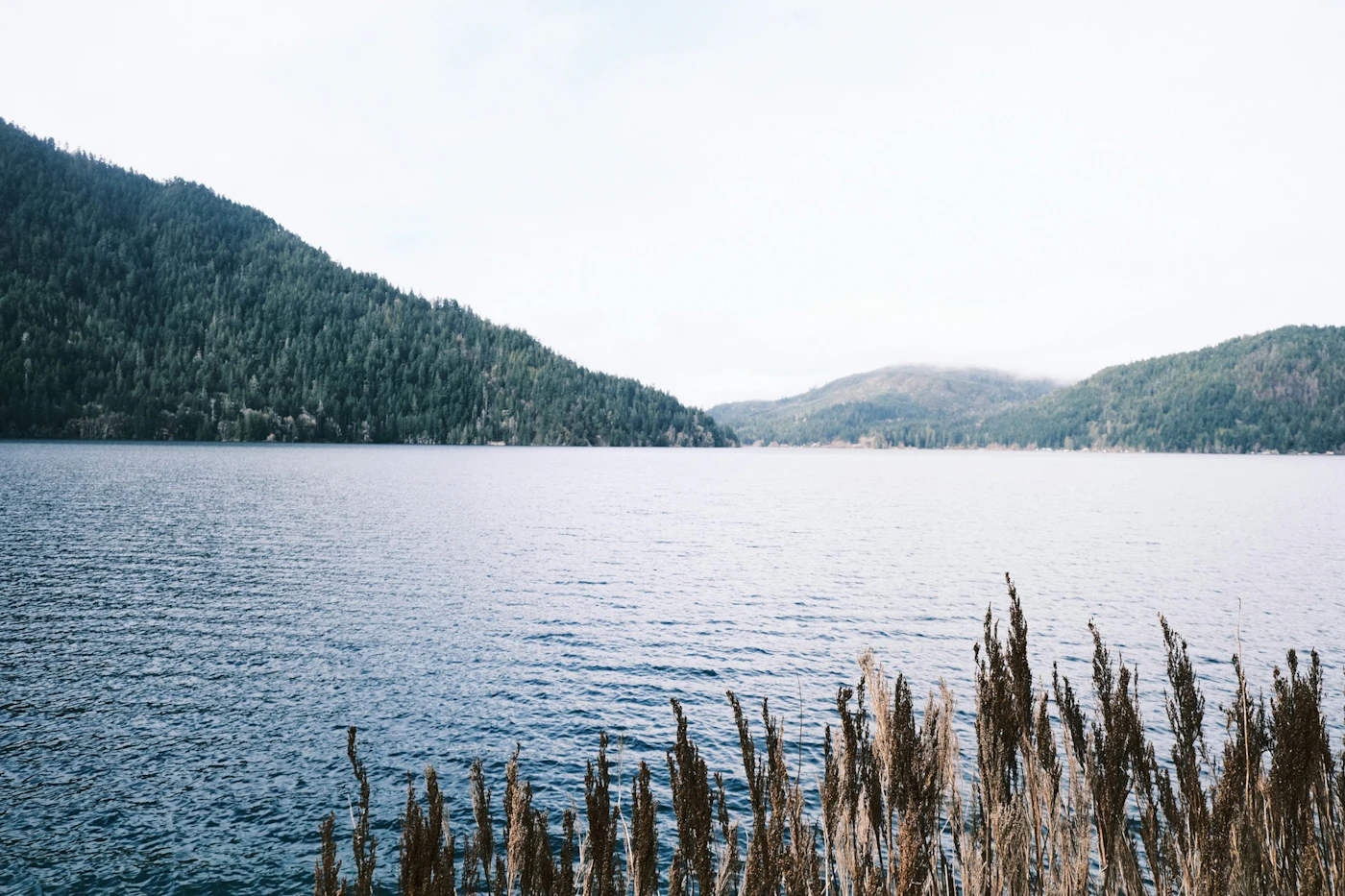
Pacific Northwest Forests and Watersheds
Seven days between Seattle and the Olympic Peninsula, following water from the city storm drain to Lake Crescent and the restored Elwha.
Choose this program- Seattle2 nights
- Port Angeles3 nights
- Seattle1 night
Your seven-day itinerary
-
Day 1
Arrive and settle in
The group meets its leaders at Seattle and settles in, with nothing compulsory on the first evening.
MorningArrive at Seattle–Tacoma International Airport (SEA); meet Program Leaders.AfternoonTransfer, hotel check-in, and recovery. Short local orientation only if timing allows.EveningDinner and a relaxed introduction to the week; no compulsory arrival-day attraction.- Route
- The agreed Seattle gateway to the hotel, by private group transfer.
- Travel
- Private group transfer
- Overnight
- Program-approved lodging in Seattle; twin student rooms, teacher singles.
- Meals
- All meals required by the arrival and departure timing are included, with drinking water.
- Physical demand
- Low effort; walking distances and support needs are assessed before booking.
-
Day 2
Water and the city
Urban water first, so the runoff and habitat seen here can be set against the forest work later in the week.
MorningVisit Seattle Aquarium, checking in at Pier 59; compare local marine habitats with the tropical Ocean Pavilion.AfternoonLunch and a leader-led waterfront investigation: trace urban runoff from street drains toward Puget Sound. A specialist session requires a separate confirmed booking.EveningDinner and rest.- Route
- The Seattle waterfront and the aquarium, on foot.
- Travel
- Charter transport and on foot
- Overnight
- Program-approved lodging in Seattle; twin student rooms, teacher singles.
- Meals
- Breakfast, lunch, and dinner are included, with drinking water.
- Physical demand
- Moderate effort; walking distances and support needs are assessed before booking.
-
Day 3
To the Olympic Peninsula
Travel from Seattle to Port Angeles in daylight, then begin mapping the peninsula’s shorelines and watersheds.
MorningDaylight transfer by confirmed coach route to Port Angeles, allowing 4–5 hours with ferry/traffic contingencies if applicable.AfternoonLocal shoreline orientation and hotel check-in; map the connections between Puget Sound and the Olympic Peninsula.EveningDinner and free time.- Route
- Seattle to Port Angeles by coach, with ferry if selected, then a local shoreline walk.
- Travel
- Coach transfer with ferry if selected; allow 4–5 hours including queues and breaks.
- Overnight
- Program-approved lodging in Port Angeles; twin student rooms, teacher singles.
- Meals
- Breakfast, lunch, and dinner are included, with drinking water.
- Physical demand
- Moderate effort; walking distances and support needs are assessed before booking.
-
Day 4
Lake and forest
Study Lake Crescent’s forest on a short lowland trail, recording changes in vegetation, moisture, and light.
MorningLake Crescent forest study with an authorized educator and short established trail.AfternoonPicnic and repeat observations beside the lake, then return to Port Angeles. Review walking distances and support needs before booking.EveningDinner; brief optional reflection.- Route
- Port Angeles to Lake Crescent and back, by charter transport and on foot.
- Travel
- Charter transport and on foot
- Overnight
- Program-approved lodging in Port Angeles; twin student rooms, teacher singles.
- Meals
- Breakfast, lunch, and dinner are included, with drinking water.
- Physical demand
- Moderate effort; walking distances and support needs are assessed before booking.
-
Day 5
A river restored
Compare Elwha watershed observations with historic dam-removal records to examine evidence of ecological recovery.
MorningObserve the Elwha watershed at open public sites near Madison Falls; check current Olympic National Park access before departure.AfternoonCompare historic dam-removal records and current observations. The road beyond Madison Falls is closed to vehicles; no upper-valley access is promised.EveningDinner and rest.- Route
- Port Angeles to accessible Elwha watershed sites, by charter transport and on foot.
- Travel
- Charter transport and on foot
- Overnight
- Program-approved lodging in Port Angeles; twin student rooms, teacher singles.
- Meals
- Breakfast, lunch, and dinner are included, with drinking water.
- Physical demand
- Moderate effort; walking distances and support needs are assessed before booking.
-
Day 6
Return to Seattle
Bring the lake, forest, and river observations together before the daylight return to Seattle.
MorningMorning local field synthesis, then daylight return to Seattle.AfternoonLunch during the return journey and Seattle hotel check-in.EveningFarewell dinner.- Route
- Port Angeles to the Seattle hotel by coach, with ferry if selected.
- Travel
- Coach transfer with ferry if selected; allow 4–5 hours including queues and breaks.
- Overnight
- Program-approved lodging in Seattle; twin student rooms, teacher singles.
- Meals
- Breakfast, lunch, and dinner are included, with drinking water.
- Physical demand
- Moderate effort; walking distances and support needs are assessed before booking.
-
Day 7
Departure
Breakfast, packing, and the transfer to the gateway, with meals as the flight timing requires.
MorningBreakfast, packing, and check-out.AfternoonTransfer to the agreed Seattle gateway; destination meals included when flight timing requires.EveningNo group program after departure.- Route
- The Seattle hotel to the agreed gateway, by private group transfer.
- Travel
- Private group transfer
- Overnight
- None on program: the group departs on day 7.
- Meals
- All meals required by the arrival and departure timing are included, with drinking water.
- Physical demand
- Low effort; walking distances and support needs are assessed before booking.

Seattle Aviation and Science
Study aircraft at the Museum of Flight, test ideas at Pacific Science Center, and connect Puget Sound to Seattle’s transport systems.
Choose this program- Seattle5 nights
Your 6-day itinerary
-
Day 1
Arrive in Seattle
Meet Program Leaders at Seattle–Tacoma International Airport (SEA), then settle into a downtown or Seattle Center hotel.
MorningArrive at SEA; meet the group and Program Leaders.AfternoonTransfer and check in. Take a short neighborhood orientation if flight timing allows.EveningDinner, group agreements, and an introduction to the Pacific Northwest.- Route
- SEA to the Seattle hotel; no timed attraction on arrival day.
- Travel
- Private group transfer
- Overnight
- Seattle; students in shared rooms with individual beds, teachers in private rooms.
- Meals
- Breakfast, lunch, and dinner with drinking water; on flight days, meals required by the agreed timing.
- Physical demand
- Low effort; walking distances and support needs are assessed before booking.
-
Day 2
Aircraft design at the Museum of Flight
Investigate the trade-offs among lift, materials, and passenger capacity at the Museum of Flight beside Boeing Field.
MorningExplore the Great Gallery and Space Gallery, including the Space Shuttle Full Fuselage Trainer exhibit.AfternoonVisit the Aviation Pavilion’s Concorde and Air Force One exhibits. Teams sketch and compare wing designs using museum observations.EveningShare one aircraft-design trade-off in a short team presentation.- Route
- Seattle hotel to the Museum of Flight and back; allow about 45–75 minutes each way in traffic.
- Travel
- Coach and walking
- Access
- Museum workshops and trainer crew-compartment tours need separate bookings. Aircraft interior access can change; no wind-tunnel or docking session is included.
- Overnight
- Seattle; students in shared rooms with individual beds, teachers in private rooms.
- Meals
- Breakfast, lunch, and dinner with drinking water; on flight days, meals required by the agreed timing.
- Physical demand
- Moderate effort; walking distances and support needs are assessed before booking.
-
Day 3
Science and urban systems at Seattle Center
Explore physics at Pacific Science Center, then investigate how Seattle moves people through a growing city.
MorningPacific Science Center exhibits and a reserved planetarium show or IMAX screening.AfternoonStudy the Space Needle’s structure and skyline; ride the Seattle Center Monorail and compare its route with the Link light rail network.EveningTeacher-led coding or paper-prototype challenge: design a control system that makes city travel easier.- Route
- Seattle Center attractions on foot; short Monorail ride and hotel transfer.
- Travel
- Coach and walking
- Access
- Reserve science-center groups at least two weeks ahead. Planetarium capacity is 40 total; larger groups rotate. The show choice and Space Needle admission must be confirmed.
- Overnight
- Seattle; students in shared rooms with individual beds, teachers in private rooms.
- Meals
- Breakfast, lunch, and dinner with drinking water; on flight days, meals required by the agreed timing.
- Physical demand
- Moderate effort; walking distances and support needs are assessed before booking.
-
Day 4
Puget Sound from ferry to aquarium
Cross Puget Sound to Bainbridge Island and compare shoreline observations with marine habitats at Seattle Aquarium.
MorningEarly ferry to Bainbridge Island; waterfront observation and return crossing.AfternoonSeattle Aquarium, including Ocean Pavilion: compare Salish Sea food webs with tropical reef ecosystems.EveningWaterfront dinner and a diagram linking rivers, cities, and the sea.- Route
- Seattle–Bainbridge walk-on ferry, then Seattle waterfront; crossing is about 35 minutes each way plus boarding queues.
- Travel
- Ferry and walking
- Access
- Use the morning for the ferry and island waterfront only. Aquarium group check-in is at Pier 59; this is a museum visit, not a promised staff-led lab.
- Overnight
- Seattle; students in shared rooms with individual beds, teachers in private rooms.
- Meals
- Breakfast, lunch, and dinner with drinking water; on flight days, meals required by the agreed timing.
- Physical demand
- Moderate effort; walking distances and support needs are assessed before booking.
-
Day 5
Natural history and Seattle’s food economy
Read Northwest natural and cultural history at the Burke Museum, then investigate the city’s landscape and market economy.
MorningBurke Museum of Natural History and Culture on the University of Washington campus: fossils, Northwest Native art, and visible working collections spaces.AfternoonKerry Park skyline study, then a fixed-budget food activity at Pike Place Market. Compare prices, sourcing, and the choices within a lunch budget.EveningPresent one proposal for a more sustainable Seattle neighborhood.- Route
- Seattle hotel to UW, Kerry Park, and Pike Place Market by coach; allow a full day with traffic and meal breaks.
- Travel
- Coach and walking
- Access
- Book Burke youth groups at least three weeks ahead; allow 90 minutes and one adult per seven students. Extra adults may affect the quote. School visits are unavailable on Free First Thursday. Lab viewing does not include entering labs or meeting a researcher.
- Overnight
- Seattle; students in shared rooms with individual beds, teachers in private rooms.
- Meals
- Breakfast, lunch, and dinner with drinking water; on flight days, meals required by the agreed timing.
- Physical demand
- Moderate effort; walking distances and support needs are assessed before booking.
-
Day 6
Pioneer Square and the gold rush economy
Connect Seattle’s growth to trade and migration through Pioneer Square and the Klondike Gold Rush National Historical Park’s Seattle unit.
MorningOne-hour reserved Klondike school visit and a Pioneer Square history walk; trace links with Alaska and the Yukon.AfternoonFinal student presentations, then transfer to SEA for a late-afternoon or evening flight.EveningNo group program after departure.- Route
- Pioneer Square to SEA; reserve the morning for learning and allow airport check-in time.
- Travel
- Coach and walking
- Access
- This morning requires a suitably late flight. An earlier departure requires moving the history session to another day and revising that day’s stops.
- Overnight
- None on program: the group departs.
- Meals
- Breakfast, lunch, and dinner with drinking water; on flight days, meals required by the agreed timing.
- Physical demand
- Low effort; walking distances and support needs are assessed before booking.
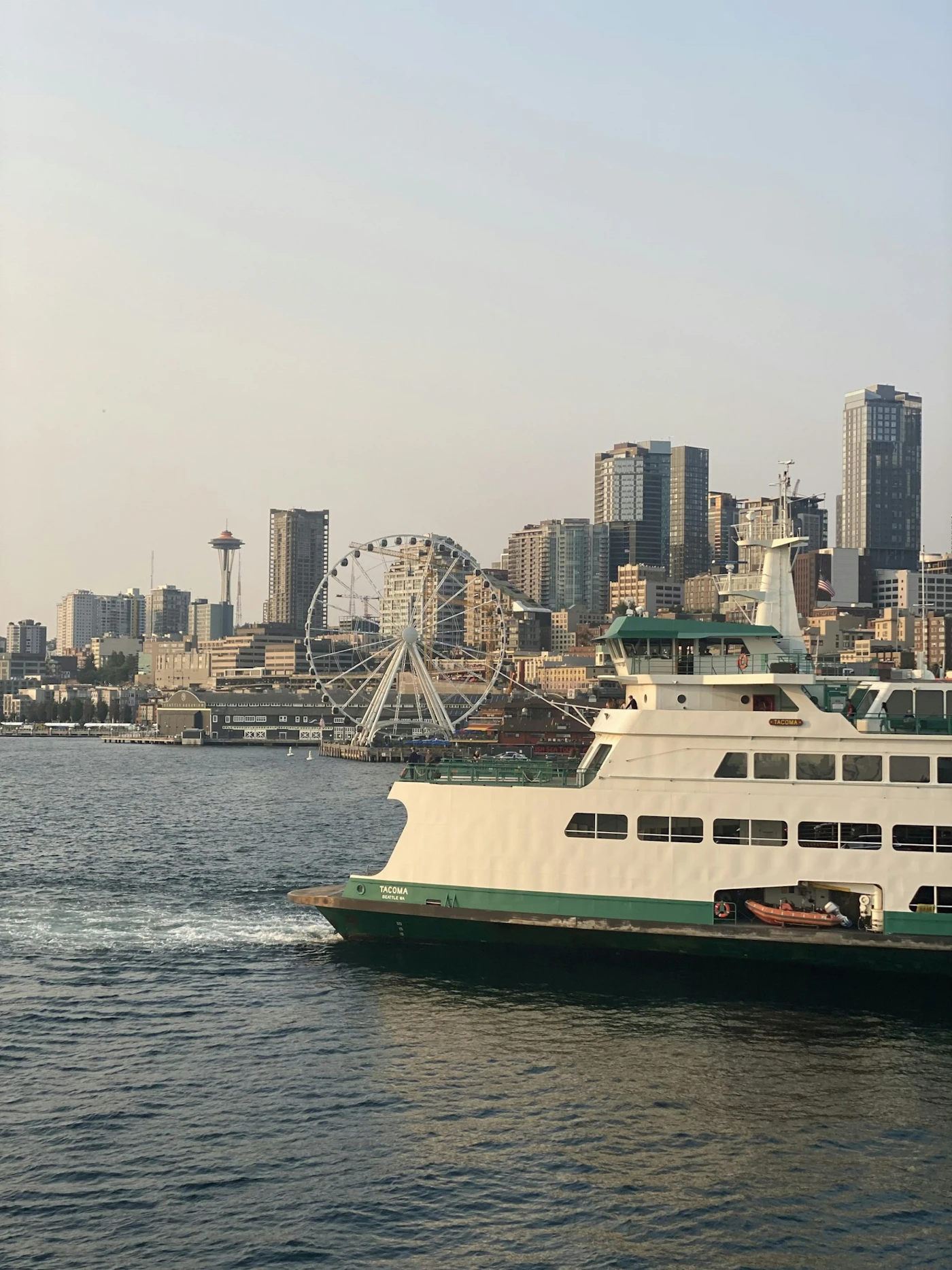
Puget Sound Marine and Coastal Ecology
Follow the Salish Sea from the Seattle waterfront to Bainbridge Island, Suquamish, and the Ballard fish ladder, using observations to examine coastal stewardship.
Choose this program- Seattle4 nights
Your 5-day itinerary
-
Day 1
Arrive at Sea-Tac for the marine week
Meet Program Leaders at Seattle–Tacoma International Airport (SEA), then settle into a downtown or Seattle Center hotel.
MorningArrive at SEA; meet the group and Program Leaders.AfternoonTransfer and check in. Take a short neighborhood orientation if flight timing allows.EveningDinner, group agreements, and an introduction to the Pacific Northwest.- Route
- SEA to the Seattle hotel; no timed attraction on arrival day.
- Travel
- Private group transfer
- Overnight
- Seattle; students in shared rooms with individual beds, teachers in private rooms.
- Meals
- Breakfast, lunch, and dinner with drinking water; on flight days, meals required by the agreed timing.
- Physical demand
- Low effort; walking distances and support needs are assessed before booking.
-
Day 2
Marine habitats and a working harbor
Compare marine food webs with human uses of Elliott Bay on Seattle’s waterfront.
MorningSeattle Aquarium at Pier 59 and Ocean Pavilion: connect Puget Sound habitats to wider ocean systems.AfternoonTake an Argosy harbor cruise on Elliott Bay, observing port activity and the shoreline. Discuss published water-quality data back on land.EveningPike Place area dinner and a waterfront infrastructure sketch.- Route
- Seattle waterfront on foot, with a harbor cruise boarding buffer.
- Travel
- Walking and harbor boat
- Access
- Group aquarium admission and the commercial cruise are reserved separately. Neither includes an onboard water-quality laboratory.
- Overnight
- Seattle; students in shared rooms with individual beds, teachers in private rooms.
- Meals
- Breakfast, lunch, and dinner with drinking water; on flight days, meals required by the agreed timing.
- Physical demand
- Moderate effort; walking distances and support needs are assessed before booking.
-
Day 3
Bainbridge shorelines and Suquamish stories
Study a Puget Sound shoreline at Fay Bainbridge Park, then learn Coast Salish history through the Suquamish Museum’s own interpretation.
MorningEarly Seattle–Bainbridge ferry and a short shoreline study at Fay Bainbridge Park; continue to the museum before lunch.AfternoonReserved Suquamish Museum school visit, allowing 1–2 hours per rotation, with picnic lunch around the booked session. Compare shoreline notes with the museum’s account of place and community.EveningReturn ferry and Seattle dinner; shoreline reflection journal.- Route
- Bainbridge ferry, Fay Bainbridge Park, Suquamish Museum, and return. Reserve the full day; ferry crossing is 35 minutes each way plus vehicle queues.
- Travel
- Coach, ferry, and short walks
- Access
- School visits run Wednesday–Friday with three weeks’ notice: 30 students per rotation, up to two rotations, and 60 students per day. Groups above 30 need an earlier museum arrival, shorter Fay study, and two confirmed rotations; above 60 needs a revised day plan. Optional museum activities cost extra. Ferries asks for 72-hour group notice; vehicle space is not reservable.
- Overnight
- Seattle; students in shared rooms with individual beds, teachers in private rooms.
- Meals
- Breakfast, lunch, and dinner with drinking water; on flight days, meals required by the agreed timing.
- Physical demand
- Moderate effort; walking distances and support needs are assessed before booking.
-
Day 4
Urban habitats, locks, and salmon
Investigate how green space, waterways, and engineered barriers shape habitat within Seattle.
MorningLeader-led forest and meadow walk at Discovery Park; record habitat changes along an agreed short trail.AfternoonVisit the Hiram M. Chittenden Locks, known as Ballard Locks, and the fish ladder. Use published Lake Washington Ship Canal data to compare freshwater and marine conditions.EveningBuild a salmon lifecycle diagram and distinguish direct observations from conclusions supported by records.- Route
- Seattle to Discovery Park and Ballard Locks, returning to the hotel.
- Travel
- Coach and walking
- Access
- Fish sightings depend on migration and conditions. Reserve organized Locks tours for groups of eight or more. Teen walks use the trip’s leaders; the city’s school program serves pre-K–grade 5. Any water sampling requires a separately approved method and access plan.
- Overnight
- Seattle; students in shared rooms with individual beds, teachers in private rooms.
- Meals
- Breakfast, lunch, and dinner with drinking water; on flight days, meals required by the agreed timing.
- Physical demand
- Moderate effort; walking distances and support needs are assessed before booking.
-
Day 5
Field notes packed, transfer to Sea-Tac
Pack up the field notes and transfer to the airport.
MorningBreakfast, final reflection, and check-out.AfternoonTransfer to SEA with time for airport check-in.EveningNo group program after departure.- Route
- Seattle hotel to SEA.
- Travel
- Private group transfer
- Overnight
- None on program: the group departs.
- Meals
- Breakfast, lunch, and dinner with drinking water; on flight days, meals required by the agreed timing.
- Physical demand
- Low effort; walking distances and support needs are assessed before booking.
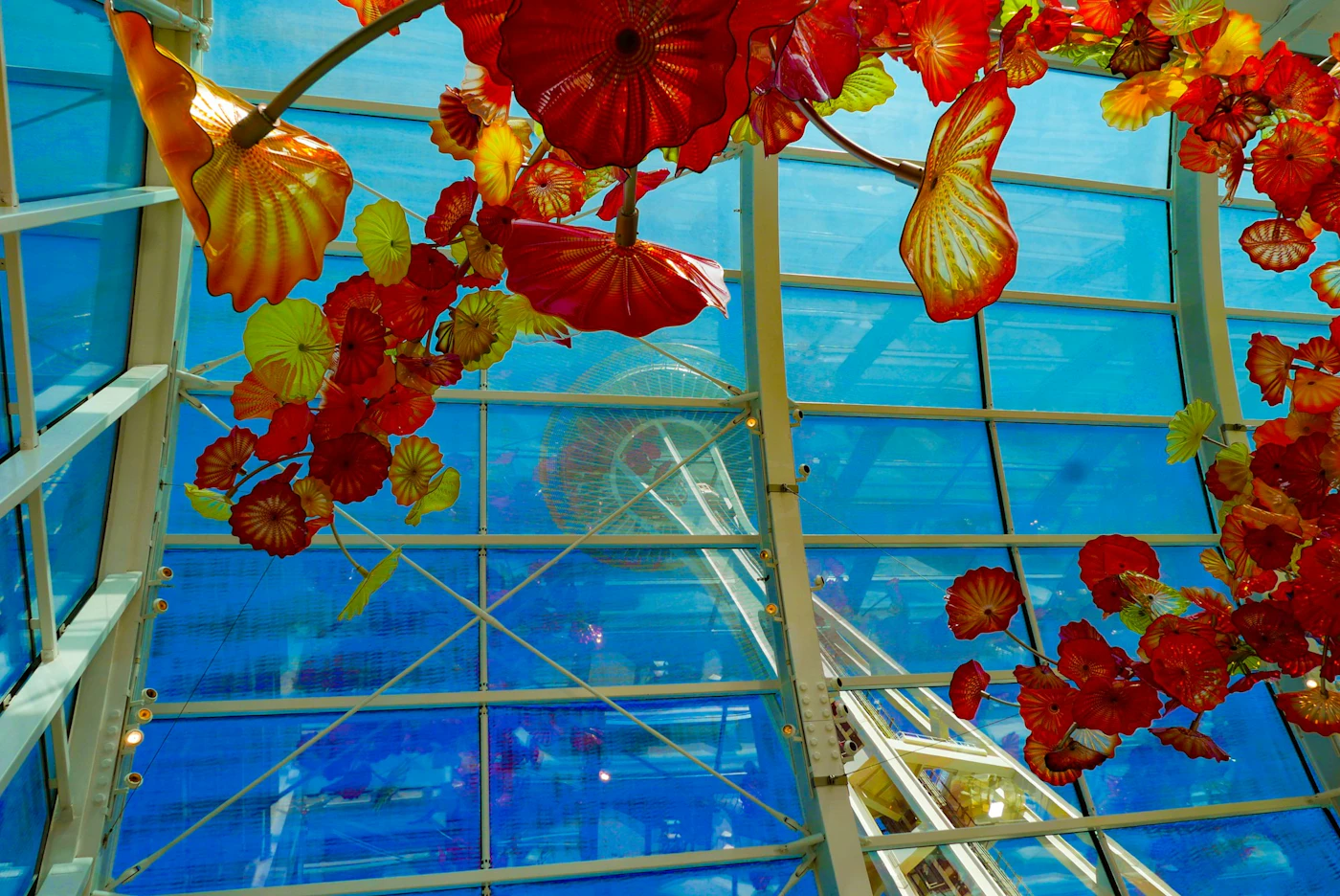
Seattle Arts, History and Design
Read Seattle through music, glass art, immigration stories, and public architecture, moving from Seattle Center to Lake Union and the Chinatown–International District.
Choose this program- Seattle4 nights
Your 5-day itinerary
-
Day 1
Arrive in Seattle for arts and design
Meet Program Leaders at Seattle–Tacoma International Airport (SEA), then settle into a downtown or Seattle Center hotel.
MorningArrive at SEA; meet the group and Program Leaders.AfternoonTransfer and check in. Take a short neighborhood orientation if flight timing allows.EveningDinner, group agreements, and an introduction to the Pacific Northwest.- Route
- SEA to the Seattle hotel; no timed attraction on arrival day.
- Travel
- Private group transfer
- Overnight
- Seattle; students in shared rooms with individual beds, teachers in private rooms.
- Meals
- Breakfast, lunch, and dinner with drinking water; on flight days, meals required by the agreed timing.
- Physical demand
- Low effort; walking distances and support needs are assessed before booking.
-
Day 2
Storytelling and form at Seattle Center
Examine how musicians, designers, and artists use sound, material, and space to tell a story.
MorningMuseum of Pop Culture (MoPOP): investigate music, science fiction, and media storytelling through exhibits.AfternoonVisit Chihuly Garden and Glass to sketch color, form, and the behavior of glass, then ascend the Space Needle for a city-design observation.EveningCompare a museum exhibit with the view from the tower in a short visual journal.- Route
- MoPOP, Chihuly, and the Space Needle form one walkable Seattle Center cluster.
- Travel
- Walking and hotel transfer
- Access
- Reserve school-group admission in advance. Chihuly admission is included in this route, but student glassblowing is not.
- Overnight
- Seattle; students in shared rooms with individual beds, teachers in private rooms.
- Meals
- Breakfast, lunch, and dinner with drinking water; on flight days, meals required by the agreed timing.
- Physical demand
- Moderate effort; walking distances and support needs are assessed before booking.
-
Day 3
Industry, migration, and community history
Compare Seattle’s industrial growth at Lake Union with Asian American experiences in the Chinatown–International District.
MorningTwo-hour school visit at the Museum of History & Industry (MOHAI), using its required student exploration activity.AfternoonReserved Wing Luke Museum school tour; examine immigration, neighborhood change, and whose stories a city preserves.EveningChinatown–International District dinner and a short evidence-based reflection on one museum story.- Route
- Lake Union to the Chinatown–International District by coach, allowing traffic and lunch time.
- Travel
- Coach and walking
- Access
- MOHAI school-year visits run Monday, Thursday, and Friday and require one adult per six students. Extra adults beyond the complimentary-teacher allowance may add cost. Wing Luke school tours are by appointment.
- Overnight
- Seattle; students in shared rooms with individual beds, teachers in private rooms.
- Meals
- Breakfast, lunch, and dinner with drinking water; on flight days, meals required by the agreed timing.
- Physical demand
- Moderate effort; walking distances and support needs are assessed before booking.
-
Day 4
Public art and civic architecture
Study how public spaces invite people to move, gather, and learn.
MorningOlympic Sculpture Park, Seattle Art Museum’s waterfront park: sketch how sculpture, landscape, and access shape a shared space.AfternoonYouth self-guided exploration of Seattle Central Library. Analyze the design by Rem Koolhaas and Joshua Prince-Ramus with OMA and LMN; teams propose one improvement to a civic space.EveningExhibit students’ sketches and explain each design choice in a two-minute presentation.- Route
- Olympic Sculpture Park to Central Library by coach or an agreed urban walking route.
- Travel
- Coach and walking
- Access
- Allow about 90 minutes at the park and one hour at the library. Divide library exploration into supervised teams of five or six; notify the library for groups over 35.
- Overnight
- Seattle; students in shared rooms with individual beds, teachers in private rooms.
- Meals
- Breakfast, lunch, and dinner with drinking water; on flight days, meals required by the agreed timing.
- Physical demand
- Moderate effort; walking distances and support needs are assessed before booking.
-
Day 5
Pack up and depart Seattle
Pack up the field notes and transfer to the airport.
MorningBreakfast, final reflection, and check-out.AfternoonTransfer to SEA with time for airport check-in.EveningNo group program after departure.- Route
- Seattle hotel to SEA.
- Travel
- Private group transfer
- Overnight
- None on program: the group departs.
- Meals
- Breakfast, lunch, and dinner with drinking water; on flight days, meals required by the agreed timing.
- Physical demand
- Low effort; walking distances and support needs are assessed before booking.
More Seattle learning options
Mount Rainier: add a full day
Study volcanoes, glaciers, and plate tectonics in Mount Rainier National Park, linking mountain landscapes to downstream water supplies. Add a day and Seattle night before departure; allow an early start and roughly 3–3½ hours each way, plus a short trail selected for conditions. July–August offers the strongest prospect of higher-elevation walking, though snow can linger into July. No glacier travel is included. Extra lodging, charter time, and park costs require a revised quote.
Everett: Boeing manufacturing and design
Replace the Burke and market day, or add a full day, for Boeing Future of Flight in Everett. Compare assembly systems on the 80-minute factory tour with exhibits in the Gallery’s Engineering Zone. Follow lunch on the Everett Waterfront with a teacher-led robotics or drone-design-on-paper challenge; return for dinner in North Seattle. Allow 1–1½ hours each way in traffic. The factory requires students to be at least 4 feet tall and arrive 30 minutes early; access and revised pricing must be confirmed. Boeing’s current exhibit space is the Engineering Zone; no provider-led drone or robotics workshop is included.
Museum of Flight: a reserved aerospace workshop
Replace part of the museum gallery day with Elements of Flight: students complete a preflight check on a real aircraft and apply their learning in a flight simulator. This two-hour program serves grade 4 and above, with 36 participants maximum and one adult per ten students; larger groups need separate sessions. Request at least two weeks ahead. The grade-6-and-up Challenger program takes 2½ hours. Either changes the activity allowance and price.
Bainbridge: art or an independently arranged garden visit
Replace Fay Bainbridge Park with a 90-minute self-guided visit to Bainbridge Island Museum of Art to examine regional artists’ use of place and material. Register in advance; its self-guided limit is 25 including adults, so larger groups need an approved rotation and revised timing.
Bloedel Reserve offers forest and garden study, but its group policy prohibits tour resellers. Admission is excluded from Rustic tuition. An independent visit requires the Reserve’s specific written acceptance of the school’s arrangements, plus agreement on coach access and revised timing.
Pioneer Square: Seattle’s Underground Tour
Replace part of the arts route’s public-space day with the 75-minute Underground Tour, studying how Seattle rebuilt after the Great Fire of 1889. Add transit and boarding time; check stair access before booking. School-group arrangements and the changed admission cost require a revised quote.
Amazon Spheres: urban biodiversity and design
Replace an hour of urban observation with an exterior study of the Amazon Spheres, comparing workplace design and plant environments. Interior public visits are limited to the first and third Saturdays, with reservations released 15 days ahead; a group’s tickets are not guaranteed. An interior visit would replace another activity and require confirmed tickets and timing. No Amazon staff tour is included.
Computing: Pacific Science Center and a design challenge
Keep computing and microprocessor questions in the Pacific Science Center day, followed by a teacher-led coding or control-system design activity. Living Computers: Museum + Labs is closed, and its collection has moved; it is not a visit option. Museum exhibits support the science visit, while the school’s challenge supplies the computing task. A separately staffed technology workshop would need a confirmed provider and revised quote.
Shorter Seattle trips
For one to four days, choose one focus: aviation, marine ecology, or city arts and history. Keep related stops together and remove whole excursions to protect learning time. These shortened routes need a group quote because airport transfers, staffing, and charter minimums do not shrink in proportion to the number of days.
Rooming
- Students
- Individual beds in shared, gender-separated rooms.
- Teachers
- Private rooms.
How much does a school trip to Seattle–Olympic cost?
Five-day Seattle programs cost $2,010 per student; the six-day aviation and science program costs $2,410, and the seven-day Olympic route costs $3,255. Airfare is extra.
Program Tuition covers lodging, meals, ground transport, scheduled activities, guides, and entrance fees, with one complimentary teacher place per eight paying students.
$2,010–$3,255
per student, excluding airfare.
5–7 days
across four itineraries.
| Included | What it covers |
|---|---|
| Travel | Every program night's lodging, all meals and drinking water, airport transfers, coach transport throughout, scheduled activities, guides, and entrance fees. |
| Staff and support | At least two trained Program Leaders, including both a male and a female leader, pre-departure planning, and school documentation. |
| Chaperones | One complimentary Program Tuition place per eight paying students. Chaperone airfare, travel insurance and medical insurance are separate. |
Not included: Airfare and home-to-airport travel, travel insurance, medical insurance, and personal spending.
| Effect | Factor |
|---|---|
| raises | Peak school-trip weeks and holiday dates |
| raises | Named-experience bookings and paid facilitation |
| raises | Upgraded lodging |
| raises | Extra chaperones beyond the complimentary place |
| lowers | More students in the group means fixed costs split more ways. |
| raises | Shorter trips cost more per day, since fixed costs spread across fewer days. |
Payment and cancellation
The school can pay as a group, or families can enroll directly. Monthly installments are available for eligible enrollments more than 90 days before departure; a deposit is required. Cancellation charges increase closer to travel. Read the payment and cancellation terms.
What do students learn on a Seattle school trip?
Students on a Seattle school trip study aviation at the Museum of Flight, coastal ecology on Puget Sound, Olympic watersheds, and Seattle’s art, migration, and architecture.
Science and engineering
Compare aircraft designs at the Museum of Flight, investigate physics at Pacific Science Center, and test an idea for Seattle’s transport system.
Ecology and stewardship
Connect Salish Sea food webs, Coast Salish accounts of place, Olympic forests, and Elwha restoration through field notes and published evidence.
History, art, and civic design
Read immigration stories at Wing Luke, industrial history at MOHAI, and public space through sculpture, glass art, and Central Library architecture.

.jpg)
What makes Rustic Pathways educational trips different?
A Rustic Pathways school trip is one private group on your school's own dates, one bed per student, and an itinerary built to your curriculum.
- 01No mixed groups. Just your school
- 02One student, one bed
- 03Your school picks the dates
- 04Monthly payment plans available
- 05No tipping; scheduled activities included
- 06Aligned to your curriculum
How is safety managed on a Seattle–Olympic school trip?
Program Leaders manage local operations alongside school chaperones. Across 13 years of published incident data from Rustic Pathways programs worldwide, 87% of reports were GREEN, the minor tier where the group stays intact.
What the team plans for
Walking days
A stated effort level on every day, with seated breaks and a shorter alternate arranged in planning
Group movement
Daylight routes with the group kept together and a named meeting point on every leg
Road transfers
Coach legs between the gateway and the sites, built with rest stops
Reserved sessions
Museum, campus, and site sessions are booked in advance; any substitute is disclosed in writing before sale
Weather and exposure
Outdoor sections carry a named indoor alternate, and layers are specified on the packing list
Controls built into every trip
Written risk plan. A score above 5 requires new controls, reassessment, or cancellation.
Two-Deep Leadership. A single staff member is never alone with students, and at least two trained Program Leaders, including both a male and a female leader, support each School Group Travel trip.
Assessed activity vendors. Every named vendor is reviewed before use, every one to two years, and on site when high risk.
Medical readiness. Dr. William R. Smith, Medical Director, oversees medical protocols and emergency planning; Program Leaders carry the local response plan.
Is Rustic Pathways the right partner for your school trip to Seattle?
Rustic Pathways runs private school trips to Seattle on your dates, built around your curriculum. Your students travel only with their own teachers and classmates, never with another school's group.
Individual students can join fixed-departure United States programs instead.
A strong fit
- You want one private group with your dates and your teachers.
- You can travel for 5–7 days, or want a quote for a shorter city trip.
- You have 10 or more students.
Talk with us first
- A student has significant mobility, medical, sensory, mental-health, dietary, or religious support needs.
- You have fewer than 10 students.
- A student may need a shorter walking route or additional support; discuss feasibility before booking.
- You want a specific reserved session. It is booked in advance and never promised before it is contracted.
Probably not a fit
- You are an individual student or parent looking for open-enrollment United States teen programs.
- You want your group merged with another school.
- You want a fixed-date catalog departure rather than your own group on your own dates.
Questions about school trips to Seattle–Olympic
What costs extra when we add Mount Rainier or Boeing?
Mount Rainier adds a day, hotel night, charter time, and park costs; Boeing changes admission and transport costs.
Request a revised quote before selecting either option or a staffed workshop. Airfare, travel insurance, medical insurance, and personal spending remain separate from Program Tuition.
When is the best time for a school trip to Seattle–Olympic?
The best time for a school trip to Seattle–Olympic is July–early September for Olympic lake and forest fieldwork; spring and autumn work well for Seattle’s museum-based programs.
Rainier’s higher trails can hold snow into July, while autumn brings wetter Olympic conditions. Check museum school calendars before choosing dates: the Suquamish day needs a Wednesday–Friday visit, and the arts route must fit MOHAI’s school-visit days.

Have a question before you ask for a proposal?
Patrick Ziemnik answers Seattle–Olympic school-trip questions with the school travel team.
Send your group size, dates, trip length, and what you want students to learn. I’ll reply within 1 business day and send you options within 48 hours, and no sales call unless you ask for one.
Get your Seattle–Olympic school trip proposal
Start your Seattle–Olympic trip proposal with your travel dates, group size, and learning goals. Receive a reply within 1 business day and customized trip options within 48 hours.
Or reach a person directly: +1 440-975-9691 or groups@rusticpathways.com
Need approval or funding first?
Certificate of insurance, risk management plans, and fundraising templates for families, on request.


Destinations related to Seattle–Olympic
United StatesBrowse all school trip destinations- Rustic Pathways has operated student travel since 1983. Recent industry recognition:
- 2026 GoAbroad Innovation AwardsInnovation in Adventure-Based Programming · Global Adventure Learning Model
- 2025 International Travel AwardsBest Group Tour Operator
- 2024 Skift IDEA AwardsIndustry Innovators – Tour Operators
- 4x WYSETC Best Youth Tour Operator2015, 2017, 2018, 2019
- BBB A+ RatingBetter Business Bureau profile
- NESA Affiliate OrganizationNear East South Asia Council of Overseas Schools
- 2025 World Travel AwardsUnited States’ Leading Tour Operator