School Trips to Hawaii

School trips to Hawaii are educational group programs that connect marine science, volcanic landscapes, Hawaiian culture and Pacific history.
Programs run eight to nine days and cost $3,720 to $3,860 per student, excluding airfare.
No commitment, and no sales call unless you ask for one.
4.9on Trustpilot and Google
- From $3,720
- per student, excluding airfare
- 8–9 days
- three programs
- Custom school trips
- your dates and curriculum
- 1 free teacher spot
- per 8 paying students
- 321 schools
- have partnered since 2012, each counted once

Compare school trips to Hawaii
The three Hawaii school travel itineraries are Kona Service and Adventure, Oʻahu History and Ecology, and Hawaiʻi Island Volcanoes and Conservation. Kona Service and Adventure starts at $3,720 for 8 days, Oʻahu History and Ecology starts at $3,860 for 9 days, and Hawaiʻi Island Volcanoes and Conservation starts at $3,720 for 8 days.
Compare routes, bases and prices
| Choose by | Kona Service and Adventure | Oʻahu History and Ecology | Hawaiʻi Island Volcanoes and Conservation |
|---|---|---|---|
| Length | 8 days / 7 nights | 9 days / 8 nights | 8 days / 7 nights |
| Program Tuition | From $3,720 | $3,860 | $3,720 |
| Bases | Kona: 7 nights | Waikīkī: 8 nights | Kona: 4 nights · Hilo: 3 nights |
| Focus | Repeated Kona food-access service and reef activities | Monarchy, Pearl Harbor, marine ecology and Polynesian cultures | Volcanoes, dry-forest restoration, farming and navigation |
| Airports | KOA return | HNL return | KOA arrival; ITO departure |
| Decision | Host roster and water participation | Advance timed access; Hanauma party limit 40 | One hotel move; crater hike and volcanic conditions |

Kona Service and Adventure
Eight days on one Kona base, returning twice to the same food-access host, with farm work on the Kohala side and structured reef time in between.
Choose this programYour eight-day itinerary
-
Day 1
Arrive Kona
The group lands at Kona and recovers at the single hotel it keeps for the whole week.
MorningFlight to KOA; arrival timing depends on the gateway flight.AfternoonTransfer to one Kona hotel and recover.EveningOrientation and dinner.- Route
- KOA to the Kona hotel, by private group transfer.
- Travel
- Private group transfer
- Overnight
- Program-approved lodging in Kona; twin student rooms, teacher singles.
- Meals
- All meals required by the arrival and departure timing are included, with drinking water.
- Physical demand
- Low effort, with breaks and accessible routing agreed before booking.
-
Day 2
Hawi food systems
A day in North Kohala on how food is grown here, ending at the table it was grown for.
MorningPlan a visit to a North Kohala farm, subject to contract, for food-growing interpretation.AfternoonHost-approved hands-on farm tasks and farm-to-table meal, with a short Kohala beach stop if conditions allow.EveningReturn to Kona for an early evening.- Route
- Kona to a North Kohala farm and back, with a short Kohala beach stop.
- Travel
- Charter transport and on foot
- Overnight
- Program-approved lodging in Kona; twin student rooms, teacher singles.
- Meals
- Breakfast, lunch and dinner are included, with drinking water.
- Physical demand
- Moderate effort, with breaks and accessible routing agreed before booking.
-
Day 3
Food access, first visit
The first shift with the food-access host on a written roster, and an easy introduction to the water afterwards.
MorningKona food-access host orientation and first three-hour group scheduling block. Volunteer time follows a written host-approved station roster; remaining students join supervised food-systems learning.AfternoonRest and an operator-led introductory snorkel with a shore-based alternative.EveningDinner and short reflection.- Route
- The Kona food-access host, then a shore or boat snorkel site.
- Travel
- Charter transport and on foot
- Overnight
- Program-approved lodging in Kona; twin student rooms, teacher singles.
- Meals
- Breakfast, lunch and dinner are included, with drinking water.
- Physical demand
- Higher effort, with breaks and accessible routing agreed before booking.
-
Day 4
Land, stories and lei
A local guide picks the walk for the heat and the access, and a contracted practitioner carries the afternoon.
MorningShort cinder-cone or established coastal geology walk selected by local guide for access and heat.AfternoonPaid lei-making and oral-history session with a locally contracted cultural practitioner.EveningEarly dinner; Program Leader-led naked-eye constellation observation from a permitted low-elevation venue if clear.- Route
- A cinder cone or established coastal route on foot, then a permitted low-elevation venue after dark.
- Travel
- Charter transport and on foot
- Overnight
- Program-approved lodging in Kona; twin student rooms, teacher singles.
- Meals
- Breakfast, lunch and dinner are included, with drinking water.
- Physical demand
- Moderate effort, with breaks and accessible routing agreed before booking.
-
Day 5
Return to the service host
The same host, the same rotations, and each student's real working time published separately from the visit length.
MorningSecond three-hour group scheduling block with the same host. Repeat the approved station rotations.AfternoonKua Bay shore time subject to lifeguard/ocean conditions, with no swimming obligation.EveningFree time and dinner.- Route
- The Kona food-access host, then Kua Bay as the ocean conditions allow.
- Travel
- Charter transport and on foot
- Overnight
- Program-approved lodging in Kona; twin student rooms, teacher singles.
- Meals
- Breakfast, lunch and dinner are included, with drinking water.
- Physical demand
- Moderate effort, with breaks and accessible routing agreed before booking.
-
Day 6
Catamaran and reef day
A licensed catamaran and certified water staff for the reef, with nothing scheduled uphill afterwards.
MorningGroup places on a licensed Kona catamaran snorkel excursion, with certified water staff and flotation.AfternoonComplete the cruise, lunch and recovery; no mountain transfer follows.EveningDinner in Kona.- Route
- Kona harbor out to a reef site by licensed catamaran and back.
- Travel
- Charter transport and on foot
- Overnight
- Program-approved lodging in Kona; twin student rooms, teacher singles.
- Meals
- Breakfast, lunch and dinner are included, with drinking water.
- Physical demand
- Higher effort, with breaks and accessible routing agreed before booking.
-
Day 7
Surf, choose confidence and close
Beginner surf instruction in ability groups, a supervised option on land, and a closing look at both service visits.
MorningIncluded beginner surf instruction in ability groups with adequate licensed instructors; supervised land option.AfternoonRelaxed Kona town time and closing discussion of the two service visits.EveningFarewell dinner and Rustic Ties.- Route
- A Kona instruction beach, then Kona town on foot.
- Travel
- Charter transport and on foot
- Overnight
- Program-approved lodging in Kona; twin student rooms, teacher singles.
- Meals
- Breakfast, lunch and dinner are included, with drinking water.
- Physical demand
- Moderate effort, with breaks and accessible routing agreed before booking.
-
Day 8
Depart Kona
Breakfast, packing and the transfer to the airport.
MorningBreakfast and packing.AfternoonKOA transfer and departure.EveningReturn flight may continue overnight, with mainland arrival the following day.- Route
- The Kona hotel to KOA, by private group transfer.
- Travel
- Private group transfer
- Overnight
- None on program: the group departs on day 8.
- Meals
- All meals required by the arrival and departure timing are included, with drinking water.
- Physical demand
- Low effort, with breaks and accessible routing agreed before booking.
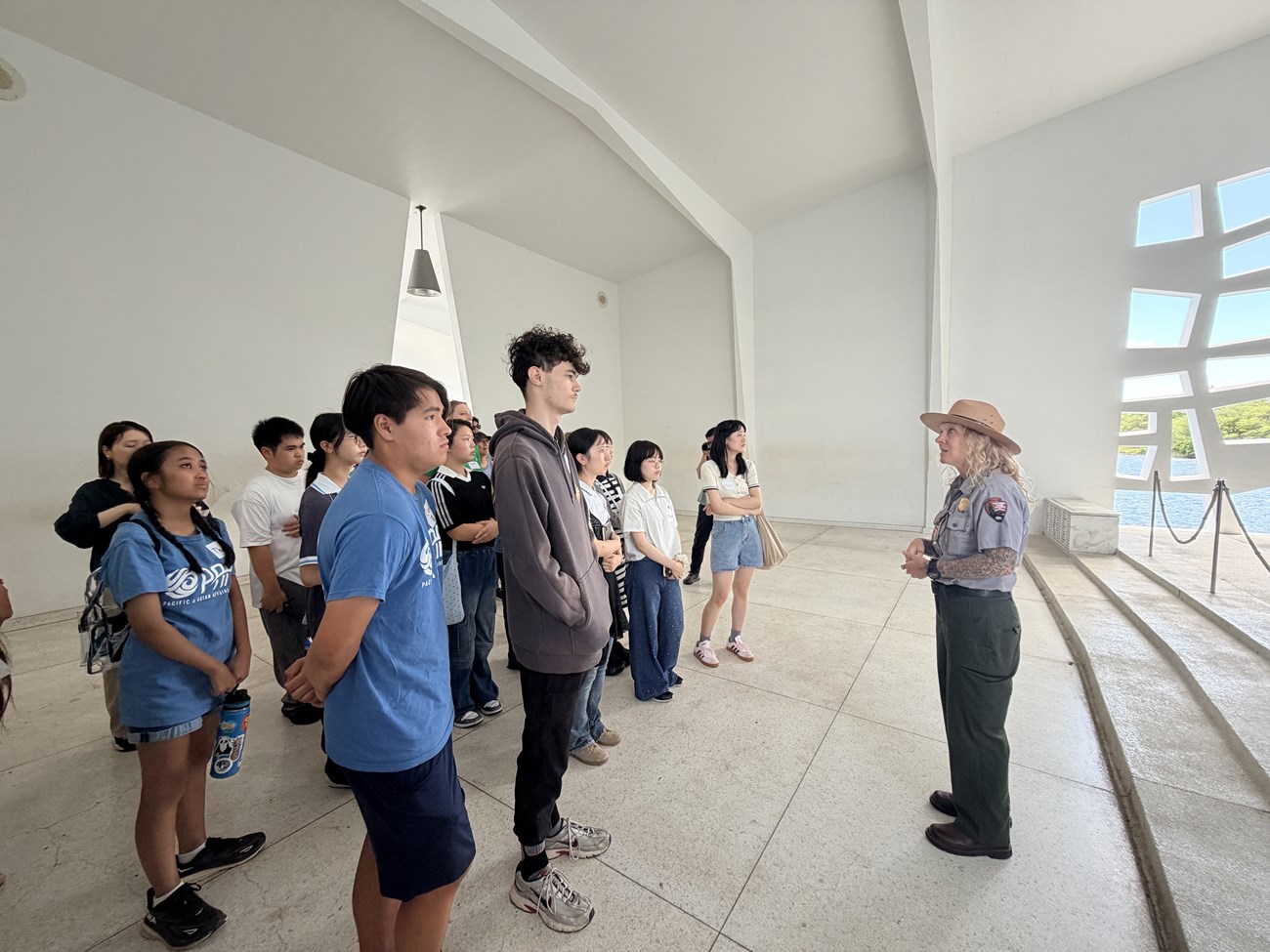
Oʻahu History and Ecology
Nine days on Oʻahu for Hawaiian monarchy, Pearl Harbor, reefs, rainforest and Polynesian cultures, with time for each museum and a full North Shore day.
Choose this programNational Park Service education photo; pictured group is not a Rustic Pathways program.
Your 9-day itinerary
- Day 1
Arrive in Honolulu
Land on Oʻahu and settle into one Waikīkī base for eight nights.
MorningFlight to Daniel K. Inouye International Airport (HNL); timing varies by gateway.AfternoonGroup airport transfer, check-in and recovery.EveningOcean-safety orientation and dinner in Waikīkī.- Route
- HNL to Waikīkī.
- Travel
- Flight and private transfer
- Overnight
- Program-approved lodging in Waikīkī; individual student beds and private teacher rooms.
- Meals
- Meals from program arrival through departure, with drinking water.
- Physical demand
- Low effort; discuss walking and support needs before booking.
- Day 2
Hawaiian monarchy and the stars
Connect the history of the Hawaiian Kingdom with the navigation that brought Polynesian voyagers to these islands.
MorningStudy ʻIolani Palace grounds and the King Kamehameha I Statue, distinguishing Kamehameha I, the 1893 overthrow and later U.S. statehood.AfternoonExplore Bishop Museum’s Hawaiian Hall and Kamehameha dynasty collections; request a wayfinding presentation in the J. Watumull Planetarium.EveningCompare royal artifacts and celestial navigation in field journals.- Route
- Waikīkī to downtown Honolulu, Bishop Museum and back.
- Travel
- Charter transport and on foot
- Overnight
- Program-approved lodging in Waikīkī; individual student beds and private teacher rooms.
- Meals
- Meals from program arrival through departure, with drinking water.
- Physical demand
- Moderate effort; discuss walking and support needs before booking.
- Booking and access
- The itinerary uses Palace grounds/exterior. An interior school tour needs its own Tuesday/Friday morning booking; current elevator outage requires stair-access planning. Bishop’s nonresident group program and planetarium need advance confirmation.
- Day 3
Pearl Harbor and the end of the Pacific war
Use Pearl Harbor National Memorial and the Battleship Missouri Memorial to connect the 1941 attack with the 1945 surrender.
MorningVisit the shore galleries and separate documentary film, then join the reserved USS Arizona Memorial boat program if operating.AfternoonTake the approved Ford Island shuttle to the Battleship Missouri Memorial; study ship design and the surrender deck.EveningDiscuss commemoration and the U.S. entry into World War II.- Route
- Waikīkī to Pearl Harbor Visitor Center; shuttle to Ford Island and return.
- Travel
- Charter transport and on foot
- Overnight
- Program-approved lodging in Waikīkī; individual student beds and private teacher rooms.
- Meals
- Meals from program arrival through departure, with drinking water.
- Physical demand
- Moderate effort; discuss walking and support needs before booking.
- Booking and access
- The supervising teacher must coordinate any NPS educational facilitation directly with rangers. USS Arizona reservations and boat operations are conditional; partner-museum admissions are separate.
- Day 4
Lēʻahi geology and coastal stewardship
Study Diamond Head’s tuff crater in the Honolulu Volcanic Series and its later coastal defenses, then connect visitor pressure with shoreline care.
MorningTake a reserved early visit to Diamond Head State Monument (Lēʻahi); the summit route is 1.6 miles round trip with steep stairs and 560 feet of ascent.AfternoonRest, then request a beach cleanup and debris study with Sustainable Coastlines Hawaiʻi at an agreed nearby site.EveningSort observations into volcanic processes and human impacts.- Route
- Waikīkī to Diamond Head and a host-approved coastal site.
- Travel
- Charter transport and on foot
- Overnight
- Program-approved lodging in Waikīkī; individual student beds and private teacher rooms.
- Meals
- Meals from program arrival through departure, with drinking water.
- Physical demand
- Higher effort; discuss walking and support needs before booking.
- Booking and access
- Allow about two hours for the summit walk; arrange crater-floor learning when the ascent is unsuitable. Cleanup requires host, site, project, date and minor-consent approval; a shoreline observation session replaces an unconfirmed service booking.
- Day 5
Mānoa rainforest and living taro systems
Compare a wet upland forest with the water channels and cultivation of a loʻi kalo.
MorningRequest a guided rainforest field trip at Lyon Arboretum in Mānoa Valley, with the agreed bus drop-off and walk to the entrance.AfternoonVisit Ka Papa Loʻi o Kānewai for host-led water-system learning and approved taro-patch work.EveningDiscuss food sovereignty and how upland water reaches farms and the coast.- Route
- Waikīkī to upper Mānoa, then Kānewai at UH Mānoa and return.
- Travel
- Charter transport and on foot
- Overnight
- Program-approved lodging in Waikīkī; individual student beds and private teacher rooms.
- Meals
- Meals from program arrival through departure, with drinking water.
- Physical demand
- Moderate effort; discuss walking and support needs before booking.
- Booking and access
- Both visits require confirmed group appointments. Lyon has group-size and vehicle limits; Kānewai requires the appropriate waivers. Host approval determines practical work and accessible participation.
- Day 6
Hanauma Bay marine field study
Study the coral reef inside Hanauma Bay’s breached volcanic crater.
MorningAttend the Hanauma Bay Nature Preserve education orientation and mandatory film under the approved group permit.AfternoonComplete a conditions-led snorkel or shore study; identify reef fish such as humuhumunukunukuāpuaʻa and record habitat observations.EveningCompare species logs and discuss reef conservation in Waikīkī.- Route
- Waikīkī to Hanauma Bay and back.
- Travel
- Charter transport and on foot
- Overnight
- Program-approved lodging in Waikīkī; individual student beds and private teacher rooms.
- Meals
- Meals from program arrival through departure, with drinking water.
- Physical demand
- Higher effort; discuss walking and support needs before booking.
- Booking and access
- Education visits allow a maximum party of 40 and require a permit requested at least two weeks ahead. Gear and in-water supervision must be arranged separately; ocean conditions and swimming ability determine participation.
- Day 7
Aviation engineering and island markets
Examine aircraft and the engineering choices behind flight, then study what a local market sells and where its goods come from.
MorningReturn by approved Ford Island shuttle for Pearl Harbor Aviation Museum; request an Aviation Learning Center STEM session alongside the exhibits.AfternoonVisit the relocated Aloha Stadium Swap Meet & Marketplace for lunch and a study of local crafts and commerce on an operating day.EveningUse the NPS Opana radar evidence to examine how the 1941 warning was interpreted, then compare aviation and naval engineering.- Route
- Waikīkī to Pearl Harbor/Ford Island, then the stadium-area marketplace and back.
- Travel
- Charter transport and on foot
- Overnight
- Program-approved lodging in Waikīkī; individual student beds and private teacher rooms.
- Meals
- Meals from program arrival through departure, with drinking water.
- Physical demand
- Moderate effort; discuss walking and support needs before booking.
- Booking and access
- The Swap Meet opens Wednesday, Saturday and Sunday until 3 p.m. On other days use Makai Market Food Court at Ala Moana Center for lunch; school STEM programming requires museum confirmation.
- Day 8
Plantation history and Polynesian cultures
Contrast plantation agriculture with living Hawaiian food systems, then compare distinct Polynesian traditions.
MorningStop at Dole Plantation’s public grounds to discuss pineapple production and the wider sugar-and-pineapple plantation economy; continue to Lāʻie before noon.AfternoonExplore Polynesian Cultural Center’s villages, including Hawaiʻi, Sāmoa, Tahiti and Aotearoa; join scheduled hula learning, storytelling and a lagoon canoe ride.EveningAttend the booked Aliʻi Lūʻau and HĀ: Breath of Life, including performance traditions such as fire-knife dancing; return to Waikīkī after the show.- Route
- Waikīkī to Wahiawā, Lāʻie and back; reserve a full North Shore day.
- Travel
- Charter transport and on foot
- Overnight
- Program-approved lodging in Waikīkī; individual student beds and private teacher rooms.
- Meals
- Meals from program arrival through departure, with drinking water.
- Physical demand
- Moderate effort; discuss walking and support needs before booking.
- Booking and access
- Dole’s formal group tours are suspended; no reserved train or garden tour is promised. PCC villages run 12:15–5:30 p.m., with the show ending around 9 p.m.; most Wednesdays and Sundays are closed. Allow roughly 1–1.5 hours each way between Waikīkī and Lāʻie, traffic permitting.
- Day 9
Synthesis and departure from Oʻahu
Use evidence from reefs, museums and food systems to explain how island geography shapes civic and environmental decisions.
MorningBreakfast and student presentations; avoid an early fixed activity after the late cultural-center return.AfternoonPack and transfer to HNL for the booked departure.EveningReturn flight may continue overnight, with mainland arrival the following day.- Route
- Waikīkī to HNL.
- Travel
- Private transfer and flight
- Overnight
- None on program after departure.
- Meals
- Meals from program arrival through departure, with drinking water.
- Physical demand
- Low effort; discuss walking and support needs before booking.
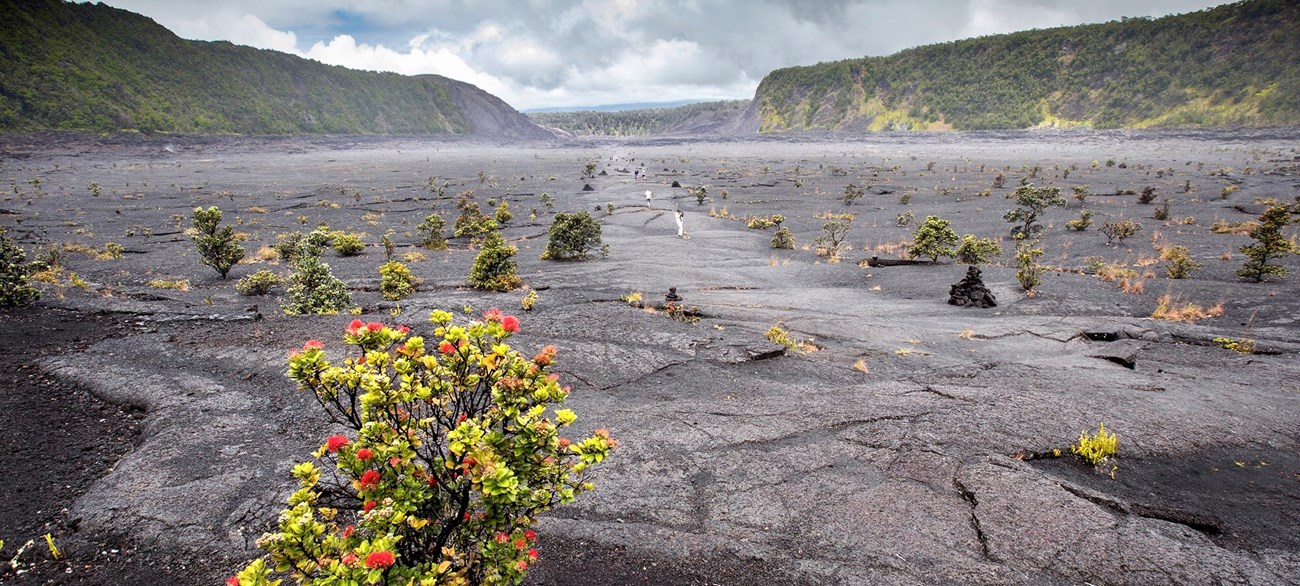
Hawaiʻi Island Volcanoes and Conservation
Eight days from Kona to Hilo for reef science, Hawaiian land relationships, dry-forest restoration and Hawaiʻi Volcanoes National Park.
Choose this programKīlauea Iki photo: NPS / J. Wei.
Your 8-day itinerary
- Day 1
Arrive on Hawaiʻi Island
Begin on the Kona coast, with four nights here before moving to Hilo.
MorningFlight to Ellison Onizuka Kona International Airport at Keāhole (KOA); timing varies by gateway.AfternoonTransfer to Kona lodging and recover.EveningIntroduce volcanic island formation, ocean currents and biological isolation.- Route
- KOA to Kona.
- Travel
- Flight and private transfer
- Overnight
- Program-approved lodging in Kona; individual student beds and private teacher rooms.
- Meals
- Meals from program arrival through departure, with drinking water.
- Physical demand
- Low effort; discuss walking and support needs before booking.
- Day 2
Kona reefs and coastal science
Investigate how land use, reef health and human activity connect along the Kona coast.
MorningBegin a coastal observation session at Kahaluʻu Bay and learn from available ReefTeach interpretation.AfternoonJoin a separately contracted, conditions-led guided snorkel with an agreed shore-based alternative.EveningCompare coral-health observations and discuss freshwater runoff.- Route
- Kona to Kahaluʻu and the confirmed snorkeling departure point.
- Travel
- Charter transport and on foot
- Overnight
- Program-approved lodging in Kona; individual student beds and private teacher rooms.
- Meals
- Meals from program arrival through departure, with drinking water.
- Physical demand
- Higher effort; discuss walking and support needs before booking.
- Booking and access
- Confirm bay access, coral-spawning closures, commercial permissions, gear and water staff. ReefTeach interpretation does not by itself supply a guided swim or reserve a school session.
- Day 3
Hawaiian land relationships and farming
Connect Hawaiian stewardship with the soils, rainfall and farming choices of the Kona uplands.
MorningVisit Puʻuhonua o Hōnaunau National Historical Park for cultural-site interpretation and respectful access protocols.AfternoonRequest a Kona Joe Coffee group farm-and-facility tour to examine a working coffee farm, volcanic soils and food production; compare this with traditional food systems.EveningReflect on who holds knowledge of a place and how that knowledge is passed on.- Route
- Kona to Hōnaunau, Kona Joe in Kealakekua and back.
- Travel
- Charter transport and on foot
- Overnight
- Program-approved lodging in Kona; individual student beds and private teacher rooms.
- Meals
- Meals from program arrival through departure, with drinking water.
- Physical demand
- Moderate effort; discuss walking and support needs before booking.
- Booking and access
- Park facilitation and any paid practitioner session depend on confirmation. Kona Joe publishes a group-booking contact for parties of 12 or more; confirm the school visit, group rate, bus access and route accessibility in advance.
- Day 4
Restore a dry forest
Study island biodiversity and why introduced species can change a native ecosystem.
MorningRequest Waikōloa Dry Forest Initiative’s Restore the Forest field trip.AfternoonComplete the host’s approved planting, invasive-plant removal or other restoration tasks; compare dry-forest conditions with the coast.EveningRecord observed species and what the work was intended to change.- Route
- Kona to Waikōloa Dry Forest Preserve and return.
- Travel
- Charter transport and on foot
- Overnight
- Program-approved lodging in Kona; individual student beds and private teacher rooms.
- Meals
- Meals from program arrival through departure, with drinking water.
- Physical demand
- Moderate effort; discuss walking and support needs before booking.
- Booking and access
- The host must confirm the project, date, group capacity and minor consent. Rugged ʻaʻā terrain and heat require assessment; a guided ecology visit is the alternative if service cannot be arranged.
- Day 5
From the coast to volcanic uplands
Move across elevation and rainfall zones without an inter-island flight.
MorningDepart Kona by coach via Highway 11 for Hawaiʻi Volcanoes National Park; allow 2–2.5 hours of driving before stops.AfternoonUse open rim viewpoints and native-forest paths for geology and ecosystem comparisons; request ranger interpretation where available, then continue to Hilo.EveningSettle into Hilo for three nights and prepare the next day’s field questions.- Route
- Kona to the national park, then Hilo; allow most of the day for transfers, breaks and short studies.
- Travel
- Coach transfer and short walks
- Overnight
- Program-approved lodging in Hilo; individual student beds and private teacher rooms.
- Meals
- Meals from program arrival through departure, with drinking water.
- Physical demand
- Moderate effort; discuss walking and support needs before booking.
- Booking and access
- Hilo is about 45 minutes from the park. Current construction, volcanic gas, weather and closures determine access; no eruption, lava-viewing or ranger booking is guaranteed.
- Day 6
Kīlauea Iki crater and forest succession
Investigate the 1959 lava lake and the return of plants to its surface.
MorningReturn from Hilo to Hawaiʻi Volcanoes National Park and assess the Kīlauea Iki route against current conditions.AfternoonWhen suitable, walk the 3.3-mile loop from the overlook with about 400 feet of descent and ascent, allowing 2–3 hours plus group breaks.EveningReturn to Hilo and compare older forest with the crater’s younger surfaces.- Route
- Hilo to the national park and back; approximately 45 minutes each way.
- Travel
- Charter transport and on foot
- Overnight
- Program-approved lodging in Hilo; individual student beds and private teacher rooms.
- Meals
- Meals from program arrival through departure, with drinking water.
- Physical demand
- Higher effort; discuss walking and support needs before booking.
- Booking and access
- Parking and trail access may change the starting point and length. If the descent is unsuitable, use an open crater overlook and shorter rim/forest study; never enter a closed area.
- Day 7
Wayfinding and an island-system investigation
Connect observations of land and ocean with Polynesian navigation and the sky.
MorningRequest ʻImiloa Astronomy Center’s Polynesian Navigation school program in Hilo.AfternoonComplete a coastal observation and synthesis session linking elevation, water, biodiversity and settlement.EveningPresent field evidence; add low-elevation naked-eye constellation observation only if clear and the venue permits it.- Route
- Hilo museum and a locally assessed coastal study site.
- Travel
- Charter transport and on foot
- Overnight
- Program-approved lodging in Hilo; individual student beds and private teacher rooms.
- Meals
- Meals from program arrival through departure, with drinking water.
- Physical demand
- Low effort; discuss walking and support needs before booking.
- Booking and access
- ʻImiloa’s two-hour school experience requires reservations and depends on presenter availability. No high-altitude summit visit is included.
- Day 8
Depart from Hilo
Share conclusions about living on an isolated volcanic island before leaving the east coast.
MorningBreakfast, final journals and packing.AfternoonTransfer to Hilo International Airport (ITO); departures commonly connect via Honolulu.EveningContinue the return flight; mainland arrival may be the following day.- Route
- Hilo lodging to ITO.
- Travel
- Private transfer and flight
- Overnight
- None on program after departure.
- Meals
- Meals from program arrival through departure, with drinking water.
- Physical demand
- Low effort; discuss walking and support needs before booking.
- Booking and access
- A KOA departure instead needs a revised ground transfer and flight plan; an Oʻahu stopover is a separately quoted extension.
Planning details
- Group limits
- Hanauma Bay permits cap the whole party at 40; Lyon and other hosts set separate limits.
- Flights
- Oʻahu: HNL. Kona: KOA. Island science: KOA–ITO. Transportation to and from Hawaii and inter-island airfare are separate; allow a full transfer day between islands.
- Access
- Review stairs, lava, rainforest paths and water participation; Diamond Head and Kīlauea Iki need alternatives for students unable to climb.
How much does a school trip to Hawaii cost?
A school trip to Hawaii costs $3,720 to $3,860 per student for eight to nine days.
Program Tuition covers lodging, meals, ground transportation, scheduled activities, and one complimentary teacher place for every eight paying students. Transportation to and from Hawaii, inter-island airfare, travel insurance, and medical insurance are separate.
From $3,720
per student for Kona Service and Adventure, excluding airfare.
8 days
Kona service and Kona–Hilo science; Oʻahu runs 9 days.
Group quote
every school receives its own, built on dates, group size and route.
| Included | What it covers |
|---|---|
| Travel | Every program night's lodging, all meals and drinking water, airport transfers, coach transport throughout, scheduled activities, guides, and entrance fees. |
| Staff and support | At least two trained Program Leaders, including both a male and a female leader, pre-departure planning, and school documentation. |
| Community donations | Required by a service project, paid by Rustic Pathways and never collected from students. |
| Chaperones | One complimentary Program Tuition place per eight paying students. Chaperone airfare, travel insurance and medical insurance are separate. |
Not included: Transportation to and from Hawaii, inter-island airfare, travel insurance, medical insurance and personal spending.
| Effect | Factor |
|---|---|
| raises | Peak school-trip weeks and holiday dates |
| raises | Named-experience bookings and paid facilitation |
| raises | Upgraded lodging |
| raises | Extra chaperones beyond the complimentary place |
| lowers | More students in the group means fixed costs split more ways. |
| raises | Shorter trips cost more per day, since fixed costs spread across fewer days. |
Payment and cancellation
Installment plans are available. Schools pay as a group, or families pay monthly under the current enrollment terms.
What do students learn on a Hawaii school trip?
Students learn marine science, environmental science, and Hawaiian culture and food systems through field observations and hands-on activities.
Marine science
Students compare reef organisms and habitat conditions through an assessed snorkel or shore study, then discuss runoff, visitor pressure and conservation.
Environmental science
At Kīlauea Iki and Waikōloa Dry Forest, the island science route examines volcanic surfaces, native plants and the effects of introduced species.
Hawaiian culture and food systems
Farm work in North Kohala connects what an island can grow to what it has to ship in, and a paid session with a locally contracted cultural practitioner covers lei-making and the oral history that comes with it.

What makes Rustic Pathways educational trips different?
A Rustic Pathways school trip is one private group on your school's own dates, one bed per student, and an itinerary built to your curriculum.
- 01No mixed groups. Just your school
- 02One student, one bed
- 03Your school picks the dates
- 04Monthly payment plans available
- 05No tipping; Rustic Pathways Program Tuition includes community donations
- 06Aligned to your curriculum
How is safety managed on a school trip to Hawaii?
Program Leaders manage local operations and safety procedures alongside school chaperones. Across 13 years of published incident data from Rustic Pathways programs worldwide, 87% of reports were GREEN, the minor tier where the group stays intact.
What the team plans for
Water activity
A swimming-ability assessment, suitable flotation, contracted water staff and an agreed land alternative; currents and closures decide whether entry is suitable
Lava terrain
Sharp, uneven ground, crater ascents and volcanic gas; closed footwear, current park conditions and shorter learning alternatives
Sun and heat
Sun protection, hydration and heat breaks; forecasts and tropical-storm warnings can change outdoor plans
Island transfers
Driving time, rest stops and flight days for the selected island route; no same-day inter-island volcano excursion
Service work sites
Tools, gloves and site briefings on the farm and conservation days, supervised by the partner organization
Controls built into every trip
Written risk plan. A score above 5 requires new controls, reassessment or cancellation.
Two-Deep Leadership. A single staff member is never alone with students, and at least two trained Program Leaders, including both a male and a female leader, support each School Group Travel trip.
Assessed activity vendors. Every named vendor is reviewed before use, every one to two years, and on site when high risk.
Medical readiness. Dr. William R. Smith develops medical protocols and emergency response planning as Medical Director.
Is Rustic Pathways the right partner for your school trip to Hawaii?
Yes. Rustic Pathways is the right partner for schools seeking a private Hawaii trip built around their dates and curriculum.
Students travel with their own teachers and classmates. Individual students can join teen travel programs in the United States.
A strong fit
- You have 10 or more students and 8–9 program days, plus return-flight time.
- You want service and marine science, Oʻahu history, or a Kona–Hilo geology route.
Talk with us first
- Share mobility, medical, sensory, mental-health, dietary and religious support needs early.
- Discuss non-swimmers, steep crater trails and groups above Hanauma Bay’s total-party limit of 40.
- You need an inter-island extension or have fewer than 10 students.
Probably not a fit
- You want individual enrollment or a group merged with another school.
- You want a beach holiday without the field studies and cultural visits.
Questions about school trips to Hawaii
What should our school budget for a trip to Hawaii?
Budget $3,720 to $3,860 per student for an eight- to nine-day Hawaii school trip, or about $429 to $465 per student per day. Budget separately for transportation to and from Hawaii, inter-island airfare, travel insurance, and medical insurance.
When is the best time for a school trip to Hawaii?
The best time for a school trip to Hawaii is May or September through October, when conditions are generally drier for outdoor learning. Winter is wetter, while ocean conditions can affect snorkeling throughout the year. Confirm park, museum, and service-host availability before booking flights.

Have a question before you ask for a proposal?
Patrick Ziemnik answers Hawaii school-trip questions with the school travel team.
Send your group size, dates, trip length, and what you want students to learn. I’ll reply within 1 business day and send you options within 48 hours, and no sales call unless you ask for one.
Start with your travel window
Start your Hawaii trip proposal with your travel dates, group size, and learning goals. Receive a reply within 1 business day and customized trip options within 48 hours.
Or reach a person directly: +1 440-975-9691 or groups@rusticpathways.com
Need approval or funding first?
Certificate of insurance, risk management plans, and fundraising templates for families, on request.


Destinations related to Hawaii
United StatesBrowse all school trip destinations- Rustic Pathways has operated student travel since 1983. Recent industry recognition:
- 2026 GoAbroad Innovation AwardsInnovation in Adventure-Based Programming · Global Adventure Learning Model
- 2025 International Travel AwardsBest Group Tour Operator
- 2024 Skift IDEA AwardsIndustry Innovators – Tour Operators
- 4x WYSETC Best Youth Tour Operator2015, 2017, 2018, 2019
- BBB A+ RatingBetter Business Bureau profile
- NESA Affiliate OrganizationNear East South Asia Council of Overseas Schools
- 2025 World Travel AwardsUnited States’ Leading Tour Operator