School Trips to Charleston

School trips to Charleston are educational group programs focused on Black heritage, maritime science and colonial history. Students visit IAAM and McLeod, study naval engineering aboard USS Yorktown, and explore historic sites along the Ashley River.
Programs run five to six days and cost $2,010 to $2,410 per student, depending on the itinerary. Airfare to and from Charleston is separate.
No commitment, and no sales call unless you ask for one.
4.9on Trustpilot and Google
- $2,010–$2,410
- prices; Freedom route quoted
- 5–6 days
- three itineraries
- Custom school trips
- your dates and curriculum
- 1 free teacher spot
- per 8 paying students
- Since 1983
- Rustic Pathways has operated student travel programs

Compare school trips to Charleston
The three Charleston school travel itineraries are Charleston: Freedom, Culture and the Living Coast, Charleston: Maritime Engineering and Coastal Science, and Charleston: Colonial Roots and Plantation Landscapes. Charleston: Freedom, Culture and the Living Coast starts at $2,410 for 6 days, Charleston: Maritime Engineering and Coastal Science starts at $2,010 for 5 days, and Charleston: Colonial Roots and Plantation Landscapes starts at $2,410 for 6 days.
Compare the three routes
| Choose by | Freedom, Culture and the Living Coast | Maritime Engineering and Coastal Science | Colonial Roots and Plantation Landscapes |
|---|---|---|---|
| Length and base | 6 days; 5 nights in Mount Pleasant | 5 days; 4 nights in Mount Pleasant | 6 days; 5 nights in Mount Pleasant |
| Price | $2,410 | $2,010 | $2,410 |
| Best for | Grades 9–12; 10+ students. Black heritage, emancipation and living culture. | Grades 7–12; 10+ students. Ship engineering and coastal biology. | Grades 6–8; 15+ students. Settlement, plantation labor and preservation. |
| Core places | Old Slave Mart Museum, IAAM, Fort Sumter, McLeod, Gullah tour, Capers Island | Patriots Point and USS Yorktown, Aquarium, Fort Sumter, Folly Beach | Charleston Museum, Old Exchange, Charles Towne Landing, Drayton Hall, Middleton Place, Boone Hall |
| Plan around | IAAM weekday mornings; ferry and eco-boat access | Flight Academy booking; ship ladders, ferry boarding and sand | Weekday school programs; Adventure’s seasonal closure; uneven grounds |
Prices exclude airfare, travel insurance and medical insurance.

Charleston: Freedom, Culture and the Living Coast
Connect African American history, living Gullah Geechee culture and barrier-island ecology from one Mount Pleasant base.
Choose this programYour six-day itinerary
-
Day 1
Arrive in the Lowcountry
Arrival day leaves room for flight delays and a quiet start.
MorningTravel to Charleston International Airport (CHS), in North Charleston, South Carolina. No essential admission depends on an early flight.AfternoonTransfer to the Mount Pleasant hotel for five nights. After check-in, orient the group to Charleston Harbor on a map.EveningWelcome dinner and a short discussion of the waterfront stories students expect to encounter.- Route
- CHS to the Mount Pleasant hotel, by private group transfer.
- Travel
- Private group transfer
- Overnight
- Mount Pleasant, same hotel throughout.
- Meals
- Meals are included from arrival on program.
- Physical demand
- Low effort
-
Day 2
Read Charleston’s streets and slave-trade records
Trace the labor behind the historic streetscape, then examine the domestic slave trade at the Old Slave Mart Museum.
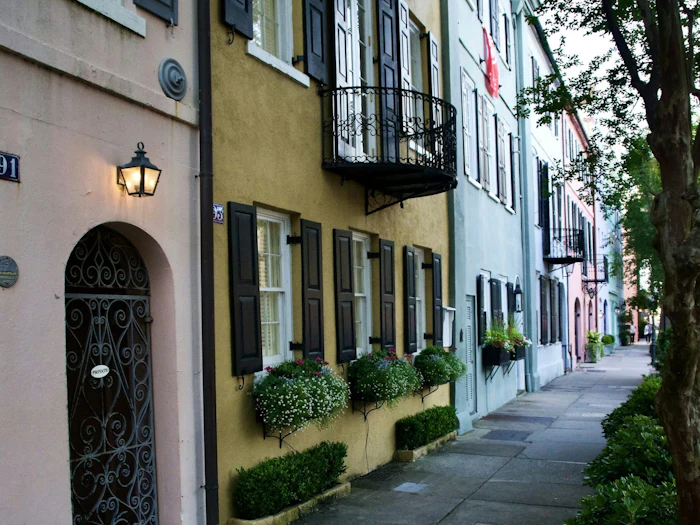
MorningA guided walk connects the French Quarter, Rainbow Row and South of Broad with the Battery’s harbor views; use coach support for the longer loop. Allow a separate hour at the Old Slave Mart Museum, with group access arranged in advance.AfternoonAfter lunch and a break, compare an archival document with a public marker. Finish at Waterfront Park and the Pineapple Fountain with time to reflect.EveningDiscuss how the city interprets enslavement, allowing students to pass on speaking. No reenactments of buying, selling or enslavement are part of the trip.- Route
- Mount Pleasant to the historic peninsula and back.
- Travel
- Coach to the peninsula, on foot in the old city
- Overnight
- Mount Pleasant.
- Meals
- Breakfast, lunch and dinner are included, with drinking water.
- Physical demand
- Moderate effort, mostly walking
-
Day 3
Connect IAAM and Fort Sumter
At Gadsden’s Wharf and Fort Sumter, compare the history of enslavement with the outbreak of the Civil War.
MorningPlan a 100-minute International African American Museum field trip and time in its memorial garden. IAAM offers school sessions Tuesday–Thursday mornings; reserve the museum date before arranging the rest of the week.AfternoonEat lunch away from IAAM grounds, then leave at least an hour before ferry check-in at Liberty Square. Protect roughly three hours for check-in and the 2¼-hour Fort Sumter excursion; the afternoon sailing must be confirmed.EveningCompare evidence from the museum and fort, including journeys from West Africa through the African diaspora and the Civil War. A dedicated ranger-led session is subject to availability.- Route
- Mount Pleasant to the International African American Museum and Liberty Square, then Fort Sumter by ferry.
- Travel
- Coach and the Fort Sumter ferry
- Overnight
- Mount Pleasant.
- Meals
- Breakfast, lunch and dinner are included, with drinking water.
- Physical demand
- Moderate effort, walking and ferry travel
-
Day 4
Examine freedom and living Gullah culture
Study enslaved people and their freed descendants at McLeod, then hear Gullah interpretation of the city.
MorningVisit McLeod Plantation Historic Site on James Island for its current one-hour guided group tour, followed by reflection. The route includes extended standing; discuss support needs before booking.AfternoonAfter lunch, plan a two-hour step-on tour with Alphonso Brown’s Gullah Tours on the group’s coach. Confirm the guide, start time and emphasis on language and cultural continuity before including it in the final itinerary.EveningA Lowcountry dinner introduces regional food traditions, with dishes such as she-crab soup, shrimp and grits or cornbread subject to the chosen menu. Use Charleston Museum’s study of Lowcountry foodways to discuss African and African American contributions alongside English roots and French immigrant influences. Dietary alternatives and restaurant capacity are checked during planning.- Route
- Mount Pleasant to McLeod Plantation Historic Site on James Island, then a Gullah-led tour of the city.
- Travel
- Coach, with a step-on guide for the afternoon
- Overnight
- Mount Pleasant.
- Meals
- Breakfast, lunch and dinner are included, with drinking water.
- Physical demand
- Moderate effort
-
Day 5
Investigate the salt marsh and Capers Island
Compare two coastal habitats and separate observations from claims about long-term change.
MorningTravel to Isle of Palms Marina for a Barrier Island Eco Tours school excursion to the salt marsh and Capers Island. Reserve a format within its three-to-five-hour range, allowing about 4½ hours plus boarding time and a confirmed packed or provider lunch.AfternoonReturn to the hotel for rest, then develop a short waterfront recommendation using one historical finding and one ecological observation. Swimming is outside this route; any handling or sampling follows the operator’s permitted activities.EveningPresent the recommendations over the farewell evening and identify an unanswered question to pursue at home.- Route
- Mount Pleasant to Isle of Palms Marina, then the salt marsh and Capers Island by boat.
- Travel
- Coach and a chartered boat
- Overnight
- Mount Pleasant.
- Meals
- Breakfast, lunch and dinner are included, with drinking water.
- Physical demand
- Higher effort, a full day outdoors on the water
-
Day 6
Take a Charleston question home
Complete the learning before departure timing takes priority.
MorningBreakfast, packing and a short closing circle if flight times allow. No ticketed visit is scheduled.AfternoonTransfer from Mount Pleasant to CHS with the airport buffer agreed for the flight. Meals are included while the group remains on program.EveningTravel home; this is a departure day, not an additional sightseeing day.- Route
- Mount Pleasant to CHS.
- Travel
- Private group transfer
- Overnight
- None; program ends.
- Meals
- Meals are included while the group is on program.
- Physical demand
- Low effort

Charleston: Maritime Engineering and Coastal Science
Investigate USS Yorktown, the Aquarium, Fort Sumter and Folly Beach, with a full day for naval engineering and a full day on the coast.
Choose this programYour 5-day itinerary
-
Day 1
Arrive for a harbor science week
Travel to Charleston and settle into one hotel for four nights.
MorningFly to CHS or arrive by the school’s coach. The itinerary includes today’s travel time.AfternoonTransfer to Mount Pleasant and introduce the harbor’s rivers, shipping channels and coastal habitats on a map.EveningWelcome dinner and team questions for the coming field visits.- Route
- CHS to Mount Pleasant
- Travel
- Private group transfer
- Overnight
- Mount Pleasant
- Meals
- Meals included while on program.
- Physical demand
- Low effort
-
Day 2
Investigate USS Yorktown’s engineering
Spend the day at Patriots Point Naval & Maritime Museum, with time for ship systems and aviation.
MorningVisit USS Yorktown’s visitor routes and flight deck, examining how an aircraft carrier supports people, aircraft and equipment. Compare its structure with waterfront views of the Arthur Ravenel Jr. Bridge, confirming routes through steep ladders and confined spaces before the visit.AfternoonRequest the two-hour Flight Academy for grades 7–12; its simulators require a separate reservation. If unavailable, confirm a museum-based engineering investigation with the school before the trip.EveningUse the National Park Service record of USS Clamagore as a preservation case study: the submarine was removed for scrapping in 2022 and cannot be visited.- Route
- Mount Pleasant to Patriots Point and back
- Travel
- Private coach
- Overnight
- Mount Pleasant
- Meals
- Meals included while on program.
- Physical demand
- Higher effort: ship stairs and standing
-
Day 3
Compare aquarium ecosystems and the island fort
Pair coastal biology with the harbor’s Civil War history at two neighboring departure points.
MorningAllow a full morning at the South Carolina Aquarium, including the Great Ocean Tank and public Zucker Family Sea Turtle Recovery exhibits. The standard school visit is self-guided; specialist activities need separate confirmation.AfternoonLunch near Liberty Square precedes the Fort Sumter ferry; allow about three hours including check-in and the 2¼-hour excursion. Map the Ashley and Cooper rivers against Charleston Harbor and the Atlantic coast, then examine why fighting began at the fort in 1861.EveningReturn to Mount Pleasant to compare a living ecosystem with a constructed defensive site. Ranger-led teaching is not guaranteed.- Route
- Mount Pleasant to the Aquarium and Liberty Square; Fort Sumter by ferry
- Travel
- Coach and ferry
- Overnight
- Mount Pleasant
- Meals
- Meals included while on program.
- Physical demand
- Moderate walking and boat boarding
-
Day 4
Read Folly Beach’s changing shore
Use one full coast day to study dunes, beach erosion and coastal protection.
MorningTravel by coach to Folly Beach County Park for a shore-based observation walk. Compare the open Atlantic beach with the salt-marsh and estuary habitats encountered in the week; stay on permitted paths and off protected dunes.AfternoonAfter a picnic and a break, compare field notes with published shoreline research. Identify the evidence needed to judge a coastal intervention; tides, weather and access determine the walking route.EveningReturn to the hotel for short team presentations and a farewell dinner. Swimming is not included.- Route
- Mount Pleasant to Folly Beach County Park and back
- Travel
- Private coach
- Overnight
- Mount Pleasant
- Meals
- Meals included while on program.
- Physical demand
- Higher effort: sand walking and sustained time outdoors
-
Day 5
Depart with a coastal field notebook
Finish the program with flight time protected.
MorningBreakfast and pack; no essential admission is scheduled.AfternoonTransfer to CHS for the journey home. Meals are included until departure from the program.EveningTravel home according to the school’s arrangements.- Route
- Mount Pleasant to CHS
- Travel
- Private group transfer
- Overnight
- None; program ends.
- Meals
- Meals included while on program.
- Physical demand
- Low effort

Charleston: Colonial Roots and Plantation Landscapes
Compare The Charleston Museum, Old Exchange, Charles Towne Landing, Drayton Hall, Middleton Place and Boone Hall across four full learning days.
Choose this programYour 6-day itinerary
-
Day 1
Arrive for Charleston’s colonial story
Travel to the Lowcountry and settle into one hotel for five nights.
MorningArrive at CHS or by the school’s coach. Flight time is part of this first day.AfternoonTransfer to Mount Pleasant and introduce the Ashley River corridor and historic peninsula on a map.EveningWelcome dinner and an inquiry into whose experiences survive in buildings and museum collections.- Route
- CHS to Mount Pleasant
- Travel
- Private group transfer
- Overnight
- Mount Pleasant
- Meals
- Meals included while on program.
- Physical demand
- Low effort
-
Day 2
Question the museum and the Old Exchange
Use two focused downtown visits to compare objects, buildings and historical accounts.
MorningVisit The Charleston Museum for Lowcountry cultural and natural history. Request the education program that fits the class, allowing time for collection-based work and a break.AfternoonAfter lunch, take the one-hour Old Exchange & Provost Dungeon education tour. Discuss the American Revolution, South Carolina’s 1788 ratification of the U.S. Constitution at the Exchange and the Great Hall’s George Washington events. Separate prison records from pirate folklore.EveningUse a short reflection to compare what an artifact and a building can tell students about colonial Charleston.- Route
- Mount Pleasant to The Charleston Museum and Old Exchange
- Travel
- Coach with downtown walking
- Overnight
- Mount Pleasant
- Meals
- Meals included while on program.
- Physical demand
- Moderate walking
-
Day 3
Study settlement at Charles Towne Landing
Spend the day at the original 1670 settlement site and its habitats.
MorningBegin with the Charles Towne Landing Visitor Center exhibits and history trail. Compare English settlement accounts with evidence that Indigenous peoples shaped this environment before colonization.AfternoonAfter lunch, visit the Animal Forest and, when open, board Adventure, the replica trading ship. Adventure closes Tuesdays and is away January 1–April 1; confirm the date or study ship design through the park’s interpretive resources.EveningReturn to the hotel and explain how trade, labor and ecology shaped the settlement. Guided school programs require separate confirmation; the itinerary allows a self-guided park visit.- Route
- Mount Pleasant to Charles Towne Landing and back
- Travel
- Private coach
- Overnight
- Mount Pleasant
- Meals
- Meals included while on program.
- Physical demand
- Moderate effort: park paths and sustained walking
-
Day 4
Compare Drayton Hall and Middleton Place
Keep both visits in the Ashley River corridor, with distinct questions and a lunch break.
MorningAllow the morning at Drayton Hall for preserved architecture and African American history. Confirm a grade-appropriate school program and house access before fixing the schedule.AfternoonAfter lunch and a short coach transfer, study rice culture, agriculture and enslaved labor at Middleton Place. Book a focused afternoon education visit, with room for its grounds and interpretation rather than every optional tour.EveningCompare the two sites’ evidence about wealth, work and preservation. Both school bookings must fit the same day; otherwise adjust the route before the school approves it.- Route
- Mount Pleasant to Drayton Hall, Middleton Place and back
- Travel
- Private coach along the Ashley River corridor
- Overnight
- Mount Pleasant
- Meals
- Meals included while on program.
- Physical demand
- Moderate effort: house access and uneven grounds
-
Day 5
Hear Gullah interpretation at Boone Hall
Connect plantation labor, agriculture and cultural continuity on a dedicated Mount Pleasant day.
MorningPlan Boone Hall Plantation & Gardens’ two-hour Beyond the Big House education program, including its Gullah presentation. It runs for grades 3–8, March–November on weekdays, with at least 15 students.AfternoonAfter lunch and a rest, compare the plantation narratives encountered this week. The education program excludes the house tour; students develop an evidence-based interpretation panel.EveningFarewell dinner and brief presentations linking colonial institutions with the lives of enslaved people and their descendants.- Route
- Mount Pleasant to Boone Hall and back
- Travel
- Private coach
- Overnight
- Mount Pleasant
- Meals
- Meals included while on program.
- Physical demand
- Moderate effort: outdoor walking and standing
-
Day 6
Carry the history inquiry home
Leave the final day clear for departure.
MorningBreakfast, packing and an optional closing discussion before the transfer.AfternoonTravel from Mount Pleasant to CHS with flight check-in time protected. Meals are included while on program.EveningContinue home; no museum visit depends on a late departure.- Route
- Mount Pleasant to CHS
- Travel
- Private group transfer
- Overnight
- None; program ends.
- Meals
- Meals included while on program.
- Physical demand
- Low effort
Planning details
- Groups and rooms
- 10+ students for Freedom or Maritime; 15+ for Colonial. Gender-separated student rooms with individual beds; private teacher rooms.
- Base
- Fly into CHS; stay in Mount Pleasant.
- Access
- Check ship ladders, uneven paths, sand and boat boarding. Liberty Square ferry access depends on tides.
How much does a school trip to Charleston cost?
A school trip to Charleston costs $2,010 to $2,410 per student for program tuition, or approximately $402 per day. Tuition covers lodging, meals, ground transport, scheduled activities, guides, and entrance fees.
Schools receive one complimentary program tuition place for every eight paying students. Airfare, travel insurance and medical insurance are not included, and final pricing varies by travel dates, group size, rooming, and itinerary.
$2,010–$2,410
prices per student; airfare, travel insurance and medical insurance excluded
5–6 days
three routes, including arrival and departure days
Group quote
Freedom route and final costs confirmed for your school
| Included | What it covers |
|---|---|
| Travel | Every program night's lodging, all meals and drinking water, airport transfers, coach transport throughout, scheduled activities, guides, and entrance fees. |
| Staff and support | At least two trained Program Leaders, including both a male and a female leader, pre-departure planning, and school documentation. |
| Community donations | Required by a service project, paid by Rustic Pathways and never collected from students. |
| Chaperones | One complimentary Program Tuition place per eight paying students. Chaperone airfare, travel insurance and medical insurance are separate. |
Not included: Transportation to and from the destination, travel insurance, medical insurance, and personal spending.
| Effect | Factor |
|---|---|
| raises | Peak school-trip weeks and holiday dates |
| raises | Named-experience bookings and paid facilitation |
| raises | Upgraded lodging |
| raises | Extra chaperones beyond the complimentary place |
| lowers | More students in the group means fixed costs split more ways. |
| raises | Shorter trips cost more per day, since fixed costs spread across fewer days. |
Payment and cancellation
Installment plans are available. Schools pay as a group, or families pay monthly under the current enrollment terms.
What do students learn on a Charleston school trip?
Students learn about Black heritage, U.S. history, engineering and coastal science by examining museum records, historic sites, naval systems and coastal environments.
Black heritage and US history
Compare IAAM, Old Slave Mart Museum and McLeod accounts of enslavement and freedom, then connect them with Gullah interpretation and the Fort Sumter visit.
Engineering and coastal science
Use USS Yorktown, aquarium exhibits and Folly Beach field notes to ask how engineered systems and living coastlines respond to constraints.
Colonial and environmental history
Compare the Charleston Museum, Old Exchange, Charles Towne Landing and three plantation sites, identifying whose work and knowledge shaped each place.
How is safety managed on a school trip to Charleston?
Program Leaders manage local operations and safety procedures alongside school chaperones. Across 13 years of published incident data from Rustic Pathways programs worldwide, 87% of reports were GREEN, the minor tier where the group stays intact.
What the team plans for
Boat excursion
Confirm a licensed operator, certified crew, flotation and a weather alternative before booking the water-based route.
Walking days
Review each day’s effort level, seated breaks and any shorter route with the school before confirming support arrangements.
Heat and sun
Shaded breaks, drinking water on every leg and midday work moved indoors where the forecast requires it
Road transfers
Charter coach with historic-district permits and approved loading arrangements agreed before travel
Venue group requirements
School bookings, group splits and required adult ratios are checked for the chosen route and group size.
Controls built into every trip
Written risk plan. A score above 5 requires new controls, reassessment or cancellation.
Two-Deep Leadership. A single staff member is never alone with students, and at least two trained Program Leaders, including both a male and a female leader, support each School Group Travel trip.
Assessed activity vendors. Every named vendor is reviewed before use, every one to two years, and on site when high risk.
Medical readiness. Dr. William R. Smith oversees medical protocols and emergency planning as Medical Director.
Is Rustic Pathways the right partner for your school trip to Charleston?
Yes, Rustic Pathways is the right partner for private, curriculum-focused school trips to Charleston. Your school chooses the travel dates, and Rustic Pathways builds the itinerary around your curriculum.
Students travel only with their teachers and classmates and never join another school's group. Individual students can join open-enrollment teen travel programs in the United States instead.
A strong fit
- One school group with its own teachers, dates and curriculum.
- 5 or 6 days, including arrival and departure.
- 10+ students for Freedom or Maritime. 15+ students in grades 6–8 for Colonial.
Talk with us first
- Mobility, medical, sensory, mental-health, dietary or religious support needs. Share these early.
- Named school sessions, ferry access and weather alternatives. Confirm these before your school approves the route.
Probably not a fit
- Individual students seeking open enrollment.
Questions about school trips to Charleston
What should our school budget for Charleston?
Schools should budget $2,010 to $2,410 per student for a five- to six-day Charleston school trip. Airfare and travel and medical insurance are separate, and final costs vary by travel dates, group size, rooming and itinerary.
When is the best time for a school trip to Charleston?
The best time for a school trip to Charleston is April or October through November, when conditions suit outdoor history and coastal activities. The Adventure at Charles Towne Landing is unavailable from January 1 through April 1, and ferry trips remain weather-dependent.

Have a question before you ask for a proposal?
Patrick Ziemnik answers Charleston school-trip questions with the school travel team.
Send your group size, dates, trip length, and what you want students to learn. I’ll reply within 1 business day and send you options within 48 hours, and no sales call unless you ask for one.
Start with your travel window
Start your Charleston trip proposal with your travel dates, group size, and learning goals. Receive a reply within 1 business day and customized trip options within 48 hours.
Or reach a person directly: +1 440-975-9691 or groups@rusticpathways.com
Need approval or funding first?
Certificate of insurance, risk management plans, and fundraising templates for families, on request.


Destinations related to Charleston
United StatesBrowse all school trip destinations- Rustic Pathways has operated student travel since 1983. Recent industry recognition:
- 2026 GoAbroad Innovation AwardsInnovation in Adventure-Based Programming · Global Adventure Learning Model
- 2025 International Travel AwardsBest Group Tour Operator
- 2024 Skift IDEA AwardsIndustry Innovators – Tour Operators
- 4x WYSETC Best Youth Tour Operator2015, 2017, 2018, 2019
- BBB A+ RatingBetter Business Bureau profile
- NESA Affiliate OrganizationNear East South Asia Council of Overseas Schools
- 2025 World Travel AwardsUnited States’ Leading Tour Operator