Meet the Cohort Ten Fellows
Read the inspiring stories from Climate Leaders Fellows
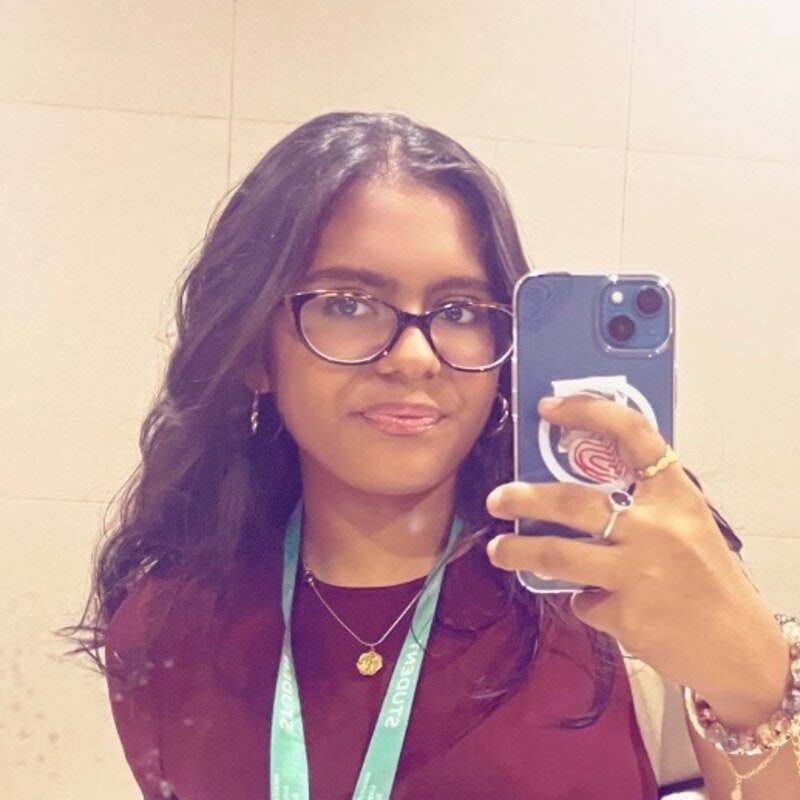
Kimaya Asrani
Bangalore, India · Canadian International School
Threads for Tomorrow: Textile waste all over the world
My name is Kimaya Asrani, and I am a 15 year old student based in Bangalore, India. I moved to India 5 years ago and absolutely love it here. I am deeply interested in climate activism, education, and public awareness, especially how implementing systems to manage waste properly can have such a huge positive impact on our planet.
Project Background & Overview
Every single person wears clothes, most of which are bought from mainstream fast fashion brands like H & M, Zara, etc. In India, it is extremely common to see that many clothes are made by local tailors, most of whom do not know the impact of their disposal of unusable textile scraps. The issue identified was lack of knowledge on the climate impacts of the textile waste, but also the fact that the disposal process is really complicated, which creates friction between awareness and action.
Additionally, we found that most people simply throw their old clothes away once they don’t want it, instead of donating them or giving them to recycling facilities.
Project Execution
To execute this project, we partnered up with four local tailors in my region, and developed systems to ensure recycling or repurposing for each piece of waste. Also, through the CLF discord I gathered 3 people from all over the globe with similar ideas and held planning sessions discussing how we will collect the textile waste. Our target audience was mainly tailors, but also people with old clothes that they needed to throw away.
Impact
Through Threads for Tomorrow, we collected almost 100kgs of textile waste over six months. We also gathered data from all over the world, including places like Dubai, Michigan, Lebanon, New York, Singapore, and India. We continue to look for volunteers, as well as raise awareness and implement action across borders.
CLF really helped to keep me motivated throughout this process, while also making it fun for everyone. We worked with recycling NGOs in India to repurpose the textile scraps from tailors, and in other countries we collaborated with thrift stores to send old clothes to.
Personal Reflection
I am so glad I took part in the 2026 spring cohort of the climate leaders fellowship, not only because it helped me materialise the plans that were going on in my head, but also helped me build connections with like minded people from across the world. I was inspired by the immense dedication shown by so many people in the cohort, which really helped me put in the work myself. I am really proud that despite the time difference, my group and I were still able to collaborate effectively and collect huge amounts of textile waste.
Tips for Others
- Make sure to base your project around something you are genuinely passionate about
- If you’ve been thinking of starting a project, joining CLF will help motivate you a lot
- Impact>Instagram
- Don’t be afraid to ask anyone for help! Everyone was a beginner at some point
- If you join CLF, make full use of the community of like-minded people on discord
- Try partnering up with other student orgs to gain a following and spread the word about your project
- Doing the project alone is not as easy as it seems. Recruit a team or partner with a friend to do the project
- Don’t forget to have fun during the process
Back to all Fellows

Alexis Blanco
North Carolina · West Forsyth High School
Books of Wonder : The seed of wonder and environmental change
Hi, my name is Alexis Blanco, and I live in North Carolina, I am 18 and some of my interests include hanging out with friends, playing sports like tennis, volleyball, and soccer, and enjoying the outdoors. I really enjoy taking walks or going on hikes. Being able to enjoy nature makes me very happy.
Project Background & Overview
The specific problem I was addressing in my community was the lack of knowledge. I think that many times we stop ourselves from making the changes or taking the actions we want to make simply because we are overwhelmed by the many options and the amount of information found on the internet. For example, if you look up “how to better the environment” on Google right now, you will get so many results from so many different sources and research studies that it can feel overwhelming to know where to start. Research conducted by the Journal of Consumer Research (JCR), based on an analysis of 50 experiments, found that too many options can decrease people’s motivation to make choices.
This problem matters to me personally because, on many occasions, having too many choices has discouraged me or caused me to lose interest in changes or actions I want to take. It is very easy to get distracted by so many different things. Because of this, I wanted to consolidate information that was easy for everyone to understand and help my community feel less overwhelmed and more confident about the changes they could make in their everyday lives to positively impact our environment.
Project Execution
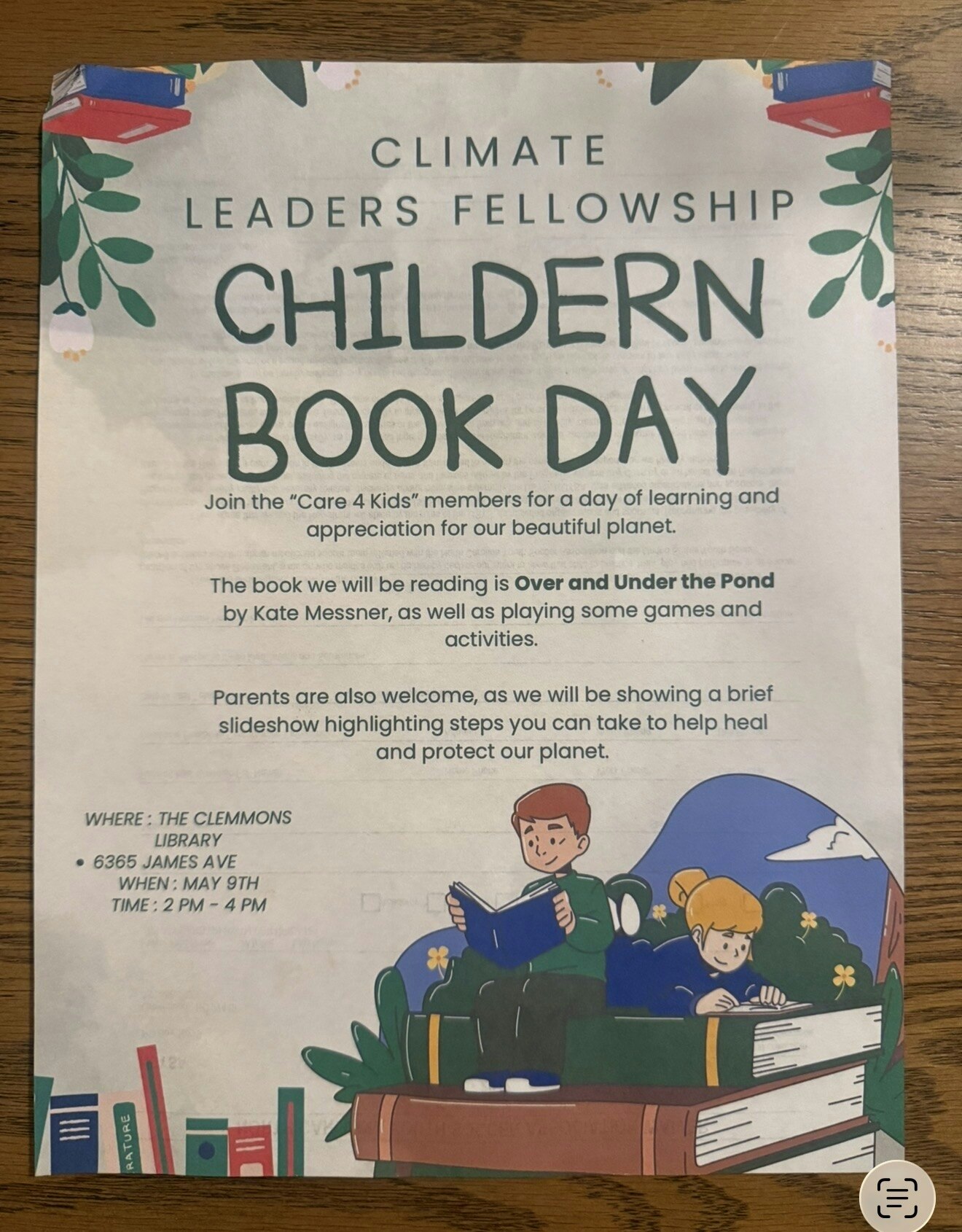
For my project, I decided to create a community project where I found a children’s book that supported the message I was trying to promote: the beauty of nature. The book we presented was Over and Under the Pond by Kate Messner. My team and I read the book to kids in our community and engaged in a meaningful conversation by answering their curious questions. We also had engaging games at the end so that the message would be meaningful and memorable.
I also created a presentation for the parents and families at the event discussing small steps and actions they could take at home to make an impact on our environment. We discussed topics such as composting, recycling, reducing water usage, and reducing light and energy usage. We also opened the floor for questions and discussions about what problems stopped them from taking these steps and what could be changed to address those problems.
My goal with this project was to reduce the discouragement that comes with choice overload and make environmental information as simple and accessible as possible for my community.
My target audience were the families in our community because I believe both the next generation and older generations can make changes to help heal our environment. Planting the seed of curiosity and appreciation for nature in kids in the community will flourish if parents and families strengthen that growth. This is why choosing a library helped me and my amazing team reach out to our community and invite families to the “Climate Leaders Fellowship Children’s Book Day” event. It was held in a place that felt safe and welcoming, which made our engagement much more supportive and meaningful.
Impact
The types of contributions I needed for my project to be successful were a venue to host the “Book Day” and volunteers to help make the event a success. I was able to partner with a club at my school that I lead, Care 4 Kids, whose mission is to create a safer and more caring community for the kids in our community. Their support and help made the event possible.
The event was a success, bringing over 15 kids to the “Book Day,” where we tried to express the message, “No one is too small to make a change,” inspired by the words of Climate Activist Greta Thunberg. We also welcomed over 20 parents and family members who learned about steps they could take to help protect our environment and engaged in a fruitful discussion about those changes and the need for a better future.
This event would have been very difficult without the amazing help of volunteers from my school and the Care 4 Kids Club members who made it possible, as well as the support and guidance of the CLF leaders who helped and guided me throughout the process. Their support made me feel hopeful that this project was possible.
Personal Reflection
Participating in the Climate Leaders Fellowship made me feel empowered. Even though, as the upcoming generation, we know we must make changes to create a better tomorrow, just as current generations have made changes for us, it can be difficult to know what the right changes are, what steps to take, and what choices to make. Being part of the CLF gave me the tools I needed to start making those changes and helped me feel confident that my actions can have an impact.
Tips for Others
This experience taught me that creating change starts with one conversation, one book, one question, or one small action. Through this project, I was able to see how sharing simple and accessible information can help people feel less overwhelmed and more capable of making a difference. I hope that the children who attended the event continue to be curious about nature and that the families who participated feel empowered to take small steps toward a healthier environment.
If you are starting your own advocacy path, some tips I could share with you are:
- Don’t be scared or discouraged to ask for help.
- Reach out to your community.
- Be confident in the steps you are taking and the cause that you believe in.
- Include your friends so that you can both grow and learn together.
- Don’t be scared of complications. You can always find a solution.
Back to all Fellows
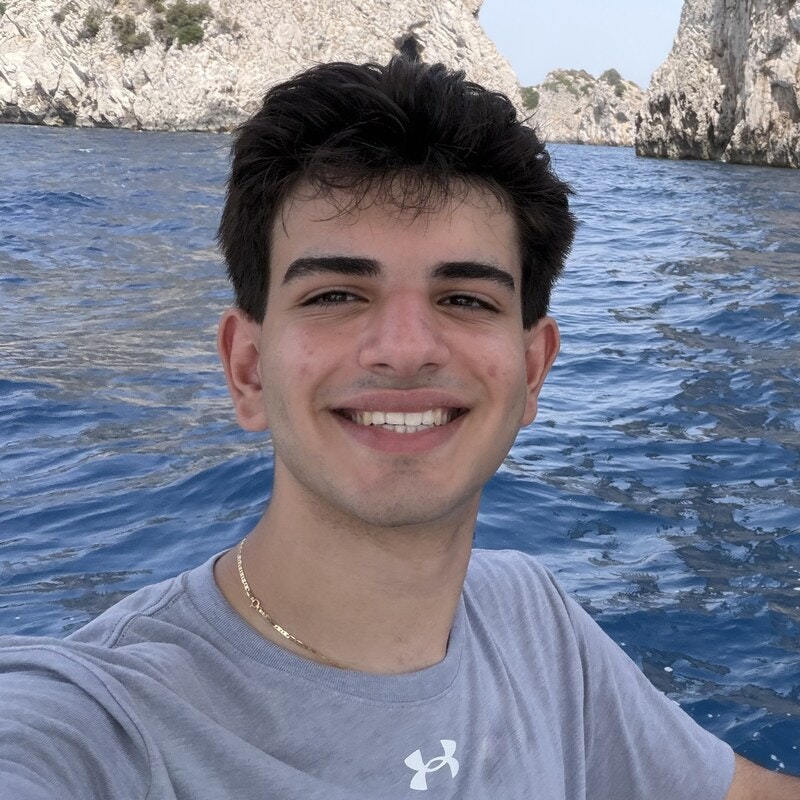
Sandro Boujaoude
Moorestown, New Jersey · Moorestown High School
Turning the Tides: How 16-Year-Old Sandro Boujaoude Is Combining Science, Education, and Youth Leadership to Confront the Global Environmental Crisis
My name is Sandro Boujaoude, and I am a 16-year-old student from South Jersey passionate about environmental science, biotechnology, education, and public communication. I am especially drawn to the intersection of environmental science and storytelling, using research to understand environmental problems and communication to make those problems feel urgent, human, and actionable.
My environmental interests have been shaped by experiences in both the United States and Lebanon. Over time, I became especially interested in one question: How can scientific innovation become something communities can actually understand, access, and use?
That question led me to create Project Turn the Tides, an environmental initiative built around three connected pillars: scientific innovation, youth education, and community action. Through the project, I have engineered enzymes designed to degrade plastic in aquatic environments, created environmental education resources reaching audiences internationally, and developed programs that help young people see themselves as environmental problem-solvers.
I believe the environmental crisis cannot be solved through science, education, policy, or advocacy alone. Meaningful environmental leadership requires finding ways for each of them to reinforce the others.
Project Background & Overview
Project Turn the Tides began with something deeply personal.
Through my family’s connection to Lebanon, I witnessed severe environmental neglect firsthand, including polluted waterways such as the Litani River and a reality in which my family can no longer safely rely on drinking water directly from the tap. When I returned to South Jersey, I noticed a different but related problem: a lack of environmental urgency in many schools and communities.
I realized that the challenge was not only pollution itself, but also environmental apathy, the lack of education, awareness, and accountability that allows environmental damage to continue.
That realization shaped Project Turn the Tides into an initiative addressing environmental harm through three approaches: developing scientific solutions, expanding access to environmental education, and empowering young people to take action in their own communities.
The project now includes AquaPETase, my research into plastic-degrading enzymes for aquatic environments; EnviroHealthExplorer.com, an open-access environmental education platform; Human and Habitat Magazine, a student-led global environmental health publication; and EnviroWeek, a program designed to turn environmental learning into youth-led action.
Project Execution
I designed Project Turn the Tides around a simple idea: environmental action should not stop at recognizing a problem. We should ask what we can build to address it.
For AquaPETase, I used site-directed mutagenesis to engineer 23 PETase enzyme variants and tested them across six aquatic conditions involving different temperatures, salinities, and pH levels. Four variants showed the ability to degrade and digest plastic directly in water, with up to 500% greater activity across diverse water-based conditions. I am also developing the AquaPETase Computational Pipeline, a free, open-access workflow intended to help design enzyme variants for environments such as oceans, freshwater systems, and polluted rivers.
I created EnviroHealthExplorer.com to make environmental and public-health information more accessible to students and the broader public. Through the platform and related outreach, I have developed 100+ pages of environmental curriculum and distributed thousands of pages of educational materials.
I also founded Human and Habitat Magazine, a student-led global environmental health publication featuring international youth voices, and developed EnviroWeek, a five-day curriculum that helps elementary and middle school students move from learning about environmental problems to designing solutions for their own communities.
Together, these projects connect scientific research with education, storytelling, and direct community engagement.
Impact
Project Turn the Tides has allowed me to measure impact across both scientific research and environmental education.
Through AquaPETase, I engineered 23 enzyme variants, tested them across six aquatic conditions, and identified four promising variants, with activity increases of up to 500% across diverse water-based conditions.
Meanwhile, EnviroHealthExplorer.com has received thousands of views worldwide. I have created more than 100 pages of environmental curriculum and distributed thousands of pages of educational materials. Human and Habitat Magazine has published international contributions across two volumes and has a four-member editorial board spanning India, Texas, and New Jersey.
I have also collaborated with local South Jersey elementary schools through EnviroWeek and worked with the New Jersey Sierra Club Youth Action Committee on environmental policy advocacy and research related to water scarcity.
Some of the most meaningful results, however, are harder to quantify. I have seen younger students become curious and solution-oriented when environmental problems are connected to their own lives. That experience reinforced one of the central lessons of Project Turn the Tides: science and education can strengthen one another, turning environmental concern into action.
My environmental work has also influenced my writing and storytelling. In 2026, I was selected as a winner of the River of Words International Environmental Poetry Competition.
Personal Reflection
The Climate Leaders Fellowship helped me transform a broad environmental mission into a structured initiative with clear goals, audiences, measurable results, and plans for long-term impact.
One of the most important realizations I had was connecting the environmental damage I had witnessed in Lebanon with the environmental apathy I noticed in South Jersey. I came to understand that environmental problems persist not only because technical solutions are missing, but also because people may lack the education, access, or sense of agency needed to respond.
That realization pushed Project Turn the Tides beyond scientific research and toward an intersection of innovation, education, communication, and youth action.
The fellowship also strengthened my ability to explain complex scientific ideas to younger students and broader audiences. It reinforced my belief that discovery and communication are inseparable: a solution has limited impact if it remains confined to a laboratory.
I am most proud that something that began with seeing environmental damage and feeling frustrated by it became something constructive. Instead of only asking what was wrong, I began asking what I could build to help change it.
That mindset continues to guide Project Turn the Tides as I work to expand its scientific research, educational reach, and opportunities for young people to become part of environmental solutions.
Tips for Others
My biggest advice to other young environmental leaders is:
- Start with a problem you genuinely care about.
- Look beyond the visible problem to understand its deeper causes.
- Do not limit yourself to one type of solution, science, education, advocacy, and storytelling can work together.
- Measure your impact so you can understand what is working.
- Build resources that other people can use and expand.
- Do not wait until everything is perfect to begin.
Some of the strongest parts of Project Turn the Tides only emerged after I started experimenting, listening, revising, and expanding.
Back to all Fellows
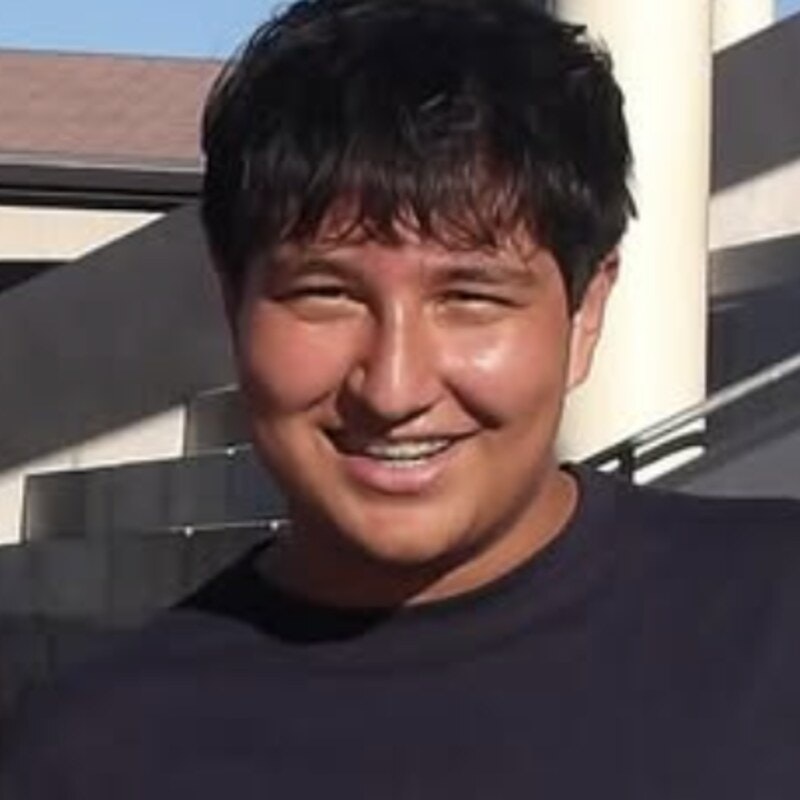
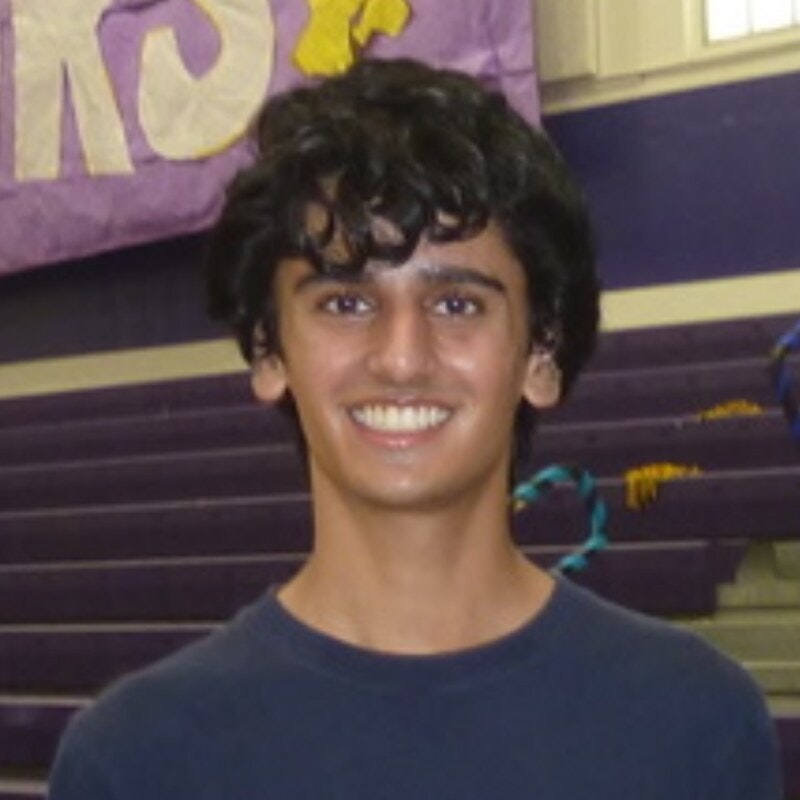
Shreyas Chatterjee, Roshan Saxena
Cupertino, CA · Monta Vista High School
These South Bay Teens Are Helping Main Street Go Green, and Save Money

Shreyas: I am passionate about enabling a transition to a more sustainable future. I enjoy participating in climate advocacy and journalism and researching environmental issues.
Roshan: I’m dedicated to tackling climate risk and environmental challenges through technology, research, advocacy, and community-driven solutions that make a real difference.
Project Background & Overview
We saw a disconnect between California government sustainability programs and the small businesses they are intended to support. Small and family-owned businesses often lack the requisite time, awareness, or technical expertise to apply for complex government grants, incentives, tax programs, and utility programs. As a result, valuable programs can go unused while businesses continue with inefficient equipment, higher utility costs, and larger environmental footprints. We wanted to bridge that gap. The issue became personally significant after speaking with the owner of a local garden center I had spent significant time in during my childhood. Their outdated irrigation infrastructure required significant amounts of water, and California’s water constraints translated that inefficiency directly into substantial financial pressure. That conversation made me realize that this access gap was directly impacting businesses that serve as cornerstones of our community. Without intervention, sustainability could become a K-shaped transition, where large organizations have the resources to adapt while smaller businesses are increasingly left behind. With climate challenges developing quickly, we also realized we couldn’t wait for every system to be redesigned. There is enormous value in making existing resources work better.
Project Execution
We developed a repeatable process for helping small businesses identify and implement high-value sustainability opportunities. This is critical so our framework is scalable and we can expand our impact continuously.
- Identify: Screen businesses based on energy use, operating patterns, equipment, and building conditions to find situations where intervention could have meaningful impact.
- Study: Analyze utility history, equipment, schedules, site conditions, and industry context to understand each business’s environmental and economic profile.
- Match: Research applicable utility, municipal, California, federal, and other programs and compare opportunities based on financial, energy, carbon, and water value.
- Translate: Turn complicated technical and regulatory information into clear recommendations business owners can actually use.
- File: Help organize documentation and support owners through applications, questions, follow-up, and implementation.
- Scale: Build databases, standardized processes, and increasingly data-driven tools so the model can support more businesses without sacrificing individualized analysis.
We began developing a more quantitative system for evaluating sustainability opportunities rather than relying exclusively on qualitative recommendations. Our framework considers factors including climate, weather, grid mix, utility rates, and program geography; building characteristics such as HVAC, lighting, refrigeration, motors, controls, and envelope; operating hours, occupancy, production cycles, and seasonality; and tariffs, project costs, maintenance, useful life, and available funding. We are developing an ensemble approach that combines multiple analytical models while preserving uncertainty instead of hiding it behind a single number. The goal is to determine not merely what is theoretically sustainable, but what will realistically work for a particular business.
Our primary audience was local small and family-owned businesses. We initially identified businesses through our own knowledge of the community and later through more systematic research. We reached owners through in-person visits, phone calls, cold outreach and email, and direct conversations about their businesses and operating challenges. The most important part was building trust. Many owners understandably associate government programs with bureaucracy and significant effort for uncertain results. Instead of approaching owners with a predetermined solution, we first tried to understand how their businesses actually operated and then adapted our recommendations around their needs.
Impact
Through this work, we supported 17 small businesses, helping them save more than $105,000 and 600,000 kWh of energy—roughly equivalent to the annual electricity use of 90 homes—while avoiding more than 120 metric tons of CO₂ emissions. These results demonstrated that environmental and economic outcomes do not necessarily have to compete. Businesses can reduce operating pressure, customers can be protected from costs that might otherwise contribute to price increases, California can advance its sustainability goals, and existing public resources can reach the communities they were designed to support.
More recently, we have expanded from directly supporting businesses to helping other young people develop climate ventures of their own. For example, we supported EcoTex, a youth-led initiative exploring fermentation-derived biofiber as an alternative to petroleum-based synthetic materials, and helped connect its team with industry professionals. Our broader goal is not only to create sustainability solutions ourselves, but also to expand the number of young people capable of creating them.
As part of this broader mission, we collaborated with Cupertino’s Sustainability Commission beyond our work with individual companies. The commission encouraged us to approach sustainability from a systems perspective, viewing businesses, government, economics, climate, and communities as interconnected rather than isolated. One of our biggest lessons was that the most scalable solutions can create value for multiple stakeholders at once. Instead of assuming sustainability requires someone to make a sacrifice, we began deliberately seeking solutions that allow businesses to benefit financially, communities to retain strong local enterprises, customers to benefit, and governments to achieve their environmental objectives. This systems-oriented perspective has become central to how we design our work.
Personal Reflection
Reallocation can be more powerful than creation. Sometimes the resources needed to solve a problem already exist; the real challenge is connecting them to the people who can use them to their full potential.
Design around the user, not the framework. Business owners’ lived experience repeatedly forced us to modify our process. A theoretically perfect solution is useless if it doesn’t work within someone’s actual day to day constraints.
Sustainability and economics don’t have to be opposing forces. The best solutions work precisely because they create environmental and financial value simultaneously.
Systems thinking matters; climate problems intersect with regulation, economics, technology, community, and human behavior. Treating any one piece in isolation limits the solution.
Scale requires process. We moved from individual research toward databases, repeatable workflows, student training, and quantitative modeling so the work could expand beyond its founders.
Creating tangible environmental impact while helping local businesses financially. Building something that began with one observation at a neighborhood business into a repeatable model that can serve more enterprises. Beginning to move beyond doing the work ourselves and helping other students become climate problem-solvers.
Tips for Others
- Start by listening to the people experiencing the problem.
- Don’t assume your first solution is the right one.
- Understand the economics, not just the environmental benefits.
- Look for valuable resources that already exist before creating something new.
- Turn successful one-off work into a repeatable process.
- If you want your impact to scale, teach other people how to contribute and grow your idea.
Back to all Fellows
Rethinking Climate Education Through… Thinking?
Hi! I’m Raean and I’m from Singapore 🙂 My friends often dub me their go-to person when it comes to all things climate and the environment, so you could imagine how psyched I was to be a part of the Spring 2026 CLF cohort!
Having done all sorts of projects surrounding waste before like Recycle Red!, an annual nationwide Chinese New Year sustainability initiative I started (almost half a million red packets diverted from landfills since 2025!!!), and The Bettering Run, an annual large-scale zero-waste logistics community event, I more or less had some experience with planning projects with regards to waste management.
And so I wanted to do something I had never done before for my CLF project. Considering my projects in the past have always been logistically complex and broad in terms of reach, I wanted to do something that went deeper this time, reaching fewer people but hopefully making a deeper and more meaningful impact on each of them.
Project Background & Overview
In Singapore, youths are generally quite aware of climate change. They have a general understanding of what it does to the world and how it comes about. But awareness doesn’t necessarily translate to action or even just caring (in fact, it almost never translates to it).
But this is also not because youths (like my friends and peers) don’t want to care or are apathetic by nature.
Going to school at 7 in the morning and leaving at 7 in the evening is a common sight in local Singaporean schools. It’s not every day, but it’s most days. Add in monthly exams and just the general woes of being a teenager, climate change is just another problem to one already very stressed-out Singaporean teenager’s life.
It’s further exacerbated by the fact that the impacts of climate change often feel relatively easy for Singaporean youths to mitigate. While things like the urban heat island effect are very real and can be felt, air conditioned public spaces are a dime a dozen. Compared to failing a test, where the repercussions are often ‘disastrous!’, for Singaporean youths, climate change is unfortunately nothing more than just erratic weather and sweating more on some days.
That’s why awareness campaigns these days aren’t all that helpful in getting Singaporean youths involved in climate action. In fact, I would argue, more awareness campaigns often present a ‘diminishing marginal utility’. Their ‘returns’ only get smaller the more we rely on them. Pushing more numbers and charts is not going to change one’s perspective much if they already have a grasp on the idea. Studies on psychological resistance have also shown that being constantly told something can make you disengage from it entirely!
Project Execution
Hence, for my project, my goal was to shift youth perspectives regarding climate change, and specifically waste management, by engaging them in meaningful thought.
The main goal was not for everyone to leave wanting to start movements or figure out how to solve the global waste crisis, but for them to genuinely reconsider actions in their daily lives. For climate change to shift from being just another thing they knew about in the background, to something they felt they had a real and personal stake in. I especially hoped the sessions would create an educational experience that made participants want to make real changes out of their own volition, not because they were following someone else’s instructions or being guilt-tripped.
I did this by trying to position my approach around making participants engage in genuinely meaningful thought. Initially, I had actually struggled to choose between taking a problem-based or curiosity-based approach. In the end, spoiler alert! I realised with CLF’s flexible timeline, I could do both and watch how they both unfolded.
For the problem-based session,
- I gave participants a problem to solve: a major environmental problem was occurring in a fictional country I created, and they needed to propose a solution.
- They were also given a range of fictional sources, which they had some time to read through so they could understand the context, and then they discussed within smaller groups on what they thought.
- After awhile, the groups were prompted to present their solutions to the rest of the participants (which actually fostered a pretty interesting debate!)
- To keep things engaging, sources included things like dramatic online newsletters, Reddit threads and Instagram posts. (I’m proudest of the ‘Instagram feed’ I put together by combining all the Instagram posts into one PDF. This made the sources/posts scrollable, like participants were using the actual app!)
Making the country fictional was also especially important for me because I understood how readily Singaporean youths were relying on AI chatbots and search engines for direct answers. If participants could have simply uploaded the entire problem and asked for a solution, they would have bypassed the entire thought process I was trying very hard to create.
My idea for the problem based sessions also came directly from my own experience with learning, and I wanted to apply that same process to climate education. When you are given a problem that you have to solve, you have to understand what you need to solve. You need to identify the cause, the mechanisms and figure out what information you need to even begin thinking about a solution (very much like when you read a math question for the first time).
For the curiosity-based session,
- I tried to create moments of uncertainty and surprise that would make participants want to know more. It was also a more interactive and discussion-based session compared to the problem-based session.
- I would present them with real-world situations, giving them only the bare basics of what was happening, and then ask them for their best guess on why it was happening.
- I deliberately did not give them any additional information or time to do research, as I wanted them to draw on what they already knew and make a guess.
- I would then use their guesses to prompt them into the right direction/answer
- The point was never for them to explicitly get things right, but to get them to stop and think!
- The situations were also deliberately chosen to pique curiosity. For example, countries like South Korea (and their waste crisis) were chosen due to the prevalence of K-beauty and K-pop culture in Singapore, which made participants a bit more invested in what was actually happening in the country.
- I also intentionally presented participants with a few questions in between situations that I knew they were likely to get wrong, but believed they were right. Common misconceptions like “which is more environmentally friendly, a plastic bag or a paper bag?”.
Paper bags were the obvious choice for all participants since thats a general public consensus, and so the curiosity came when I told them it was a bit more nuanced than that, and prompted them to guess why it was that way. (Paper bags actually require multiple reuses before the water and energy required to produce a paper bag become less than the water and energy required to produce a plastic bag = they aren’t necessarily better!)
For both approaches the underlying thought process was to get participants genuinely thinking and learning something new about climate change and the waste crisis. Crucially, I also never told them what to think or how to understand a problem or situation as I believed understanding that you arrive at yourself often runs a lot deeper than understanding that is handed to you. The hope was that when they understood it more deeply, they would see it more clearly in their lives, that climate change or the waste crisis was not just another problem in the background, but something very real and actionable.
Impact
To evaluate whether the sessions changed how participants understood climate and waste-related issues, I collected pre- and post-session data from 24 youths via a Google Forms questionnaire. The questionnaire was a scenario-based quiz and survey to assess systems-level reasoning and causal inference around waste and climate, rather than just testing factual recall.
The post-session quiz was also only conducted seven days after the session, without any prior warning, meaning participants had no idea they would be tested again and they were not simply being tested for their ability to memorise facts. In that sense, the results therefore reflected the most accurate measure of retention and understanding that I could obtain.
The following are the results:
Curiosity-based (12 youths)
- Pre-session mean: 14.2 / 20
- Post-session mean: 18.7 / 20
- Mean increase: +4.5 points (+32%)
- Score range narrowed from 11, 18 to 17, 19
Problem-based (12 youths)
- Pre-session mean: 12.0 / 20
- Post-session mean: 18.2 / 20
- Mean gain: +6.2 points (+51%)
- Score range narrowed from 3, 16 to 15, 20
The quantitative data showed that the problem-based session produced a larger mean gain, yet the curiosity-based approach produced a higher final score, making my results not very straightforward to interpret. My qualitative observations told a similar story.
After the curiosity-based session, participants reached out unprompted to ask me where they could go to learn more, and whether the session would run again, suggesting to me that the curiosity-based approach had produced a more genuine appetite to keep going and learning more. The problem-based approach on the other hand, did not reflect such initiative and enthusiasm after the session.
But my caveat with this is that youths from the curiosity-based session had a higher pre-session mean score, which could be interpreted as them generally being more interested and informed about the environment, resulting in greater enthusiasm after the session.
That said, the group of youths engaged across both sessions were self-selected individuals potentially skewed to be more interested in environmental issues, given both sessions were conducted on a sign-up basis, so the results do become harder to understand. The bias was pre-empted and confirmed with pre-survey questions asking participants to rate on a scale of 1 to 10 how important they thought solving climate change was. Most participants, barring a few outliers, rated it 5 or above. On the other hand, though encouraging for me, I do suspect social pressure played a role as participants may have felt uncomfortable subconsciously rating climate change as unimportant in the session setting.
In short, the results did not give me a straightforward answer on which approach worked better. That said, this did not make the project a lost cause. On the contrary, as both approaches ended up engaging participants in genuinely meaningful thought, my original goal had been achieved.
In particular, one of the participants from the problem-based session actually came to me afterwards to suggest improvements to the activity. They said that providing more context on the country’s political situation and neighbouring countries, rather than focusing on environmental issues and social context, would have been helpful. To me, that was real proof my participants were not simply taking part, but genuinely thinking about the activity and engaging with the issues critically.
Personal Reflection
To sum up, I think I learnt more than I could’ve asked for during CLF. Aside from my project itself, one of the things I appreciated most was the opportunity to hear from people from very different communities and countries. Even when I was not personally interacting with someone, hearing them share during Zoom sessions and breakout rooms made me realise how differently young people around the world can experience climate change and education.
In terms of the project itself, the entire process taught me a lot! Even though I regularly read environmental news beforehand, researching about frequent misconceptions (for the curiosity-based session) made me realise just how much I still have to learn about environmental issues, which really opened my eyes to what else I could learn.
Looking forward, I do hope to run the sessions again with a new group of participants, this time with more variables taken into account, more experimentation with how the information is presented and with more attention paid to how participants responded and engaged with each other during discussions (eg. during problem-based sessions). I also hope to explore and experiment more on how I can create different spaces where people can genuinely think, learn, question and meaningfully engage with climate issues.
Tips for Others
- Your first run or try will not be perfect, and that’s very okay! (I hadn’t accounted for so many variables, running through the sessions were the only ways I could identify my blind spots!)
- Take the project seriously in terms of execution (you have a real chance to do some good!), but don’t take yourself too seriously during execution. Basically put in the effort and commit to doing it well, but if things go south, give yourself some grace 🙂
- You can never truly fail when the goal is experience!
Back to all Fellows
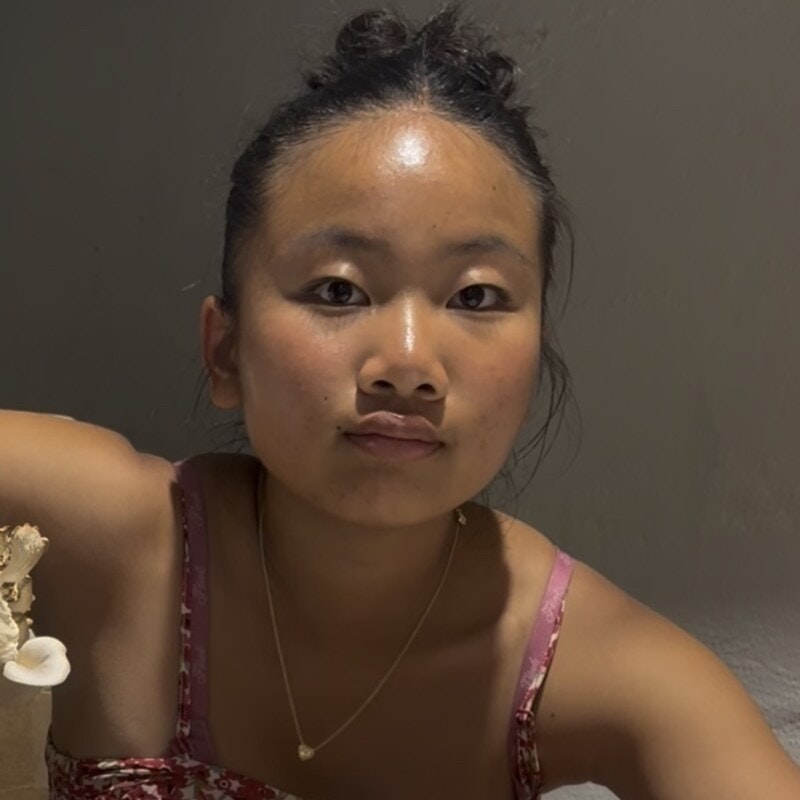
Gloria Chi
Bloomington, IN, USA · Bloomington High School South
Fungi For Future: Growing Mushrooms On Used Coffee Grounds
My name is Gloria Chi, and I am going into my freshman year at Bloomington High School South in Bloomington, IN. I am the founder of Fungi For Future, a mushroom cultivation initiative repurposing used coffee grounds from local cafes as mushroom substrate.
Project Background & Overview
In many food-insecure communities, the biggest hurdle is not just getting enough calories, but accessing fresh, homegrown produce, which is often the first thing to disappear from the table due to high costs.
A few years ago, I looked at this problem and took action. My inspiration comes from my father, a 26th-generation fisherman. In his small village, children and adults often went hungry. Today, I live a life of privilege, where I do not have to worry about where my next meal comes from. But this privilege comes with responsibility. I owe it to him, and to those still facing the reality he grew up in, to take action.
My journey began with a single lemon seed salvaged from a glass of lemonade. The seed was the first of many plants that I have gone on to grow. In those six years, I have experimented with dragonfruits, pomegranates, lemons, mangos, apples, avocados, pineapples, and mushrooms!
Project Execution
At 13, I started Fungi For Future, a mushroom cultivation initiative repurposing used coffee grounds from local cafes in Bloomington, Indiana, as substrate for mushrooms. My mission is to produce fresh, homegrown food for communities in need. Fungi For Future donates its mushrooms to the Bloomington community. To date, we have produced 90 pounds of mushrooms across three varieties of oyster mushrooms.
Impact
To date, Fungi For Future has repurposed 142 pounds of coffee grounds, which is the equivalent of 4,828 cups of coffee. We have 110 volunteers collecting coffee grounds, grown three varieties of oyster mushrooms, and harvested a total of 81 pounds of mushrooms.
The support I have received from the Bloomington, IN community is incredible. People are willing and eager to help when given the chance.
Our partnerships have been essential to this work. Through collaborations with both national and local coffee shops, including Starbucks, Soma Coffee House & Juice Bar, Crumble Coffee and Bakery, The Inkwell Bakery & Cafe, Hopscotch Coffee, and the Bloomington Bagel Co. I have been able to collect used coffee grounds as a growing substrate. Crumble Coffee and Bakery has been a particularly supportive partner. Additionally, my partnership with the Hoosier Hills Food Bank allows us to grow mushrooms at Will Detmer Park, expanding our impact and reaching more people in need. A final thank you to Sodexo, Karma for Cara, and Wayfinder for funding our work.
Personal Reflection
During the Climate Leaders Fellowship, I was surprised. I met people from all around the globe taking on the same climate problems. Sometimes, it was easy to feel discouraged because I was trying to solve a global issue with my small local one. But being around other people who are also taking action made me feel like I was not alone.
Tips for Others
Chase your passions even when they are uncommon! Mushroom growing isn’t the most popular after-school activity, but my experience with Fungi For Future has shown me that when young people pursue what excites them, community support often follows. People want to help youth who are brave enough to be different.
Back to all Fellows
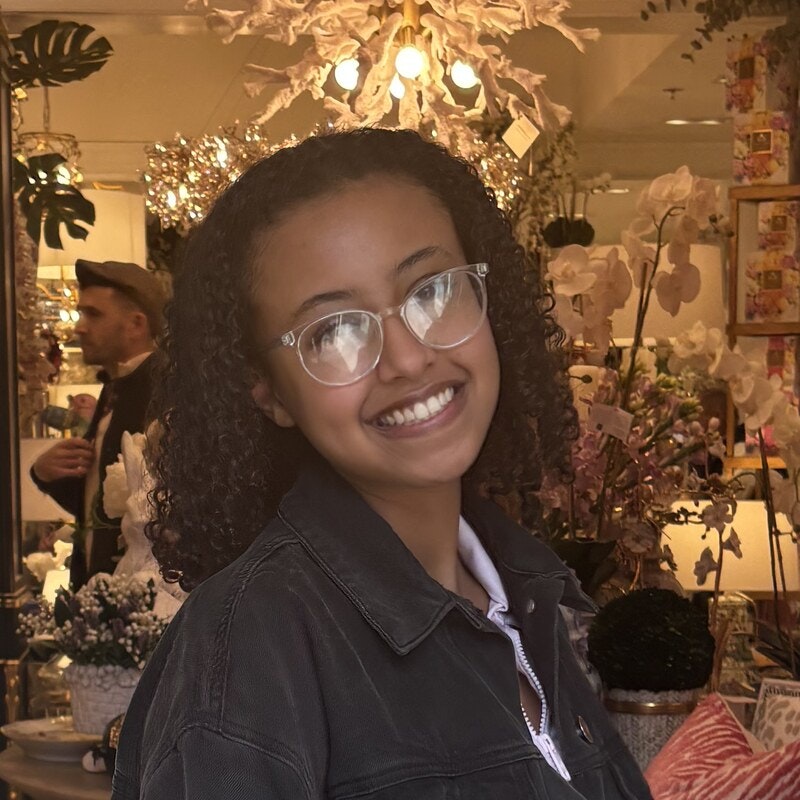
Mariamawit Gebrilu
Falls Church, Virginia · Justice High School
How One Student Mapped Urban Heat In Her Neighborhood
Hi! My name is Mariamawit Gebrilu and I am a 17 year old rising senior in high school. I am Ethiopian-American and live in Falls Church, Virginia. My passion is in environmental advocacy and conservation which compelled me to become a Climate Fellow! To pursue my interests in conservation, outside of being a Climate Fellow, I currently work with the Student Conservation Association over the summer. During the school year I am also apart of a few clubs and organizations such as my county’s Superintendent Youth-Led Environmental Council. Outside of conservation and environmental advocacy I enjoy crouching, skateboarding, playing cross country and cheer as well as reading a good chapter book!
Project Background & Overview
When brainstorming project ideas for this fellowship I created a list of requirements. One of the most important things my project needed was to make a positive impact, use quantifiable data, and address a local issue. After a few hours of researching environmental topics, I decided to create an urban heat island map to identify which neighborhoods are heating up more than others due to global warming and where tree planting is most needed. Most importantly, the quantifiable data from this project will be able to help my community understand where to plant trees in the hottest neighborhoods.
Project Execution
For this project, I measured ground temperatures of concert and asphalt using an infrared thermometer, GPS, and a notebook. I recorded the surface temperature of concrete and asphalt both in direct sunlight and under the shade of a tree. I also documented the evening air temperature on my notebook from the weather app. Using google maps, I also pinned the neighborhoods i visited and wrote the latitude and longitude in my notebook. Over several months, I recorded all data, uploaded it to Excel, and used a website to create my heat map.
Impact
I believe that my project has exceeded its goal and impacted me and my community in a positive way. Over the past few months working on this project, I have gained over 100 volunteer hours! With the data that I have collected I hope to present it to my Superintendent Youth-led Environmental Council were I can possibly showcase which parts of our neighborhood is increasingly affected by the heat in Fairfax County and were to plant more trees.
Personal Reflection
By continuously monitoring and documenting my project for months, I learned the true value and importance of commitment and determination. As my first independent long-term environmental project it came with inevitable mistakes and a learning curve. The zoom meetings during the fellowship and my active participation during the program also helped when I was feeling confused or stuck. However successfully completing my project and producing data that can be used to environmentally benefit my community made the time commitment deeply rewarding. While I do believe managing a better time management during the busy third quarter semester would have eased the process, overall i am satisfied with how I handled and created my own project!
Tips for Others
One of my biggest tips is to not be afraid to ask questions. During the beginning of the fellowship, in the first couple of zoom meetings, you will meet new people from around the world who will have different ideas and share what there projects will be. This is a good time to socialize, ask questions and gain new insights from Climate fellows. Most importantly, I emphasis that if you get stuck on you project do not hesitate to ask program leaders for help! They are very understanding and accommodating, and they can help you with whatever conflict your dealing with. Lastly, I believe that picking your project carefully is extremely important. Come up with a list of goals you want your project to accomplish that are realistic. Research and pick a project that fits for your time commitment and most importantly positively affects your local communities!
Back to all Fellows
Siena Geddes
Durham, NC · Trinity School of Durham and Chapel Hill
Plastic to Purpose
I am Siena Geddes, a rising sophomore living in Durham, NC. I swim competitively on a year-round team as well as on my school’s varsity team and my neighborhood’s summer league team. I also am a competitive pianists, with dreams of one day playing with a symphony. I’m also on my school’s SGA, am a student ambassador for my school, and on my school International Academic Competition team. I also have a passion for helping my community.
Project Background & Overview
When brainstorming a project, I was drawn to an old hobby, crochet. When I was younger, I used to crochet all the time, but as my schedule has filled over the years, I got less and less time to crochet. I remembered having seen videos online of people using plastic bags to crochet different things such as handbags and placemats, and so I wondered how I could turn that into a project. I was talking to my mom one day about it, and she brought up an old program at my church that had been stopped by the pandemic. In this program, members would meet once a week in a room in my church building and take plastic bags to crochet into mats for homeless people to sleep on. I felt very inspired by this, and thought I could make it my own. In my project, I helped to restart this program at my church, as well as collecting bags from my school, church, and swim team. I also met with some youth in my area to teach them how to make the plastic yarn, or plarn, and crochet the mats.
Project Execution
To actually carry out my project, I first began collecting bags. It takes about 900 bags to make a single mat, so I knew that this would take a lot, and I couldn’t do it alone. I collected from numerous sources, including people on my swim team, my entire high school, and my church. I met with some people at our church to help get the program going again, and from there the majority of my project was just crocheting. As the word about my project got out, I was contacted by a former staff member at my school who invited me to teach her kids and their friends how to do this project, stemming off of a previous school project they had done. I met with them to teach even more people how to do this project to help our community!
Impact
I’m still working on my project to this day, but I have saved about 1200 bags from going into landfills and polluting our world. Plastic bags are everywhere, from the sides of our highways to the bottoms of the ocean. Helping to deplete the amount in the ecosystem, if even on a small scale, was important to me. I have also taught others how to make these mats, which could lead to others continuing to help our community, by decreasing pollution and helping those less fortunate.
Personal Reflection
This project has taught me so many things, but one thing taught me an important lesson, even though to others it might seem small. When I needed more bags, I knew I had to go to my high school to ask for donations. For reference, I attend a small high school, about 250 students. To introduce my project and ask for donations, I had to give an announcement live in front of everyone, which really intimidated me. The idea of speaking right in front of so many of my peers was extremely outside of my comfort zone, and I was terrified going into it, even though it was just a 45-second announcement. As I sat on the stage, a million thoughts ran through my head, but eventually it was my turn to speak. I gave my announcement, and as a result of doing it my project gained countless donations that allowed my project to go on. This project taught me that to achieve your goals, you have to go outside of your comfort zone and
Tips for Others
As I said earlier, you will have to do things that you aren’t comfortable with in this project, whatever that may be. However, you also have to be adaptable and not give up. Before this project, I was in the Fall 2025 cohort, and my project failed. Even though my first project failed, I knew that this was something I really wanted to do and see through, and so I applied to the Spring 2026 cohort, and ended up having a successful project. Being willing to change course if something isn’t working out and completing your project to the best of your ability is
Back to all Fellows
Ema-Maria Gerova
Vevey,Vaud, Switzerland · Haut-Lac International Bilingual School
Giving clothes a second chance
My name is Ema-Maria, and I am originally from Bulgaria. I currently live and study in Switzerland. I am 18 years old and enjoy traveling, cooking, and singing. I love exploring new cultures through my travels, trying different cuisines, and expressing myself through music.
Project Background & Overview
My project focused on giving clothes a second chance. It started with a problem that me and my teammate noticed that people would purchase more and more clothes, instead of using their already purchased clothes. This we especially saw in our school and the way our classmates behaved. This problem matters to me personally, because I am too doing the same buying new and more clothes, instead of using the ones I already own, therefore through this project I also wanted to minimalise my purchasing behavior when it comes to clothes and learn how to help others as well.
Project Execution
For such problem we wanted to do something fun and engaging for the students, therefore we came up with a thrift store idea. For the thrift store to work we created posters and digital posts to be able to get attention on our project. We laid out boxes throughout our school in which students and teachers were able to leave clothes and items they no longer needed or used. Our main target group was the younger students as they also tend to over purchase and have little knowledge over why this is a problem. And after a month of collections we had gathered over 10 bags of diverse clothing and were able to execute our project. We did a thrift shop simulator in our school`s garden and people were able to come, look around and purchase clothing items. The money we raised gave to the charity Caritas and the clothing left we donated to the same charity, through clothing donation boxes.
Impact
As of materials, there was a lot of diversity – there was dresses, jackets, tops, bottoms, hats and all form different materials, to have even more choice. We were able to solve more than half of our items, and collect more than 50 francs, as our prices were for five items three francs. As of help from our school we had our Eco Committee teacher help and guide us, Helen Cass, as she helped us find hangers, tables and stands and be able to execute the shop. As well as she was abled to take some photographs of the event, which helped show the impact.
Personal Reflection
I received help form the team at the Fellowship, as a few times I was out of ideas on how to promote the event, as well as the idea of the thrift shop came with inspiration from the meetings. Therefore participating in the meetings helped me feel inspired, connected and surrounded by people with fresh, new and optimistic ideas. I am proud of the project, as we were Abel to reach our goal and help people give their clothes a second chance and spread awareness of the problem.
Tips for Others
A tip for someone who would want to have a similar project would be to do something fun and interesting for their target group as people do not want to give up their clothes and through something that appeals to them they would be able to learn for the problem and have an easier time to “declutter” their closet.
Back to all Fellows
Leab Mesganaw Getinet
Tullu Dimtu, Woreda 13, Akaki Kality, Addis Ababa, Ethiopia · Saint Joseph School
Bokashi Fermentation: A methane free journey
My name is Leab Mesganaw Getinet. I am a 14 year old soon-to-be Sophomore currently residing in Addis Ababa, Ethiopia. I am interested in climate action, virology, immunology, vaccinology, and scientific investigation. I am a med student in the making with an avid interest in climate change and strategies to combat it. You could say that I am that one “sweat” that reads research papers to study for exams rather than my notes. I really enjoy robust, methodologically airtight scientific investigation because of how incremental and how informative it is to broader body of knowledge.
Project Background & Overview
We identified a distinct problem within our school Saint Joseph School compound. Although Saint Joseph School has an existing compost pile, it took way to long to produce enough for the school’s fertiliser needs. You see Saint Joseph School has a large football field that gets fertilised once a year. But because the compost pile is new and insufficient with a very long composting period, the institution is forced to buy expensive fertiliser.
Imagine that you have a pile of organic waste that you don’t know what to do with. You could dump it all in a landfill but it produces a lot of methane gas and toxic residue. You have a clever idea to compost your organic waste but regular cold composting takes a year or so, it is heavily pungent, and produces methane gas. After some contemplation, you have another epiphany. What if you were to do it in such a way that no methane forms? This is the core idea behind Bokashi Anaerobic Fermentation. It only takes 6-9 weeks, it has a subtle, fermented, almost sweet aroma, it doesn’t produce any harmful greenhouse gases, and best of all it is highly practical for urban spaces.
Project Execution
I didn’t do this project solo, far from it. My colleague Ezana Manuel Kassaye was there from Day one as an architect of our creation. We made all the necessary ingredients from scratch and successfully produced pre-compost. Just to be clear, this is not a composting method. It is a fermentation process (4-6 weeks) that is coupled with trench composting (2-3 weeks).
We planned rigorously for 8 weeks. After designing a solid plan and procuring administrative support from our school, we went straight into implementation. We curdled some milk, prepared dechlorinated water, and then added our brown sugar to activate the Lactobacillus bacteria. It failed. It smelled putrid and rotten. We tried again with expired yogurt and it worked. For just 101 ETB (62 US cents) we had prepared our microorganisms. Next, we acquired sawdust for 0 ETB from our local carpenters and prepared our bran. After some mixing and back pain we prepared our Bokashi bran for just 102 ETB (only the water cost us).
We mobilised the Climate friendly club (A CLF chapter within Saint Joseph School established by me as its president) members to wash and prepare our buckets. We had to scrape off the paint with a set square ruler for days. Alongside our teachers washing their hands after lunch, we students were scrapping paint. They asked us “What are you doing?” We explained to them what we were doing and how our compost will smell sweet and pleasant while the cold water wrinkled our hands and wet our uniform. We probably sounded crazy looking back but our teachers admired our commitment. That is an experience that I will never forget. Finally, we put our waste layer-by-layer into the buckets wit hour bran and sealed them off. On the final day we trenched them and completed our project. I want to give special thanks to the gardening department and the lunch ladies for their cooperation. Throughout our implementation period, we were backed by a lot of institutional support for our innovation. Especially the gardening department, they provided us with tools, 26 buckets, drills… just about anything. They were with us to the very end.
Impact
We successfully produced over 23 kilogrammes of pre-compost, over 140 litres of nutrient rich gardening water from just 1.4 litres of Bokashi leachate, nearly 10 kilogrammes of Bokashi bran with sufficient microbial activity for our next batch, and impacted 10 school staff members, 6 lunch ladies, 7 students, and 13 teachers. Most importantly, we established a working system of Bokashi Anaerobic fermentation that overcomes the hurdles of traditional compost for years to come.
Personal Reflection
At some point in our project I asked myself “Even if all the schools and educational institutions in the world suddenly became carbon neutral, will it even make a dent?” The answer is no. It is equivalent to removing a spoon of water from the ocean. The math is simply not in our favour. Then I asked myself “If we can’t meaningfully impact climate change even in an idealised thought experiment, then what is the point? What can we hope to achieve with such miniscule excuses for projects?” I thought that the only logical conclusion was that we might as well give up. That question would not let me rest and it drained my motivation.
After careful contemplation, I arrived at a sound conclusion. We can neither fix climate change here nor should we waste our times trying to. Rather, we should focus on pilot studies that demonstrate the feasibility, efficiency and most importantly profitability of sustainable approaches to the most anti-climate industries like construction, energy, manufacturing, and waste management to one day bring systemic change. Throughout this 4 month project I have been humbled, surprised, intrigued, and tired. But the key thing that I learnt is how we can move beyond making a dent into collapsing the old and building the new.
Tips for Others
My tips:
- Be Feasible. Don’t do some crazy big project right from the get go, especially if this is a novel method that you are practicing for the first time. Initially, our proposal outlined 200 kilogrammes of food waste to be diverted and a 15% increase in agricultural output. We shifted our focus into a pilot study since it was our first and you should do the same with your project if you’re doing it for the first time. The objective should be to assess its sustainability and feasibility not to break records.
- Use AI, but don’t make it do your project. If you want to structure proposals, brainstorm ideas, or paraphrase Emails go ahead and treat AI as a consultant and use it. But be careful, AI can hallucinate and include unrelated material especially if you get lazy.
- Start at school. Don’t go to other institutions without getting your school on your side. Bureaucratic administrations have a strict hierarchical chain that starts at your school, don’t try to overcome it you will be fighting a losing battle.
- Scale your initiative, but terminate your project. A lot of students don’t know how this works. A project is time-bounded. It ends. But adding more projects and expanding your work is the mark of an initiative. Understand the difference. The initiative must be sustained for it to have real value, but a project must end for your reports. A one-time gig only takes you so far so scaling it as an initiative is the smart choice.
Back to all Fellows
Harini Gopinath
Fremont, California, USA · Mission San Jose High School
Turning E-Waste into Action
Hello, my name is Harini Gopinath, and I’m a 16-year-old high school student from Fremont, California. I’m really into engineering, architecture, sustainability, and trying to find practical ways that actually help my community. I like volunteering, learning about environmental concerns, and going all in on projects that can create a positive impact. Outside of that, I love playing different sports and cheering a little too passionately for my favorite teams. I also enjoy going to concerts of my favorite artists, trying just about any food I can get my hands on, and never saying no to Starbucks or boba with friends. In my free time, you’ll usually find me sketching, creating art, watching my favorite shows, or rewatching movies and giving them my own ratings just for fun.
Project Background & Overview
For my Climate Leaders Fellowship project, I focused on e-waste and battery recycling. Living in the heart of Silicon Valley, I’m surrounded by technology every day. As new devices are constantly being released, it’s common for people to replace old phones, chargers, earbuds, cables, and other electronics, leaving many unused items sitting in drawers or, even worse, ending up in the trash. When these items are improperly disposed of, they can release harmful materials into the environment and contribute to unnecessary waste.
Honestly this problem really matters to me, because in a region that people call the world’s leading center for innovation and technology, we also have to deal with the waste that shows up with all that progress. I noticed that a lot of people truly want to recycle their old electronics, but they just don’t know what place to bring them to, or even what can be recycled in the first place. So I decided to make e-waste recycling feel simpler, while also encouraging my school community to understand why proper disposal of electronic waste is so important.
Project Execution
I organized an E-Waste and Battery Recycling Drive for my school community. To encourage participation, I created promotional materials, planned announcements, and spread awareness about what items could be recycled and why proper disposal matters. My target audience included students, teachers, and families, since many households have unused electronics that often go unrecycled. The goal wasn’t just to collect e-waste, but also to educate people and make recycling feel simple and accessible.
Impact
The drive collected approximately 80, 100 batteries and small electronic items, with around 15, 25 participants contributing. One of the biggest successes wasn’t just the number of items collected, but the conversations the project started. Several students mentioned that they didn’t realize batteries and electronics should never be thrown into regular trash. Others said they had old electronics at home but simply didn’t know where to recycle them until learning about the project. Seeing people become more aware reminded me that education can be just as impactful as collecting waste. For guidance on responsible disposal, I looked to the City of Fremont Environmental Services Division, whose recycling resources helped me better understand proper e-waste management.
Personal Reflection
The Climate Leaders Fellowship showed me that meaningful change doesn’t always require a huge budget or a large organization behind it. Sometimes it starts with one person identifying a problem and taking the initiative to solve it. I’m most proud that I turned an idea into a real project that benefited my community. Throughout the Fellowship, I became more confident communicating with others, organizing a project, and taking responsibility from planning through implementation. I was also inspired by other Climate Fellows who were passionate about improving their own communities. Seeing everyone tackle different environmental issues reminded me that climate action can happen in many different ways.
Tips for Others
If you’re thinking about starting your own project:
- Pick a problem you genuinely care about.
- Start small and keep your project realistic.
- Ask for help from local organizations or mentors.
- Make it easy for people to participate.
- Educate people, not just collect donations or materials.
- Be flexible when plans change
- Stay organized, set goals/task and stick to them
- Don’t be afraid to reach out to others.
- Celebrate small successes.
- Document your progress with photos and data.
- Remember that even small actions can make a meaningful difference.
Back to all Fellows
Mrittika Govindaraj
Singapore · Dimensions
How a teen hosted a virtual climate business pitch competition
Hey everyone, I’m Mrittika Govindaraj! I’m 15 years old, and I live in Singapore. I’m someone who loves to explore new hobbies and ideas. I’m also an incredibly curious person. I always like to learn more about our planet and try my best to help in any way possible. Maybe it’s because my name, “Mrittika”, literally means “Mother Earth”, but I have always been passionate about sustainability from a young age. My passions include STEM, Climate action, Music and Art. My favourite subject in school would be Chemistry, and I enjoy playing the good old ukulele whenever I can.
Project Background & Overview
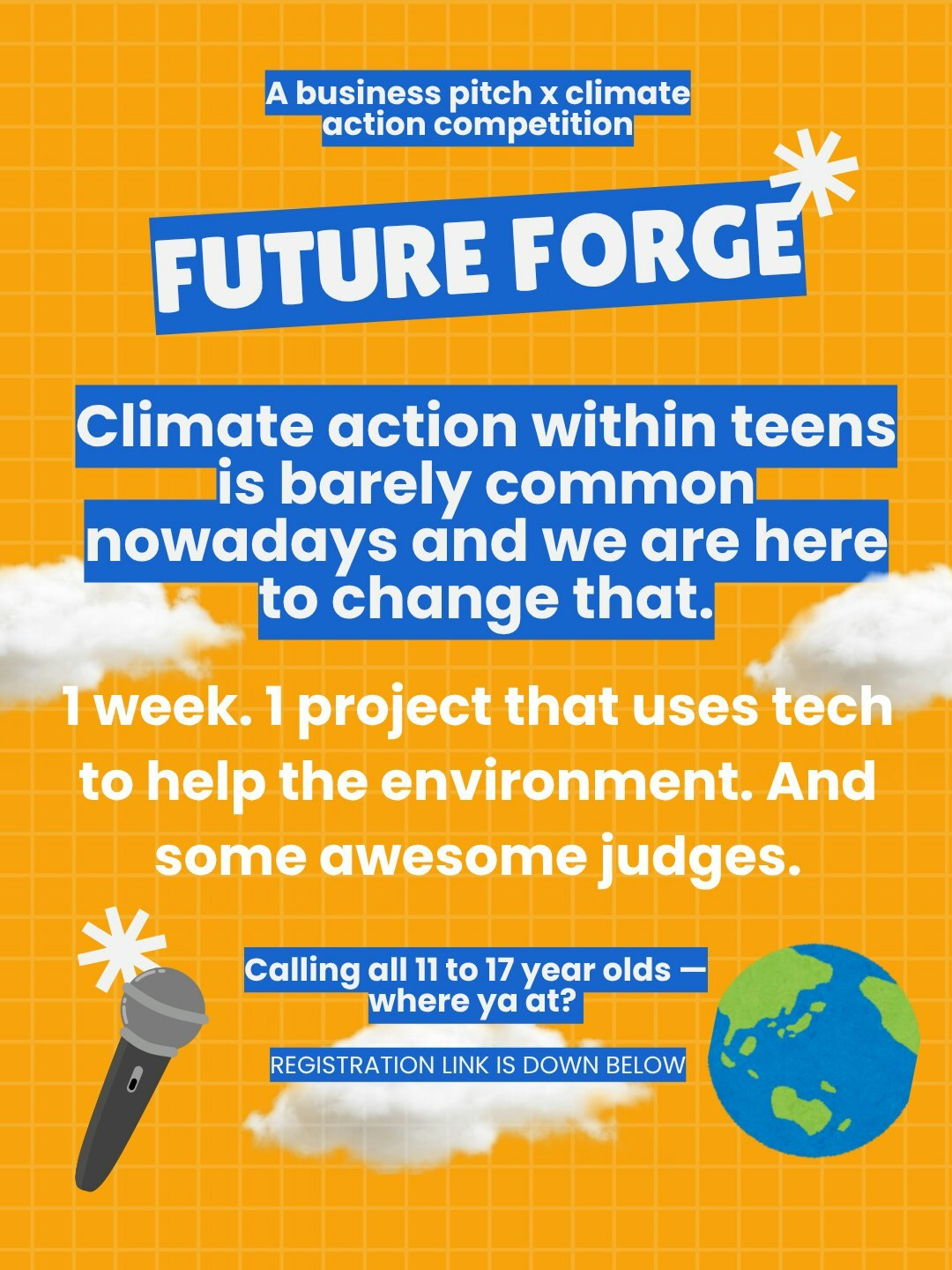
Over the course of the CLF program, I was working on a project that revolved around hosting Future Forge, a virtual climate business pitch competition. Climate change and Business often seemed like an unlikely pair. In reality, they complement each other remarkably well. I want to raise awareness about this and make teenagers realize that Climate change isn’t so “boring” after all. This matters to me personally as I want more teenagers to realize the climate is actually fun and engaging to learn about. I also want to help create meaningful change in the world.
I already had a climate nonprofit called “Project GenPlanet”, so we hosted this event as a collaboration between a climate nonprofit and an idea validation startup. I collaborated with this startup through LinkedIn. The competition revolved around participants getting a 1-week timeframe to develop a climate pitch and present it to the judges on the last day. Future Forge had judges from various fields, including business, AI, Leadership, and Environmental Impact. The top 3 received a certificate and a customized digital badge.
Project Execution
Executing the project was challenging, as it required managing and coordinating numerous tasks. Surprisingly, securing the judges turned out to be the easiest part. We hopped onto LinkedIn and contacted top Gen Z voices in fields like AI and Business. We coordinated with the judges, and eventually, all our participants’ work was reviewed by them. What was hard at that time was marketing. Despite having a website and posters ready for registration, it was harder than expected to get people to register.
Eventually, our consistent marketing efforts across helped us get a strong number of sign-ups. After participants registered, they received an email that connected them to the Future Forge Discord community. All resources were shared through Discord. I remember that some of the judges were unable to attend the final day, when the pitches were evaluated, due to unforeseen circumstances. Because of this, we recorded our participants’ pitches and sent it to the unavailable judges so they could mark them easily. This resulted in a delay in announcing the results, but we eventually published them.
Impact
While working behind the scenes, we used tools like Canva and CapCut to design our graphics and visual edits. For all competition participants, we provided certificates recognizing their participation in the event. We gave the top 3 participants achievement certificates and customized digital badges.
We gathered a total of over 8k+ impressions on different social media platforms. We received registration applications from people located in different parts of the world.
As I mentioned before, I am the founder of a climate nonprofit known as “Project GenPlanet”. We hosted Future Forge as a collaborative event with LockIn, a startup focused on idea validation. We divided the tasks between the two initiatives and conducted the event successfully in that manner.
Personal Reflection
I didn’t collaborate with any other CLF members in my cohort; however, they always encouraged what I did and gave me really good feedback, which I implemented. The other CLF members always inspired me to become a better leader. Hearing about the other projects participants were working on inspired me to put even more effort into making my own project successful.
Participating in CLF helped me develop my communication skills and engage better with an international community of like-minded teenagers. It was my first time in a room full of teenagers with similar aspirations, and I learnt a lot from each of my peers. To be honest, CLF made me more extroverted, and it helped me make memories I will never forget. CLF also made me step out of my comfort zone and try things I had never done before, such as cold-calling people to invite them to be a judge at Future Forge formally.
I was most proud of getting people to become competition judges, as I had thought that was pretty hard. I never expected them to reply to the messages I had sent, but they did, and it shocked me how you are one message away from an opportunity.
Tips for Others
My top tips for others who want to undertake a similar project are to step out of their comfort zone and challenge themselves with a goal that might seem difficult to reach, and actually achieve it. For me, that goal was to have experienced Gen Z individuals attend as judges for our competition. I thought that would be really tricky, but it was possible. I also encourage them to promote their project on LinkedIn and Instagram through short-form content. I recommend planning the event considering the worst scenarios possible. What if the judges cancel at the last minute? What if there is a technical glitch? They should be able to overcome these types of situations by having backups, doing a tech check before the event and more.
Back to all Fellows
Delisha Gudimalla
India · Oakridge International School
From Awareness to Action: EnviroAware
My name’s Delisha and I’m a high school student from India. I have a keen interest in the sciences and in pursuing research that can be applied to real-world problems. I have pursued projects related to climate awareness and community engagement such as EnviroAware, an interactive climate change platform that enables people to progress from awareness to action. Taking an idea from research to something real, accessible and practical that makes a difference is what interests me most.
Project Background & Overview
EnviroAware is an interactive digital platform created to raise awareness about climate change, but most importantly, about what concrete steps can be taken in everyday life. First, I researched about the disconnect between climate awareness and individual action and how individuals, although aware of climate change impacts, are unable to make a difference in their everyday lives. This study contributed to the development of the platform by focusing on simple and accessible actions that participants could easily integrate into their daily lives.
The platform offers interactive and accessible climate action information aimed at awareness, but also with a practical focus on lifestyle changes. I also included aspects that give the users the opportunity to add their own experiences and share actions that they’ve taken within their community. This was done to increase the participatory nature of the platform and show people how their actions could inspire others to get involved.
Project Execution
One of the key problems in communicating about climate change is that awareness doesn’t always translate into action. Individuals might grasp the gravity of climate change, but lack clarity regarding their personal actions. This disconnect between the understanding of the issue and action was the initial problem I tackled with EnviroAware.
EnviroAware was developed to help bridge this gap by providing information about climate change in simple, actionable steps that people could take in their daily lives. The platform includes more than just the magnitude of the climate emergency, it invites users to look at what they can do, what manageable changes they can make and how their actions can be part of a bigger change.
The interactive features also allow users to share their own experiences, helping create a community where people can learn from and encourage one another. The idea behind this was to demonstrate that climate action does not have to be massive and that everyday choices can help provide for wider environmental progress.
The project began with my own school community and eventually, a model to be developed and shared with a wider audience. EnviroAware sought to make climate action seem more practical, more achievable, more relevant to daily life through a combination of research, easy-to-digest information, and opportunities for engagement.
Impact
EnviroAware was able to involve about 900 people, primarily among my school community and people who care about climate action. Its objective was to raise awareness, as well as to encourage that simple and meaningful lifestyle changes can contribute to addressing climate change.
The feedback I received indicated that the project had enabled climate action to be more achievable. Instead of feeling like a radical change or an extreme challenge to their daily lives, many were able to recognize small changes to their lives that would naturally fit into this climate change.
Individuals also reported their own experiences and activities they were participating in in their communities. These contributions demonstrated to others and inspired them to consider other means of responding to climate change.
The platform also enabled people to engage with and contribute to the content, fostering a more interactive and engaged community as opposed to a platform where information was delivered to an audience.
For me, the impact of the project is not only represented by the number of people who accessed it. I’m most excited about people going from learning about climate change, to taking action in their own way.
Personal Reflection
As part of the fellowship, I attended peer discussions that were invaluable to shaping my perspective of the project. I witnessed the variety of each individual’s project and the impact they had with it. Learning about the ways others were approaching climate action encouraged me to reconsider how I presented and structured EnviroAware.
It also taught me that successful projects don’t always have to be based on complex ideas. Simple solutions can be effective when well researched, well designed and implemented to address a specific need.
Before taking part in the programme, I thought climate action was primarily about awareness raising and a shift in consciousness about climate change. But in and through the Program I discovered that awareness does not always translate to action. There should also be ways for people to take practical and accessible action in response to the learning.
Tips for Others
Making information available and allowing users to be involved in a project can enhance engagement and relevance. In addition, being a part of the project can help you better understand the individuals your project is intended to help.
Make things accessible and simple: Information is useful when people can readily understand and use it. Try not to over-complicate a project when a simpler solution will better communicate an idea.
Provide encouragement for small steps: Along with awareness building, assist people to make decisions about actions they can take in the real world. They can go from ‘problem awareness’ to ‘action’ if climate action is actually ‘doable’.
Give attention to the audience: Pay attention to the audience’s response, what they found easy or difficult, what they got out of your project. Feedback can be utilized to identify and communicate areas for improvement, and enhance the relevance of the project to the target groups.
Working on a project can be difficult to focus on if you’re not that interested in an issue, so it can help to be able to stay focused on an issue that you really care about.
Back to all Fellows
Brandon Ho
New York, USA · Midwood High School
New York City High School Students Organizes Clothing Drive to Support Their Community
My name is Brandon Ho, a 15 year old from Brooklyn, New York. My interests and inspirations stem from my friends, family and peers. I enjoy working with others and push myself to help those around me. Alongside my partner, Ricardo Torres, we were able to raise awareness and help reduce clothing waste in our community.
Project Background & Overview
In the beginning of our planning phase, we wanted to center our project around actual change. Rather than just discussing the importance of recycling and reducing waste, we aimed to raise environmental awareness while providing our community with a practical way to address the issue of overconsumption. I personally did not like the idea of fast fashion clothing and brands that promoted styles that was popular for a couple months. Clothing waste, particularly from garments made with synthetic materials such as polyester and nylon, has become an increasingly significant environmental concern. These materials can take decades to naturally decompose, further contributing to growing landfills. By creating an outlet for students, teachers, and staff to donate unused clothing, we were able to give these clothing a second life by redistributing them to people in need while reducing unnecessary waste.
Project Execution
To address this issue, my partner and I set up donation boxes in our school lobby where students, teachers, and staff could donate used or unused clothing. We promoted the drive through various social media posts and used our student council pages to attract the help of our fellow peers. Within a week, our boxes boxes became overfilled and the positive feedback encouraged us to extend the clothing drive. In total, we collected approximately 15 large bags of clothing, which we distributed to local churches and donation centers in our community.
Impact
Our hard work over several weeks resulted in multiple large bags of clothing being donated to local churches and donation centers around our school. Beyond the donations themselves, our project encouraged our peers to become more aware of clothing waste and consider more sustainable ways to reuse and donate clothing. Overall, our clothing drive demonstrated how a small initiative can create a positive impact.
Personal Reflection
Throughout the progression of my project, I took major inspiration from my partner, who had previously completed the Climate Leaders Fellowship. He guided me through the stages of planning the project, executing our ideas, and giving back to our community. My participation in the Climate Leaders Fellowship allowed me to not only learn about the environmental effects of clothing waste, but also furthering my leadership skills while taking initiative to help my community.
Tips for Others
- Be open-minded when working with others
- Learn from your mistakes
- Do not slack off and stay on track
- Be punctual
- Allow your peers to give you feedback
- Have good time management
Back to all Fellows
Rohan Huria
Making Reuse The Easier Choice: Building A Circular Economy For School Supplies
My name is Rohan and I was part of the Spring 2026 Climate Leaders Fellowship cohort.
I did not come into this as an environmental kid. I was not running the recycling club or organizing cleanups on weekends. What I have always been interested in is systems, why they work, why they fail, and why people keep doing things they already know are wasteful. That interest is what pulled me toward this project, and it ended up shaping all of it. I approached the problem the way you would approach a design problem, which meant spending less time asking people to care and more time asking why the wrong choice was so easy to make in the first place.
If you had asked me in February what my project would be, I would not have said school supplies. I got there by paying attention to something I had walked past every year without really seeing.
Project Background & Overview
Every May, at every school I have attended, the same thing happens. Lockers get cleaned out and the dumpsters fill with binders, half-used notebooks, folders, backpacks, and the occasional graphing calculator that cost somebody eighty dollars in August.
None of this is really anyone’s fault. Nobody wakes up planning to throw away a working calculator. It happens because throwing something away takes four seconds and finding it a second home takes an afternoon of effort that nobody has been assigned. The waste is not a caring problem. It is a convenience problem.
Why it matters to me
School supplies are expensive, and not every family absorbs that cost easily. I go to school with people who feel that every August. So this was never only an environmental project. Manufacturing new notebooks and binders and backpacks takes raw material, energy, packaging, and freight, and extending the life of what already exists cuts demand at the source instead of managing waste after the fact. But every binder kept out of a dumpster is also a binder somebody did not have to buy. Those two problems turned out to have one solution, and that is what made it worth doing.
Project Execution
I built a supply drive designed around convenience rather than enthusiasm. The idea was simple: create a path for usable materials to move from students who are finished with them to students who need them, and make that path easier to walk than the path to the trash can.
The first thing I did was not build anything. I spent time working out where the friction actually was, which meant paying attention to when supplies get thrown out, where students already are at that moment, and how much effort I could realistically ask of somebody in a hallway between classes. The answer to the last one was almost none. If participating took longer than the walk to the trash can, it was not going to happen.
Where and how
Collection points went where students already were, not where it was convenient for me to staff them. I timed the drives to the end of grading periods and the end of the year, when cleanouts happen anyway, so I was catching things already headed for the dumpster instead of asking anyone to make a special trip.
How I reached people
Outreach was the piece I underestimated. I started with my own social media and school announcements, which mostly reached people who already knew me. The real shift came when I partnered with a local community organization that had run similar events before. They had the audience and the credibility I had not built yet, and working with them extended my reach well past my own building.
Then came the unglamorous part. Sorting. Checking condition. Deciding what was genuinely usable and what was not. Working out who needed what and getting it to them. This is where a project like this either becomes real or quietly falls apart, and it took more hours than everything else combined.
Impact
Across three collection events, volunteers and I recovered usable school supplies, including notebooks, binders, folders, backpacks, art supplies, and calculators, and redistributed them to students and community programs in the Frisco area rather than letting them reach a landfill.
What I did not expect
The part I think about most is not in any of those figures. It is how quickly the project stopped being mine.
Students who came by to drop off a binder started asking when the next drive was. Then they started asking if they could help run it. By the end, people were suggesting collection points I had not thought of and recruiting their own friends without being asked. I went from organizing volunteers to fielding ideas from them, which is a much better problem to have.
Teachers and school staff noticed the same shift and said so. Families told me the supplies helped, and a few said it plainly enough that I remember it.
The outcome I would point to
If I could only point to one thing, it would be this. A meaningful number of students in my community now look at a half-used notebook in May and hesitate before it goes in the trash. That hesitation did not exist before. It is difficult to put a number on and it is the thing most likely to still be happening after I graduate.
Personal Reflection
The most useful thing the Fellowship taught me had nothing to do with climate science.
Early on I kept circling a question that was framed wrong. I was asking how to get students to care about waste. I spent weeks on it before I understood that students already cared, at least in the abstract, and that caring was producing exactly no change in behavior. The question that actually unlocked the project was different. What makes throwing it away the easy choice, and how do I change that?
That sounds like a small distinction. It is not. It moved me from running an awareness campaign, which is what most student environmental projects end up being, to designing a system. Awareness campaigns ask people to be better. Systems make being better take less effort. Only one of those survives contact with a busy Tuesday.
The other thing I learned is harder to admit. I came in assuming the hard part would be the idea. It was not. The idea took an afternoon. The hard part was logistics, follow-through, and showing up to sort donations on a Saturday after the excitement had worn off. Ambition is cheap and common. Execution is neither.
Seeing what other fellows in the cohort were building also raised the bar for me. It is much harder to settle for a project that sounds good on paper when you are watching other people actually finish things.
Tips for Others
Design for the lazy version of your audience, including yourself. If your project needs enthusiasm to function, it will work for two weeks and stop. Build it so it still works on the days nobody feels inspired.
Find people who already have the reach you want. I burned a lot of energy trying to build an audience from nothing before partnering with an organization that already had one. That did more in a week than my own posting did in a month.
Pick something narrow. “Reduce waste” is not a project. “Keep school supplies out of the dumpster in May” is a project. The narrower the target, the more likely you are to hit it.
Track everything from day one. I learned this the slow way. Log what you collect and who shows up starting at the very first event, because reconstructing it afterward is painful and a number you can document is worth far more than a number you remember.
Build for the people who come after you. If the project needs you specifically, it ends when you graduate.
Back to all Fellows
Ananya Jain, Nitya Jain and Somya Jain
New Jersey · Bridgewater Raritan Regional High School
EcoWarriors: The New Way to Act
We are Ananya Jain and Nitya Jain, students interested in technology, environmental sustainability, and using software to solve real-world problems.
We live in New Jersey and are rising seniors in high school. Through the Climate Leaders Fellowship, we became especially interested in the connection between climate action and everyday behavior. We wanted to explore how technology could make sustainable actions feel more accessible, engaging, and rewarding. Our shared interest in both technology and climate action led us to create EcoWarriors.
Project Background & Overview
We wanted to address the gap between knowing about climate change and actually taking action. Sustainable behaviors like biking, reducing waste, and participating in cleanups can feel small compared to the scale of climate change, making it difficult for people to stay motivated. During CLF, we participated in discussions with students from different regions about how climate change affects their communities. Hearing firsthand experiences with issues like drought, flooding, and pollution made climate change feel much more personal. It motivated us to create something that could turn climate awareness into real, measurable action.
Project Execution
We built EcoWarriors, a gamified sustainability app where users complete environmental tasks, upload photo/video proof, and earn XP and points. Tasks include bike commuting, planting trees, zero-waste meals, plant-based days, and park and beach cleanups. Users can also compete with friends through a battle system. We built EcoWarriors entirely from scratch during CLF. It includes real authentication, an AWS-backed database, file uploads for proof verification, and a complete game experience. It is a live, deployed application rather than a prototype. We shared it with approximately 20, 30 early users to gather feedback.
Our main audience was students and young people interested in sustainability who wanted an easier and more engaging way to take environmental action.
Impact
Our project focused on collecting real environmental actions. Approximately 20, 30 people tested EcoWarriors and completed tasks with photo/video evidence. Early users responded positively to the gamification. Some said seeing their XP increase after actions like biking encouraged them to repeat the behavior. The battle system also created friendly competition, with users completing tasks to earn enough points to beat their friends. The proof requirement had an unexpected benefit: users said documenting their actions made them feel more accountable and made the actions feel more meaningful. We developed EcoWarriors solely through the Climate Leaders Fellowship, receiving feedback and inspiration from our mentors and fellow students.
Personal Reflection
The Climate Leaders Fellowship allowed us to hear different perspectives from students around the world and helped us understand that climate change affects communities in very different ways. Those conversations influenced how we thought about climate action and motivated us to focus on practical individual actions. It made us more confident in our ability to turn ideas into action. We learned that while climate change requires systemic solutions, young people can still contribute by building tools, engaging communities, and encouraging behavioral change. We are most proud that EcoWarriors is a real application that we built and deployed from scratch.
Tips for Others
Our biggest advice is to start with a specific problem and focus on creating real action rather than just raising awareness. Start small, test your idea with real people, and use their feedback to improve the project. If you are working with a partner, communicate clearly and divide responsibilities while continuing to make major decisions together. Most importantly, don’t wait for your project to be perfect. Build something meaningful, learn from it, and find ways to make it continue beyond the program.
Back to all Fellows
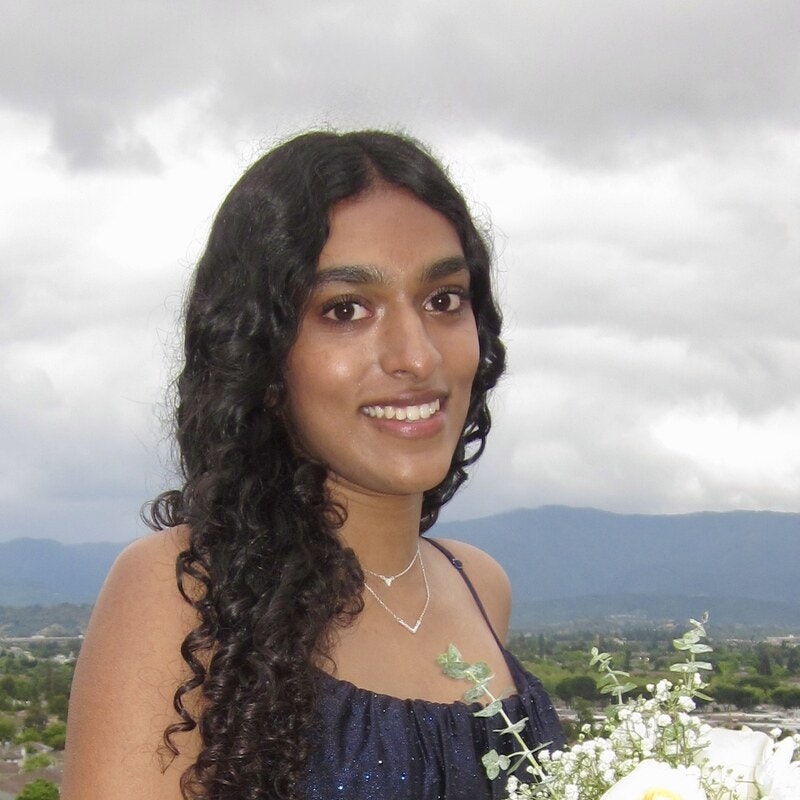
Hasinishree Jeyakumar
San Jose, California · Leigh High School
Ace for Atmosphere: Giving Used Tennis Balls a Second Life
Hi! I’m Hasinishree, and I’m a 17-year-old high school student from San Jose, California. I’m super interested in sustainability and environmental science, and I love volunteering in my community. In my free time, I enjoy playing tennis, doing arts and crafts, and visiting new places!
Project Background & Overview
In the U.S. alone, 125 million tennis balls end up in landfills each year, where they take 400 years to decompose and release methane over this period. In professional matches, balls are changed about every 30 minutes of play, while recreational players use a set of balls for about 1-4 weeks. Regardless of skill level, most balls are discarded while some bounce is still left, generating 20,000 metric tons of rubber waste each year. As a tennis player, I noticed this issue firsthand, seeing the staggering amount of waste generated by tennis balls in my community, which motivated me to take action.
Project Execution
For my Climate Leaders Fellowship project, I started Ace for Atmosphere, an initiative aimed at repurposing tennis ball waste. I started by designing my own collection bins, which I placed at four parks and my local community center, encouraging tennis players in my community to repurpose their balls rather than throwing them into trash cans. Additionally, I built partnerships with local tennis clubs to collect their used balls. To repurpose these balls, I frequently donated them to dog shelters and large organizations that reused old tennis balls.
Impact
Through Ace for Atmosphere, I partnered with another student fellow to repurpose over 2,350 tennis balls, collecting 1,800+ through partnerships with tennis clubs including Bay Club Santa Clara and Tennis Point NYC, and 550+ through drives at parks and community centers. To keep these out of landfills, my partner and I sent thousands of tennis balls to the United States Tennis Association’s Recycled Tennis Ball Program, where balls are given to schools, assisted living centers, and animal shelters, as well as Animal Care Centers NYC to support 250+ dogs. In total, the tennis balls we collected made up roughly 107 kilograms of rubber waste diverted from landfills. Beyond the numbers, I watched my community rethink their habits. Coaches who used to throw most of their balls away began setting them aside for us, and one coach even handed me an entire bag filled with used balls.
Personal Reflection
Participating in Climate Leaders Fellowship allowed me to collaborate with global leaders who are also passionate about sustainability and climate advocacy. Hearing their feedback during meetings helped me improve and expand my own project. Through the fellowship, I also got the opportunity to work alongside another student based in New York City, allowing our initiative, Ace for Atmosphere, to expand across multiple cities in the United States.
Tips for Others
Reach out to other students in the fellowship to ask for partnerships. It’ll help you expand your project and gain a fresh perspective! Make sure to document your work throughout the project, whether it’s keeping track of the number of supplies you collected, the organizations you partnered with, or the number of people you impacted.
Back to all Fellows
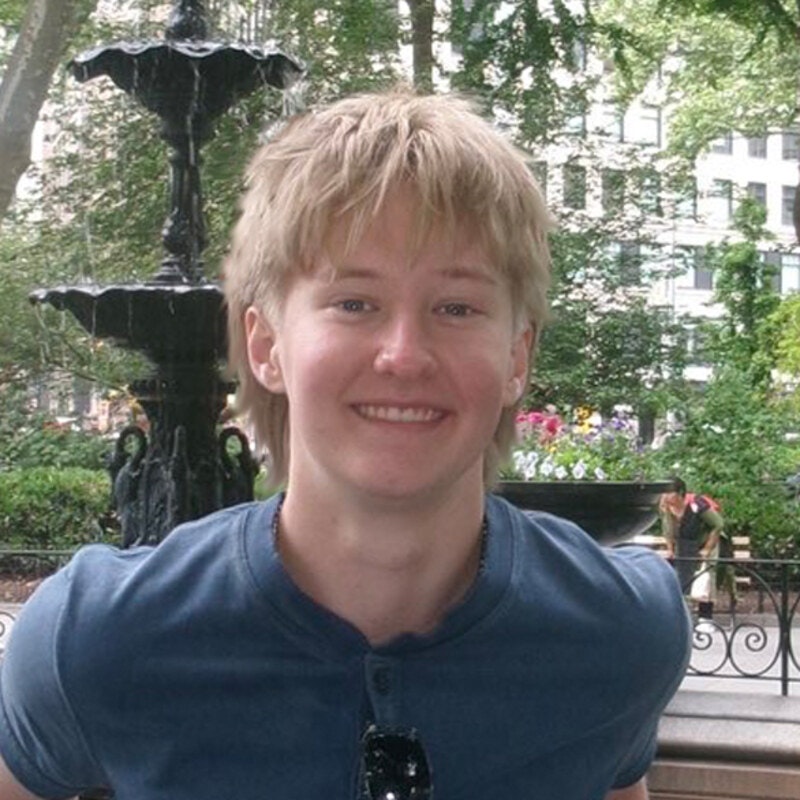
Kaeleigh Jones
Wall, New Jersey, USA · Communications High School
Love New Jersey: Local Support on a Global Scale
My name is Kaeleigh Jones and I am a 17-year-old girl currently living in Wall, New Jersey, in the United States. Outside of my work as an environmental activist, I’m an avid bodybuilder and junior volunteer firefighter who loves biochemistry.
Project Background & Overview
In my local area, I’ve always noticed a lack of passion for environmental issues. Not because people simply didn’t care, but because there was a lack of understanding of what to care for. After elementary school, there wasn’t much discussion about climate change and I wanted to fill in the gaps that that created. I believe the basis for all powerful movements is a strong education, and I wanted to tackle that in my project.
Project Execution
New Jersey is a geographically diverse state, filled with mountains, forests, farmland, and beaches. As a result, our environmental issues are unique as every part of our environment is impacted differently due to climate change. To educate people on this issue, I created Love New Jersey, an Instagram account where I combined my graphic design skills with my passion for my state to bring awareness to our unique issues. Through my posts, I wanted to target an audience of young adults, engaging them with hand made graphics and relevant issues.
I created posts that were focused on a variety of local problems, from locally endangered animals, proper beach etiquette to follow throughout the summer, and new laws being passed that sought to alleviate environmental issues.
Impact
In my first month of creating the account, I gained over 40 followers. Each month, my account sustained over 3k monthly views, including post views and story views. On my story, I frequently shared posts from local organizations to help promote them to a larger audience. I’ve received numerous DMs from people, strangers, family, and friends, who wanted to let me know my account is meaningful and that they truly learned something new every post.
Currently, I’m working with Clean Water Action to educate local businesses on a new law called Skip the Stuff, which will reduce plastic waste from single-use utensils. I’m also conducting a case study on how the law will reduce plastic waste at my job, and will hopefully conduct another case study in the near future on its effectiveness on businesses throughout Monmouth County.
Personal Reflection
While creating my project, I went through a variety of ideas. From donation drives to educational presentations, nothing truly clicked in my head. It wasn’t until I had excelled in my graphic design class at school that I realized I could use my talents for something other than getting good grades. Although creating the account was nerve-racking and certainly out of my comfort zone, its impact has helped me gain the confidence I needed to continue.
Participating in the Climate Leaders Fellowship has been one of the most meaningful opportunities I’ve ever had and I truly can’t imagine what my life would be like now if I never got involved. The leadership skills it’s helped me develop have pushed me to continue to put myself out there and take charge in my life in ways I will forever be grateful for. I take great pride in all the work I put into each post on the account, sometimes taking days at a time to do the research alone. It’s helped me develop useful skills I hope to use in future projects.
Tips for Others
For someone looking to also use social media as a tool for your project, don’t be discouraged if a post doesn’t perform well! Every message from someone about how much they enjoyed my post will forever be more meaningful than any statistic from my Instagram dashboard. Don’t be afraid to put yourself out there and allow your project to grow with you; longevity and flexibility are more important than you think.
Back to all Fellows
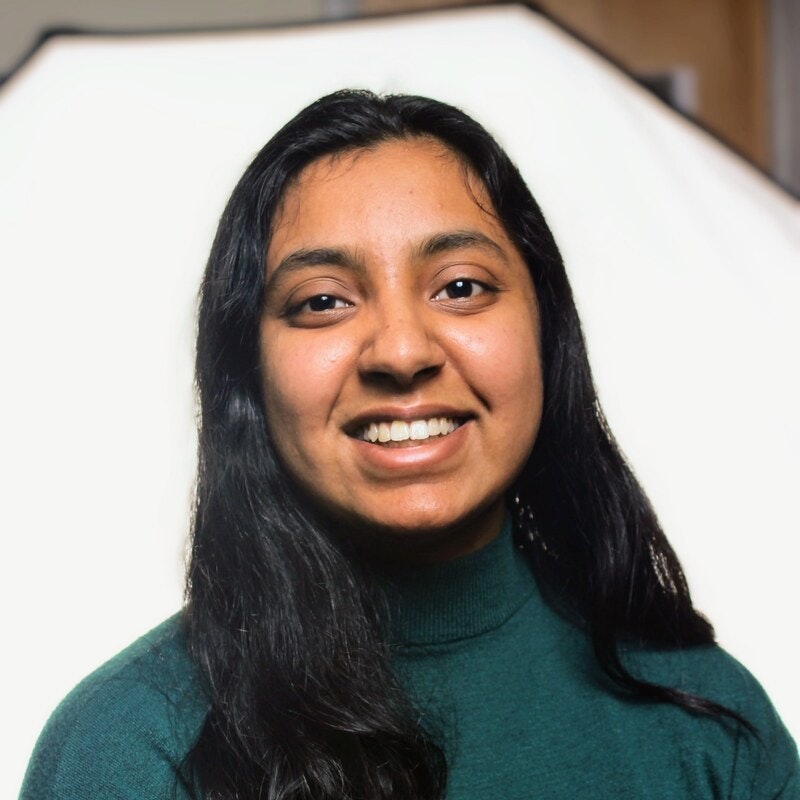
Vaishnavi Kaligotla
Frisco, TX, USA · Centennial High School
Sustainity: Sustainability for Small Business
I’m Vaishnavi Kaligotla, a high school student from Texas, USA. I have always felt a sense of urgency to mitigate climate risks, but overtime I began thinking of the problem in terms of incentives and practical feasibility. Climate action isn’t something we can separate from business and corporate decisions, especially since they are the biggest polluters currently. This idea is what led me to work on a project that targets small businesses and real-world entrepreneurship.
Project Background & Overview
My community project was a sustainability dashboard that I called Sustainity. It is a sustainability scoring and decision-support tool designed to help businesses improve their environmental impact using a step-by-step framework that covers energy use, business operations, supply chain, and sustainability reporting. I was particularly interested in reducing carbon emissions in businesses because my city has a lot of public/private partnerships which means we have a lot of small businesses that struggle with integrating eco-friendly practices in their jobs. I developed this tool through feedback from mentors and local businesses in my community, including a beta test with the sustainability head of a mortgage firm. I am currently piloting the program with local marketing and real estate agencies to test its functionality within my local community.
Project Execution
To actually begin the process of designing this tool, I needed to understand the needs of a corporation. This is where I relied on the expertise of industry leaders from the city’s economic development team, to the International Data Corporation and Radian Home Mortgage. Through the feedback I received from these leaders, I understood that what small-businesses really need is a step-by-step protocol. Regulation behind sustainability and the general image behind it is associated with confusion and complexity. Through an analysis of 90 companies, I was able to identify the best ways for a company to integrate renewable energy transition and report it as well. These findings are what culminated in the tool: Sustainity.
Impact
At an environmental level, the project helped businesses identify practical opportunities to reduce their environmental impact, particularly through energy use, operations, and supply chain decisions. By turning sustainability goals into a step-by-step process, the tool made climate action feel more achievable. Sustainity addressed a gap I saw among small businesses: many wanted to become more sustainable but did not know where to begin. The scoring and decision-support framework helped translate complex sustainability concepts into recommendations that businesses could understand and incorporate into their existing operations. At a community level, I was able to take the project beyond research and test it with organizations in the Dallas area. Feedback from local businesses and industry professionals helped me refine the dashboard and make it more relevant to the needs of businesses in my own community.
What stood out to me most was seeing how the conversation changed when sustainability was presented as a practical business decision rather than simply an environmental responsibility. Instead of asking whether sustainability was important, organizations could begin asking what they could actually do next.
Personal Reflection
Through this project, I learned that building a strong tool is not as important as making it relevant and simple for my target audience. Early feedback showed me that simplifying language and aligning outputs with existing industry standards made the dashboard significantly more effective. I was aiming for my tools to be used by small businesses who have never heard of or considered sustainability before, and my language needed to reflect that. If I were to do this project again, I would involve pilot users much earlier in the process rather than relying on my own assumptions before scaling.
Tips for Others
- Reach out to your target audience and have honest conversations
- Start small and then work your way up
- Always take longer to plan your idea rather than rushing into it
- Involve pilot-testers early in your process
- Find mentors within your field
- Take feedback and iterate
Back to all Fellows
Ronak Kasaram
Frisco, Texas · Texas Academy of Mathematics and Science
LOOP SUPPLY: FROM WASTE TO IMPACT: HOW I TURNED A LOCAL PROBLEM INTO A STUDENT-LED CIRCULAR ECONOMY
My name is Ronak Kasaram, and I am a student passionate about the intersection of technology, entrepreneurship, sustainability, and community impact.
I have always been interested in building things, whether that means developing technology, experimenting with business ideas, leading projects, or finding creative solutions to problems around me. What excites me most is taking an idea that initially seems too ambitious and figuring out how to actually make it happen.
The Climate Leaders Fellowship gave me an opportunity to apply that mindset to something bigger than myself.
I live in Frisco, Texas, a rapidly growing community in the Dallas-Fort Worth area.
Living in a fast-growing area has allowed me to see both sides of development. Communities gain new schools, businesses, homes, and opportunities, but growth also means increasing consumption and waste. I became especially interested in the amount of perfectly usable material that gets discarded while other people and organizations still need those same resources.
I am 16 years old.
One thing this project taught me is that being young does not prevent you from solving meaningful problems. Students may not always have huge budgets, professional teams, or decades of experience, but we do have creativity, energy, technology, and the ability to mobilize other young people.
My biggest interests include entrepreneurship, artificial intelligence, technology, business, sustainability, community service, marketing, and leadership.
At first, these interests seemed separate. Through this project, I realized they could actually strengthen one another.
Technology can make service more efficient. Marketing can increase participation. Entrepreneurship teaches you to build systems instead of temporary solutions. Data can help measure whether something is actually working. Sustainability gives all of those skills a meaningful problem to address.
That intersection became the foundation of my project.
Project Background & Overview
The problem I wanted to address was surprisingly simple:
We throw away useful things while people around us still need them.
Clothing, school supplies, electronics, books, household materials, and other usable resources are constantly discarded or left unused. At the same time, nonprofits, families, students, and community organizations frequently need these exact resources.
I realized that this was not always a supply problem.
Sometimes it was a connection problem.
Resources existed. People who needed those resources existed. Volunteers willing to help existed. What was missing was an efficient system connecting them.
Instead of approaching sustainability only through recycling, I became interested in reuse and the idea of a circular economy. If an item could move from someone who no longer needed it directly to someone who did, its useful life could be extended before it ever became waste.
My project therefore focused on creating a student-led resource redistribution system that combined community participation, technology, and sustainability.
I have always disliked seeing potential wasted.
That applies to time, ideas, technology, and physical resources.
When I began looking more closely at sustainability, I realized how often environmental problems are treated as problems that require enormous institutions to solve. Climate change can feel so large that an individual student may wonder what they could realistically accomplish.
I wanted to challenge that mindset.
I became interested in something much more immediate: What resources already exist within my community, and how can we use them better?
Instead of asking people to completely change their lifestyles overnight, I wanted to make sustainable behavior easier.
That became one of the philosophies behind the project:
The easiest sustainable choice should also be the easiest practical choice.
Project Execution
Rather than creating a traditional one-time donation drive, my team and I worked toward developing a student-led circular economy network supported by technology and a centralized community hub.
The goal was to create an organized system connecting:
DONORS → STUDENT VOLUNTEERS → RESOURCE MANAGEMENT → COMMUNITY ORGANIZATIONS → PEOPLE WHO NEED RESOURCES
We used a centralized digital hub to help organize participation, coordinate collections, communicate with volunteers, and manage the redistribution process.
One of the most exciting aspects was exploring how artificial intelligence could make this system more efficient.
The system was designed around ideas such as categorizing donated resources, organizing inventory, recognizing patterns in what resources were needed, and helping determine where materials could potentially have the greatest impact.
AI was not the purpose of the project.
Impact was the purpose. Technology was the tool.
That distinction became extremely important to me.
Our work included developing the digital infrastructure behind the initiative, organizing resource collection efforts, communicating with potential participants, coordinating volunteers, researching community needs, promoting participation, organizing incoming materials, and working toward redistribution.
We also focused heavily on making participation simple.
Instead of expecting someone to understand the entire circular economy, we could give them one straightforward action:
Donate something you no longer need.
Volunteer.
Share the initiative.
Connect us with an organization.
Help distribute resources.
Small actions become powerful when hundreds of people participate in the same system.
The project was built around my local community and student network in the Frisco area, with much of the organizational infrastructure operating digitally.
That combination was intentional.
The physical side allowed us to collect and redistribute actual resources, while the digital side allowed the initiative to reach people beyond a single event or location.
I wanted the project to feel less like an event people attended once and more like infrastructure people could repeatedly use.
Who were your target audiences and how did you engage them?
Our audiences included students, families, community members, volunteers, potential donors, local organizations, and people interested in sustainability.
Different audiences required different approaches.
Students were more likely to participate when they understood exactly how they could help.
Potential donors needed a convenient process.
Volunteers needed organization and clear responsibilities.
Organizations needed resources that were actually useful rather than random donations.
Because of this, communication and marketing became a major part of the project. We used digital outreach, personal networks, student-to-student communication, community connections, and our centralized platform to make participation easier and more understandable.
Impact
The project focused primarily on collecting and redistributing useful physical resources while also generating another resource that is sometimes overlooked: student volunteer power.
Contributions included usable donated materials and supplies, alongside volunteer time spent collecting, organizing, communicating, transporting, managing, and redistributing those resources.
Resources/items collected: 10k+
Volunteer hours contributed: 1000+
Volunteers/participants involved: 500
People or organizations reached: 5000
Estimated value of resources redistributed: $25,000
One of the biggest results was proving that students could take something normally viewed as “waste” and transform it into value.
But I also learned that impact should not only be measured by how many items you collect.
We began thinking about questions like:
How many resources avoided unnecessary disposal?
How many people participated?
How many resources reached somewhere useful?
How many volunteers became involved?
How many people learned about reuse?
Could the system continue after the original project ended?
Those questions changed the way I thought about service.
Success was no longer just completing an event.
Success meant creating something capable of continuing.
The most meaningful feedback came from seeing people understand how easy participation could be. Instead of sustainability feeling distant or intimidating, people could contribute through something as simple as giving an unused resource a second life.
Throughout the project, we benefited from the guidance, structure, and community provided through the Climate Leaders Fellowship, along with support from people and organizations within our school and local community.
Aid2Uplift
Hopes Door
Partnerships helped transform the project from an idea into something connected to a larger community.
They provided guidance, credibility, feedback, connections, and perspectives that we would not have developed alone.
Most importantly, they taught me that community impact is rarely created by one person.
A strong project is not about being the person who does everything.
It is about building something that allows more people to contribute.
Personal Reflection
Absolutely.
One of my favorite parts of the Climate Leaders Fellowship was seeing how differently students approached the same enormous challenge.
Climate action does not have one solution.
Some students focused on education. Others focused on conservation, policy, waste, food, transportation, advocacy, technology, or community engagement.
Seeing other students take action reinforced something important for me: you do not need to solve every environmental problem to make a difference.
You need to identify one problem, understand it deeply, and start.
The ambition and creativity of other Fellows pushed me to think bigger about my own project.
CLF changed my perspective on what student leadership can look like.
Before this experience, it was easy to think of environmental action as something led primarily by scientists, governments, nonprofits, and large organizations.
After participating, I saw how much students can accomplish when they are given mentorship, resources, and permission to experiment.
It made me feel empowered, but it also gave me a greater sense of responsibility.
Once you realize you are capable of creating change, it becomes much harder to accept doing nothing.
I am most proud that we did not stop at saying, “We should reduce waste.”
We tried to build something.
There were easier versions of this project. We could have held one collection drive, counted the donations, taken pictures, and considered the project finished.
Instead, we asked a harder question:
How could we create a system that keeps working?
That question pushed us toward technology, resource management, partnerships, community engagement, and the circular economy model.
I am proud of the resources we collected and the people we reached, but I am even more proud of the mindset behind the project.
We stopped treating discarded resources as garbage.
We started treating them as misplaced opportunities.
Tips for Others
- Start with the problem, not the project.Do not decide you want to “start an organization” and then search for a problem. Find something that genuinely bothers you and build around it.
- Start before you feel ready.Your first version will probably be imperfect. Ours was too. You learn much faster by actually doing something.
- Make participation ridiculously easy.If helping requires ten steps, people will lose interest. Give someone one clear action they can take immediately.
- Build systems, not just events.Ask yourself what happens the day after your event ends.
- Use technology intentionally.Do not add AI or technology just because it sounds impressive. Use it when it makes the solution faster, easier, smarter, or more accessible.
- Track everything from day one.Count donations, participants, volunteer hours, organizations reached, and other measurable outcomes. You will be grateful later.
- Talk to the people you are trying to help.Never assume you know exactly what another community or organization needs.
- Make rejection normal.Some emails will receive no response. Some people will say no. Keep moving.
- Give other people ownership.People care more about something when they feel like they helped build it.
- Document the journey.Take pictures, record milestones, collect feedback, and save your results. The story of your impact can inspire someone else to begin.
- Think bigger, then start smaller.Your vision can be huge, but your first action should be achievable this week.
Back to all Fellows
Tira Lai
Hawaii · Punahou School
ReJeweled: From Trash to Treasure
I’m Tira Lai, and I’m 16 years old. I live in Honolulu, Hawai’i. I enjoy trying all sorts of art forms, but my primary hobbies are jewelry-making and sewing.
Project Background & Overview
In Hawai’i, jewelry is a crucial part of people’s identity. From 5th graders to 12th graders, I’ve seen nearly every girl in my school wear some kind of adornment (I’m no exception to this!). Golden heritage bangles, woven shell necklaces, and gemstone-laden earrings can all be spotted in just one day. Unfortunately, the sources of these pieces are usually unsustainable and often involve forced labor and harsh working conditions. On top of this, fast fashion jewelry made of cheap metal and plastic can take over 500 years to biodegrade.
As an avid jewelry maker and jewelry wearer with a love for the environment, I wanted to reduce the amount of jewelry waste and extend the lives of otherwise wearable pieces. As a result, I decided to tackle these two local issues by hosting jewelry upcycling sessions, which were later formalized with the name “ReJeweled.”
Project Execution
Initially, I was torn between a few different ideas, so I did research on different types of upcycling events. I wasn’t completely sure which niche to focus on for my project, but after looking at past examples, I thought that upcycling old jewelry was a novel and sustainable idea. Then, I emailed my school’s jewelry teacher with a general plan and timeline for my project. This email served as an idea proposal, but it also allowed me to have a space where I could host the sessions.
After some back-and-forth meetings, I collaborated with my teacher to finalize the logistics (time, dates, materials, etc), and I made and sent two posters to my school’s Metals Club based on our finished plan. Additionally, I put up the posters in the jewelry room, sent out emails to all of my friends, and reached out to one of my classmates to ask if they could act as an assistant if students needed help.
From there, I created two lessons and practiced my presentations, which taught about the impacts of fast fashion jewelry waste on the environment, along with techniques to upcycle jewelry into something new. Both upcycling sessions were held after school in the jewelry room, and all attendees were invited to bring their old jewelry in and use scrap metal from previous years. Since I noticed that many students in my high school wore jewelry, I thought they’d be an excellent target audience for my project.
Impact
From both ReJeweled sessions, I collected over 60 old beads and pieces of jewelry from the eight participants, which were upcycled into 10 new items. Most of the people from the first session returned for the second day, so they learned a lot about basic wire-wrapping techniques and sustainability in the jewelry industry. Altogether, we kept 32 pieces of wire, old jewelry, and beads from going into a landfill.
After the second session, I sent a feedback form to everyone who participated. When asked how helpful I was in teaching the impacts of fast fashion jewelry waste and basic wire-wrapping, the majority of the votes were 10 out of 10. Similarly, all of the participants agreed that they’d participate in another similar session based on what they learned.
However, it’s important to note that all of this wouldn’t be possible without the help of Mr. Calvin Lac, who is the high school jewelry teacher at my school. Although I’ve never had him as a teacher before, his kindness and generosity in staying after school and letting me use his space was greatly appreciated by everyone involved in this event. Without him, this project wouldn’t have had the success that it did, and I’m grateful for his help.
Personal Reflection
As mentioned in the Project Execution section, I was initially unsure of which idea to do; however, I found that sharing my possible topics during breakout rooms was especially helpful. With their feedback and opinions, I was able to narrow my ideas down and hone in on my final topic. While not in meetings, I also enjoyed looking at everyone’s ideas in Discord. From websites to policy reforms, I was impressed by the ingenuity of my peers.
Overall, based on all of the positive feedback I received on my project, and all of the help I gained from the other fellows, participating in the Climate Leaders Fellowship made me feel accomplished and confident in myself. Everyone who participated in ReJeweled learned a lot about the environmental impacts of jewelry waste (and how to upcycle it), and I’m very proud that I was able to connect my interests with other students at my school.
Tips for Others
- Don’t be afraid to reach out to others in your community. Their support often shapes your project in more ways than you might expect.
- Make sure to stay on top of deadlines, so you’re not rushing at the last minute.
- Believe in yourself. You can do anything you put your mind to, and no idea is too grand!
Back to all Fellows
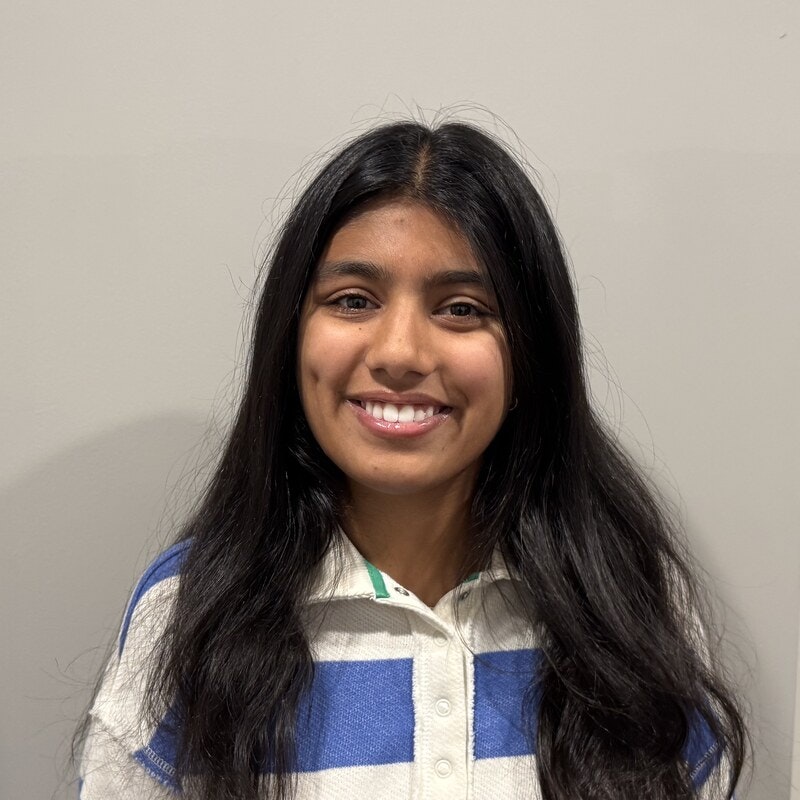
Parvathi Limaye
Chicago Illinois, USA · Jones College Prep
The ReSupply Project: Turning School Supplies Into Sustainability
My name is Parvathi Limaye and I am a 17-year-old based in Chicago, Illinois! I am passionate about raising awareness about the detrimental effects of climate change and inspiring others to take action. Whether it’s hanging up informative posters or organizing group service events, I love to connect with my community to make meaningful change. Outside of this, I am also passionate about reading and spending time with my friends and family!
Project Background & Overview
The ReSupply Project addresses the issue of school supply waste, which often goes unnoticed when discussing the topic of landfill waste. In fact, according to the Environmental Defense Initiative, “77% of all school supplies bought during one school year are wasted.” This is especially harmful not only to our environment but also to under-resourced schools that lack the supplies to meet students’ needs. I specifically observed this in my own community when I noticed the significant amount of school supply waste in my school, library, and even in my own apartment complex.
Project Execution
For my project, I started by hosting a two-week school supply drive at my local library. There, community members could drop off old school supplies in an accessible area. The issue with my neighborhood was that there was no clear site to sustainably dispose of old school supplies, so most people threw them in the trash. However, The ReSupply Project was able to provide a central location that made it easy to be environmentally conscious. After community members dropped off their old supplies, I would sort through them, donating the supplies in good condition and taking the non-reusable supplies to specific school supply waste centers. In addition, I contacted my local alderman to help support and promote my drive and project. After the success of the library drive, I also hosted another school supply drive at my elementary school. It was important for me to also create educational flyers that were hung up near the drive collection spot so that the students, the group most affected by this problem, could learn to make environmentally conscious choices at a young age! In addition to this, I used my online platform to spread more awareness about school supply waste and also provide resources that gave information about where people could sustainably dispose of or donate such supplies.
Impact
For The ReSupply Project, I decided to focus on school supplies that are common in everyday life, such as pens, pencils, colored pencils, crayons, and markers. So far, we have prevented over 5,000 of these supplies from going into the landfill! In addition, fellow library patrons, students, and community members have reached out and shared how this project helped them approach school supply waste in an environmentally conscious way. Thanks to the support from my local alderman, the Chicago Public Library, and my elementary school, I was able to grow not only as a climate conservationist but also as a collaborator and leader. These mentors and organizations gave me a platform to be able to help my community and take significant steps toward my main goal of making environmental stewardship easy and accessible.
Personal Reflection
Participating in the Climate Leaders Fellowship made me feel empowered to establish a campaign to make a specific, real difference in my community. I am so grateful to be able to provide an accessible resource that can prevent school supply waste from entering the landfill. Through the Climate Leaders Fellowship, I was able to discuss with my peers and make improvements to my project that ultimately contributed to its success! I am proud of the small but meaningful impact I was able to make in my community.
Tips for Others
Don’t be afraid to reach out to your local government, such as your city council or a local alderman! Collaborating with people in power can strengthen your project’s impact and reach.
Start planning early. It’s important to give yourself enough time to make sure you are prepared.
Know your audience and design your project with them in mind. Make sure your project is accessible so that others can also participate and engage!
Setbacks shouldn’t stop you from continuing! Instead, use these moments as learning opportunities to improve your project.
It’s okay to start small! Projects don’t have to be large to have a significant impact. What matters is what you learn and the difference you make.
Back to all Fellows
Kelly Liu
Climate Leadership Award Finalist
San Jose, California · Valley Christian High School
ConServe: How a San Jose Student is Taking on Air Pollution
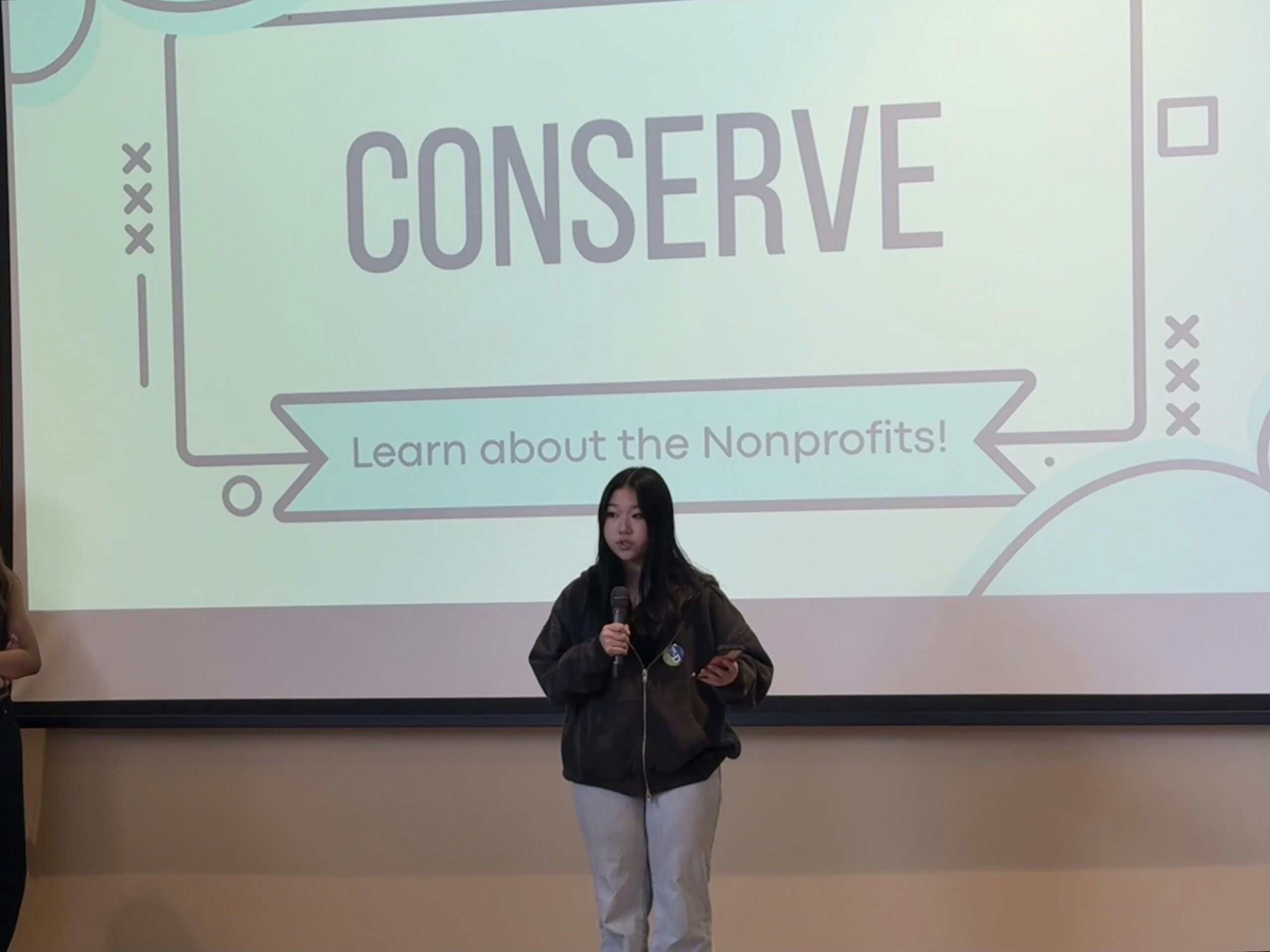
My name is Kelly Liu, and I am a 16 year old senior at Valley Christian High School from San Jose, California. As an avid researcher, I have worked on projects at Harvard University, Massachusetts Institute of Technology, University of Maryland, and Wolfram ranging from segmenting individual tree mortality with machine learning to forecasting harmful algal blooms via satellite imagery. A student leader at Silicon Valley Youth Climate Action, I lead the $50,000 Bring Your Own Cup campaign and 320-attendee Youth Summit and advocate for SB1048. Outside of climate work, you can find me taking walks, reading feminist literature, or indulging in an occasional sweet treat!
Project Background & Overview
Growing up in East San Jose, I have experienced the impacts of chronic air pollution firsthand. During the 2020 fires, I had difficulty breathing as smoke filled the air during the 2020 wildfires. Even today, tire shops, gas stations, and dense traffic near my home continue to remind me everyday that poor air quality is a reality for many communities. Despite being in the top 10% for worst air quality in California, East San Jose still has significantly fewer air quality monitoring systems than wealthier parts of San Jose. With youth being disproportionately impacted by air pollution, I sought out solutions catered to youth by working through schools, one of the largest public sector consumers of energy and thus drivers of emissions.
Project Execution
Before tackling the incredibly large challenge of air pollution, I started by gaining a deeper understanding of the issue in my community. Given the lack of comprehensive air quality monitoring across East San Jose, I worked with the Stanford Burney Lab, Acterra, Breathe Mongolia, and the Plato Arroyo Neighborhood Association to install particulate matter sensors across various community centers and schools. Based on these readings, as well as results from a custom machine learning model I created that maps out air pollution burdens across Santa Clara based on wildfire proximity, traffic exposure, and socioeconomic factors, I was able to quantify the harmful effects of air pollution in East San Jose.
With this newfound knowledge and data to bring to public officials and stakeholders, I began my advocacy journey. I reached out to school district board members across East San Jose and introduced climate action resolutions to advance solar energy, net-zero commitments, climate literacy, climate audits, and more! I then began to work on resolutions at the County Office of Education level to raise more awareness for air pollution amongst students.
Impact
Through ConServe, we have impacted over half a million students through introducing climate action resolutions in over 20 school districts such as Berryessa, Fremont, Milpitas, Sunnyvale School District, and more. These resolutions have worked to advance solar energy, net-zero commitments, climate literacy, climate audits, and more! Building upon this momentum, I worked directly with Santa Clara County Office of Education Trustee Tara Sreekrishnan to draft an air pollution resolution that seeks to raise awareness of the impacts of air pollution through education and community partnerships, reaching the over 270,000 students in Santa Clara County schools. This resolution also serves as the first air pollution resolution of its kind in the United States! I am now actively working with the Santa Cruz, Monterey, San Joaquin, and Los Angeles County Offices of Education to model these same efforts across California.
Personal Reflection
Being a part of the Climate Leaders Fellowship cohort has provided me with so much inspiration; the passion, drive, and commitment of other fellows has pushed me to achieve higher impact in my work. Having received the Climate Leader Finalist award for this cohort, I feel that my efforts have been externally validated and pushes me to continue fighting for climate and environmental justice within my own community.
Tips for Others
- Do not be afraid to reach out to adults or people in positions of power to support you.
- Leverage your voice as youth as much as possible! Youth advocates are rare and people are more inclined to listen when you advocate for a certain cause.
Back to all Fellows
Mahi Mekala
California · Notre Dame San Jose
Cooling the Gaps: A Push for Urban Canopy Equity in San Jose
Who are you? My name is Mahi Mekala.
Where do you live? San Jose, California.
How old are you? 16
What are your interests? I’m interested in climate science and environmental policy, biology and bioinformatics research, dance, cooking, and I run a small mehendi (henna) business on the side.
Project Background & Overview
What specific problem were you addressing in your community? I noticed, through a thermograph of San Jose, that the hottest areas of the city (urban heat islands) lined up almost exactly with low-income neighborhoods. These neighborhoods had significantly less tree canopy than wealthier parts of the city, which meant residents were dealing with higher temperatures and fewer resources to cope with them.
Why does that problem matter to you personally? As a team leader on the District 4 Youth Advisory Council, I often see people who are disempowered by a system that does not make space for their voice, and so it was very important to me that whatever work I did impacted the communities that needed it the most.
Project Execution
What did you do for your project? I researched how urban heat islands are identified and measured, drawing on similar mapping projects done in Palo Alto, then used that method to pinpoint exactly which San Jose neighborhoods needed intervention most.
What actions did you take to address the problem? I contacted the City of San Jose’s Urban Forestry Department, independently adopted a park, and coordinated the planting of over 100 trees in the highest-need areas identified by the data with help of over 20+ volunteers.
Who were your target audiences and how did you engage them? My target audience were mostly youth who can engage in community education and take the time to volunteer in the community.
Impact
What were the results? Over 200 flora planted in some of San Jose’s highest-heat, lowest-income neighborhoods, targeted using thermographic data rather than guesswork.
Which organizations or mentors did you work with? City of San Jose Urban Forestry Department for data, A lot of the shrubs/plant research was found online or donated by volunteers, and school student body and local community to run planting.
How did these partnerships help your project succeed? The Urban Forestry Department gave me the on-the-ground expertise and access needed to turn the data into an actual planting plan, adopting the park through them was what made implementation possible rather than just theoretical.
Personal Reflection
Being a part of this fellowship helped me develop this project from a team of volunteers, a research document, and a few plantings to a wider group of volunteers and connections that I wouldn’t have met otherwise.
Tips for Others
I would say be persistent and know that things don’t always turn out the way you intended but you can learn a lot along the way.
Back to all Fellows
Frisco TX · Wakeland High School
Battery Loop
Hi, I am Tanav Metai a Junior at Wakeland High School. I’m on the varsity tennis team, and I really enjoy playing tennis. In addition to that I also really care for our environment and love doing activities for its betterment.
Project Background & Overview
BatteryLoop is a nonprofit project focused on making battery recycling easier and helping protect the environment. Through BatteryLoop, we collect used household batteries from our community and deliver them to the Frisco Environmental Center so they can be recycled safely instead of ending up in landfills. We also created a website where residents can request free battery pickups and learn about the importance of proper battery disposal, recycling, and reducing pollution. Working on BatteryLoop has taught me how to organize community service projects, educate others about environmental issues, and use technology to make sustainability more accessible for everyone.
Project Execution
BatteryLoop is live in Frisco at batteryloop.org, serving the 75033, 75034, and 75035 ZIP codes with both home pickup and drop-off options. The platform has processed 25 pickup requests to date, 14 of them completed and zero cancelled, with each request tracked through an admin dashboard that manages status from intake to confirmed drop-off. Residents submit a request in under a minute with their address and rough battery count, and the dashboard routes it to a volunteer and logs the completion.
Impact
Across 14 completed pickups, BatteryLoop has kept an estimated 110 to 140 batteries out of Frisco landfills, based on the quantity ranges residents reported at request. Just as important, zero of the 25 requests were cancelled, which says the pickup model actually holds up in practice instead of just sounding convenient. The broader impact is the loop itself: residents get an easy way to clear the battery drawer, student volunteers get verified service hours tied to real work, and hazardous material that would have leaked into soil and water goes to a partner recycling center instead.
Personal Reflection
The hardest part wasn’t building the site, it was realizing that convenience is the whole product. I originally thought people didn’t recycle batteries because they didn’t care, but every request that came in was from someone who had been holding onto a drawer full of them for months and just never had an easy way to get rid of them. Watching 25 requests come in with none of them cancelled taught me that if you remove one small piece of friction, people will show up. I also learned that the safety and logistics side is where a project like this actually lives or dies, and that a good idea without a real plan for handling lithium batteries is just a pitch.
Tips for Others
Start smaller than feels ambitious, since a single ZIP code or two is enough to prove the model before trying to cover a whole city. Don’t skip the safety plan to get to launch faster, because lithium batteries are a real hazard and having a clear process for damaged or swollen ones matters more than a polished landing page. Build the admin dashboard before you need it, since once requests start coming in, you need a way to track status or things fall through the cracks fast. Talk to the recycling center first, not last, because they’re the partner that makes the whole loop actually close and their requirements will shape your process more than you’d expect. Finally, pay attention to your cancellation rate, since it’s the clearest signal of whether people actually trust and use what you built, not just whether they liked the idea.
Back to all Fellows
Sanaya Mistry
New Jersey · Mount Saint Dominic Academy
From Compost to Clean Air: Rethinking Household Air Pollution
My name is Sanaya Mistry and I am a junior at Mount Saint Dominic Academy in New Jersey. I firmly believe that the solutions to many of the problems faced in our world today require research to understand the issue, advocacy to raise awareness in communities and empirical solutions to make a real difference in the lives of real people.
For my project, I focused on household air pollution (HAP), from residential cooking. Gas stoves and other fuel-burning cooking systems can release fine particulate matter (PM2.5), nitrogen dioxide (NO₂), carbon monoxide (CO), and volatile organic compounds (VOCs). Exposure to these pollutants can harm respiratory and cardiovascular health, while prolonged exposure has been associated with metabolic diseases.
My interest in HAP began through field research on cooking pollution in Cameroon and India, where many households still rely on wood, charcoal, and other solid fuels. I was surprised to learn that this was a pressing issue closer to home. About 38% of American households use natural gas for cooking (69% of households in my state, NJ). To address the problem, I designed a compost-based biofilter to reduce cooking-related VOCs. The filter draws polluted kitchen air through a porous bed of compost-based organic material. VOCs are absorbed into the moisture surrounding the filter media, where naturally occurring microorganisms can break down some of the compounds. Biofiltration is already used to treat polluted industrial air, but I adapted the same biological principle into a smaller system intended for household kitchens.
I distributed the filter to 14 households for a six-week pilot study. Participants used Airthings Wave Mini monitors (purchased on Amazon!) to measure total VOC concentrations before, during, and after cooking. I worked with families interested in reducing food waste and improving indoor air quality, explaining how to operate the filter and how to collect consistent measurements.
Across the 14 households, the biofilter reduced total VOC concentrations by an average of 37% during and after cooking. It also cut the average duration of elevated VOC exposure from approximately 22 minutes to 11 minutes. Together, the households diverted roughly 60 pounds of organic kitchen waste into biofilter media.
The Climate Leaders Fellowship helped me turn a scientific idea into something people could use. Feedback from mentors and other fellows helped me strengthen the pilot, explain the science clearly, and make the design practical for families. The experience showed me that climate action does not always begin with sweeping policy or major infrastructure change. It can begin by rethinking an ordinary material and giving it a new purpose.
I am proud that the project produced measurable results and continues beyond the initial pilot. A local university has expressed interest in testing a shared-kitchen version, and I have filed a provisional patent application for the design. My advice to others is to begin with a problem that feels personal, be data driven, and follow the evidence, because real change begins when concern is transformed into a solution people can see, measure, and use.
Back to all Fellows
Aanya Mukhopadhyay
Baton Rouge, Louisiana · Baton Rouge Magnet High School
From Creation of Plastics to Taking Care of the Earth: On the Go
My name is Aanya and I’m from Louisiana. I’m 14 years old and I’m interested in chemistry, environmental sciences, math, and different forms of art, ranging from singing to writing.
Project Background & Overview
Louisiana has a large amount of petrochemical and chemical industries, including large companies like Exxon Mobil. Living near the region known as Cancer Alley, I see the impact of those industries in communities around me and the environment. However, in my area, there is a lot of litter and waste, which increased my interest in climate awareness. Through this project, my goal was to educate the public about climate change and how small, practical steps, like recycling and reducing waste can help take care of our environment.
Project Execution
As I had a podcast unit in my school’s Talented Theater class, I decided one of the best ways to deliver information to an audience was through podcasts. Podcasts allowed me to be creative, and allowed me to use my editing skills in a way that made the information consumable and entertaining to the public. The audience could listen to it whenever they pleased. I created the podcast script on google docs, I recorded it on Voice Memos on my iPhone, and I edited the recording on CapCut. My target audience was my high school community, specifically students who didn’t seem to care enough about environmental problems.
Impact
I received a lot of positive feedback from students who enjoyed listening to my podcast episode. I don’t have any quantitative results, but the listeners seemed to gain a better understanding about climate change and expressed that they wanted to take initiative to protect the environment.
Personal Reflection
Many of the students in my cohort wanted to teach their classmates about climate change and its effects. I wanted to do the same, but with a different approach. Participating in the fellowship allowed me to collaborate with my peers, and made me feel like I was sharing my ideas confidently. I’m proud of how I was able to convey factual information in a way that was very easy to follow, while adding a creative, engaging aspect.
Tips for Others
Try to not overthink your project. Focus on the primary goal or message that you want to give away to your audience. Your project doesn’t have to reach a giant audience, it can reach a small community like your neighborhood or school. Don’t let any of your peers’ opinions discourage you from sticking to your own idea. In the end, it’s your project, you get to choose how you want to implement it.
Back to all Fellows
Sophia Paul
Dayton, OH USA · Purdue University (at the time of the project I was in high school at The Miami Valley School)
Designing a Summer Camp for CLF
My name is Sophia Paul, and I am from Dayton, Ohio USA. I am 17 and will be pursuing a biology degree with an environmental focus this fall at Purdue University. To get to know me a little, some of my interests include spending a lot of time outside, reading and writing, volunteering (especially in education), and spending time with my friends. When I first heard about CLF, it sounded like an amazing opportunity to make a positive impact on my local community. After seeing all the creative ways people could use their unique interests to make a difference, I was inspired to blend my passions for education and the environment for my own project.
Project Background & Overview
When I assumed a leadership position in my high school’s Sustainable Action Club in my sophomore year, I realized two main issues were causing some of our projects to fall through: a lack of knowledge about why our mission was important and a lack of interest in participating in initiatives the club planned. We were able to develop many new projects and events to foster more interest and engagement, and while all of these things positively impacted my community, the two problems I identified in my sophomore year never completely went away. Because of this, my CLF project targeted younger age groups in the hope of inspiring interest earlier on. I constructed my lessons and activities using immersive-based learning techniques for added fun and engagement. My final project was a summer camp that focused on educating students about climate change issues to foster empathy for the environment and spark action among young people in my community.
Project Execution
I designed a week-long summer camp that aimed to immerse students in nature so that they could learn about climate change and ways to support the environment in a fun and engaging manner. During the planning weeks of CLF, I participated in conversations with my peers and facilitators to choose what I wanted to focus on during my camp. They helped me to refine my lessons and brainstorm interactive activities. I also reached out to my high school (which already offered summer camps) and worked with them to secure a classroom to host my camp in, as well as two adult advisors who were very eager to help me provide a memorable experience for the students.
Each day of the five-day camp had a field trip, a short lesson, and at least one activity related to the theme of the day. The field trips and activities allowed the students to enjoy time outdoors while simultaneously gaining knowledge on issues like sustainability or pollution. Each theme was inspired by climate issues that are most relevant to our area so that the field trips and activities related to the lessons I designed. The themes were: intro to climate change & waste reduction, local endangered flora and fauna, sustainable art & the power of advocacy, and water quality & water pollution. On the last day, each student made a sustainable art project advocating for an issue they learned about at some point in the week that mattered to them.
Impact
After my project, all students who participated in the summer camp came away with new skills, environmental knowledge, and projects and experiences to share with others.
Examples of what they learned: hiking trail etiquette, ways to reduce household waste, composting, local endangered animals and what we can do to help, and lessons on sustainable art and advocacy. As a final project, they made sustainable art projects that represented something they learned over the course of the week.
Numbers on Impact:
- 100% of students AND both of the teacher advisors reported learning something new all five days of camp (having known nothing about at least one topic or activity before that day).
- 87.5% of students learned how to compost for the first time, and 100% got to take a DIY compost home; that means all families can now reduce their food waste!
- All students were given general lessons on climate change (only 2 reported having been taught about climate change in school before)
- Each student did an endangered animal project that focused on local animals
- Each student did an art project that tells a story about something they are passionate about using sustainable or recycled materials (All students reported that they did not know what sustainable art was before the camp)
To accomplish my CLF project, I partnered with the Miami Valley School’s Summer@MVS Program. They provided a classroom and two adult supervisors (I legally wasn’t allowed to run it alone since I am 17). Additionally, they gave the adult supervisors a small fund for project materials and transportation to field trip locations.
Personal Reflection
I did not receive any specific inspiration from my CLF peers or facilitators; however, hearing about the diverse interests that resulted in past CLF projects is what helped me decide to combine my passions for education and the environment. During the planning stages of my camp, both my peers and facilitators helped me brainstorm hands-on activities that corresponded with each day’s theme. Additionally, the 1-on-1 meetings with a facilitator helped me stay on track during the designing and outreach stages of my project.
I was very excited when I found out that I was accepted to the CLF program, and I am happy to report that the experience exceeded my expectations. Not only did I have a lot of fun because I could tailor my project to my specific interests, but I also got to hear from people my age from around the globe. I heard many diverse viewpoints, participated in surveys and experiences to provide my peers with data for their projects, and even made friends who I talk with daily even though they live in other countries or time zones.
For my project, I am really proud that I designed all the lessons and was in an educational position. It was very important to me to do a project where I could get some teaching experience because my dream is to be a professor of environmental sciences later on in my career.
Tips for Others
- Take advantage of the resources CLF provides you & use the guidebook
- Interact with your facilitators
- They have gone through this process before and are participating because they want to see you succeed. Don’t be afraid to ask for help!
- Having an ambitious idea is good, but make sure to plan accordingly if you want to accomplish all your goals.
- Design your project theme around issues that interact with the people or environment that you focus on for your research for the best results
Back to all Fellows
Eeshwara Pulsani
Climate Leadership Award Finalist
Bangalore, Karnataka, India · Candor International School
Pioneered a research-driven sustainability initiative that harnessed campus-grown banana leaves as a biodegradable alternative to single-use serving materials, creating measurable environmental impact while inspiring over 1,000 students to embrace everyday climate action.
My name is Eeshwara Pulsani, and I am a rising Sophomore high school student at Candor International School in Bengaluru, India. I am passionate about engineering, sustainability and using practical innovation to solve real-world challenges. I turned 15 march 2026 and I live in Bengaluru, Karnataka, India.
My interests include sustainability, engineering, robotics, reading and developing innovative solutions that create a positive impact in local communities. In addition, I am a State Level Footballer representing my State in Nationals and Bangalore’s most prestigious football club, Bengaluru Football Club in National Leagues as well and I love to play the Piano.
Project Background & Overview
My project addressed the unnecessary use of disposable tissue paper and other single-use serving materials in my school’s cafeteria. Although each item seemed insignificant, more than 1,000 students use the cafeteria every day, creating a substantial amount of avoidable waste over the course of a school year. My School is recognized as India’s First Green School by the Indian Green Building Council (IGBC), making sustainability an important part of our school’s identity. I wanted to contribute to those efforts by introducing a practical solution that reduced waste while utilizing an existing resource already available on campus. I believe climate action starts with the choices we make every day. Seeing large amounts of disposable materials being used despite having banana trees growing on our own campus inspired me to look for a more sustainable alternative. I wanted to demonstrate that meaningful environmental change doesn’t always require expensive technology, sometimes it begins with rethinking simple everyday practices.
Project Execution
I designed and implemented a plan to replace disposable tissue paper and other single-use serving materials used for school snacks with biodegradable banana leaves harvested directly from our campus farm. I researched the environmental, scientific, health, and cultural benefits of banana leaves, developed a detailed implementation plan, and presented my proposal to the school’s leadership and cafeteria management. After receiving approval, students volunteered to prepare banana leaves during breakfast and lunch, and the cafeteria staff used them to serve snacks. The project was implemented at Candor International School in Bengaluru, India. Banana leaves harvested from the school’s farm were cut into serving sheets and used by the cafeteria to replace disposable serving materials for student snacks. My primary target audience was the school administration and cafeteria management because they had the authority to implement the project. I also engaged students by explaining the environmental, scientific, and cultural benefits of banana leaves and demonstrating how one small daily habit could collectively make a significant environmental difference.
Impact
The project utilized banana leaves harvested from the school’s farm, requiring virtually no additional funding. Students volunteered their time to prepare the leaves, while the cafeteria staff and school administration collaborated to successfully implement the initiative.
The project positively impacted more than 1,000 students by replacing hundreds of disposable serving materials each day with biodegradable banana leaves.
Highlights of the initiative:
- Eliminated Single-Use waste generated by the cafeteria.
- Eliminated operational costs associated with single-use serving materials.
- Is 100 percent Biodegradable and has 0 environmental impact.
- Increased environmental awareness among students.
- Encouraged student participation in sustainable practices.
- Revived a traditional and environmentally responsible method of serving food.
Initially, some students were skeptical, but after learning about the environmental and practical benefits, they became more supportive and appreciative of the initiative.
I worked closely with the leadership and administration of Candor International School, including:
- Mr. Ross Ferris, Head of School
- Ms. Aruna Adeel, Head of Secondary School
- Mr. Sridhar, Dean of Administrations
- Mr. Ashok Hegde, Senior Administration Manager
- Mr. Ramachandra, Cafeteria Manager
The project was developed through the Stanford Climate Leaders Fellowship, organized by the Stanford Deliberative Democracy Lab in partnership with Rustic Pathways, under the guidance of Mr. John Hsu, Climate Fellowship Director.
The school leadership and cafeteria team provided the approval, operational support, and collaboration needed to implement the project successfully. The Stanford Climate Leaders Fellowship provided mentorship, structure, and inspiration throughout the project, encouraging me to transform an idea into measurable community impact. The other fellows in the Discord group also played a significant role by sharing ideas, feedback, and encouragement, which helped me refine my approach and stay motivated throughout the process.
Personal Reflection
Seeing the creativity and passion of other fellows inspired me to think more critically about the impact that even small community-based projects can have. Their ideas motivated me to strengthen my own project and think more broadly about climate leadership. The fellowship gave me confidence that meaningful change is possible regardless of age. It taught me that leadership is about identifying a problem, collaborating with others, and taking action to create practical solutions that benefit both people and the environment. I am most proud that a simple idea became a real initiative that positively impacted more than 1,000 students. I am also honored to have been selected as a Climate Leadership Award Finalist, with my project recognized among the top 2, 3% of Fellowship projects submitted from around the world.I am especially grateful to my mother, whose unwavering encouragement, guidance, and belief in me gave me the confidence to pursue this project and persevere through every challenge.
Tips for Others
- Choose a problem that genuinely affects your community.
- Research your solution thoroughly before proposing it.
- Understand who has the authority to create change.
- Build your proposal using evidence and practical implementation steps.
- Collaborate with teachers, administrators, and community members.
- Be prepared to answer questions and address skepticism.
- Start with solutions that are simple, affordable, and scalable.
- Measure your impact whenever possible.
- Stay persistent, even small ideas can take time to gain support.
- Communicate your vision clearly and confidently.
- Remember that climate leadership begins with taking the first step.
Back to all Fellows
Simone Raju Punaliparambil
India · Hiranandani International School
14 year-old helps women in need by making bags out of old jeans
Hello! My name is Simone. I live in India and study in the 10th grade. I am passionate about the environment. Ever since I knew the words ‘climate change’, I have been interested in the field of sustainability. After learning the significant challenges that the environment has been facing around the world, I always felt it was our responsibility as humans to solve them.
Project Background & Overview
My project focused on collecting old jeans from my community and giving them to a foundation of women in low-income backgrounds to turn them into functional bags. By converting jeans to usable products such as bags, I helped to reduce the amount of waste generated by individuals that would have otherwise gone to landfills. This also helped the women in need to use their skills for a better cause and generate an income to support their families. Thus it helped with sustainability motives as well as women empowerment.
Project Execution
Under the guidance of a known Rotary member, we reached out to Asha foundation which is an local NGO to support women and children in need. I understood from them how we can potentially upcycle old clothes to avoid wastage. We narrowed down on jeans as a starting point and designed multiple options. Next, i reached out to my community, friends and family about this initiative and organized a jeans collection drive. We collected jeans and then worked with the foundation to make individual designs for each of the bags based on the customers needs.
Impact
In the initial phase, around 15 jeans were collected from 10 families. Asha Foundation women created around 20 handbags, pouches and wallets from them. I was able to raise around 8,000 INR from the residents for these bags and shared them with the women of Asha Foundation. We also spread the message throughout many society groups making citizens aware on the issue. I’m getting more requests for such upcycling and this will create long term benefits. Through the fellowship I also earned 28 volunteering hours.
Personal Reflection
Earlier, I was under the impression, that implementing my ideas would be an impossible task , which would be unachievable in a short amount of time. But when I got started, by first connecting with a Rotary member guide, things started to all fall in place. In less than two months, i had managed to plan, connect with Asha Foundation women, organize jeans donation drives, and upcycled them to functional bags. I now want to take this forward and create larger impact. I received a lot of guidance from the climate leader mentors and my fellow students. This opportunity was something that I will also look back as the start of my journey in learning about sustainability.
Tips for Others
I would advise those who are interested in doing such a project to not be afraid to reach out to organizations and NGO’s as they are usually really friendly and enjoy working with students. The first step is always the one that takes the most amount of time but after that it is smooth sailing for the rest.
Back to all Fellows
Joyna Sehgal
Melbourne, Victoria · Overnewton Anglican Community College
Life after Bloom: Flower Waste Management
Hi! I’m Joyna Sehgal, just another high school student who saw far too many problems and was clueless about what to do about them.
I’m a Year 11 student, and I completed this project while I was living in India at around 16 years old. My love for reading started when I was 11, when I picked up books and fell completely in love with them. I loved them enough, in fact, that a year later, I made a bet with my mother and ended up publishing my own book.
Reading and writing eventually led me to another passion: public speaking and debating. By Years 10 and 11, I was knee-deep in debating, participating in every competition I could, meeting friends from all over the country, and eventually representing Team India at the Harvard College World Schools Invitational 2026 in Boston, USA.
I’ve also always been somewhat of a scholar, with a particular interest in science, mathematics, and anything that gives me an excuse to ask “but why?” In Year 10, I ranked in the top 0.1% of successful candidates nationally in History, Civics and Geography.
So, I suppose it’s safe to say that I’m a proud nerd who loves learning, questioning things, and, perhaps most importantly, yapping about them whenever I get the chance, especially when that yapping involves science and reasoning.
Project Background & Overview
As I mentioned earlier, back in Year 10, I was studying geography like my life depended on it. One particular topic that caught my attention was waste management, especially the recycling and decomposition of biodegradable materials. I became fascinated by composting, waste segregation, and all the other “lovely” things that come with managing waste responsibly. I loved not only learning about these issues, but also educating others about them.
So, when I joined CLF and discovered that the project focused on waste management, I knew I wanted to do something meaningful with it.
The idea for my project came from a seemingly ordinary moment. One day, I saw an elderly lady throw religious offerings, consisting mainly of flowers, into a river. I was deeply affected by it. I understood the religious and cultural significance these offerings held, but at the same time, I knew the environmental consequences of disposing of them in rivers.
Being the science nerd that I am, I knew that organic waste in waterways could affect water quality, mess up the pH levels of the water disrupt decomposition processes, and contribute to environmental pollution. In fact in India alone an estimated 8 million tonnes of floral waste is generated annually, with daily estimates ranging between 300 to over 2,000 tons driven largely by religious offerings at temples, mosques, and households, as well as weddings and commercial events and Roughly one-third of this floral waste ends up directly dumped into holy water bodies and rivers like the Ganges and Yamuna. The chemical hazards to this are enormous that include pesticides and synthetic chemicals used in commercial flower farming to wash into water channels during decomposition, threatening aquatic life and public water supplies
I wanted to find a solution that could address the environmental problem without disrespecting the religious significance behind the practice.
That was when I discovered “HolyWaste by Oorvi”, an organization that collects flowers offered during religious activities and repurposes them into products such as agarbatti (incense sticks), herbal colors, and fragrance pouches. Their work showed me that environmental responsibility did not have to come at the expense of cultural or religious traditions. Instead, the two could coexist.
I knew I had found something worth pursuing.
I collaborated with HolyWaste and sent them around 10 kg of dried flower waste, to be recycled and repurposed. At the same time, I partnered with the “Association for Social Health in India (ASHI)” o educate young people about how they could adopt sustainable waste-management practices in their own homes, particularly through composting and waste segregation.
The seminar was a huge success, reaching over 100 children across a range of age groups, from young children and pre-teens to teenagers. More importantly, the project allowed me to turn something I had only studied in textbooks into something tangible, something that could change how people viewed the waste they produced and, hopefully, inspire them to do something about it.
Project Execution
For my project I decided to conduct a seminar on Waste management, specifically flower waste management in a school under the Association for Social Health in India (ASHI). To help make a difference in the collection of flower waste I collaborated with HolyWaste by Oorvi and sent them over 10+kgs of flower waste for upcycling so that they could convert them into organic incense sticks, fragrance pouches and Holi colors. The target audience for this project were school students and young adults who i believe are the pioneers of change in any society, they have enough time and resources to see problems around them and create change that is why the audience for the seminar i conducted was school students and young adults.
Throughout the execution of the project, I encountered plenty of challenges, but also many victories. From attempting to make an agarbatti(incense stick) myself and tracking down some surprisingly rare ingredients, to reaching out to religious places and convincing them to provide me with their used flowers, every step taught me something new. Looking back, each challenge became a reflection of what I learned throughout the process and how much I grew as an individual.
What kept me motivated, however, was the change I knew the project could create. By educating children about composting, waste segregation, and responsible disposal of religious offerings, I hoped to create a ripple effect. If even a fraction of the children I reached adopted these practices at home, potentially hundreds of kilograms of flower waste could be diverted away from rivers and instead composted into organic fertiliser. The idea that a single seminar could eventually influence the actions of entire families was incredibly motivating.
I also wanted the project to extend beyond education and create a practical incentive for people to make more sustainable choices. As part of my collaboration with HolyWaste, I helped establish a discount code, “JOYNA10,” which gave customers 10% off their products. The aim was simple: make sustainable and environmentally friendly alternatives more accessible and encourage people to choose recycled and organic products.
For me, the project was never just about collecting flower waste or conducting a seminar. It was about creating a system where people could understand the problem, learn how to address it, and then have the resources and incentives to continue making those choices themselves. That, ultimately, is what I hope will allow the impact of this project to continue long after its completion.
Impact
When we look at the statistical impact of this project I can see that we diverted of 10kg+waste from rivers to factories of HolyWaste by Oorvi for upcycling, and how we reached over 100+ students via the Association for Social Health in India (ASHI), that allowed me to conduct a seminar for the students studying at their school.
But the impact of this project spanned far beyond numbers that could be written as “10+ kg of flower waste diverted,” “100+ students reached,” or “2 organisations collaborated with.”
It was in every student who discovered a solution to a problem they encountered in their everyday lives. It was in the little girl who answered how to compost in her native language, eagerly trying to explain what she could do with used flowers instead of allowing them to end up in rivers. It was in the excitement I saw when students began talking about creating their own composting system at school and burying the flowers they collected in it.
It was more than the certificates I received from ASHI. It was the thought that the knowledge shared in that room could travel home with those children and influence their families, their communities, and the way they thought about waste.
Most importantly, it was in the glimmer of hope I saw in their eyes, the quiet realisation that perhaps they could contribute something back to the Earth too. That they did not need to be scientists, politicians, or environmental activists to make a difference. They could simply take an old, discarded flower and bury it in the soil.
And perhaps that is what impact truly means to me: not just the amount of waste diverted or the number of people reached, but the moment someone looks at an everyday problem and thinks, “Maybe I can do something about this.
Without both these organizations the impacts i achieved wouldn’t have been possible at least not at the scale they are at the moment.
Personal Reflection
There were many moments throughout the execution of this project that challenged me: reaching out to organisations, learning to make agarbattis, attempting to compost at home for the first time, preparing engaging material for the seminar, and constantly trying to find meaningful ways for students to contribute.
But when I look back at those challenges now, I see them as some of the most valuable parts of the experience. Somehow, I managed to find the materials I needed to make the agarbattis. I reached out to schools for seminars and eventually connected with ASHI. I met people I would never have encountered otherwise, gathered knowledge I did not have before, and developed a level of endurance that I did not know I possessed. Every setback eventually became another lesson, and every difficulty made the eventual success feel that much more meaningful.
More importantly, this project changed the way I look at the world around me. It made me realise that the smallest, most ordinary actions can sometimes create surprisingly large consequences. Something as simple as throwing away a flower can contribute to water pollution, alter water quality, harm aquatic ecosystems, and create unnecessary waste. I learned to pay attention to these everyday actions, to look at the seemingly insignificant things around me and ask two questions: What problem is hiding here, and what can I do about it?
Participating in this fellowship and bringing this project to life taught me one of the most important lessons I have learned so far: the most effective solutions are often the simplest ones.
A flower does not always need to become waste. Sometimes, the solution can be as simple as returning it to the soil, where it can decompose and become organic fertiliser instead of contributing to pollution.
That realisation is what I will carry with me beyond this project. I do not think solving environmental problems always requires something revolutionary. Sometimes, it requires us to notice the small things, understand their consequences, and have the courage to do something differently.
Sometimes, the answer really is as simple as burying the flower.
Tips for Others
Two pieces of advice, I would give to other students, it is this: start thinking, and start early.
As soon as your first fellowship meeting happens, start looking around you. Ask yourself: What problem can you find in your community?, What can you improve? How can you contribute? You do not need to have the perfect project idea immediately. Sometimes, the best ideas come from simply paying attention to the things happening around you every day.
And once you have an idea, do not sit around waiting for the “execution phase” to begin. Start reaching out immediately. Contact organisations, speak to people, research your idea, ask questions, and see where it takes you.
The earlier you start, the more time you have for your project to evolve. You will discover new ideas along the way, meet organisations you never knew existed, build connections with people who can help you, and find opportunities that you may never have encountered if you had waited.
My own project changed and grew through every person I spoke to and every organisation I reached out to. What I started with was not what I eventually ended up doing, and that is exactly why I think starting early matters.
So, do not wait for the perfect idea or the perfect moment. Look around you, find something you care about, and start. The project will figure itself out along the way.
Back to all Fellows
Harini Senthil
Tamil Nadu
Jellyfish, Trash Monsters & Other Ways to Save the Ocean
Vanakkam makkale! I’m Harini, a Grade 10 student from Tamil Nadu, India. I love reading books, watching anime, and I spend my free time gardening. I’m also interested in researching ocean conservation and the health of marine ecosystems.
Project Background & Overview
One problem that really bothers me is the gap between climate education and actual engagement. We teach young people about pollution, climate change, endangered species, and environmental damage, but a lot of the time it becomes another chapter to read, memorize, and forget before the exam.
I wanted to do something different. After a lot of musings, I created the first draft of what would be born as Chrono-Jelly, an educational game built around an immortal jellyfish, marine creatures, and, naturally, trash monsters. The slightly ridiculous premise is intentional. I wanted to take a serious subject and make it something people would actually want to explore.
Players travel through different periods of ocean history, learning how marine ecosystems changed and how human activity contributed to pollution and other environmental problems. The project also includes a citizen-science idea where players can photograph plastic waste and potentially contribute useful information to real-world research.
Basically: learn about the ocean, collect cool creatures, fight garbage, and maybe help scientists along the way.
Project Execution
I turned the Chrono-Jelly concept into a website prototype, designing the experience around the idea of learning through play rather than sitting through another virtual classroom.
The core game concept combines creature collecting, storytelling, progression, and battles against “trash monsters.” As players move through different eras, they learn how the ocean has changed over time. I also designed a citizen-science component where players can take photographs of plastic pollution, connecting their in-game actions to something that exists outside the game.
I designed the project with several audiences in mind. Children aged 5 to 10 are the primary audience. Teens/adults can participate through the citizen-science side of the project. In a nutshell, I want every player, whether a child collecting creatures or an adult contributing to citizen science, to feel that their in‑game actions have a measurable impact on real‑world ocean conservation.
I initially shared the prototype with friends and people in my neighborhood to get feedback. Since the fellowship ended, the website has now received 100+ views.
Impact
During the fellowship, the prototype received 40+ visits after I shared it with friends and my neighborhood community. Since then, I have continued developing the website, and it has now passed 100 total views. I don’t currently have analytics that distinguish unique visitors from repeat visits, so I don’t want to pretend that means 100+ individual people. But it has been encouraging to see people continue finding and exploring the project after the fellowship ended.
The feedback has been even more valuable than the numbers. People described the immortal jellyfish concept as creative and unique, and several teenagers told me they liked that the game felt meaningful rather than being entertainment for entertainment’s sake. One parent particularly liked the idea of passing down a jellyfish as a way for children and parents to engage with ocean conservation together.
I also received constructive suggestions, such as adding more characters and making the battle system faster. Those comments have helped me think beyond simply making a “cool website” and toward building something that people would genuinely want to use.
I worked on Chrono-Jelly independently rather than with an external organization, while the Climate Leaders Fellowship gave me the environment and framework to develop the idea further.
Personal Reflection
Before the Climate Leaders Fellowship, Chrono-Jelly was basically a very enthusiastic idea living inside my head. The fellowship gave me the push to actually turn it into something people could see.
One thing I really enjoyed about being part of the cohort was seeing how differently other young people approached climate issues. It reminded me that climate action doesn’t have to mean everyone doing the same thing. Someone might work in research, someone else might organize their community, and someone else might build a game about immortal jellyfish fighting trash. There is room for all of it.
The fellowship also made me think much more seriously about how we communicate environmental problems. I wanted to let children find the problem themselves, to ask, “wait, what happened to the ocean?” and then actually go looking for the answer.
Tips for Others
- Start with something you actually care about. You will have to work on your project for a while, so you might as well make it something you won’t get bored of after three days.
- Make people curious. If your project is about a serious problem, you don’t have to make the project itself feel depressing.
- Get feedback early. Friends, parents, classmates, and random people you trust can catch things you completely missed.
- Don’t be embarrassed by the weird idea. “Educational ocean conservation game” sounds normal. “Immortal jellyfish fighting trash monsters” is much more memorable. Lean into the weird.
- Finally, the most obvious one: have fun! Climate problems are serious enough already. The process of trying to solve them doesn’t have to be miserable.
Back to all Fellows
Sustainable Flows: Rethinking Period Care
Hi, I’m Shriya! I am a high school student in California. I love reading mystery books, doing pottery, watching nature documentaries, and collecting sand dollars at the beach!
Project Background & Overview
About 1.8 to 2 billion people menstruate every month, making menstrual products something people rely on. But when I started researching these products, I realized that many of them contain synthetic materials and plastic-related chemicals. One study found phthalates, parabens, and other chemicals in pads, pantyliners, and tampons, while other research has found chemicals that may interfere with hormones and reproductive health. This research made me wonder how much people actually know about the products they use every month. I realized that I had assumed there were only a few options for menstrual products, and I saw the same thing in my community. I noticed that my audience wanted to make more sustainable choices, but they weren’t sure how to start or what options were available to them. This made me want to share what I spent my time researching during this cycle. I wanted people to be able to ask questions without feeling embarrassed and learn about different options so they can decide what works best for them. My goal was never to tell anyone what product to use, but to make sure they had the information to make that choice for themselves.
Project Execution
For my project, I researched different menstrual products and shared what I learned at my school district’s Earth Day event. I wanted to help people learn about sustainable period care and understand the different options available. At the event, I talked directly with community members, especially women of different ages. I explained the differences between disposable and reusable products, answered questions, and shared a QR code with resources on how to use certain products and where to find affordable options for people to learn after my presentation. I also made the presentation more interactive by asking people about their own experiences with period products. This led to conversations about cost, comfort, and convenience, and allowed me to answer questions based on what each person was looking for. Through these conversations, I was able to share information in a way that fit each person’s needs and helped them make their own choices.
Impact
I dived into research for my topic and designed educational materials about sustainable period care, including a slideshow that explained different menstrual products, their environmental impact, cost, and how to use them. I spoke with about a dozen audience members, many of whom had never heard of some of the products I presented. As I explained different options and answered their questions, several women were surprised to learn that reusable and affordable products were available! Many saved my QR code to learn more and said they were interested in trying products they had not considered before! These conversations showed me that the biggest impact of my project was not simply sharing information, but helping people discover options they did not know they had! I also had the opportunity to share my project with my school district’s superintendent, which helped bring the topic to a larger audience. Through the Climate Leaders Fellowship, I was able to take something I had researched on my own and turn it into conversations with people in my community!
Personal Reflection
I learned that speaking openly about uncomfortable issues can encourage others to open up too, and that one honest conversation can make a difference! I’m also proud that I created a space where people felt comfortable sharing their own experiences and asking questions. Knowing that I helped even a few people learn about options they had never considered makes me proud of the work I put into this project!
Tips for Others
Make your project easy to learn from by keeping your information simple and giving people resources they can come back to. When you talk to people, take the time to listen to their different perspectives and let their questions guide the conversation. You might learn something from those conversations that you didn’t expect!
Back to all Fellows
Riya Singhal
Houston, Texas · Tomball Memorial High School
Simply Sustainable: Translating Complex Science into Youth Climate Action
My name is Riya Singhal, and I am a 15-year-old high school student and youth environmental advocate from Houston, Texas. I am passionate about climate literacy, community organizing, and digital communication. Growing up, I noticed that conversations about climate change often included complex data or felt overwhelming for young people. This inspired me to create Simply Sustainable, a platform that breaks down difficult environmental topics into clear, visual, and practical steps to help my peers take real action. Outside of Simply Sustainable, I enjoy studying environmental policy, staying active in my community, and finding creative ways to make science easy to understand for everyone.
Project Background & Overview
In many communities, environmental information is shared in a way that feels dry, academic, or overwhelming. While over 75% of young people experience climate anxiety, traditional communication often creates a big barrier for teenagers who want to help but lack the scientific vocabulary. Living in Houston, Texas, I noticed that climate change is often shown through scary headlines, leaving my peers wanting to make a difference but unsure where to begin. Since young people will face the effects of today’s environmental choices, I created Simply Sustainable to connect complex science, like ocean currents (AMOC), policy, and household toxins, with clear, everyday habits. My goal is to help young people move past climate anxiety and take confident, informed action.
To measure environmental literacy in our community, I also conducted a pre- and post-survey that evaluated participants’ baseline knowledge before and after reading our educational articles, ensuring our content directly addressed and resolved key learning gaps.
Project Execution
To address the lack of accessible climate education, I created Simply Sustainable, a digital platform that turns complex environmental science and policy into easy-to-understand social media carousels on Instagram. I researched and designed custom graphics that explain topics like ocean currents (AMOC), climate equity, and household toxins, breaking them down into clear, practical eco-friendly habits. Instead of working alone, I collaborated on an Earth Day campaign with other student-led groups like Trash 2 Change, The ReSupply Project, and Learning For Our Future. This helped us share followers and resources. My main audience was youth and young adults aged 13 to 34, who made up 76.7% of our total reach. By using platform analytics to improve the content and combining academic ideas with practical household waste audits, I turned passive scrolling into active and informed engagement among young people.
Additionally, I implemented a structured evaluation method where participants completed a 5-question pre-survey, read our educational materials, and then took a 5-question post-survey to track their increase in climate comprehension and confidence.
Impact
Rather than collecting funds or physical materials, Simply Sustainable focused on generating digital volunteer advocacy, educational engagement, and community action. Throughout the fellowship, the project achieved strong quantitative metrics and meaningful qualitative feedback:
- Platform Reach & Growth: Reached 458 unique accounts during our peak month (a 154% increase), accumulated 6,000+ lifetime views, generated 1,452 total impressions, and built a dedicated network of 350+ active followers (an 11.2% monthly growth rate).
- Audience Demographics: Demographics showed that 76.7% of our audience fell between ages 13 and 34 and 80% identified as female, with viewers spanning the U.S. (57.0%), India (7.3%), and Canada (6.1%).
- Qualitative Observations: Beyond numbers, followers reported using our guides to safely audit household toxins, reduce waste, and understand complex climate policy.
- Pre- & Post-Survey Growth: To evaluate our educational impact, participants took a 5-question pre-survey, read our educational article, and completed a 5-question post-survey. On the initial survey, over 60% scored a 3 or below out of 5, showing clear initial learning gaps. After engaging with our content, scores surged, with 80% of participants achieving a perfect 5 out of 5 on the post-survey, proving that accessible visual formats effectively build climate literacy and confidence.
To maximize impact, I partnered with student-led organizations including Trash 2 Change, Project GenPlanet, The ReSupply Project, and Learning For Our Future, along with support from the Climate Leaders Fellowship network. Co-authoring a joint Earth Day campaign allowed us to pool resources and cross-promote across our audiences, turning Simply Sustainable into a collaborative hub for youth climate action.
Personal Reflection
Participating in the Climate Leaders Fellowship was an empowering and life-changing experience that connected me to a global group of young people passionate about making a difference. I was inspired by my cohort, especially when other fellows reached out to collaborate on posts. Working with peer organizations on an Earth Day campaign showed me that Simply Sustainable isn’t just one project, it’s part of a bigger, connected movement. What I’m most proud of is creating a permanent, open-access digital library that will keep educating young advocates even after the fellowship ends. Seeing our pre- and post-survey results confirm a jump from over 60% scoring low to 80% achieving perfect comprehension proved firsthand that youth-led educational content creates real, measurable understanding. This experience taught me that you don’t need a big budget or corporate support to get hundreds of people involved in real climate science, you just need clear, easy-to-understand messages that reach people where they are.
Tips for Others
- Simplify the Science: Translate complex topics and policies into bite-sized, visual steps anyone can understand.
- Collaborate, Don’t Compete: Partner with peer student groups to co-author content and grow your audience together.
- Focus on Action, Not Just Awareness: Always pair environmental problems with clear, doable solutions people can try at home.
- Use Clean Visuals: Design clear, structured graphics to make intimidating topics feel approachable.
- Prioritize Quality and Consistency: Maintain a regular schedule with well-researched content to build audience trust.
- Use Data to Guide Strategy: Track your analytics to discover which topics and formats resonate most.
Back to all Fellows
Michael-Christopher Suman
Chicago, IL · UWC Maastricht
The 2030 Project
My name is Michael-Christopher Suman. I am a 17-year-old high school student currently living and studying in Maastricht, the Netherlands.
My interests include environmental sustainability, biomedical research, public health, technology, advocacy, and community service. Much of my work focuses on turning research and awareness into practical projects that people can use in their daily lives.
Project Background & Overview
My project, The 2030 Project, addressed plastic waste and confusion surrounding recycling among students living in Maastricht, particularly international students living in dormitories, student housing, and shared apartments.
Maastricht has several different waste streams, but the system can be difficult to understand, especially for students who recently moved to the Netherlands. Organic waste is processed separately, PMD waste such as plastic packaging and metal containers may be collected or taken to neighborhood sorting stations, and residual waste must be placed in designated red-and-white bags. Because the rules vary by material and location, students may not know where an item belongs or may choose the most convenient bin even when the item could be recycled.
The problem was not only a lack of concern about sustainability. In many cases, students wanted to recycle but faced barriers such as unclear information, language differences, limited convenience, and uncertainty about local rules.
Project Execution
I created The 2030 Project, a student-led sustainability initiative designed to reduce plastic waste and improve recycling habits through digital education and direct community engagement.
The project centered on a website and QR-code system that gave students quick access to clear information about waste sorting, recycling, and sustainable habits. Instead of expecting people to search through several municipal webpages or documents, the project brought the information together in one place.
Impact
The project’s main impact was making local recycling information easier for students to understand and use in their daily lives. Rather than relying only on general awareness, The 2030 Project gave students a practical resource they could access while deciding where to dispose of waste.
Through the project, I contributed volunteer hours toward researching Maastricht’s waste system, developing the website, creating QR-code materials, and sharing the resource with students. The project also collected community feedback, which helped identify the parts of the recycling system that caused the most confusion.
The initiative reached approximately 2000 students across 8 schools, residences, or community locations. The website received 7,000 visits. Participants reported that the resource made the local waste system clearer and gave them more confidence when sorting plastic packaging, organic waste, and residual waste.
One of the most important results was the change in accessibility. Students no longer had to search through several different sources to understand the rules. The information was placed in one mobile-friendly location and could be accessed immediately through a QR code.
The project also created a model that could be adapted for other schools, residence halls, and communities. Its impact was not limited to the initial group of students reached; the website and QR-code system can continue to be shared and updated as the project expands.
Personal Reflection
Environmental action has been important to me for several years. Before this project, I was involved in restoring a degraded local forest preserve and helping protect land that was at risk of being cleared for development. That experience taught me that environmental problems are often local and practical. They require people to take responsibility rather than wait for someone else to act.
After moving to Maastricht, I noticed that many students wanted to make sustainable choices but did not always understand the waste system. I wanted to create something that made the correct choice easier and more accessible.
Tips for Others
My biggest advice is to start with a problem you can actually see in your own community. Climate change can feel overwhelming, so it helps to focus on one specific issue that you can realistically address.
Before creating a solution, talk to the people affected by the problem. I learned that many students were not ignoring recycling because they did not care. They were often confused by the system or did not know where to find clear information. Understanding that difference helped me design a project that addressed the real barrier.
Keep the project simple and practical. People are more likely to change their habits when the information is easy to understand and available at the moment they need it. Tools such as QR codes, short guides, and mobile-friendly websites can make a project more accessible.
Set measurable goals from the beginning. Track things such as the number of people reached, QR-code scans, volunteer hours, survey responses, materials distributed, or locations involved. This makes it easier to evaluate whether the project is working and explain its impact.
Ask for feedback early. Do not wait until the project is finished to find out whether people understand or use it. Small changes made during the process can make the final project much stronger.
Work with people and organizations that already have access to your target audience. Schools, student groups, residence halls, local organizations, and mentors can help you reach more people and make the project more credible.
Do not expect the first version to be perfect. A successful project can begin small, improve over time, and later expand to other schools or communities.
Most importantly, focus on making action easier. Awareness matters, but people are more likely to change when they are given a clear, realistic next step.
Back to all Fellows
Gvantsa Tsiklauri
Climate Leadership Award Winner
Tbilisi, Georgia · 64th Public School of Tbilisi
Building a Youth Movement for a Cleaner Georgia
I remember the tune of music filling our elementary school classroom, as I stared at the projector showing us an animated short movie called “MAN” in complete shock. It was 5th grade, and our teacher had decided to bring up the topic of environment in class. She believed, rightfully so, that the best way to invoke the right emotions in children is through well-told stories. Unfortunately for our teacher, though, the animated movie of how mankind was actively destroying earth had too big of an impact for me at the moment, and I wailed for the rest of the lesson, making her efforts to teach us more about said topic futile for that day.
Hello! My name is Gvantsa and I’m a 16 year old teenager from Tbilisi, Georgia. I’ve been passionate about many things since childhood, though what stuck most out of my hobbies was drawing, reading, and volunteering. As for activism, I believe I became an eco-activist the moment I stepped out of the elementary school classroom that day. Over the years, I’ve volunteered in various local or global projects relating to protecting our environment, ranging from presenting about recycling for 6th graders in my school to being a World Cleanup Day volunteer in Georgia. And this path is precisely what led me to discover and sign up for the CLF spring cohort.
Project Background & Overview
If I’m being honest, I already had an idea in mind by the time I registered for the fellowship. I’d been sitting on it for over a year, mainly held back by doubts. What if people aren’t interested in what I’m planning? What if the project ends with little to no impact? These were the same fears I explained to CLF coaches and facilitators when I first pitched the idea, and it was their support that finally gave me the push to launch my youth initiative, Ecolis – Eco-Volunteers.
The problem I wanted to tackle, however simple it might sound, was the growing amount of litter scattered across the nature around me. Georgia is known for its beautiful landscapes captivating wilderness, and seeing litter in places like that never fails to anger me. If I truly wanted to do something about it, I knew that no amount of school presentations on littering would change that reality, so I had to actually take action. So that’s where I started.
Project Execution
The first thing I did was plan everything out properly. My main goal was to organize a large-scale debut for an Eco-Cleanup Championship across major locations in Georgia, one I hope to run seasonally going forward. But a project on a scale i was hoping to reach needed an active community of volunteers, which is what led me to run a month-long volunteer Eco-Club in my community first.
With social media and local volunteer organizations as my only real tools for reaching my target audience (which were teenagers curious about ecology and environmental issues, and young volunteers who wanted to make an impact), I started posting educational content while reaching out to organizations in hopes of securing a physical space for Eco-Club sessions. Before long, I got the permission to host the sessions at a local Youth Center, and the number of people who signed up for the Eco-Club far exceeded what I’d expected.
That momentum carried us towards Eco-Cleanup Championship. Alongside my incredible team of volunteer organizers, we worked tirelessly to gain sponsor companies and organizations, since hosting a cleanup at this scale comes with real costs and we needed every resource we could gather. At the same time, we kept the Ecolis Instagram page active to keep growing our reach. In the end, we brought together participants across two major cities: Tbilisi, the capital city; and Batumi, a popular seaside destination, which became the two main sites for the championship.
Impact
For our target audience, I focused on environmentally conscious or curious teenagers and young adults across Georgia, particularly those aged 13, 18 living in Tbilisi and Batumi, while also reaching the broader community through our social media campaigns. My goal was to create direct, measurable impact through the cleanup championship itself, while raising broader awareness about ecological issues in Georgia and encouraging more people to adopt an environmentally conscious mindset.
Ecolis benefited Georgia’s communities directly by removing waste from its natural spaces, specifically its beaches and its forests, while also building long-term environmental awareness through consistent outreach. In our debut season alone, we collected:
- 693 kg (0.7 tonnes) of waste across 3 days of the Eco-Cleanup Championship
- 20+ teams and 65+ participants competing across Tbilisi and Batumi
- 35 active volunteers in the Tbilisi Eco Club
- 80,000+ views across all our social media content in roughly 2.5 months
- 2 major locations and 5, 6 smaller local sites covered during the championship
The numbers only tell part of the story, though. What stayed with me most was the feedback. Championship’s team-based format turned what could have been a tedious task into something genuinely fun, with most of the participants visibly enjoying themselves and engaging with friends throughout the cleanup. Members of the Tbilisi Eco Club rated the project 4.76 out of 5 in a formal survey, and their input gave us honest, valuable direction on where to improve going forward.
We were fortunate enough to partner with three sponsors who made the championship possible: Woodex, a local Georgian company that provided printed shirts for our organizers; Fino, a Ukrainian brand that supplied trash bags and gloves for all participants across all three days of the event; and Sandomi, a Georgian sweets company that provided awards for the winning team.
Looking ahead, both the Eco Cleanup Championship and the Eco Volunteer Club are designed to run on a recurring seasonal basis, meaning every new season brings fresh participants, more waste collected, and a growing community of environmentally conscious young people. Having already reached this much in our debut season, we’re aiming to expand into more cities across Georgia, grow our volunteer base beyond the current 35 members in Tbilisi, and scale up each season’s efforts, with the hope of at least doubling our impact in autumn of this year. The goal, ultimately, is to make eco-cleanups a normalized, celebrated part of youth-led projects in Georgia.
Personal Reflection
The CLF gave me the organizational and management skills I needed to actually turn an idea into a functioning initiative, which helped me build Ecolis from the ground up. But more than the practical skills, it shaped how I see myself: it showed me that a young person really can be the initiator of change in their own community.
One moment from the fellowship stands out clearly. I had a lot of doubts about Ecolis early on, and during my first individual coaching session, I opened up about them to my facilitator. Instead of brushing my concerns aside, they took them seriously and encouraged me to keep going. That moment of support is a big part of why I actually followed through with the project and I’m deeply thankful for it.
More than anything, CLF gave me a sense of purpose and direction. Before it, caring about the environment was just a feeling I carried around. Now I have something concrete to work toward and build on. It also gave me genuine hope: the kind that comes from seeing that effort really does pay off, and that even the most overwhelming environmental problems can be chipped away at with enough determination. Registering for the CLF will always be one of the best decisions I’ve made for myself, and I’m endlessly grateful for the opportunity.
Tips for Others
If you’re thinking about starting a project like mine, here’s what I’d tell you:
Don’t be afraid to take the leap. Keep the big picture in mind, and when setbacks come (because they will) view them as something to grow from.
Reach out to as many people, organizations, and companies as you can. Support was what helped me most while running both the volunteer Eco-Club and the Eco-Cleanup Championship, and it’s what will undoubtedly come in handy for you too.
Build a broad reach, and don’t hold back from using social media to get there. It’s one of the most powerful tools you have, and it costs nothing to start.
And lastly, don’t give up. Not seeing the results you’d hoped for can be genuinely discouraging, but don’t let that stop you from clearly recognizing what you have managed to achieve. What matters most is that you started something with the intention of improving your community, and no matter how small, impact is still impact. It deserves to be celebrated, not dismissed.
Back to all Fellows
Yuvika Vashisth
Charlotte, North Carolina · North Carolina School of Science and Mathematics
Charlotte’s Waste Machine
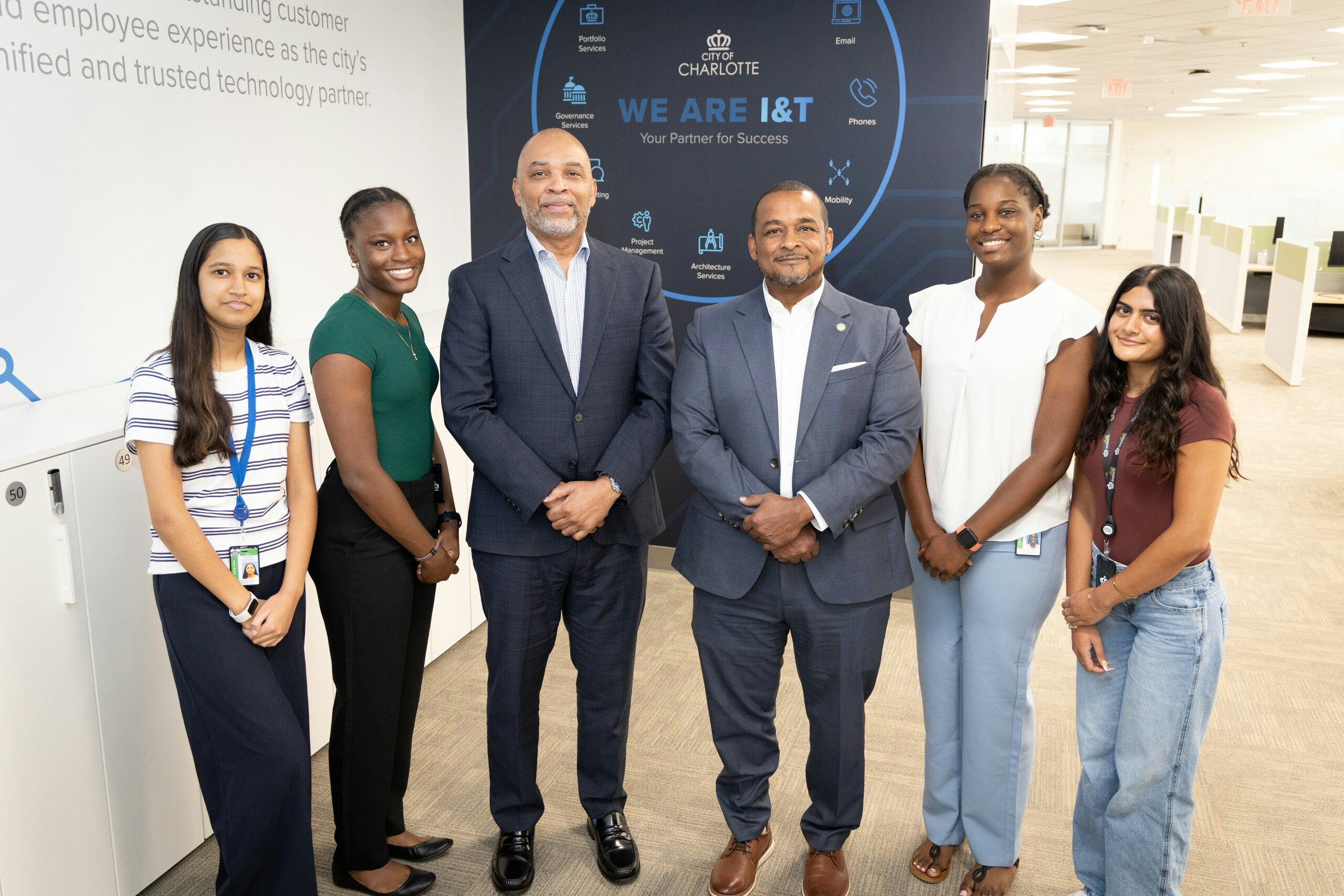
I’m Yuvika, a student at NCSSM (North Carolina School of Science and Mathematics), Morganton campus, part of the class of 2028. I live in the Harrisburg/Charlotte, NC area. Outside of academics, I tutor students in SAT/ACT prep with a focus on grammar and math, and I’m involved in the Climate Leaders Fellowship, MYEP internship, and volunteer work at the Charlotte Mecklenburg Library. My interests include swimming, movies, reading, and activism, and I also play varsity tennis. Looking ahead, I’m aiming for a career in AI engineering.
Project Background & Overview
Charlotte-Mecklenburg’s waste system is running out of room. The county’s Speedway and Foxhole landfills can handle current municipal waste generation rates for the next few decades, and eight other landfills outside Mecklenburg take waste from local businesses and institutions. But that capacity isn’t guaranteed to last: with steady population growth and shrinking available land, officials expect mounting pressure in the future if residents and businesses keep treating “away” as somewhere trash simply disappears to. Getting approval for the county’s only currently operating landfill, now sitting in the fast-growing Ballantyne area, took 15 years, which shows just how hard it will be to permit new capacity as Charlotte keeps expanding. Meanwhile, in nearby Wake County, the South Landfill is already nearing capacity, and county leaders are weighing options like building a new landfill, adding transfer stations, shipping waste to a regional facility, using waste-to-energy technology, or pre-processing trash before disposal, a response to waste volumes that spiked in 2020, 2021, dipped, and are now climbing again. That’s the same growth-driven squeeze Charlotte is heading toward: more waste generated every year, fewer places to put it, and a narrowing window to build better recycling infrastructure and habits before space runs out. This problem matters to me because I’ve grown up in the Charlotte area and have watched the region grow rapidly, new neighborhoods, new development, and along with it, more waste generated every single day. As someone involved in the Climate Leaders Fellowship and passionate about activism, I don’t want to just watch that trend continue quietly in the background. Waste management is one of those problems that’s easy to ignore because it’s largely invisible, once the trash truck picks it up, most of us stop thinking about where it goes. But growing up here means this is my community, and the choices Charlotte makes now about landfill space, recycling infrastructure, and waste policy will directly shape the environment I’ll keep living in. That’s why I wanted to dig into it rather than let it stay someone else’s problem to solve.
Project Execution
For my project, I researched and wrote an article titled “Charlotte’s Waste Machine,” which examined the landfill and waste capacity challenges facing Charlotte-Mecklenburg. To address the problem, I gathered background information and data on local landfill capacity, waste generation trends, and the county’s history with permitting and expanding disposal sites, using this research to explain why the issue matters now and what’s at stake if the region doesn’t act. I implemented the project by writing and sharing the article through the Climate Leaders Fellowship, translating research that’s often buried in government reports and local news into something more accessible. My target audience was fellow students in the fellowship, so I focused on engaging them by grounding the piece in concrete, local facts rather than abstract warnings, making an easy-to-ignore issue feel immediate and relevant to people my own age.
Impact
For this project, the main contribution I gathered was funding, which supported the research and completion of the article. In terms of results, I received feedback on the piece, which helped affirm that the article succeeded in making the issue of Charlotte’s landfill and waste capacity problems feel relevant and understandable to readers. I worked on this project independently, serving as my own mentor throughout the process, from researching the topic to writing and finalizing the article, without partnering with an outside organization or mentor. While that meant handling every stage of the project myself, it also meant the perspective and voice in the piece were entirely my own, shaped directly by my own research and judgment on the issue.
Personal Reflection
I didn’t draw inspiration from other members of my Climate Leaders Fellowship cohort, this project was something I worked through largely on my own. Still, being part of the fellowship was motivating in itself; knowing I was contributing to a larger effort around climate and environmental issues pushed me to take the topic seriously and follow through on it. What I’m most proud of is the research I put into the project. Digging into the details of Charlotte’s landfill capacity, waste trends, and the challenges the region faces gave me a much deeper understanding of an issue most people never think about, and turning that research into something clear and accessible for my peers is the part of this project I value most.
Tips for Others
- Pick a topic that’s local and specific, it’s easier to find real data and make the issue feel relevant when it’s happening in your own community.
- Start with research before you start writing; understanding the background thoroughly makes the actual writing much easier.
- Don’t be afraid to work independently, you don’t need a mentor or partner organization to produce something meaningful.
- Use primary sources (government reports, official county/city data) rather than relying only on news articles or secondhand summaries.
- Look for a “hook” that makes an invisible or overlooked problem feel immediate to your reader.
- Write for your actual audience, if you’re writing for peers, keep the tone accessible instead of overly technical.
- Get feedback before you consider it finished, even informally, since it can help you see gaps you missed.
Back to all Fellows
Sharanya Vats
Atlanta, Georgia · Alliance Academy for Innovation
Quantifying the Urban Heat Footprint in Metro Atlanta
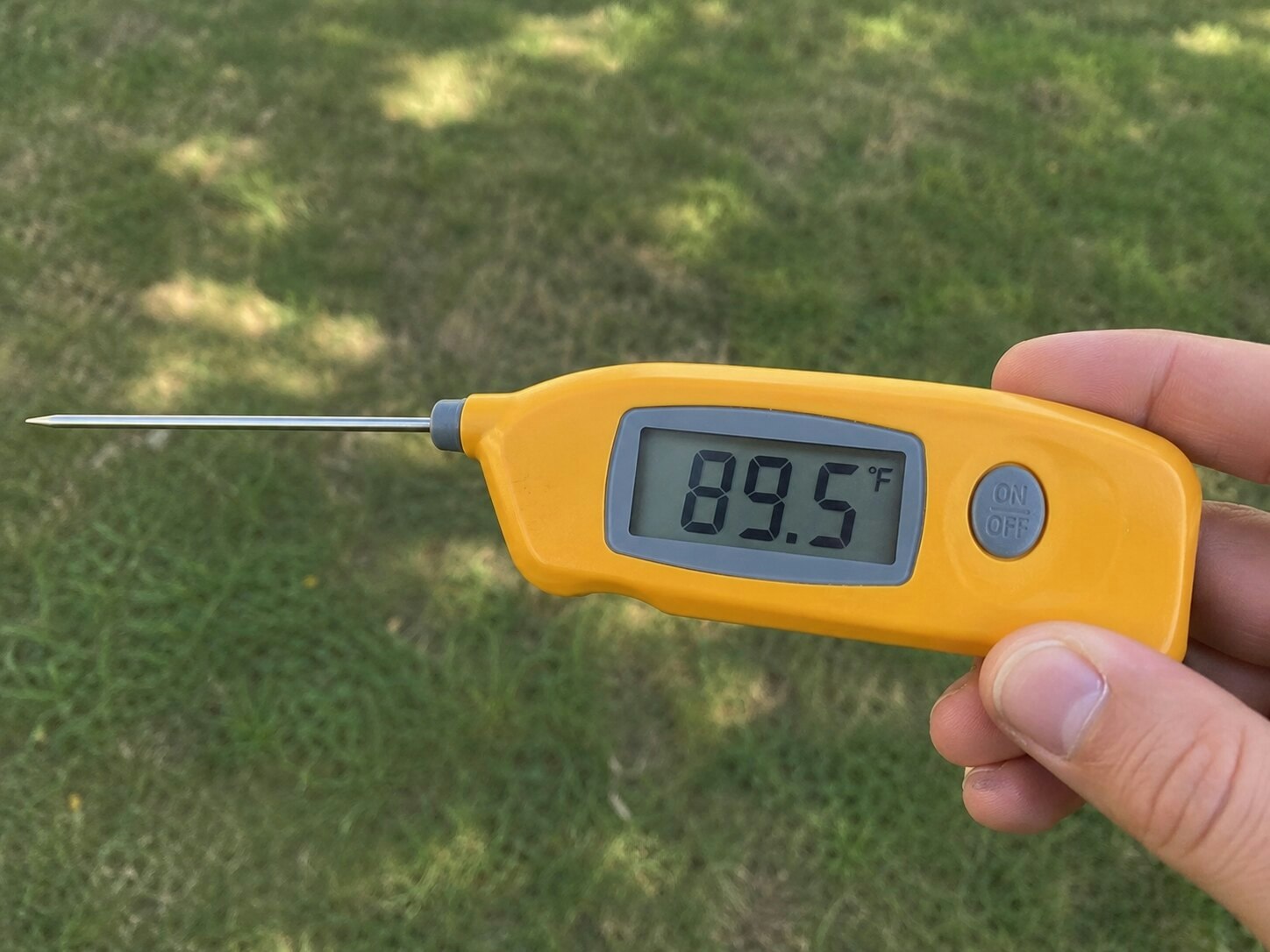
My name is Sharanya Vats, a high school junior at the Alliance Academy for Innovation in Metro Atlanta. My academic interests center on the intersection of data science, environmental advocacy, and astrophysics. Grounded in my cultural heritage, my approach to sustainability is guided by the principles of non-violence and environmental ethics, shaping my focus on leveraging quantitative data to address ecological challenges, from terrestrial microclimates to orbital space debris dynamics.
Project Background & Overview
My project addressed the escalating Urban Heat Island (UHI) effect across Metropolitan Atlanta, with a specific focus on the environmental impacts of expanding digital infrastructure. Metro Atlanta hosts one of the fastest-growing data center markets in North America, particularly along industrial corridors like the Chattahoochee River basin. These high-density facilities demand intensive power and cooling, contributing to hyper-local anthropogenic heat emissions and land conversion. Quantifying these surface temperature disparities is critical to advocating for sustainable urban planning and environmental equity in adjacent communities.
Project Execution
To measure these microclimate variations, I organized and led a field study with 13 student volunteers. Equipped with calibrated digital probe thermometers, our team conducted dual-surface sampling across industrial corridors, recording paired temperature metrics between concrete/asphalt infrastructure and adjacent vegetated control zones. Our field data revealed temperature elevations on artificial surfaces ranging from 10.0°F to 14.8°F above surrounding green space near high-density commercial sites. Synthesizing these empirical findings, I authored a formal legislative memo outlining targeted recommendations for urban canopy preservation and reflective surface standards, which was transmitted to local municipal officials.
Impact
The project yielded measurable scientific and civic outcomes.
- In field research, we accumulated over 85 field collection hours and recorded more than 120 paired microclimate data points.
- In empirical findings, we documented consistent thermal anomalies of 10°F to 14.8°F near industrial and data center infrastructure.
- In youth engagement, I mobilized 13 student researchers and collected over 400 community signatures supporting sustainable zoning practices.
- In legislative outreach, I delivered 3 formal policy briefs to municipal and county legislative offices to inform local environmental policy.
Personal Reflection
Participating in the Climate Leaders Fellowship demonstrated how primary field data can bridge the gap between community science and legislative action. Leading a dedicated team of student researchers reinforced my conviction that rigorous quantitative analysis is essential for advancing environmental justice. I am most proud of our ability to translate raw environmental measurements into formal policy recommendations delivered directly to local decision-makers.
Tips for Others
Target hyper-local environmental issues where primary observational data is limited.
Maintain strict data collection protocols to ensure scientific credibility.
Combine empirical findings with structured civic outreach and legislative memos to bridge science with civic action.
Present data directly to city and county planning bodies where local zoning decisions occur to engage municipal leaders.
Utilize social media and student groups to organize volunteer researchers effectively.
Let personal values and long-term community impacts guide your research vision.
Back to all Fellows
Joey Williams
Noosa Heads, Sunshine Coast, Queensland, Australia · St Andrews Anglican Collage Peregian Beach
From Concern to Climate Action: The Story Behind Act4Earth
Hi! I’m Joey Williams, a 17-year-old from the Sunshine Coast, Australia, currently completing my final year of high school. I’m passionate about journalism, sustainability, and global issues, and I love learning from people with different perspectives. Taking part in Model United Nations has strengthened my interest in international affairs and communicating across cultures. Outside of school, you’ll usually find me playing volleyball with my team, reading a good book, or spending time with friends at the beach. I’m also a huge fan of BTS and K-dramas, so there’s almost always one of their songs on my playlist or a new series waiting to be watched.
Project Background & Overview
For my Climate Leaders project, I focused on addressing climate disengagement among young people in my community. I noticed that many students believed adopting sustainable habits was pointless because climate change felt too overwhelming for individual actions to make a difference. This sense of hopelessness often discouraged people from making even small, positive changes. This issue matters to me personally because I am passionate about both protecting our planet and journalism. I believe that effective communication and accessible education can inspire people to feel empowered rather than discouraged. By sharing clear, engaging information, I wanted to show that individual actions, when combined across a community, can contribute to meaningful change.
Project Execution
For my project, I collaborated with several other passionate students from the Climate Leaders Fellowship to create Act4Earth, a youth-led non-profit organisation dedicated to making climate education more accessible and engaging. Our goal was to address the lack of climate awareness by creating informative, short-form content that resonates with younger audiences. We chose Instagram as our primary platform because it is where many young people already consume news and information. Through a combination of short-form videos, news carousel posts, and themed educational content, we communicate complex climate issues in a way that is engaging, easy to understand, and visually appealing. As Act4Earth continues to grow, we are expanding our reach by launching a TikTok account, publishing longer-form articles on Substack, and developing a website to provide more in-depth resources and educational content.
Impact
As a non-profit organisation, Act4Earth is entirely volunteer run. Every post, article, and video is created by a team of passionate high school students from around the world who generously contribute their time and skills. Our volunteers dedicate hours each week to researching climate issues, producing engaging content, designing graphics, and managing our social media platforms. Our team of 14 volunteers from 12 countries have published over 40 pieces of educational content, reaching more than 3,000 accounts. Our results have shown that short-form video content is the most effective way to engage our audience. One of our most successful Instagram reels has reached over 2,000 views, demonstrating the impact of presenting climate education in a concise and accessible format. We have also seen growing engagement across our educational video essay posts, reinforcing the importance of meeting young people on the platforms they use most. To expand our reach, we have collaborated with several youth-led climate organisations, including Project Gen Planet. These partnerships have allowed us to share audiences, exchange ideas, and create stronger educational content together. Working alongside like-minded organisations has amplified our message and helped us reach more young people with the goal of increasing climate awareness and encouraging meaningful action.
Personal Reflection
Participating in the Climate Leaders Fellowship has been an incredibly inspiring and supportive experience. Meeting my fellow Act4Earth team members through the fellowship is what turned the idea of creating a youth-led non-profit into a reality. As we were all new to creating content on social media, we learnt together, encouraged one another, and built our confidence as a team. Since then, Act4Earth has continued to grow, welcoming volunteers from beyond the Climate Leaders Fellowship who share our passion for climate education. The fellowship gave us the network, encouragement, and platform to transform an idea into something meaningful. It reminded me that creating change is much easier when you are surrounded by people who share your values and are willing to support one another.
I am most proud of the commitment and dedication of our team. Despite balancing school, extracurricular activities, and our own individual projects, we meet every Saturday to collaborate, share ideas, and support each other’s work. Beyond helping raise climate awareness, Act4Earth has given me lifelong friendships and shown me the power of young people working together to create positive change.
Tips for Others
My biggest piece of advice is to find a niche that combines what you are passionate about with the skills you already have. For me, that was climate journalism. By combining my interest in environmental issues with my love of communication, I was able to create a project that felt both meaningful and sustainable.
I would also encourage you to connect with people who share your passion. Whether they become teammates, mentors, or simply a source of encouragement, having a support network makes a huge difference. Some of my closest collaborators came from the Climate Leaders Fellowship, and working together has allowed us to learn from one another, overcome challenges, and achieve far more than we could have individually.
Finally, don’t wait until your project feels perfect to get started. Begin with the resources and knowledge you have, be open to learning as you go, and trust that your project will grow over time. Every post, conversation, and action has the potential to inspire someone else.
Back to all Fellows
Chloe Misaki Wisan
Jakarta, Indonesia · Sekolah Lentera Indonesia
From Food Waste to Climate Action
Who are you?
My name is Chloe Wisan, and I’m a ninth grader planning to pursue a career in PPE (Philosophy, Politics and Economics).
Where do you live?
I live in Jakarta, Indonesia.
How old are you?
I’m fourteen years old.
What are your interests?
I love the social sciences and pop culture!
Project Background & Overview
What specific problem were you addressing in your community?
The main focus of my project was tackling food waste while helping shape a more climate-conscious generation. I wanted to address the issue from both sides: reducing food that would otherwise go to waste and educating young people about environmental responsibility.
Why does that problem matter to you personally?
Growing up in Jakarta, I’ve seen how pollution and inequality can exist side by side. Because of this, choosing a project that bridged environmental and social issues felt natural to me. I wanted to work on something that not only addressed climate issues, but also had a tangible benefit for people in my community.
Project Execution
What did you do for your project?
I organized a food waste collection and redistribution initiative to reduce food waste while supporting underserved communities. Alongside the redistribution efforts, I also conducted climate education activities to encourage children to become more environmentally conscious.
What actions did you take to address the problem?
I collected surplus food from local factories and bakeshops and redistributed it to underserved communities. I also worked with children to teach them about environmental issues and encourage more conscious attitudes toward the environment. This allowed the project to create both an immediate impact through food redistribution and a longer-term impact through education.
Where and how did you implement your project?
I implemented the project through my existing community networks and connections with local bakeshops, factories, volunteers, and underserved communities.
Who were your target audiences and how did you engage them?
I primarily worked with underserved communities, particularly orphans and low-income individuals. Rather than simply providing resources, I focused on building trust and genuine relationships with the communities I worked with. I believe this helped make the programs more meaningful and effective.
Impact
What types of contributions (materials, funds, volunteer hours) did you collect?
Several of my friends volunteered their time and effort, which I’m incredibly grateful for and which played an important role in the project’s success. I also collected surplus food and other materials from local bakeshops and factories.
What were the results?
The project resulted in:
- More than 200 kilograms of food redistributed
- More than 100 children reached through our work and educational activities
- 10+ volunteers involved
Which organizations or mentors did you work with?
I worked through my two existing organizations, SeeItNow and Bloom4Tomorrow, as well as with the support of my family.
How did these organizations or mentors help your project succeed?
My two existing organizations allowed me to leverage networks, connections, and experience that I had already built. My family, especially my grandfather and mother, also supported me throughout the process and helped me turn the idea into something real.
Personal Reflection
Did you receive any help or inspiration from other members of your Climate Leaders Fellowship cohort?
I did not directly receive help from other cohort members, but being surrounded by other passionate young people was inspiring in itself.
How did participating in the Climate Leaders Fellowship make you feel?
I felt inspired by being part of a community of people who were genuinely committed to creating change. The discussion sessions were definitely a highlight for me, as they gave me the opportunity to challenge and refine my ideas.
What are you most proud of regarding your project?
I’m proud that we were able to see real results.
Tips for Others
What are your top tips for someone else who wants to do a project like yours?
- Be willing to change your original idea. Adapt to new circumstances, and use the planning period to explore several different concepts.
- Find people you trust to be part of your team. The right people can make a huge difference.
- Start even if you don’t feel ready. Don’t let endless planning stop you from taking the first step.
- Avoid performative activism. If possible, focus on doing meaningful work rather than constantly documenting or publicizing it.
- Combine different ideas. Don’t be afraid of being “unoriginal”; sometimes combining existing ideas can create something more effective.
Back to all Fellows
Cynthia Xu
United states, Washington · The Overlake School
Filtering the Future: A Student’s Fight Against Stormwater Pollution
My name is Cynthia Xu, I am 15 years old, and I am going into sophomore year at the Overlake School in Redmond, Washington. I became interested in environmental science after watching endless streams of animal documentaries on National Geographic as a child. After witnessing how amazing our planet could be, I made it my goal to protect it! I am passionate about creating a lasting impact in my community, whether it is at my school, with my family at home, or in Washington state. My goal is to combine my love for the environment with my skills and talents to help others and make a difference.
Project Background & Overview
I found my project when a local environmental issue hit home: my sister had to cancel her plans because our neighborhood lake was closed due to pollution. This sparked my investigation into stormwater runoff, which remains one of the largest sources of pollution in Washington’s Puget Sound. As rain sweeps over roofs and streets, it carries heavy metals, microplastics, and oils directly into our aquatic ecosystems. To combat this, I purchased and planned a stormwater filtration system to reduce pollution before runoff enters local waterways. The project aims to create an affordable solution that small schools and communities can use to improve water quality and protect downstream ecosystems.
Project Execution
My first step was defining the scope of my project, identifying potential collaborators, and determining my target audience. I initially researched companies that might support my project, but none were targeted towards teenagers or aligned with my goals. I then shifted my focus to the teachers and clubs at my school, The Overlake School, and after contacting the head of my school, the maintenance staff, and my environmental science teacher, I found the right mix of mentors to help me execute my project.
With their support, I created an executive summary to brainstorm the ideas, steps, and solutions for my project. I then collected water testing kits and worked with staff to collect rainwater runoff and coordinate testing and data collection. At the same time, I spread the word of my project to the students and staff at school as my school community was my target audience. I spoke to them during an assembly about my project and the issue of stormwater pollution, and collected signatures, which was my key way of engaging with my community. After spreading the word in this assembly, I collected 173 signatures supporting my project.
That assembly is what got the project moving. I obtained blueprints of the school’s pipe and drainage system and met with Jay to identify filter locations that would minimize overflow risk while maximizing coverage. Together we selected 4 drainage sites and 2 filter types. Implementation is underway, and the first filter is already installed. In total, I’ve put in 94.5 hours on this project, with $2,000, $5,000 in funding from my school.
Impact
My project benefits both my immediate community and the broader environment in two concrete ways: education and direct environmental impact.
On the education side, I was able to raise awareness about storm drain pollution, an issue that widely affects Washington state but that most people know very little about. By hosting an all-school presentation and installing informational boards alongside each filter, I created a lasting educational resource on campus that will continue to raise awareness about this issue.
On the environmental side, I am currently installing filters across four drainage areas on my campus. I have also researched and planted native plants that help absorb more water, as one issue that also was seen in our campus was the overflowing drains. When I conducted a retest after the first filter installation, the results were significant: alkalinity in the water decreased by 78%, and heavy metals were nearly eliminated in the area of the filter. These are real, measurable improvements to the quality of water leaving our campus and entering the local watershed. By installing these filters, I helped my school directly reduce the kind of pollution that harms aquatic ecosystems and degrades water quality downstream.
Together, these two outcomes reflect what I believe effective environmental action looks like: educating minds and changing conditions at the same time. My project didn’t just raise awareness; it produced data-backed environmental results that will continue making an impact on my school and greater community for as long as the filters remain in place.
Personal Reflection
Participating in the Climate Leaders Fellowship took me out of my comfort zone. At the beginning of my project, I believed that as a freshman, I had little ability to make an impact on my community. Soon, with the help of mentors in my school, I realized that even though I’m young, I can still make an impact. All you need is a drive to make a change, and it will happen. Doing this project allowed me to meet people around my school I might have never interacted with before. It also allowed me to connect with researchers outside of my school to continue this work. At each meeting, hearing about the other fellows’ projects inspired me to continue and improve my own. I hope that this project can eventually expand beyond my school and inspire other communities to take action against stormwater pollution.
Tips for Others
Tips for others:
- Your age does not determine your ability to make an impact.
- Never be afraid to ask for help
- Remember to have a clear timeline for your project
- Every issue matters, even if it affects only a small number of people.
Back to all Fellows
Lily Zezula
Connecticut · Ridgefield High School
Every Jersey Deserves Another Season
My name is Lily Zezula. I am a rising high school junior, a varsity volleyball player, and I am an inventor! I have been inventing solutions to environmental problems since I was 9. My award winning inventions include a turtle tent that reverses the impacts global warming has on the gender of sea turtles, a speed bump that helps generate renewable energy from car trips, a buoy that helps prevent the cold-stunning of sea turtles, and a filter that uses mushrooms to clean stormwater runoff. I love problem-solving and have a list of “problems” that I research and try to brainstorm ideas as to ways to solve them. The Civics Innovators Fellowship embodied my passion for curiosity and my innovative spirit. Through my CIF project, I was able to bring my passion for protecting the environment and my love of volleyball together.
Project Background & Overview
As many parents know, when kids play sports, it requires purchasing uniforms, safety equipment, shoes, and other gear. Often, the lifespan of that gear lasts just one to two years or less. Most parents and coaches typically throw away these at the end of a sport’s season. According to Planetaid about 85% of clothing ends up in landfills or get burned. Once items, like uniforms, end up in the landfill, they can take 30-40 years or more to decompose. These items produce greenhouse gases that can be harmful to our health and planet.
Each season, I noticed that my volleyball club provided new jerseys and backpacks to athletes. Teams were required to buy the newly designed jerseys and therefore had no need for last year’s. I knew that I wanted to do my part in reducing that waste and its environmental impact.
Project Execution
To do my part in reducing athletic waste and its environmental impact, I partnered with my local volleyball club and KitAid USA, a dedicated charity that collects and recycles gently used sports uniforms to distribute them to children and adults worldwide and helping to bring the joy of sports to children and adults. During the course of a few months, I ran a collection drive at my local volleyball gym, collecting over old jerseys. I marketed this effort on social media, through flyers, and through electronic blasts. In a short period of time, I collected close to 100 items of athletic items.
Impact
I helped find a second life for the jerseys collected, prevented unneeded waste, and also was able to support the KitAid mission of making sports accessible to everyone, regardless of their background, by providing quality gear that inspires and empowers individuals to stay active and healthy. This partnership provided athletes, families, and teams with an earth-friendly option to give their jerseys, kneepads, and shorts, they no longer wanted or needed to an athlete who does. I helped make both a positive impact on the environment and on the lives of individuals across the globe. Most importantly, my volleyball club wants to host another collection at the close of each season.
Personal Reflection
I am most proud of turning a simple idea into something that had a real, tangible impact. Collecting volleyball jerseys might seem small, but it became a way to connect people who had extra with those who had very little. It also was a great way to take something that will not be used again and find a new way to reuse it. Seeing the generosity of teammates, friends, and community members reminded me that people are often willing to help when given a clear and meaningful opportunity. I am hoping that each recycled jersey can help underserved kids feel included, confident, and part of a team. That sense of belonging is easy to overlook, but it can make a big difference in how someone sees themselves. I was honored to participate in the Climate Leaders Fellowship this past spring. My biggest takeaway was that creating an impact doesn’t always require something huge. It requires initiative, consistency, and purpose. Coming up with a meaningful idea was the hardest part, but once I had an idea and took the first step, others, including my volleyball club and the partnership organization of KitAid followed and contributed. However, what mattered most was realizing that I have the ability to create change, even at my volleyball club level, and that small actions can grow into something meaningful. What I learned is that I don’t have to wait for the “perfect” opportunity; I can create one.
Tips for Others
My top tip is don’t be scared to find partners in implementing your idea. There are so many people searching for ways to make donations or recycle their waste but sometimes don’t have the time to seek out charities or not-for-profits that have a direct connection. Most people and the organizations I found were eager to assist. My other tip is to stay organized and communicate. Clearly explaining your goal makes people more willing to support it.
Back to all Fellows
The Issue That Followed Me Home
Hi everyone! My name is Yani and I’m from Madrid, Spain. I’m a rising senior, and my passion has always been learning new things each day. One day, I came across the field of STEM and I couldn’t be more engaged in it. I later learned more about sustainability, but I didn’t just want to understand it. I wanted to give my little grain of sand to honor what all the knowledge I had gained had taught me.
Apart from this, I enjoy learning new languages, especially their literature. I think languages, together with art, are two of the most beautiful forms of expression humans are given. I also love learning about new cultures, something I was able to experience especially during my exchange year in Canada.
It was actually during my time in Canada that I came across the problem that eventually became my project.
Project Background & Overview
When I first arrived in Canada, I noticed that the waste system was completely different from what I was used to in Spain. At first, I thought my struggle to maintain my environmentally friendly habits was simply because I was in a new country. I had to learn a completely different system and figure out what belonged where.
But after a while, I realised this wasn’t a me problem.
Waste is something we all produce, but once we put something in a bin, we tend to stop thinking about it. I became interested in what happens after that moment and, more importantly, whether communities could use information to understand their waste problems before they became bigger ones.
That idea became G-WIN, the Global Waste Intelligence Network.
My goal is to reduce global waste by building a platform that helps communities detect waste problems before they become long-term environmental damage through emerging technologies.
Project Execution
For my Climate Leaders Fellowship project, I wanted to take G-WIN from an idea and bring it into my community. I worked with the New Canadians Centre and Clean Up Peterborough to organise a three-day workshop and community cleanup activities.
One of my priorities was making sure the project brought together people who might not normally participate in environmental initiatives. Through the New Canadians Centre, I was able to engage newcomers and young people from different backgrounds. Around 50 people from at least five countries and three continents participated in the project.
We combined learning with action. Participants learned about waste and then put that knowledge into practice through our cleanup activities. I also developed a website and dashboard to collect and visualise waste data.
I didn’t want G-WIN to simply be about picking up rubbish. I wanted us to start asking questions about what we were finding: what types of waste appear most often, where they appear, and what that information could tell us about our communities.
Impact
During one of our cleanups, participants collected around 2.5 kilograms of waste in just one hour.
More than 800 pieces were cigarette butts.
That number surprised me because each individual cigarette butt is so easy to overlook. Seeing hundreds of them together made the problem much harder to ignore.
The project also brought together around 50 people from different backgrounds and gave them an opportunity to work on an issue that affects everyone. Beyond the cleanup itself, I created a system for collecting waste data and developed a website and dashboard to make that information easier to understand.
I also had the opportunity to share the project through writing, including an article (EcoPulse) published by ERTeens and the New Canadians Centre’s platform. The New Canadians Centre and Clean Up Peterborough were an important part of making the project possible.
The New Canadians Centre helped me connect with members of the newcomer community, while Clean Up Peterborough helped me turn the idea into something practical and local.
Personal Reflection
The Climate Leaders Fellowship taught me that your first idea doesn’t have to be your final one.
G-WIN changed as I worked on it. There were ideas that sounded great at first but didn’t work once I started thinking about how they would actually function. I learned to listen, adapt and not be afraid of changing direction.
The other fellows were also a huge source of inspiration. Seeing students from different parts of the world working on completely different environmental problems made me realise how many ways there are to contribute to climate action.
I think what I’m most proud of is that G-WIN stopped being only my idea.
At the beginning, I was the person imagining it. But once other people participated, shared their experiences and contributed to the project, it became something that belonged to a community too; this is something I want to carry with me beyond the fellowship.
Tips for Others
My biggest advice is to start before you think you are ready.
Find something that genuinely makes you curious. Talk to people who experience the problem you are trying to address. Your first idea might change completely, and that is okay.
Also, don’t underestimate small projects. You don’t need to solve climate change in eight weeks. You just need to make one part of your community a little better than it was before.
And when something doesn’t work, don’t immediately consider it a failure. Sometimes it is just the project showing you what it needs to become.
Back to all Fellows
Jerry Zong
Climate Leadership Award Finalist
Hong Kong · Chinese International School
From Food Waste to Community Care
My name is Jerry Zong, and I am a senior in Chinese international school Hong Kong. I’ve been living in Hong Kong my whole life, and I love the mountains and beaches here. I speak three languages fluently: English, Mandarin and Cantonese. In my spare time, I love to play soccer, watch documentaries, listen to music and just enjoin nature. I am very passionate about sustainability, community service, and empowering the youth to take thoughts into action.
Project Background & Overview
My project focused on two problems that exist side by side in Hong Kong: food waste and food insecurity, especially among elderly residents. In 2023, Hong Kong disposed of around 3,191 tonnes of food waste every day, while only 6.4% of the food waste generated was recovered. At the same time, poverty remains a serious issue for older residents. Oxfam Hong Kong found that in early 2024, around 580,900 people aged 65 or above were living in poverty which roughly 36.8% of Hong Kong’s elderly population.
After looking at the numbers I felt that there was a striking contradiction or difference: thousands of tonnes of food are being thrown away every day in the same city where hundreds of thousands of elderly people are living in poverty. My project grew from the question of how can we redirect some of what is being wasted toward the people who actually need it?
The reason this became so important to me was seeing a contradiction in my home city of Hong Kong. On a daily basis we throw away large amounts of food, while at the same time, those within walking distance do not have access to enough.
Project Execution
I developed a community service project to reduce food waste while helping support elderly residents in Hong Kong who are experiencing food insecurity. I collaborated with local non-governmental organizations (NGOs) like Feeding Hong Kong and engaged in several volunteer-based activities every week to help deliver over 300-500 meals per week to seniors living in Shau Kei Wan. In addition to this direct delivery of food, I ran food drives that generated approximately 10kg of excess food per collection.I also gave talks to younger students about food waste and food insecurity. During the Tai Po fire response, I also helped mobilize 20 volunteers to coordinate food sourcing with NGOs supporting affected families.
The main service took place in Shau Kei Wan, where volunteers distributed meals directly to elderly residents. The other aspects of the project included at my school and throughout Hong Kong. This included food drives; surplus food donations; lectures on food waste and food insecurity.
The target audience in this project was elderly residents experiencing food insecurity, whom we supported through regularly delivering meals and donating excess food. Additionally, I focused on students, particularly elementary/primary students, to raise awareness of the issue and encourage their participation in actively addressing this problem.
Impact
By conducting a weekly Saturday service in Shau Kei Wan, my team distributed about 300- 500 meals to elderly residents each time. In addition, we participated in Food Drives and Food-Rescue Runs and have obtained about 30 students for volunteer work. As a result, we were able to expand our services beyond meal distribution to awareness presentations and emergency food assistance. The biggest observation that I found is that most senior residents value meals as well as the conversation/connections established with our team during our community service.
I received mentoring and guidance from mentors and fellow peers participating in the Climate Leaders Fellowship; as well as partnering with local organizations such as Feeding Hong Kong (NGO) and local organizations working to assist elderly residents.
Personal Reflection
One of my greatest accomplishments is that I believe that when I graduate from high school, this project won’t end. While I was in CLF, I began to think less about what I could accomplish as an individual, and more about how I could create a program for others to carry forward. With the involvement of younger students (through food drives, food runs, awareness events and our weekly service), I want to develop a team of people who can eventually take over the service and introduce new generations of volunteers.
Our partnerships with local NGOs also mean the project is connected to organizations that will still be doing this work long after I leave school. For me, that is probably the most meaningful outcome of the project: not just the meals we distributed or food we collected, but creating a service system that can keep growing without depending on one person.
Further One of the most valuable parts of CLF was being surrounded by other students who also so passionate about turning ideas into real projects. Hearing about their work made me rethink parts of my own project, especially how I described its impact.
Tips for Others
Start small, but make it consistent. One food drive or service day matters, but regular action is what creates lasting impact.
Work with organizations that already know the community. NGOs helped me understand where support was actually needed instead of assuming I knew the solution.
Have conversations with those you’re helping. In many cases, some of the most valuable insights I gained didn’t necessarily come from researching statistics about a particular group, but by talking directly to the elderly.
Bring other students into the project early. The goal should not be to make yourself essential, but to create something others can eventually lead and continue.
Be willing to adapt. Community needs can change quickly, and experiences like responding to the Tai Po fire taught me that a strong project should be flexible enough to help when unexpected needs arise.
Back to all Fellows