Hi! My name is Sophie Kim and I live in Huntington Beach, California. At the time of writing, I’m 16 years old and a rising junior in high school. I love learning languages, going on long bike rides through my neighborhood, pondering philosophical questions, reading classics (Little Women is one of my favorites), and volunteering at my local library!I co-led this project with my friend Jack Hunzinger, rising senior, also based in Huntington Beach but originally from Long Island, New York. He’s both a friend and a fellow environmentalist; we met at school and started working together as part of a youth-led environmental nonprofit organization called The Clean & Green Initiative (you should join :).
He was the one who initially came up with the idea to do a food waste audit!
Project Background & Overview
The specific problem we wanted to address was food waste, primarily because it has an immensely negative impact on climate change. Data compiled by the United Nations demonstrates that roughly 8% of all GHG emissions annually stem from food waste, which translates to a carbon footprint more than three times greater than that of the entire aviation industry. It’s also somewhat neglected compared to other issues, and it’s easier — at least from where we stand as HS students — to make progress on the issue of food waste than it is on, say, the carbon impact of air travel. In this sense, we tried to follow the ITN framework (importance, tractability, neglectedness) for effective altruism.
More than its impact on climate change, however, reducing food that’s wasted is also a path forward to achieving SDG #2, Zero Hunger. The World Food Programme estimates that 309 million people are currently experiencing chronic hunger and food insecurity worldwide. By reducing the food that’s wasted and redirecting it to those who need it, we can address both climate change and world hunger.
From a personal standpoint, I’m a passionate climate activist because I grew up in a coastal town and have witnessed both the amazing beauty and wonder of nature as well as the detrimental impacts of human activity. In October of 2021, there was an oil spill off the coast of Huntington Beach that resulted in 25,000 gallons of petroleum being dumped into the ocean, harming our precious marine ecosystems and our protected conservancy, the Bolsa Chica Wetlands. I’m also well aware of the millions of people worldwide who are suffering from hunger due to poverty and conflicts. As a Korean-American, I could very well have been one of those people suffering in North Korea had my grandparents not immigrated to the United States.
Project Execution & Impact
For our project, we hosted a food waste audit on the campus of our high school (Huntington Beach High School), collecting, categorizing, and analyzing 21 bags of trash. We coordinated with and received approval from our school’s administration, recruited 18 volunteers, and collected a total of 257 completely untouched fruits. We also collected 27.3 pounds of plastic trash and found quite a few random items (including a basketball, shaving cream, water balloons, painted tiles, and a Hydro Flask).
We collected data by either individually counting or weighing our categories, which included “plastic waste,” “untouched fruit,” “untouched vegetables,” “cardboard and paper,” “leftover fruit,” “other untouched food,” and a couple others.
Jack and I are now working on compiling a report on our findings to present to district leadership with recommendations on how food waste can be addressed at our school. We’re looking to eventually partner with a local nonprofit organization that serves the homeless to donate some of the food that students don’t take rather than simply throwing what’s left away. We’re also planning to ask California lawmakers to change the law requiring every student to take certain items, including fruit — although it was a policy initially intended to improve student health, it is instead increasing food waste, contributing to the climate crisis, and wasting taxpayer funds.
Since Jack and I are both part of The Clean & Green Initiative, we conducted this project as a part of the organization and compiled photos on https://www.tcagi.org/food-waste.
Personal Reflection
I absolutely loved my experience in the Climate Leaders Fellowship! I met so many incredible like-minded high school students and the community was an amazing resource. It’s being surrounded by people like this that restores your faith in humanity and your belief that the world can rise up to the challenge of the climate crisis.
Whenever I had an issue with my project or needed advice on anything, I knew I could reach out to the other Fellows for help! There were always so many options: I could send people messages on the Discord server, I could bring it up during our next Zoom meeting, I could send an email to my student facilitators or John, etc. There was never a moment when I felt alone while completing my project.
In regards to what I’m most proud of: I initially had a separate project idea that didn’t end up working out. Instead of giving up, I decided to pivot and try something new, and this turned out even better than what I was initially planning! I think being able to persevere and continue experimenting is an important life skill, and I was lucky enough to have my partner Jack alongside me every step of the way to help me do just that.
Tips for Others
In terms of advice I’d have for anyone else trying to conduct a food waste audit, the #1 tip I have is to plan your audit well in advance. Don’t wait! In our case, our audit had to be delayed due to a staff event, but since we had a bit of buffer time it still ended up being alright. Had we scheduled our audit for the week before summer break, we wouldn’t have been able to complete the project at all. Second, recruit volunteers! This is going to be a tough one. It’s hard to convince high schoolers to sort through trash for hours — I still have no clue how we pulled it off. Try recruiting friends and contact all the environmental and service clubs you possibly can.
Also, be sure to research other food waste audits and what specific materials you need (gloves, masks, a tarp, a scale, bags, etc). There are a lot of great guides out there! Here’s one by the EPA: A Guide to Conducting Student Food Waste Audits: A Resource for Schools | US EPA
Connections
If you want to connect, I’d love it if you considered joining The Clean & Green Initiative! Here’s some information regarding open positions: TCAGI Positions Open for Applications
Read the TCAGI blog
“Save the world or die trying.”





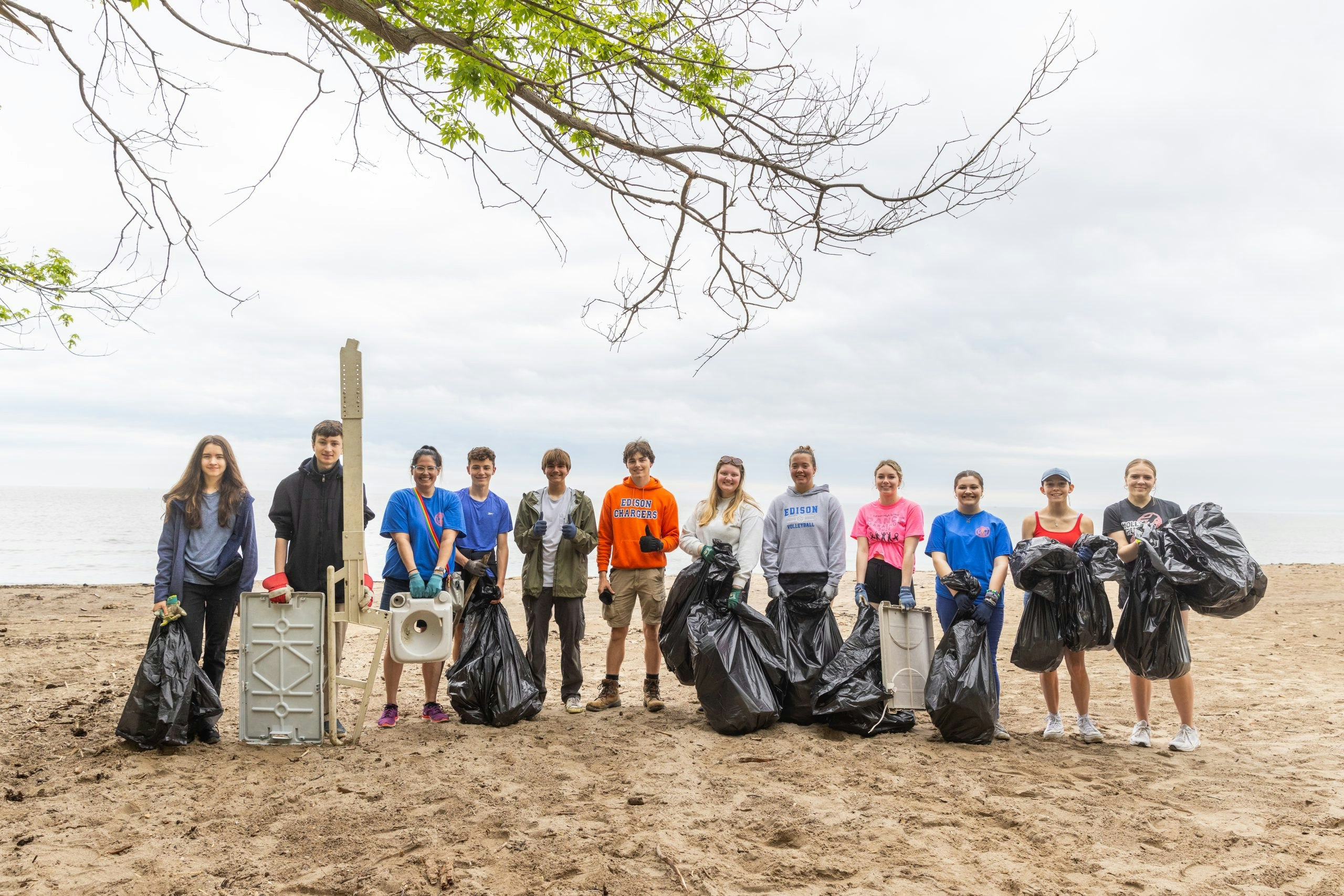








 For my project, I targeted middle schoolers as an audience old enough to make independent choices that will become the decisions of the future generation. I created a workshop for students at a local middle school to create their own composting system out of recycled jars and containers while learning about composting in our community.
  I created a curriculum that covers the science behind composting, what food scraps can and cannot be composted, and how to properly use compost to grow nutritious fruits and vegetables at home. Students were in charge of layering soil with leaf litter, apple cores, banana peels, and grasses into a container they brought from home, as well as decorating their container with paint markers. Many of them told me they would take their compost jar home and use it on a home garden. This workshop was attended by 17 students, each was interested in some aspect of the workshop, even if it was eating the apples I brought for them to compost.