

Language immersion teen tours are educational trips built around daily language instruction. Students use the target language in real situations every day, both in and out of class.
Language immersion programs run 7 to 10 days for students aged 14 to 18 and start at $2,450 per student.
Rustic Pathways offers 5 language immersion programs teaching Spanish, French, Arabic, and Mandarin across Costa Rica, the Dominican Republic, Morocco, and China. All 5 are school group travel programs for groups of at least 8 students and a teacher.
| Language | Program | Country | Days | Class hours per day |
|---|---|---|---|---|
| Mandarin | Mandarin immersion in Tianjin and Beijing | China | 8 | 2 to 4 |
| Spanish | Spanish immersion with mountain homestays | Dominican Republic | 8 | 2 to 4 |
| French | French immersion in Morocco | Morocco | 10 | 2 to 4 |
| Arabic | Arabic immersion in Morocco | Morocco | 9 | 2 to 4 |
| Spanish | Spanish immersion and outdoor adventure in Turrialba | Costa Rica | 7 | 2 to 4 |
Class hours are a baseline that can be adjusted to the school’s needs. Each program is built around the visiting group.
What Language Immersion Means
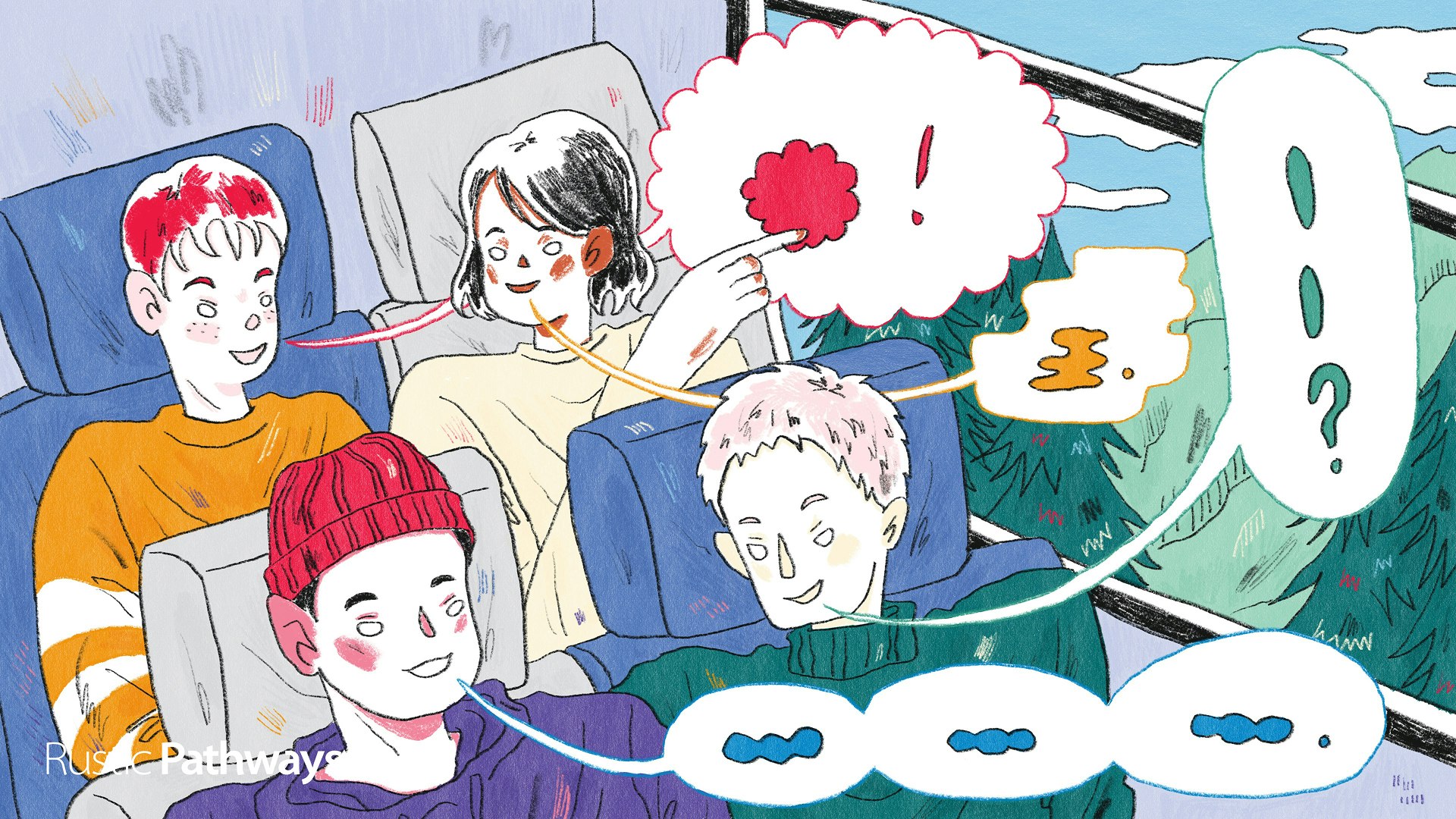
Language immersion is instruction in a target language combined with required use of that language outside the classroom, in the country where it is spoken.
A student on an immersion program orders food, asks directions, and talks with local staff in Spanish, French, Arabic, or Mandarin on the same day the relevant vocabulary is taught.
Two models exist:
- Pure language immersion focuses on classroom hours.
- Language and culture immersion incorporates guided activities, local interaction, and in some cases a homestay, so students practice in real social situations.
Rustic Pathways programs follow the language-and-culture model, pairing daily class time with structured activities in the target language.
How to Compare Language Immersion Programs
Three questions separate programs that produce measurable progress from programs that attach a language label to a holiday.
- Placement: does the program test level on arrival and teach in level-matched groups, or run one lesson for everyone?
- Class time: is the schedule fixed by the provider or adjustable by the school?
- Supervision: is the ratio a verified median or a marketing promise?
Rustic Pathways Language immersion programs address all 3 questions, starting with how a program is built.
How a Rustic Pathways Language Immersion Program Is Built
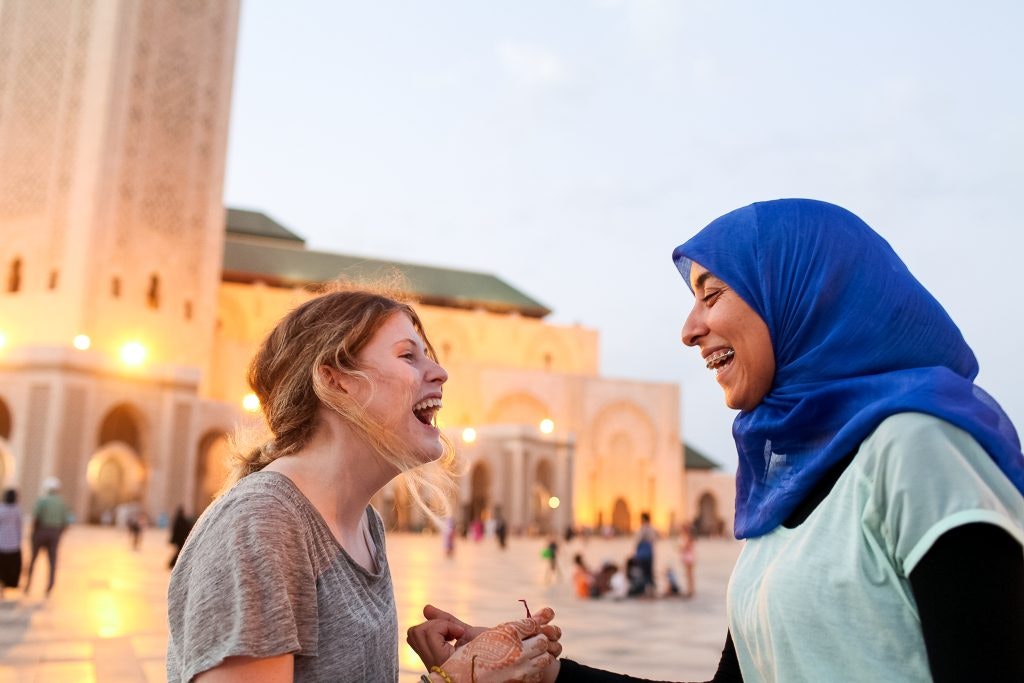
Rustic Pathways language immersion programs are built around a visiting school group of 8 or more students aged 14 to 18, pairing 2 to 4 hours of daily class time with activities conducted with local speakers in the target language. Every element below is agreed with the school before departure.
| Element | Detail |
|---|---|
| Enrollment | School group, minimum 8 students, teacher travels with the group |
| Ages | 14 to 18 |
| Dates | Flexible, set by the school |
| Class time | Approximately 2 to 4 hours on scheduled instruction days |
| Class size | Small-group instruction, with proficiency-based grouping |
| Total contact hours | Varies by program |
| Placement | Level test or other proficiency measure prior to classes |
| Instruction Setting | Program dependent: Local university instructors, language centers, local speaking partners, cultural activities, and homestays |
| Included | All lodging, all meals, in-country transportation, all activities, 24/7 staff support |
| Excluded | International airfare, travel insurance, personal spending of $150 to $200 |
| Reflection & Closing | Closing reflection and Rustic Ties ceremony |
Explore Rustic Pathways school group travel →
The practical difference from a fixed-itinerary language tour is adjustable class time. A school with an AP cohort can increase class hours, and a school treating the trip as a first exposure can reduce them.
At the start of the program, students’ language proficiency is assessed through a placement test or speaking proficiency assessment. Students are then divided into level-appropriate groups, separating beginners from more advanced students.
Where that structure lands differs by language, because the role each language plays in the destination differs.
What Each Language Program Adds
Spanish, Costa Rica, 7 days. Based in Turrialba, students take small-group Spanish classes alongside and do adventure activities like mountain biking, a waterfall hike, a coffee farm tour, and whitewater rafting on the Pacuare River.
Spanish, Dominican Republic, 8 days. Combines Spanish classes in Jarabacoa with a two-night homestay in the mountain community of La Angostura, where students stay with host families and participate in community service.
French, Morocco, 10 days. Students take morning French classes in small, proficiency-based groups, practice with a local French-speaking partner, and use their language skills during a scavenger hunt and conversations in the Marrakech souks.
Arabic, Morocco, 9 days. Students study both Moroccan Arabic, or Darija, and Modern Standard Arabic, then practice conversation during a souq scavenger hunt, cultural exchanges, and activities in Marrakech.
Mandarin, China, 8 days. Students live and study at Tianjin University, taking Mandarin classes before practicing their reading, writing, and conversation skills through cultural activities in Tianjin and Beijing.
Compare all 5 Rustic Pathways language immersion programs →
No language immersion program will produce fluency in just 7 to 10 days, so what does immersion produce?
What Immersion Produces

Rustic Pathways does not measure language proficiency gain on programs this short. Measuring proficiency improvement over 7 to 10 days is inaccurate.
Immersion programs target listening comprehension and everyday speaking confidence. Students with 1 or 2 years of prior classroom study find value in practicing vocabulary they have never used with native speakers.
Rustic Pathways measures Intercultural Competence across all programs, showing 34.8% pre-to-post growth and 28.6% growth 6 months after students return, based on Rustic Pathways’ internal SLO evaluation across a multi-year sample. Intercultural Competence is a culture outcome rather than a language outcome.
This kind of growth comes from program structure and students’ commitment.
Does Rustic Pathways Use a Language Pledge?
Rustic Pathways does not use a language pledge. Students are not asked to sign a commitment to avoid English, and no student is penalized for using English.
Rustic Pathways’ program structure does the work a pledge would. Classes are typically 2 to 4 hours per day, and activities are built around interactions with local speakers who do not speak English. In this way, the target language is the practical option rather than the enforced one.
English is available at any time. Program Leaders who speak English and the target language are present throughout to help students navigate language barriers.
On one of the 5 programs, language immersion extends past the scheduled daily activities.
Homestays on the Dominican Republic Program

Students on the Spanish immersion program in the Dominican Republic stay with families in mountain communities. Students practice Spanish outside the classroom during mealtimes, household chores, and evening conversations with their host families.
Before a student is placed with a host family, the family must pass Rustic Pathways’ 26-point assessment, covering 5 areas: Property, Security, Safety Systems, Sanitation, and Policy Compliance. The assessment is repeated on an ongoing basis to ensure continued compliance. A family that passed 3 years ago is reassessed before the next placement.
The other 4 Rustic Pathways language immersion programs use hotels and base houses. Students room with same-gender peers and program staff stay on-site.
Rustic Pathways supervises language immersion programs with a median of 4.37 students per staff member, and every host family placement is subject to the same vetting standards.
How Rustic Pathways Is Rated Independently
Rustic Pathways holds 4.9 out of 5 on Trustpilot across 218 reviews and 9.56 out of 10 on GoAbroad across 201 reviews. The Better Business Bureau rates Rustic Pathways A+ with annual verification.
The World Youth Student and Educational Travel Confederation named Rustic Pathways Best Youth Travel Operator in 2015, 2017, 2018, and 2019. Travel Weekly awarded Rustic Pathways a Magellan Gold in Health and Safety Innovations in 2024.
All 5 Rustic Pathways language immersion programs operate as school group trips, but there are options for independent travelers.
If a Student Is Traveling Without a School Group
Currently, Rustic Pathways does not run an open-enrollment language immersion program for individual students. Two individual enrollment options are available.
Students aged 17 to 22 can join a 78-day Spanish immersion and service gap program across Costa Rica, Peru, and the Dominican Republic.
Students aged 14 to 18 who want daily exposure to local language and culture without formal instruction should consider cultural immersion programs with homestays and local hosts, several of which place students in Japanese-, Korean-, and Spanish-speaking communities.
Groups don’t have to be school groups. Language clubs, families, and other extracurricular groups can also enroll as a group. The minimum is 8 participants.
What a Language Immersion Program Costs
Language immersion programs start at $2,450 per student. Final price depends on group size, destination, travel window, and total class hours.
All lodging, all meals, in-country transportation, all activities, and 24/7 staff support are included. International airfare, travel insurance, and personal spending of $150 to $200 per week are not included.
The questions below cover what parents and teachers ask before that first call.
