School Trips to The Ozarks

Study Ozark caves, river ecosystems, and traditional crafts across southern Missouri and northern Arkansas.
Choose from four five- or six-day routes. Prices for the science, Riverways, and Buffalo River programs are $2,325–$2,790 per student, excluding airfare; the Branson–Eureka Springs program is $2,325 per student.
No commitment, and no sales call unless you ask for one.
4.9on Trustpilot and Google
- $2,325–$2,790
- per student, excluding airfare
- 5–6 days
- four itineraries
- Custom school trips
- built around your dates, curriculum, and budget
- 1 free teacher spot
- for every 8 paying students
- 321 schools
- have partnered since 2012, each counted once

Compare school trips to the Ozarks
Choose a route through the region’s caves, rivers, wildlife habitats, or craft traditions.
Compare all four programs
| Program | Ozarks: Making, Wildlife and Responsible Tourism | Ozarks: Caves, Wildlife and Water | Ozarks: Springs and Riverways | Ozarks: Buffalo River and Folk Culture |
|---|---|---|---|---|
| Length | 5 days | 6 days | 6 days | 5 days |
| Price | $2,325 | $2,790 | $2,790 | $2,325 |
| Overnight bases | Branson (2), Eureka Springs (2) | Springfield (2), Branson (3) | Springfield (2), Eminence area (2), Springfield (1) | Harrison (2), Mountain View (2) |
| Gateways | SGF arrival; Northwest Arkansas National Airport (XNA) departure | Springfield-Branson National Airport (SGF), round trip | Springfield-Branson National Airport (SGF), round trip | SGF arrival; Clinton National Airport (LIT), Little Rock departure |
| Main learning | Social Studies · Environmental Science · Design | Earth Science · Biology · Engineering | Geology · Ecology · Regional History | Watershed Ecology · Geography · Traditional Arts |
| Physical demand | Moderate walking; gravel hills at refuge | High cave-stair day; other visits moderate | Moderate trails; two long transfer days | Moderate uneven trails; several regional transfers |

Ozarks: Making, Wildlife and Responsible Tourism
Study crafts and engineering at Silver Dollar City, Eureka Springs heritage, and wildlife rescue at Turpentine Creek.
Choose this program- Branson2 nights
- Eureka Springs2 nights
Your five-day itinerary
-
Day 1
Arrive in the Ozarks
Arrive in Branson and compare a destination advertisement with evidence about the place.
MorningTravel from home; flight time is separate from the ground program.AfternoonArrive at Springfield-Branson National Airport (SGF), allow 1.5–2 hours by coach to Branson, then check in and orient the group.EveningDinner and an introductory exercise separating a visitor advertisement from evidence about a destination. Rest.- Route
- SGF to the Branson hotel.
- Travel
- Allow 1.5–2 hours SGF–Branson
- Overnight
- Branson.
- Meals
- Meals and drinking water are included while on program.
- Physical demand
- Low effort
-
Day 2
Making and engineering
Observe craft demonstrations and investigate materials, force, and energy at Silver Dollar City.
MorningVisit Silver Dollar City on a prebooked school ticket. Teachers and Program Leaders use the park’s curriculum resources to study craft materials and engineering; separately dated STEAM events depend on the park calendar.AfternoonLunch and supervised park time, with one short observation task on how a ride or craft demonstration works.EveningDinner and reflect on how a business interprets regional history.- Route
- Branson hotel to Silver Dollar City and back.
- Travel
- Coach
- Overnight
- Branson.
- Meals
- Breakfast, lunch, and dinner are included, with drinking water.
- Physical demand
- Moderate effort; sustained park walking
-
Day 3
A town shaped by visitors
The transfer south, then a guided heritage walk and a map of what tourism has done to the town's public space.
MorningCheck out and allow 1.5–2 hours by coach from Branson to Eureka Springs, including loading and a rest stop. Arrive for lunch.AfternoonCheck in, then take the 4 p.m. Hidden Eureka downtown walking tour, subject to group acceptance and an agreed access plan. Map how springs, Victorian streets, and visitor businesses shape public space.EveningDinner and downtime.- Route
- Branson to Eureka Springs.
- Travel
- Allow 1.5–2 hours Branson–Eureka Springs
- Overnight
- Eureka Springs.
- Meals
- Breakfast, lunch, and dinner are included, with drinking water.
- Physical demand
- Moderate effort; sloping streets and steps
-
Day 4
Wildlife and responsibility
Examine wildlife rescue, then design a visitor panel explaining the refuge’s animals and responsibilities.
MorningVisit Turpentine Creek Wildlife Refuge on a reserved school tour. Study the exotic-pet trade and rescue responsibilities; the half-mile gravel route includes hills and steps, so access needs must be agreed with the refuge.AfternoonLunch and a facilitated design workshop: create an honest visitor information panel that explains both the attraction and its responsibilities.EveningFarewell dinner and presentations.- Route
- Eureka Springs hotel to Turpentine Creek and back.
- Travel
- Coach
- Overnight
- Eureka Springs.
- Meals
- Breakfast, lunch, and dinner are included, with drinking water.
- Physical demand
- Moderate effort; gravel hills and steps
-
Day 5
Departure
Breakfast, reflection, and the road transfer to the airport.
MorningBreakfast, reflection, and packing.AfternoonTransfer to Northwest Arkansas National Airport (XNA) with a 1.5–2-hour road allowance plus airport check-in time, then depart. Meals are included while on program.EveningMeals continue while the group is on program.- Route
- Eureka Springs to XNA.
- Travel
- Allow 1.5–2 hours to XNA, plus airport check-in
- Overnight
- None; program ends.
- Meals
- Meals are included while the group is on program.
- Physical demand
- Low effort

Ozarks: Caves, Wildlife and Water
Compare underground water, trout hatcheries, and wildlife care across Springfield and Branson, with two different cave experiences.
Choose this program- Springfield2 nights
- Branson3 nights
Your day-by-day itinerary
- Day 1
Arrive in Springfield
Map the Ozark Plateau before beginning field observations.
MorningTravel from home; flight time is separate from the ground program.AfternoonArrive at Springfield-Branson National Airport (SGF), transfer to the hotel and settle in.EveningGroup dinner and a teacher-led map of limestone, springs, and watersheds.- Route
- SGF to Springfield hotel.
- Travel
- Local airport transfer
- Overnight
- Springfield
- Meals
- Meals and drinking water are included while on program.
- Physical demand
- Low effort
- Day 2
Aquatic habitats and conservation
Spend four hours at Wonders of Wildlife National Museum and Aquarium.
MorningAt Wonders of Wildlife National Museum and Aquarium, follow the self-guided school route through aquatic habitats with teachers and Program Leaders.AfternoonContinue through the Wildlife Galleries and Bass Pro Shops conservation displays; compare fish adaptations and habitat-management choices in a teacher-led evidence activity.EveningDinner in Springfield and discuss how aquarium systems differ from a river.- Route
- Springfield hotel to Wonders of Wildlife and back.
- Travel
- Local coach transfers
- Overnight
- Springfield
- Meals
- Meals and drinking water are included while on program.
- Physical demand
- Moderate effort
- Day 3
A riding cave and hands-on science
Fantastic Caverns and the Discovery Center of Springfield connect groundwater with classroom science.
MorningTake Fantastic Caverns’ reserved 90-minute Living in Cave Country school program, including the ride-through cave and surface-to-groundwater connections.AfternoonAllow two hours at the Discovery Center, with a booked 30–45-minute STEM lesson for grades 6–8 or teacher-led exhibit tasks for other grades; then transfer to Branson.EveningCheck in and compare cave evidence with the day’s experiments.- Route
- Springfield, Fantastic Caverns, Discovery Center, Branson.
- Travel
- Allow 1.5 hours for the Springfield–Branson coach leg
- Overnight
- Branson
- Meals
- Meals and drinking water are included while on program.
- Physical demand
- Moderate effort
- Day 4
Walking cave, hatchery, and lake
Compare Talking Rocks Cavern with the engineered water system linking Table Rock Lake and Lake Taneycomo.
MorningAllow at least two hours at Talking Rocks Cavern in Branson West. The guided cave walk has 265 wet steps and cannot accommodate wheelchairs.AfternoonVisit Shepherd of the Hills Fish Hatchery and Conservation Education Center, then observe Table Rock Lake from shore. Trace cold dam releases into Lake Taneycomo and explain why trout thrive there.EveningDinner and a diagram connecting groundwater, reservoirs, and fish management.- Route
- Branson, Branson West, Shepherd of the Hills, Table Rock Lake shore, Branson.
- Travel
- Local coach legs with loading time
- Overnight
- Branson
- Meals
- Meals and drinking water are included while on program.
- Physical demand
- High effort: 265 cave steps plus walking
- Day 5
Dogwood Canyon wildlife and stream habitats
Observe managed herds and freshwater habitats at Dogwood Canyon Nature Park.
MorningAt Dogwood Canyon Nature Park, take the reserved two-hour Wildlife Tram Tour, which crosses into Arkansas to view bison and elk; admission and tram seats are separate reservations.AfternoonWalk a short paved stream-side route. Compare trout habitat with yesterday’s hatchery; the provider’s Stream Ecosystem session is an optional replacement for this observation block.EveningA regional barbecue group dinner in Branson, with dietary alternatives.- Route
- Branson to Dogwood Canyon and back.
- Travel
- Allow one hour each way with coach/loading buffer
- Overnight
- Branson
- Meals
- Meals and drinking water are included while on program.
- Physical demand
- Moderate effort
- Day 6
Springfield airport departure
Present one explanation of how water supports Ozark habitats.
MorningBreakfast, short student presentations, and packing.AfternoonTransfer to SGF with the road allowance and airport check-in time.EveningTravel home; meals are included while on program.- Route
- Branson to SGF.
- Travel
- Allow 1.5–2 hours on the road, plus airport check-in
- Overnight
- None; program ends.
- Meals
- Meals and drinking water are included while on program.
- Physical demand
- Low effort
Ozarks: Springs and Riverways
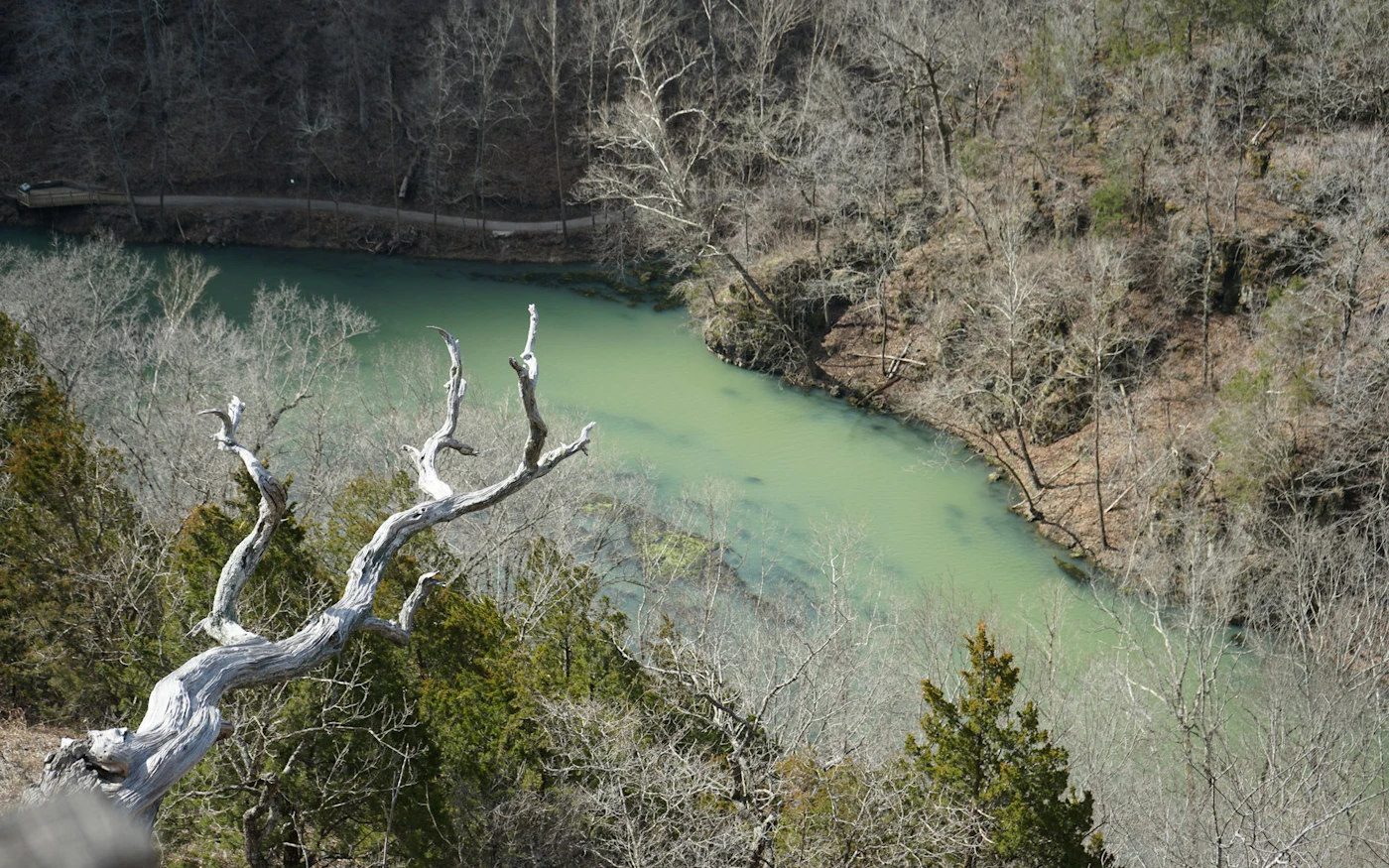
Follow water from a Springfield cave to the Current and Jacks Fork rivers, then connect springs, forests, and historic milling.
Choose this program- Springfield2 nights
- Eminence area2 nights
- Springfield1 night
Your day-by-day itinerary
- Day 1
Arrive and map the river system
Locate the Current and Jacks Fork rivers within the Ozark Plateau.
MorningTravel from home; flight time is separate from the ground program.AfternoonSGF pickup, Springfield hotel check-in, and an orientation map of the two river catchments.EveningGroup dinner and questions about how surface land use reaches groundwater.- Route
- SGF to Springfield hotel.
- Travel
- Local airport transfer
- Overnight
- Springfield
- Meals
- Meals and drinking water are included while on program.
- Physical demand
- Low effort
- Day 2
Conservation before the river
Use a four-hour Wonders of Wildlife visit to compare managed and wild aquatic habitats.
MorningTeachers and Program Leaders lead the self-guided school visit at Wonders of Wildlife National Museum and Aquarium.AfternoonContinue through the Wildlife Galleries, then prepare a field notebook for observations of water, banks, and habitat.EveningCompare aquarium filtration with what a spring-fed river can and cannot filter.- Route
- Springfield hotel to Wonders of Wildlife and back.
- Travel
- Local coach transfers
- Overnight
- Springfield
- Meals
- Meals and drinking water are included while on program.
- Physical demand
- Moderate effort
- Day 3
Fantastic Caverns to the Riverways
A cave visit introduces the groundwater system before the longer drive east.
MorningTake the reserved Fantastic Caverns school program and examine cave formation and the protection of bats and other cave life.AfternoonAfter lunch, transfer to the Eminence area in Ozark National Scenic Riverways. Allow 3–4 hours for the coach journey and a rest stop.EveningCheck in and prepare a river-observation plan.- Route
- Springfield, Fantastic Caverns, Eminence area.
- Travel
- Long travel: allow 3–4 hours for the eastbound transfer
- Overnight
- Eminence area
- Meals
- Meals and drinking water are included while on program.
- Physical demand
- Long travel with light cave access
- Day 4
Current River ecology
Investigate the Current River’s banks, flow, and riparian habitats from established public access areas.
MorningComplete a teacher-led, non-collecting habitat survey. Compare flow, shade, and riverbank vegetation; request a ranger-led stream session in advance if sampling is wanted.AfternoonWalk the one-mile Lick Log Hollow Nature Trail in Angeline Conservation Area, with group access agreed in advance. Compare oak-pine woodland, glades, and riparian habitats; a separately quoted Current River canoe or kayak float can replace this afternoon after water levels, group ability, and outfitter support are confirmed.EveningJournal the evidence for stream health and human impacts.- Route
- Eminence area, selected Current River access, Angeline Conservation Area, Eminence area.
- Travel
- Local coach transfers to the agreed access points
- Overnight
- Eminence area
- Meals
- Meals and drinking water are included while on program.
- Physical demand
- Moderate effort; optional paddling reviewed separately
- Day 5
Alley Spring, Jacks Fork, and forest communities
Alley Spring and Alley Mill connect karst water with settlement and milling.
MorningWalk the spring branch toward the Jacks Fork River and compare wooded riparian habitat with drier upland edges. Use observation sketches rather than collecting wildlife or plants.AfternoonExplore Alley Mill’s role in farming and community life; its interior is seasonal, so a reserved school visit or exterior interpretation is selected in advance. Transfer to Springfield with a 3–4-hour coach allowance.EveningPresent the sequence cave → spring → river → forest, including tourism, forestry, and conservation choices.- Route
- Eminence, Alley Spring and Mill, Springfield.
- Travel
- Long travel: allow 3–4 hours westbound after the visit
- Overnight
- Springfield
- Meals
- Meals and drinking water are included while on program.
- Physical demand
- Long travel with moderate trail walking
- Day 6
Depart from Springfield
Bring the field notebooks back to a classroom question about land use and water.
MorningBreakfast, packing, and final questions.AfternoonSGF transfer and departure with the airline’s check-in allowance.EveningTravel home; meals are included while on program.- Route
- Springfield hotel to SGF.
- Travel
- Local airport transfer
- Overnight
- None; program ends.
- Meals
- Meals and drinking water are included while on program.
- Physical demand
- Low effort
Ozarks: Buffalo River and Folk Culture
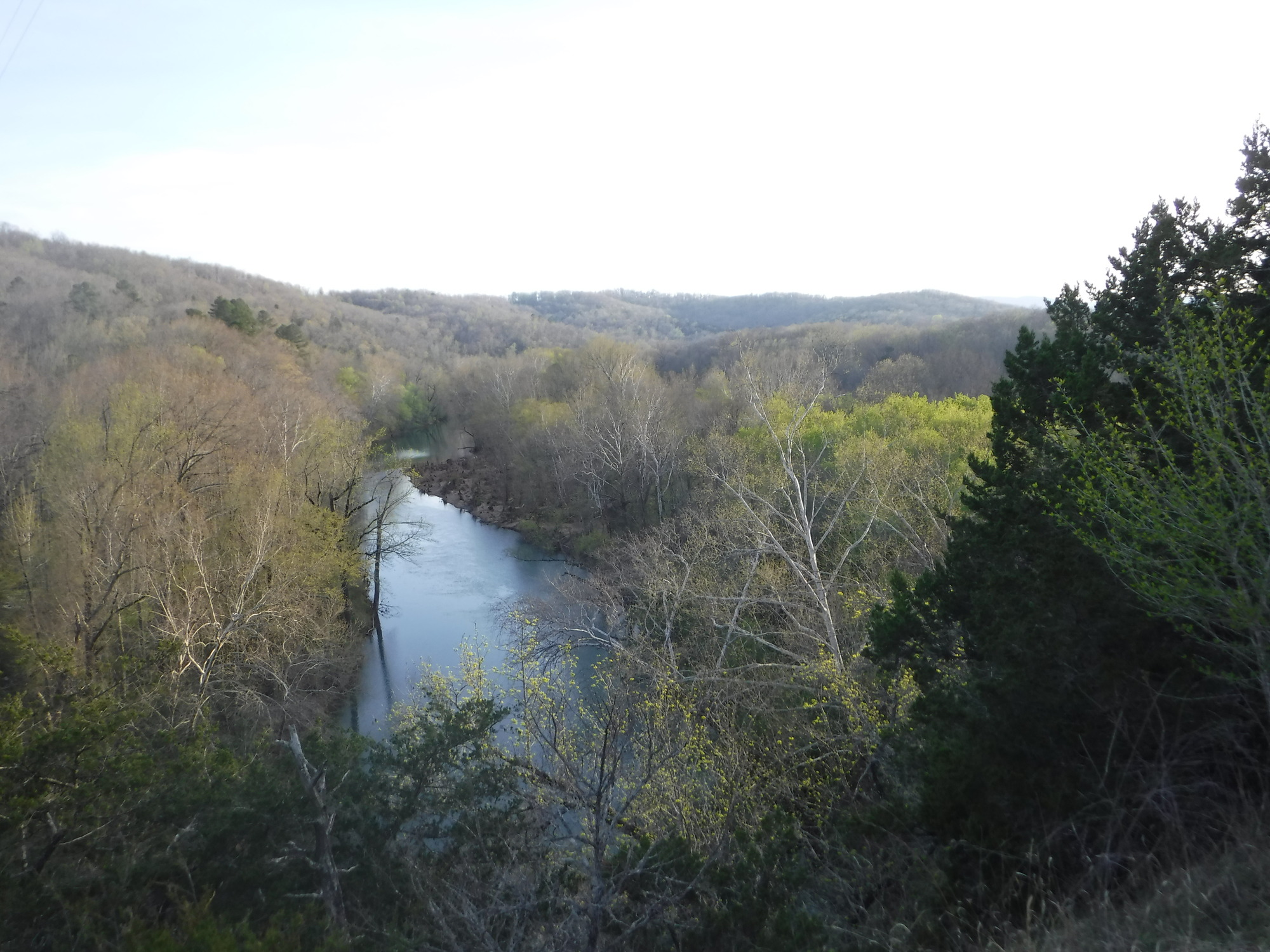
Study the Buffalo National River at Lost Valley and Tyler Bend, then investigate craft, music, and plant knowledge in Mountain View.
Choose this program- Harrison2 nights
- Mountain View2 nights
Your day-by-day itinerary
- Day 1
Springfield to northern Arkansas
Travel south into the Buffalo River region with time to settle before fieldwork.
MorningTravel from home; flight time is separate from the ground program.AfternoonArrive at SGF early enough for a daylight coach transfer to Harrison, Arkansas. Allow 2.5–3 hours including a comfort stop.EveningHotel check-in, group dinner, and an introduction to the Buffalo watershed.- Route
- SGF to Harrison.
- Travel
- Long travel: allow 2.5–3 hours on the road
- Overnight
- Harrison
- Meals
- Meals and drinking water are included while on program.
- Physical demand
- Long travel with light walking
- Day 2
Lost Valley and the upper Buffalo
Read limestone, stream erosion, and forest habitat along Lost Valley Trail.
MorningTravel to the Ponca area and hike the open Lost Valley route at a school-group pace; rocky sections and steps require a mobility review. No cave entry is included.AfternoonPicnic and compare upper Buffalo National River banks with the sheltered forest in the valley. Ranger assistance is requested in advance; fieldwork otherwise stays teacher-led and non-collecting.EveningReturn to Harrison for dinner and watershed journals.- Route
- Harrison, Lost Valley near Ponca, upper Buffalo access, Harrison.
- Travel
- Allow 1–1.5 hours each way including coach/loading buffer
- Overnight
- Harrison
- Meals
- Meals and drinking water are included while on program.
- Physical demand
- Moderate effort on uneven trails and steps
- Day 3
Tyler Bend and the journey east
Use Tyler Bend Visitor Center and river-side evidence to connect watershed protection with homesteading.
MorningTravel to Tyler Bend for exhibits and a short river-area walk. A Day by the Buffalo ranger session requires an advance reservation; the visit is planned around the center’s open days.AfternoonAfter a picnic, continue east to Mountain View with a rest stop.EveningCheck in and discuss how terrain shaped settlement, farming, and travel.- Route
- Harrison, Tyler Bend Visitor Center, Mountain View.
- Travel
- Allow 1.5 hours Harrison–Tyler Bend and 2 hours onward with buffers
- Overnight
- Mountain View
- Meals
- Meals and drinking water are included while on program.
- Physical demand
- Moderate effort with regional travel
- Day 4
Craft physics and Ozark music
Observe traditional making at Ozark Folk Center State Park.
MorningAt Ozark Folk Center State Park, visit the Craft Village on an operating Tuesday–Saturday to watch blacksmithing, woodworking, and other available demonstrations; relate tool choices to force, heat, and material properties.AfternoonWalk the Heritage Herb Garden and hear scheduled mountain music. Compare plant uses, migration stories, and folk traditions, then complete a teacher-led design sketch or simple making activity.EveningGroup dinner and presentations connecting a craft with the region’s resources.- Route
- Mountain View hotel to Ozark Folk Center and back.
- Travel
- Local coach transfers
- Overnight
- Mountain View
- Meals
- Meals and drinking water are included while on program.
- Physical demand
- Moderate effort
- Day 5
Mountain View to Little Rock
Travel from Mountain View to Little Rock for the flight home.
MorningBreakfast, reflection, and departure from Mountain View.AfternoonAllow 3–3.5 hours to Clinton National Airport (LIT) in Little Rock, plus the airline’s check-in allowance; choose an afternoon or evening flight.EveningTravel home; meals are included while on program.- Route
- Mountain View to Clinton National Airport, Little Rock.
- Travel
- Long travel: allow 3–3.5 hours plus airport check-in
- Overnight
- None; program ends.
- Meals
- Meals and drinking water are included while on program.
- Physical demand
- Long travel with light walking
Rooming
- Students
- Individual beds in shared, gender-separated rooms.
- Teachers
- Private rooms.
How much does a school trip to the Ozarks cost?
Price: $2,325 per student for five-day Buffalo River and Folk Culture, or $2,790 for either six-day science or Riverways program. The five-day Branson–Eureka Springs program is $2,325 per student.
Program Tuition covers lodging, meals, ground transport, scheduled activities, guides, and entrance fees, with one complimentary teacher place per eight paying students.
$2,325–$2,790
per student, excluding airfare.
5–6 days
four program choices.
$2,325
Making, Wildlife and Responsible Tourism.
| Included | What it covers |
|---|---|
| Travel | Every program night's lodging, all meals and drinking water, airport transfers, coach transport throughout, scheduled activities, guides, and entrance fees. |
| Staff and support | At least two trained Program Leaders, including both a male and a female leader, pre-departure planning, and school documentation. |
| Chaperones | One complimentary Program Tuition place per eight paying students. Chaperone airfare, travel insurance and medical insurance are separate. |
Not included: Airfare and home-to-airport travel, travel insurance, medical insurance, personal spending, and optional extensions or substitutions.
| Effect | Factor |
|---|---|
| raises | Peak school-trip weeks and holiday dates |
| raises | Named-experience bookings and paid facilitation |
| raises | Upgraded lodging |
| raises | Extra chaperones beyond the complimentary place |
| lowers | More students in the group means fixed costs split more ways. |
| raises | Shorter trips cost more per day, since fixed costs spread across fewer days. |
Payment and cancellation
Schools can pay as a group, or families can enroll directly. Group Travel monthly installments are available for eligible enrollments more than 90 days before departure; cancellation deductions include the deposit and ticketed airfare, with larger penalties closer to travel. Review the current Group Travel payment and cancellation terms.
What do students learn on a the Ozarks school trip?
Students connect limestone and groundwater with living habitats, then examine how people use and interpret those resources.
Caves and watersheds
Compare Talking Rocks and Fantastic Caverns with springs, rivers, and the Table Rock Lake–Lake Taneycomo system.
Wildlife and habitat
Use aquarium, hatchery, refuge, and river observations to distinguish managed care from wild ecosystems and conservation.
Craft and regional history
Study materials and music at Silver Dollar City or the Ozark Folk Center, then examine settlement, milling, and tourism through site evidence.

What makes Rustic Pathways educational trips different?
A Rustic Pathways school trip is one private group on your school's own dates, one bed per student, and an itinerary built to your curriculum.
- 01No mixed groups. Just your school
- 02One student, one bed
- 03Your school picks the dates
- 04Monthly payment plans available
- 05No tipping; scheduled activities are included in Program Tuition
- 06Aligned to your curriculum
How is safety managed on a school trip to the Ozarks?
Program Leaders manage local operations and safety procedures alongside school chaperones. Across 13 years of published incident data from every Rustic Pathways program worldwide, 87% of reports were GREEN, the minor tier where the group stays intact.
What the team plans for
Walking and outdoor days
A stated effort level on every day, with seated breaks and a shorter alternate arranged in planning
Animal contact
Provider rules on handling and distance followed exactly, with no contact promised
Road transfers
Daylight driving on winding regional roads with comfort stops built in
Heat
Shaded breaks and drinking water on every leg through the summer months
Supervision
Two Program Leaders with the school's chaperones and a named meeting point on every leg
Controls built into every trip
Written risk plan. A score above 5 requires new controls, reassessment, or cancellation.
Two-Deep Leadership. A single staff member is never alone with students, and at least two trained Program Leaders, including both a male and a female leader, support each School Group Travel trip.
Assessed activity vendors. Every named vendor is reviewed before use, every one to two years, and on site when high risk.
Medical readiness. Dr. William R. Smith leads medical oversight and emergency-response planning as Medical Director.
Is Rustic Pathways the right partner for your school trip to the Ozarks?
These trips suit school groups studying Ozark science, history, or crafts over five or six days.
Students traveling individually can join teen travel programs.
A strong fit
- You want one private group with your dates and your teachers.
- You can travel for five or six days, or need a quoted shorter route.
- You have 10 or more students.
- Your curriculum connects science, regional history, or traditional arts.
Talk with us first
- A student has significant mobility, medical, sensory, mental-health, dietary, or religious support needs.
- You have fewer than 10 students.
- Cave stairs, gravel slopes, uneven trails, or long winding-road transfers need an individual access plan before the route is chosen.
Probably not a fit
- You are an individual student or parent looking for open enrollment teen travel programs in the United States.
- You want your group merged with another school.
Questions about school trips to The Ozarks
Which airports work for an Ozarks school trip?
All four routes arrive at Springfield-Branson National Airport (SGF). The science and Riverways programs return to SGF; Branson–Eureka Springs leaves from Northwest Arkansas National Airport (XNA), and Buffalo River and Folk Culture leaves from Clinton National Airport (LIT) in Little Rock.
Confirm the route’s arrival and departure gateways before buying airfare.
When is the best time for a school trip to The Ozarks?
The best time for a school trip to The Ozarks is May or September–October for outdoor study and the Ozark Folk Center’s craft season. Match the route to Silver Dollar City, museum, and school-program calendars; river activities depend on water levels.
Blanchard Springs cave tours are a 2026-only option before announced renovations; an anticipated 2028 reopening must be confirmed before a later cave visit.

Have a question before you ask for a proposal?
Patrick Ziemnik answers The Ozarks school-trip questions with the school travel team.
Send your group size, dates, trip length, and what you want students to learn. I’ll reply within 1 business day and send you options within 48 hours, and no sales call unless you ask for one.
Get your Ozarks school trip proposal
Start your Ozarks trip proposal with your travel dates, group size, and learning goals. Receive a reply within 1 business day and customized trip options within 48 hours.
Or reach a person directly: +1 440-975-9691 or groups@rusticpathways.com
Need approval or funding first?
Certificate of insurance, risk management plans, and fundraising templates for families, on request.
Destinations related to The Ozarks
United StatesBrowse all school trip destinations- Rustic Pathways has operated student travel since 1983. Recent industry recognition:
- 2026 GoAbroad Innovation AwardsInnovation in Adventure-Based Programming · Global Adventure Learning Model
- 2025 International Travel AwardsBest Group Tour Operator
- 2024 Skift IDEA AwardsIndustry Innovators – Tour Operators
- 4x WYSETC Best Youth Tour Operator2015, 2017, 2018, 2019
- BBB A+ RatingBetter Business Bureau profile
- NESA Affiliate OrganizationNear East South Asia Council of Overseas Schools
- 2025 World Travel AwardsUnited States’ Leading Tour Operator