School Trips to EgyptGiza, Luxor & the Red Sea

School trips to Egypt are educational group tours that introduce students to the pyramids and temples of the Nile Valley, the river that carried a civilization, and the coral reefs of the Red Sea.
In 2026, Rustic Pathways programs to Egypt priced between $2,495 and $3,195 per student, excluding international airfare, on itineraries of 7 to 8 days.
No commitment, and no sales call unless you ask for one.
4.9on Trustpilot and Google

Egypt School Travel Itineraries
The three Egypt school travel itineraries are Pyramids, Temples and Living History, Pyramids and the Nile, and Ancient Civilizations and Red Sea Ecology. Pyramids, Temples and Living History starts at $2,495 for 7 days, Pyramids and the Nile starts at $3,195 for 8 days, and Ancient Civilizations and Red Sea Ecology starts at $2,795 for 8 days.
Compare the three itineraries side by side
| Itinerary | Egypt: Pyramids, Temples and Living History | Egypt: Pyramids and the Nile | Egypt: Ancient Civilizations and Red Sea Ecology |
|---|---|---|---|
| Length | 7 days | 8 days | 8 days |
| Starting price | From $2,495 | From $3,195 | From $2,795 |
| Learning focus | History · Archaeology · Engineering · Cultural Geography | History · Geography · Water Management · Heritage Conservation | History · Geography · Biology · Sustainable Tourism |
| Route | Cairo · Giza · Luxor · Deir el-Medina | Cairo · Giza · Aswan · Philae · Kom Ombo · Edfu · Luxor | Cairo · Giza · Luxor · Eastern Desert · Hurghada |
| Overnight bases | Hotel in Cairo (3) · Hotel in Luxor (2) · Hotel in Cairo (1) · In transit (1) | Hotel in Cairo (2) · Aboard the cruise, Aswan (1) · Aboard the cruise, toward Edfu (1) · Aboard the cruise, Luxor (1) · Hotel in Luxor (1) · Hotel in Cairo (1) · In transit (1) | Hotel in Cairo (3) · Hotel in Luxor (2) · Hotel in Hurghada (2) · In transit (1) |
| Physical profile | 2 low · 5 moderate | 2 low · 6 moderate | 3 low · 5 moderate |
| On-program flights | Two on program: Cairo to Luxor on day 4 and Luxor to Cairo on day 6. The group flies into and out of Cairo. | Two on program: Cairo to Aswan on day 3 and Luxor to Cairo on day 7. The group flies into and out of Cairo. | One on program: Cairo to Luxor on day 4. The group flies into Cairo and out of Hurghada. |
| River and coast | Luxor by air, no cruise | Three-night Aswan to Luxor cruise | Luxor by air, then the Red Sea by road |
| Best for | A first Egypt school trip with substantial learning and manageable logistics. | Schools that want to include a Nile River cruise. | Schools seeking a balanced history-and-science program that includes the Red Sea. |
- Cairo and Giza · Nights 1 to 3 and night 6; the Giza plateau, the Grand Egyptian Museum and a historic neighborhood walk
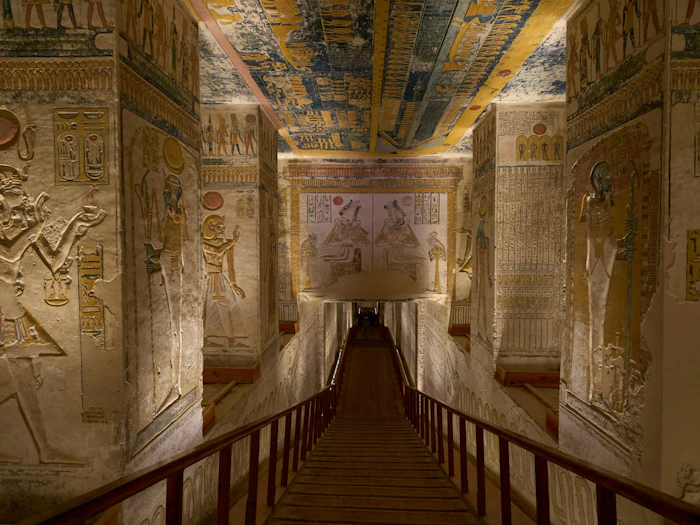
- Luxor · Nights 4 to 5; Karnak, the Valley of the Kings, Deir el-Medina and Luxor Temple
- Cairo and Giza · Nights 1 to 2 and night 7; the Giza plateau and the Grand Egyptian Museum
- Aswan · Night 3 aboard the cruise vessel; Philae by local boat, then sailing north on day 4 with a shore visit at Kom Ombo, about 45 km downstream
- Edfu · Day 5 temple visit after night 4 aboard, then north through the river lock
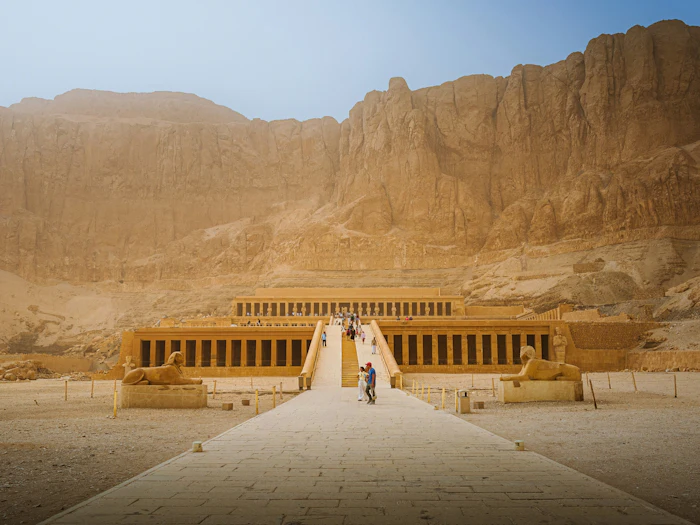
- Luxor · Night 5 aboard, night 6 in a hotel; the Valley of the Kings, Hatshepsut's Temple and Karnak
- Cairo and Giza · Nights 1 to 3; the Giza plateau and the Grand Egyptian Museum
- Luxor · Nights 4 to 5; Karnak, the Valley of the Kings and Hatshepsut's Temple
- Hurghada · Nights 6 to 7; reef ecology and a supervised snorkel, then the flight home
 Cairo · Giza · Luxor · Deir el-Medina
7 days · From $2,495
Cairo · Giza · Luxor · Deir el-Medina
7 days · From $2,495
Egypt: Pyramids, Temples and Living History
Explore Cairo, Giza, Luxor, and Deir el-Medina while studying Egypt's ancient history, archaeology, engineering, and cultural geography. This 7-day program combines major historical sites with manageable travel logistics for a comprehensive introduction to Egypt.
Choose this programThe route connects Cairo, Giza, Luxor, and Deir el-Medina.
- Hotel in Cairo3 nights
- Hotel in Luxor2 nights
- Hotel in Cairo1 night
- Flight home1 night
Your seven-day itinerary
-
Day 1
Arrival: welcome dinner in Cairo
The group arrives according to its flight schedule, is met at the airport and transfers to the hotel to rest. The evening opens with a welcome dinner, a few Arabic phrases and a first look at the Nile.
MorningArrive according to the group's flight schedule.AfternoonAirport assistance, transfer and rest at the hotel.EveningWelcome dinner, basic Arabic phrases and an introduction to the Nile. Over the map: where does the river come from, and why does every stop this week sit beside it?- Route
- Cairo airport to the hotel in Cairo or Giza.
- Travel
- Private airport transfer with airport assistance.
- Overnight
- Program-approved hotel in Cairo or Giza.
- Meals
- Dinner. Earlier meals depend on the arrival flight.
- Physical demand
- Low effort.
- Learning outcome
- Students locate Cairo, Luxor and the river that connects them on a map before the week begins.
-
Day 2
Giza: how the pyramids were built
An Egyptologist leads the group across the Giza Plateau and to the Sphinx, discussing construction, materials and the evidence behind competing explanations. After lunch and a rest at the hotel, a short model-building activity examines stability and load.
MorningExplore the Giza Plateau and the Sphinx with an Egyptologist, discussing construction, materials and the evidence behind competing explanations.AfternoonLunch and hotel rest, followed by a short model-building activity examining stability and load.EveningDinner and leisure. Carried back from the plateau: which claim made today rested on evidence you could see, and which rested on inference?- Route
- Hotel to the Giza Plateau and the Sphinx, then back for the afternoon activity.
- Travel
- Private vehicle.
- Overnight
- Program-approved hotel in Cairo or Giza, the second night.
- Meals
- Breakfast, lunch, and dinner included.
- Physical demand
- Moderate walking over exposed, uneven ground. Pyramid interiors are not essential to the program.
- Learning outcome
- Students distinguish archaeological evidence from speculation about pyramid construction, citing one example of each from the plateau.
-
Day 3
Grand Egyptian Museum: reading objects
A focused Grand Egyptian Museum visit uses selected objects to explore power, craftsmanship and daily life. An age-appropriate learning session follows lunch, then downtime before the evening's object work.
MorningFocused Grand Egyptian Museum visit using selected objects to explore power, craftsmanship and daily life.AfternoonLunch and an age-appropriate learning session, followed by downtime.EveningEach student selects one object from the morning and explains what it reveals, and what it cannot tell us.- Route
- Hotel to the Grand Egyptian Museum and back.
- Travel
- Private vehicle.
- Overnight
- Program-approved hotel in Cairo or Giza, the third night.
- Meals
- Breakfast, lunch, and dinner included.
- Physical demand
- Moderate indoor walking.
- Learning outcome
- Students use one artifact to support a historical interpretation, and say where the object's evidence runs out.
- Customization
- Timed admission and educational arrangements are reserved ahead. The museum's published school programs cover ages 6 to 16, so older groups are guided by arrangement.
-
Day 4
Fly to Luxor, then Karnak
A morning flight takes the group to Luxor, with a transfer to the hotel, lunch and rest. The afternoon is a focused visit to Karnak, and dinner opens a short introduction to the ancient festivals that ran through it.
MorningFly to Luxor and transfer to the hotel.AfternoonLunch and rest, then a focused Karnak visit.EveningDinner and a short introduction to ancient religious festivals. What did a procession through those halls say to the people watching it?- Route
- Cairo to Luxor by air, then the hotel and Karnak.
- Travel
- Morning flight of about an hour, with airport procedures and transfers taking roughly half the day.
- Overnight
- Program-approved hotel in Luxor.
- Meals
- Breakfast, lunch, and dinner included.
- Physical demand
- Low to moderate effort; walking within Karnak in the afternoon.
- Learning outcome
- Students choose one hall or gateway they walked through at Karnak and write what it was built to say, and to whom.
- Customization
- A morning flight is required for this sequence; a later flight moves the Karnak visit to the next day.
-
Day 5
Royal tombs and the workers' village
An early start reaches selected open tombs in the Valley of the Kings and the settlement of Deir el-Medina, where the tomb builders lived. After lunch and rest, the group explores Luxor Temple later in the day.
MorningEarly visit to selected open tombs in the Valley of the Kings and the settlement of Deir el-Medina.AfternoonLunch and rest, then Luxor Temple later in the day.EveningOver dinner the group sets the royal tombs beside the workers' village: what does each site say about the people who made it, and who is missing from the record?- Route
- Luxor to the west bank for the Valley of the Kings and Deir el-Medina, then Luxor Temple.
- Travel
- Private vehicle.
- Overnight
- Program-approved hotel in Luxor, the second night.
- Meals
- Breakfast, lunch, and dinner included.
- Physical demand
- Moderate walking and steps inside the tombs.
- Learning outcome
- Students set the two sites side by side and name one detail from each that shows a different section of society.
- Customization
- Tomb selection depends on access on the day; special-ticket royal tombs are not included.
-
Day 6
Back to Cairo: the historic city
A morning flight returns the group to Cairo. After lunch, a focused guided walk through a historic neighborhood introduces Islamic architecture and the craft businesses still working there, and the farewell dinner closes with student reflections.
MorningFly to Cairo and transfer to the hotel.AfternoonAfter lunch, a focused guided walk through a historic neighborhood, introducing Islamic architecture and contemporary craft businesses.EveningFarewell dinner and student reflections. What did today's workshops share with the monuments of the past five days?- Route
- Luxor to Cairo by air, then a historic neighborhood on foot.
- Travel
- Morning flight of about an hour, then a guided walk.
- Overnight
- Program-approved hotel in Cairo.
- Meals
- Breakfast, lunch, and dinner included.
- Physical demand
- Low to moderate effort; the afternoon is kept flexible around the flight.
- Learning outcome
- Students recognize the city as a living society with several historical layers, naming one layer they walked through today.
- Customization
- The afternoon stays flexible around the flight time; the Cairo overnight protects the international departure.
-
Day 7
Departure: taking the evidence home
Breakfast and the transfer to the airport for departure.
MorningBreakfast and airport transfer, with each student naming the one piece of evidence they will use to support a conclusion about ancient Egypt.AfternoonDepart according to flight arrangements.EveningOnward travel.- Route
- Cairo hotel to Cairo airport.
- Travel
- Private airport transfer.
- Overnight
- None; the group flies home.
- Meals
- Breakfast. Later meals depend on the departure flight.
- Physical demand
- Low effort.
- Learning outcome
- Students support one conclusion about ancient Egypt with evidence they observed during the trip.
 Cairo · Giza · Aswan · Philae · Kom Ombo · Edfu · Luxor
8 days · From $3,195
Cairo · Giza · Aswan · Philae · Kom Ombo · Edfu · Luxor
8 days · From $3,195
Egypt: Pyramids and the Nile
Explore Cairo and Giza before traveling from Aswan to Luxor on a three-night Nile cruise, with stops at Philae, Kom Ombo, and Edfu. This 8-day program connects Egypt's ancient history with the Nile's role in geography, water management, and heritage conservation.
Choose this programThe route connects Cairo, Giza, Aswan, Philae, Kom Ombo, Edfu, and Luxor.
- Hotel in Cairo2 nights
- Aboard the cruise, Aswan1 night
- Aboard the cruise, toward Edfu1 night
- Aboard the cruise, Luxor1 night
- Hotel in Luxor1 night
- Hotel in Cairo1 night
- Flight home1 night
Your eight-day itinerary
-
Day 1
Arrival: first evening beside the Nile
The group arrives in Cairo, is met at the airport and transfers to the hotel to rest. The welcome dinner introduces the river journey ahead.
MorningArrive in Cairo.AfternoonAirport assistance, transfer and rest.EveningWelcome dinner and an introduction to the river journey. Why does the green of the valley stop so sharply where the desert begins?- Route
- Cairo airport to the hotel in Cairo or Giza.
- Travel
- Private airport transfer with airport assistance.
- Overnight
- Program-approved hotel in Cairo or Giza.
- Meals
- Dinner. Earlier meals depend on the arrival flight.
- Physical demand
- Low effort.
- Learning outcome
- Students identify the relationship between the Nile Valley and the desert either side of it, on the map and from the road in.
-
Day 2
Giza: stone, transport and labor
A guided exploration of the pyramids and the Sphinx is followed by lunch, downtime and a practical session on transporting materials and organizing construction. No additional museum or distant pyramid complex is added today.
MorningGuided exploration of the pyramids and the Sphinx.AfternoonLunch, downtime and a practical session about transporting materials and organizing construction.EveningDinner and packing for the early flight south. The question for the table: where did the stone come from, and how many hands moved it?- Route
- Hotel to the Giza Plateau and the Sphinx, then back for the afternoon session.
- Travel
- Private vehicle.
- Overnight
- Program-approved hotel in Cairo or Giza, the second night.
- Meals
- Breakfast, lunch, and dinner included.
- Physical demand
- Moderate outdoor walking over uneven ground.
- Learning outcome
- Students connect monument building with resources, transport and labor, tracing one block from quarry to plateau.
-
Day 3
Fly to Aswan, board, then Philae
A morning flight reaches Aswan, where the group transfers to the cruise vessel. After lunch a boat visit to Philae explores the conservation challenges that came with changing water levels, and dinner aboard introduces the sailing route.
MorningFly to Aswan and transfer to the cruise vessel.AfternoonLunch and a boat visit to Philae, exploring the conservation challenges associated with changing water levels.EveningDinner aboard and an introduction to the sailing route. When a temple is moved stone by stone to save it, what is kept and what is lost?- Route
- Cairo to Aswan by air, the cruise vessel, then Philae by local boat.
- Travel
- Flight, private vehicle and local boat.
- Overnight
- Aboard the cruise vessel, moored at Aswan.
- Meals
- Breakfast, lunch, and dinner included.
- Physical demand
- Low to moderate effort.
- Learning outcome
- Students describe how Philae was moved and weigh what the move kept and what it lost.
- Customization
- The cruise must have a first-day schedule compatible with the morning flight; the vessel and sailing dates are confirmed in the proposal.
-
Day 4
Sailing north: life along the banks
As the vessel sails, students observe farming, settlements and transport along the banks. The afternoon visit to Kom Ombo follows the ship's schedule, and dinner compares the temple with the landscape around it.
MorningObserve farming, settlements and transport as the vessel sails.AfternoonVisit Kom Ombo according to the ship's schedule.EveningDinner and a short comparison of the temple at Kom Ombo with the fields around it: which came first, the farms or the temple, and what does each need from the river?- Route
- Aswan north to Kom Ombo by river, continuing toward Edfu overnight.
- Travel
- Aboard the cruise vessel, with a walk ashore at Kom Ombo.
- Overnight
- Aboard the cruise vessel, en route toward Edfu.
- Meals
- Breakfast, lunch, and dinner included.
- Physical demand
- Low to moderate effort; the precise visit time follows the navigation arrangements.
- Learning outcome
- Students identify three ways the river shapes settlement and economic activity, from what they watched pass on the banks.
-
Day 5
Edfu Temple and the river locks
A guided visit to Edfu Temple opens the day, then the vessel continues toward Luxor with time for lunch, rest and an introduction to river locks. No essential evening visit depends on the ship's arrival time.
MorningGuided visit to Edfu Temple.AfternoonContinue sailing toward Luxor, with time for lunch, rest and an introduction to river locks.EveningDinner and leisure aboard. The afternoon's question stays open: what did a boat need to travel this river three thousand years ago, and what does this one need today?- Route
- Edfu Temple, then north by river to Luxor.
- Travel
- Motor transport for the temple excursion, then aboard the cruise vessel.
- Overnight
- Aboard the cruise vessel at Luxor, according to the sailing schedule.
- Meals
- Breakfast, lunch, and dinner included.
- Physical demand
- Low to moderate effort.
- Learning outcome
- Students compare ancient river transport with today's navigation infrastructure, using the lock they passed through.
-
Day 6
Luxor: tombs, Hatshepsut and Karnak
The group disembarks for selected Valley of the Kings tombs and Hatshepsut's Temple, then rests at the hotel after lunch before a focused Karnak visit. It is the fullest sightseeing day of the trip, with no airport transfer in it.
MorningDisembark and visit selected Valley of the Kings tombs and Hatshepsut's Temple.AfternoonLunch and hotel rest, followed by a focused Karnak visit.EveningDinner at the hotel and the day's question: why hide a king's tomb in a valley and build his temple in full view?- Route
- The west bank for the Valley of the Kings and Hatshepsut's Temple, then the hotel and Karnak.
- Travel
- Private vehicle.
- Overnight
- Program-approved hotel in Luxor.
- Meals
- Breakfast, lunch, and dinner included.
- Physical demand
- Moderate walking; the fullest sightseeing day, with no airport transfer.
- Learning outcome
- Students compare a royal burial site with a ceremonial temple space, and explain what each was built to do.
- Customization
- Premium tomb admissions are not included; tomb selection depends on access on the day.
-
Day 7
Early flight, then the museum
An early flight returns the group to Cairo for lunch and a focused Grand Egyptian Museum visit that connects objects with the places students have now seen. The farewell dinner closes the day.
MorningEarly flight to Cairo.AfternoonLunch and a focused Grand Egyptian Museum visit, connecting objects with the places students have seen.EveningFarewell dinner, opening on the week's last question: which object in the museum today belonged to a place you stood in this week, and what did seeing both change?- Route
- Luxor to Cairo by air, then the Grand Egyptian Museum.
- Travel
- Early morning flight, then private vehicle.
- Overnight
- Program-approved hotel in Cairo.
- Meals
- Breakfast, lunch, and dinner included.
- Physical demand
- Moderate indoor walking after an early start.
- Learning outcome
- Students pair one museum object with one place they stood this week and write what seeing both changed.
- Customization
- The flight and museum slot are booked to keep at least three hours in the museum; a later flight means the day is redesigned, since this is not an unlimited buffer day.
-
Day 8
Departure: journey's end in Cairo
Breakfast and the transfer to the airport for departure, with no same-day domestic connection required.
MorningBreakfast and airport transfer, with each student saying in one sentence why the Nile is central to every place the group visited.AfternoonDepart.EveningOnward travel.- Route
- Cairo hotel to Cairo airport.
- Travel
- Private airport transfer; no same-day domestic connection is required.
- Overnight
- None; the group flies home.
- Meals
- Breakfast. Later meals depend on the departure flight.
- Physical demand
- Low effort.
- Learning outcome
- Students explain why the Nile is central to the places they visited, in one sentence of their own.
 Cairo · Giza · Luxor · Eastern Desert · Hurghada
8 days · From $2,795
Cairo · Giza · Luxor · Eastern Desert · Hurghada
8 days · From $2,795
Egypt: Ancient Civilizations and Red Sea Ecology
Explore Cairo, Giza, and Luxor before crossing the Eastern Desert to Hurghada on the Red Sea. This 8-day program combines ancient Egyptian history and geography with biology, coastal ecology, and sustainable tourism.
Choose this programThe route connects Cairo, Giza, Luxor, Eastern Desert, and Hurghada.
- Hotel in Cairo3 nights
- Hotel in Luxor2 nights
- Hotel in Hurghada2 nights
- Flight home1 night
Your eight-day itinerary
-
Day 1
Arrival: three environments on one map
The group arrives according to its flight schedule, transfers to the hotel, checks in and rests. After the welcome dinner the group maps the Nile, the Eastern Desert and the Red Sea, the three environments that structure the week.
MorningArrive according to the flight schedule.AfternoonTransfer, check in and rest.EveningWelcome dinner, then the group maps the Nile, the Eastern Desert and the Red Sea. What lives in each of them, and on what?- Route
- Cairo airport to the hotel in Cairo or Giza.
- Travel
- Private airport transfer.
- Overnight
- Program-approved hotel in Cairo or Giza.
- Meals
- Dinner. Earlier meals depend on the arrival flight.
- Physical demand
- Low effort.
- Learning outcome
- Students identify the three environments that structure the week, and mark where the route crosses from one to the next.
-
Day 2
Giza: geography and building materials
An early start puts the group on the Giza Plateau and at the Sphinx with an Egyptologist. After lunch and rest, a construction-and-materials activity asks what this stretch of desert offered a builder.
MorningExplore the pyramids and the Sphinx with an Egyptologist.AfternoonLunch and rest, followed by a construction-and-materials activity.EveningDinner and group leisure. Held over from the plateau: what did this stretch of desert offer a builder that the valley floor did not?- Route
- Hotel to the Giza Plateau and the Sphinx, then back for the afternoon activity.
- Travel
- Private vehicle, with an early start.
- Overnight
- Program-approved hotel in Cairo or Giza, the second night.
- Meals
- Breakfast, lunch, and dinner included.
- Physical demand
- Moderate outdoor walking; early start.
- Learning outcome
- Students name one material used at Giza and trace it back to where it came from.
-
Day 3
Grand Egyptian Museum: objects and interpretation
A guided Grand Egyptian Museum visit fills the morning. The afternoon runs as a booked learning session or a leader-led object-analysis activity, and the evening compares interpretations of one selected artifact.
MorningGuided Grand Egyptian Museum visit.AfternoonLunch and a booked learning session or leader-led object-analysis activity.EveningStudents compare their interpretations of one selected artifact, sorting each claim into what they observed, what they inferred and what stays uncertain.- Route
- Hotel to the Grand Egyptian Museum and back.
- Travel
- Private vehicle.
- Overnight
- Program-approved hotel in Cairo or Giza, the third night.
- Meals
- Breakfast, lunch, and dinner included.
- Physical demand
- Moderate indoor walking.
- Learning outcome
- Students distinguish observation, inference and uncertainty, labelling three of their own statements about one artifact.
- Customization
- Timed admission is booked ahead; the afternoon runs as a booked learning session or a leader-led object-analysis activity.
-
Day 4
Fly to Luxor: Karnak's sacred landscape
A morning flight reaches Luxor, with a transfer to the hotel, lunch and rest before the afternoon at Karnak. Dinner introduces the burial sites the group visits the next day.
MorningFly to Luxor and transfer to the hotel.AfternoonLunch and rest, then visit Karnak.EveningDinner and an introduction to tomorrow's burial sites. First, who was Karnak built to impress, the gods or the people at its gates?- Route
- Cairo to Luxor by air, then the hotel and Karnak.
- Travel
- Morning flight of about an hour, then private vehicle.
- Overnight
- Program-approved hotel in Luxor.
- Meals
- Breakfast, lunch, and dinner included.
- Physical demand
- Low to moderate effort; walking within Karnak in the afternoon.
- Learning outcome
- Students pick one feature of Karnak they saw today and say what it told a visitor about who held power.
- Customization
- A morning flight is required for the planned sequence.
-
Day 5
West bank tombs, then the riverside
The group visits selected Valley of the Kings tombs and Hatshepsut's Temple, then rests at the hotel after lunch before a short riverside observation activity. The evening prepares for the desert crossing.
MorningVisit selected Valley of the Kings tombs and Hatshepsut's Temple.AfternoonLunch, hotel rest and a short riverside observation activity.EveningDinner and packing for the desert crossing. From the riverside: why were the tombs cut into the western cliffs and the temples built on the eastern bank?- Route
- Luxor to the west bank for the tombs and Hatshepsut's Temple, then the riverside.
- Travel
- Private vehicle.
- Overnight
- Program-approved hotel in Luxor, the second night.
- Meals
- Breakfast, lunch, and dinner included.
- Physical demand
- Moderate walking and steps inside the tombs.
- Learning outcome
- Students connect the location and design of a monument with religious ideas and physical geography, choosing one site from the west bank.
- Customization
- Tomb selection depends on access on the day.
-
Day 6
Coach across the Eastern Desert
A private coach crosses the Eastern Desert to Hurghada with planned comfort stops, leaving no major archaeological visit before departure. After check-in, lunch and rest, reef ecology is introduced and snorkeling equipment practised in a controlled setting.
MorningTravel by private coach to Hurghada with planned comfort stops.AfternoonCheck in, lunch and rest; introduce reef ecology and practice using snorkeling equipment in a controlled setting.EveningDinner and beach games, then the question from the road: at which point did the desert stop and the coast begin, and what changed first, the plants, the buildings or the air?- Route
- Luxor east across the Eastern Desert to Hurghada on the Red Sea coast.
- Travel
- Private coach, about four to five hours plus breaks.
- Overnight
- Program-approved hotel in Hurghada.
- Meals
- Breakfast, lunch, and dinner included.
- Physical demand
- Low effort; the main travel day of the trip, followed by a controlled equipment practice.
- Learning outcome
- Students compare the Nile Valley, the desert and the coast, from what they saw change through the coach window.
-
Day 7
Snorkeling the reef, reading it after
Guided snorkeling at a suitable site runs with instruction, appropriate supervision and a shore-based alternative. A reef-identification activity follows lunch, then supervised recreation, and the farewell dinner closes with each student's recommendation for reducing tourism's impact on the reef.
MorningGuided snorkeling at a suitable site, with instruction, appropriate supervision and a shore-based alternative.AfternoonLunch and a reef-identification activity, then supervised recreation.EveningFarewell dinner, closing with each student's recommendation for reducing tourism's environmental impact and the closing question: what did you see today that a careless visitor could damage in a minute?- Route
- Hurghada to a suitable reef site and back.
- Travel
- A licensed operator with suitable group capacity, by boat or from the shore.
- Overnight
- Program-approved hotel in Hurghada, the second night.
- Meals
- Breakfast, lunch, and dinner included.
- Physical demand
- Moderate effort in the water, with instruction and a shore-based alternative.
- Learning outcome
- Students list two ways visitors damage a reef, and each proposes one practice the group adopts for the rest of the week.
- Customization
- The water program includes an environmental briefing and no-contact reef practices; conditions on the day decide the water program, and a shore-based alternative stands ready.
-
Day 8
Departure from the Red Sea coast
Breakfast and the transfer to Hurghada Airport for the arranged international itinerary.
MorningBreakfast and transfer to Hurghada Airport, with each student pairing one environmental observation from the week with one example of how people adapted to it.AfternoonDepart on the arranged international itinerary.EveningOnward travel.- Route
- Hurghada hotel to Hurghada Airport.
- Travel
- Private airport transfer. The group departs from Hurghada, internationally or on a protected connecting ticket, so international travel is priced into Cairo and out of Hurghada.
- Overnight
- None; the group flies home.
- Meals
- Breakfast. Later meals depend on the departure flight.
- Physical demand
- Low effort.
- Learning outcome
- Students connect one environmental observation with one example of human adaptation, from any of the three environments.
- Customization
- Any domestic sector within the homeward ticket belongs in the airfare quote; a school that needs a separate Cairo return and overnight is planning a longer trip.
What applies across every itinerary
- Groups and teachers
- Groups start at ten students; we consider smaller groups individually. One teacher's Program Tuition is free for every eight paying students.
- Price
- Excludes international flights, travel insurance, medical insurance, and spending money. Your proposal confirms availability, inclusions and exclusions.
- Rooming
- Students share gender-separated rooms with individual beds; teachers have private rooms.
- Flights and getting around
- Your school books international flights or asks Rustic Pathways to arrange them; families handle passports and visas with Rustic Pathways guidance. Every route takes one morning flight between Cairo and Upper Egypt; the Nile route then sails three nights from Aswan to Luxor, and the Red Sea route crosses the Eastern Desert by coach to Hurghada.
- Supervision
- Program Leaders lead scheduled activities, stay on site and are available overnight. The approved itinerary specifies any free time, and Program Leaders are present during it.
- Effort
- All three routes are low to moderate: low is a transfer day with little walking, or an airport morning. Moderate can mean a morning on the Giza plateau over uneven ground, steps inside an open tomb, or a first snorkel with instruction.
- Flexibility
- Tomb selection depends on access on the day, museum entry is timed, and the cruise keeps its own schedule for each temple stop. Cairo and Giza days can shuffle without restructuring anything.
How much does a school trip to Egypt cost?
A school trip to Egypt costs $2,495 to $3,195 per student for Program Tuition, or approximately $349 to $399 per day. Tuition covers lodging, meals, airport transfers, in-country transport including domestic flights, scheduled activities, Egyptologist guides, and entrance fees.
Schools receive one complimentary Program Tuition place for every eight paying students. International airfare is not included.
Each itinerary is privately quoted for your school's group and travel dates.
$2,495 to $3,195
per student across the sample itineraries, excluding international airfare.
7 to 8 days
program length across the three itineraries on this page.
Group quote
every school receives its own, built on dates, group size and route.
| Included | What it covers |
|---|---|
| Travel | Midrange lodging, meals, drinking water, airport transfers, air-conditioned coaches, taxes, and customary tips. The Nile itinerary includes three nights aboard the vessel. |
| Activities | Egyptologist guides, listed admissions and activities, domestic flights, and the three-night Aswan-to-Luxor cruise where specified. |
| Staff and support | At least two trained Program Leaders, pre-departure planning, school documentation, and a 24/7 emergency number. |
| Community donations | Required service-project donations are paid by Rustic Pathways. |
| Chaperones | One complimentary Program Tuition place per eight paying students. Airfare, travel insurance and medical insurance are separate. |
Not included: International airfare, visas, travel and medical insurance, personal spending, passport fees, and vaccinations.
| Effect | Factor |
|---|---|
| raises | Peak weeks, including Christmas, New Year and Easter, which are priced separately from the October to April window |
| raises | The cruise upgrade: Pyramids and the Nile adds three nights aboard a Nile vessel and the Aswan sailing days to the seven-day route |
| raises | Extra chaperone places beyond the complimentary one, costed across the whole group |
| lowers | A larger group, since the coach, the Egyptologist and the Program Leaders cost the same for 30 students as for 20 |
| raises | The seven-day route costs less in total than an eight-day one but more per day, because the flights and set-up spread over fewer days |
Payment and cancellation
Installment plans are available. Review the current enrollment terms.
What do students learn on an Egypt school trip?
Students on an Egypt school trip learn through curriculum-based educational travel, exploring sites such as the Giza Plateau, Grand Egyptian Museum, Luxor's West Bank, the Nile, and the Red Sea reefs of Hurghada.
History and Archaeology
Students examine evidence at the Giza Plateau and Grand Egyptian Museum, then compare the Valley of the Kings with the workers' village at Deir el-Medina.
What can a workers' village tell us that a king's tomb cannot?
Egypt: Pyramids, Temples and Living History
Geography and Water Management
Students sail the Nile from Aswan to Luxor, observing farms and settlements while visiting Philae, Kom Ombo, Edfu, and a river lock.
How does one river decide where people farm, build and travel?
Egypt: Pyramids and the Nile
Biology and Environmental Science
Students cross the Eastern Desert to Hurghada, snorkel a Red Sea reef after an environmental briefing, and identify reef species.
What does a reef need from the people who come to see it?
Egypt: Ancient Civilizations and Red Sea Ecology

What makes Rustic Pathways educational trips different?
A Rustic Pathways school trip is one private group on your school's own dates, one bed per student, and an itinerary built to your curriculum.
- 01No mixed groups. Just your school
- 02One student, one bed
- 03Your school picks the dates
- 04Monthly payment plans available
- 05No tipping; Rustic Pathways Program Tuition includes community donations
- 06Aligned to your curriculum
Who supervises and manages the trip to Egypt?
School chaperones and Rustic Pathways Program Leaders supervise and manage the school trip to Egypt together.
Rustic Pathways manages the itinerary, accommodation, ground transport, activities and emergency procedures; your school manages its own student conduct and communication policies.
Your school can book international flights directly or ask Rustic Pathways to arrange them. Families receive trip logistics and itinerary information through the MyRustic web app.
How safety is managed on a school trip to Egypt
Program Leaders manage local operations and safety procedures alongside school chaperones. Across 13 years of published incident data from every Rustic Pathways program worldwide, 87% of reports were GREEN, the minor tier where the group stays intact.
What the team plans for
Cairo and Giza
City traffic, crowded museum halls and market streets, and exposed, uneven ground on the Giza plateau with early starts to stay ahead of the heat
Luxor and the Nile cruise
Steps and low light inside open tombs on the west bank, boat transfers to Philae, and gangways, rails and deck time on three cruise nights
The Eastern Desert road and the Red Sea at Hurghada
A four- to five-hour coach crossing with planned comfort stops, and supervised snorkeling with a licensed operator, an environmental briefing and a shore-based alternative
Controls built into every trip
Written risk plan. A score above 5 requires new controls, reassessment or cancellation.
Two-Deep Leadership. A single staff member is never alone with students, and at least two trained Program Leaders, including both a male and a female leader, support each School Group Travel trip.
Assessed activity vendors. Egyptologist guides, coach and domestic-flight providers, the cruise operator and the snorkeling operator are reviewed before use, every one to two years, and on site when high risk.
Medical readiness. WFR coverage for remote programs and Dr. William R. Smith, dedicated Medical Director since 2015.
Is Rustic Pathways the right partner for your school trip to Egypt?
Yes, Rustic Pathways is the right partner for private, curriculum-focused school trips to Egypt. Your school chooses the travel dates, and Rustic Pathways builds the itinerary around your curriculum.
Students travel only with their teachers and classmates and never join another school's group. Individual students can join open enrollment teen travel programs to Egypt instead.
- You want one private group with your dates and your teachers.
- Your calendar has room for 7 to 8 days on the ground.
- You have 10 or more students.
- You want an Egyptologist guiding every site, with each day mapped out before you commit.
- A student has significant mobility, medical, sensory, mental-health, dietary, or religious support needs.
- You have fewer than 10 students.
- You want Pyramids and the Nile. Cruise dates follow the vessel schedule, and the final day starts with an early flight to Cairo.
- You want Ancient Civilizations and Red Sea Ecology. The trip departs from Hurghada, and non-confident swimmers need a support plan for snorkeling.
You want open-enrollment teen travel, a group shared with another school, one hotel for the whole week, or the Sinai, Abu Simbel or the Western Desert. Every itinerary changes base at least once, and none of them goes to those places.
Support planning starts early
Raise individual needs before booking so Rustic Pathways can assess them and adapt the route and support plan where feasible.
Questions about school trips to Egypt
The questions schools ask most before requesting an Egypt proposal, answered from the itineraries and prices on this page.
How much does a trip to Egypt cost?
A school trip to Egypt costs $2,495 to $3,195 per student in 2026 for a 7- to 8-day Rustic Pathways program, excluding international airfare.
Price varies by season, trip length, and group size. Groups start at 10 students, with one free teacher place per eight paying students.
When is the best time to take a school trip to Egypt?
The best time to take a Rustic Pathways school trip to Egypt is October through April, when these itineraries operate. Outdoor days use early starts.

Have a question before you ask for a proposal?
Patrick Ziemnik answers Egypt school-trip questions with the school travel team.
Send your group size, dates, trip length, and what you want students to learn. I’ll reply within 1 business day and send you options within 48 hours, and no sales call unless you ask for one.
Start with your travel window
Start your Egypt trip proposal with your travel dates, group size, and learning goals. Receive a reply within 1 business day and customized trip options within 48 hours.
Or reach a person directly: +1 440-975-9691 or groups@rusticpathways.com
Have a school expeditions or tour operator quote?
Send it over. Rustic Pathways will show you what’s possible for the same budget.


Destinations related to Egypt
Browse all school trip destinations- Rustic Pathways has operated student travel since 1983. Recent industry recognition:
- 2026 GoAbroad Innovation AwardsInnovation in Adventure-Based Programming · Global Adventure Learning Model
- 2025 International Travel AwardsBest Group Tour Operator
- 2024 Skift IDEA AwardsIndustry Innovators – Tour Operators
- 4x WYSETC Best Youth Tour Operator2015, 2017, 2018, 2019
- BBB A+ RatingBetter Business Bureau profile
- NESA Affiliate OrganizationNear East South Asia Council of Overseas Schools
- 2025 World Travel AwardsUnited States’ Leading Tour Operator