School Trips to LaosLuang Prabang, Nong Khiaw & Elephant Conservation

School trips to Laos take students to Luang Prabang's temples and craft workshops, the Nam Ou valley around Nong Khiaw, or the Elephant Conservation Center for observation-based fieldwork.
The three sample Laos itineraries cost $2,130 to $2,440 per student for 7 to 8 days, excluding international airfare.
No commitment, and no sales call unless you ask for one.
4.9on Trustpilot and Google
- per student across the three sample itineraries
- $2,130–$2,440
- three sample itineraries
- 7–8 days
- built around your dates, curriculum and budget
- Custom school trips
- for every 8 paying students
- 1 free teacher spot
- Rustic Pathways has operated student travel programs
- Since 1983

Laos School Travel Itineraries
Choose food and craft workshops in Luang Prabang, guided trails and river journeys in the Nam Ou valley, or elephant conservation fieldwork. Compare the three routes below.
Compare the three itineraries side by side
| Itinerary | Luang Prabang: Food, Craft and Living Heritage | Northern Laos: Nam Ou Valleys and Village Landscapes | Elephant Conservation and Luang Prabang |
|---|---|---|---|
| Length | 7 days | 8 days | 7 days |
| Starting price | From $2,130 | From $2,385 | From $2,440 |
| Learning focus | Food Systems & Enterprise · Textile Arts & Craft · World History | Environmental Science & Geography · River & Watershed Studies · World History | Biology & Conservation · Veterinary Science · World History |
| Route | Luang Prabang · Wat Xieng Thong · Luang Prabang Buffalo Dairy Farm · Ock Pop Tok · Kuang Si Waterfall · Living Land Farm · Mekong River | Luang Prabang · Mount Phousi · Nong Khiaw · 100 Waterfalls · Muang Ngoi · Nam Ou River · Kuang Si Waterfall | Luang Prabang · Wat Xieng Thong · Traditional Arts and Ethnology Center · Elephant Conservation Center · Kuang Si Waterfall |
| Overnight bases | Luang Prabang (6) | Luang Prabang (2) · Nong Khiaw (3) · Luang Prabang (2) | Luang Prabang (2) · Elephant Conservation Center (2) · Luang Prabang (2) |
| Physical profile | 4 low · 3 moderate | 4 low · 3 moderate · 1 high | 2 low · 5 moderate |
| On-program flights | None on program: the group arrives and departs Luang Prabang International Airport (LPQ) | None on program: the group arrives and departs Luang Prabang International Airport (LPQ) | None on program: the group arrives and departs Luang Prabang International Airport (LPQ) |
| Physical demand | Low to moderate effort; the walk to Kuang Si's upper pools is optional. | Moderate to a full trekking day; the week's hardest day is a guided waterfall trail with a boat approach | Moderate throughout; guided forest paths and a lake crossing, with no student contact with the elephants |
| Best for | Best for a food systems, textile arts, or world history department building one applied local-economy project across a working dairy farm, a natural-dye workshop, and a rice paddy, without a long transfer day. | Best for a geography or environmental science department running a two-region river study, comparing a UNESCO old town on the Mekong with a karst river valley three hours north. | Best for a biology, conservation, or veterinary-science department building a program around observation-based fieldwork rather than direct animal contact. |
 Laos · Luang Prabang · Wat Xieng Thong · Kuang Si Waterfall · Mekong River
7 days · From $2,130
Laos · Luang Prabang · Wat Xieng Thong · Kuang Si Waterfall · Mekong River
7 days · From $2,130
Luang Prabang: Food, Craft and Living Heritage
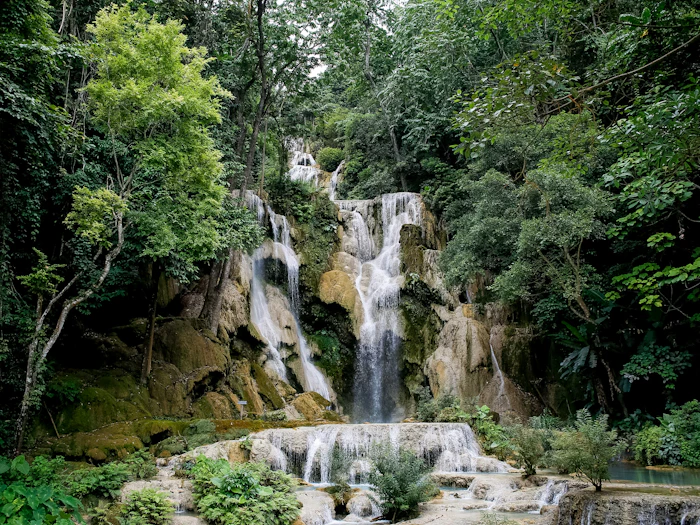
Based in Luang Prabang for six nights, students explore local food systems, textile traditions, and cultural heritage through visits to a buffalo dairy farm, Ock Pop Tok, and Living Land Farm. The seven-day itinerary also includes Wat Xieng Thong, Kuang Si Waterfall, and a slow-boat trip on the Mekong River.
Choose this programThe route connects Luang Prabang, Wat Xieng Thong, Luang Prabang Buffalo Dairy Farm, Ock Pop Tok, Kuang Si Waterfall, Living Land Farm, and Mekong River.
Your seven-day itinerary
-
Day 1
Arrive in Luang Prabang
An airport welcome at Luang Prabang and a light settling-in afternoon frame the week's inquiry into one local food-and-craft economy.
MorningArrival at Luang Prabang International Airport and the airport welcome.AfternoonA short transfer into town and a settling-in period; a light riverfront walk only.EveningDinner and an orientation to the week's food-and-craft inquiry.- Route
- Luang Prabang International Airport to the town center.
- Travel
- A private coach transfer from the airport.
- Overnight
- Program-approved hotel in Luang Prabang, shared rooms.
- Meals
- Dinner included; breakfast and lunch depend on the flight into Luang Prabang.
- Physical demand
- Low effort; a short riverfront walk only.
- Learning outcome
- Students name the two rivers that meet at Luang Prabang and the economy built around their confluence.
- Customization
- A late arrival moves the riverfront walk to the next morning.
-
Day 2
Living Heritage Before Sightseeing
A guided old-town walk and a museum stop separate a genuinely local craft tradition from a generic souvenir version of it, before the week turns to the farms that supply it.
MorningA guided walk through Wat Xieng Thong and the old town, in two groups.AfternoonInterpretation at the Traditional Arts and Ethnology Center, then a shaded rest.EveningDinner and a comparison of what the group saw against a guidebook description of Luang Prabang.- Route
- Luang Prabang's old town, including Wat Xieng Thong, and the Traditional Arts and Ethnology Center.
- Travel
- A short coach transfer, then on foot through the old town.
- Overnight
- Program-approved hotel in Luang Prabang, shared rooms.
- Meals
- Breakfast, lunch and dinner included.
- Physical demand
- Low to moderate effort; three to four kilometers on foot.
- Learning outcome
- Students separate a genuinely local craft tradition from a generic souvenir version of it.
- Customization
- A shorter indoor circuit through the Center replaces the outdoor walk in heavy rain.
-
Day 3
Food Enterprise in Practice
A working dairy farm shows students how a visitor-facing product funds farmer income, then a market visit tests that idea against other local foods.
MorningA guided tour of the Luang Prabang Buffalo Dairy Farm in staggered groups, watching cheese and ice cream production.AfternoonLunch and a shaded rest, then a market visit comparing dairy products with other local foods.EveningDinner and a group discussion on what a farm-tourism visit does and does not fund.- Route
- Luang Prabang to the Luang Prabang Buffalo Dairy Farm and back.
- Travel
- A coach transfer to the farm.
- Overnight
- Program-approved hotel in Luang Prabang, shared rooms.
- Meals
- Breakfast, lunch and dinner included.
- Physical demand
- Low effort.
- Learning outcome
- Students explain how a visitor-facing farm product funds local dairy income.
- Customization
- A dairy-free tasting option replaces direct animal contact for a student who prefers to observe only.
-
Day 4
Make a Textile, Understand the Work
A natural-dye workshop walks the group from plant to pigment to finished cloth, and every student keeps what they make.
MorningA natural-dyeing workshop at Ock Pop Tok, split into two prebooked sessions.AfternoonA second dyeing rotation and a walk through the Living Crafts Center; each student keeps a dyed textile.EveningDinner and a short presentation on where the dye plants are grown.- Route
- Luang Prabang to the Ock Pop Tok workshop and back.
- Travel
- A short coach transfer.
- Overnight
- Program-approved hotel in Luang Prabang, shared rooms.
- Meals
- Breakfast, lunch and dinner included.
- Physical demand
- Low effort; seated workshop sessions.
- Learning outcome
- Students trace a plant dye from the field to a finished textile and the artisan labor between them.
- Customization
- A bamboo-weaving or embroidery session replaces the dye class if capacity is unavailable.
-
Day 5
Kuang Si and Habitat Protection
A waterfall day turns into a lesson on tourism economics, when the group asks what visitor traffic actually funds at the rescue center next door.
MorningAn early transfer to Kuang Si Waterfall and the lower, maintained pools.AfternoonA visit to the Free the Bears rescue center beside the falls, lunch, and a relaxed return.EveningDinner and a discussion connecting visitor spending at the falls to funding for the rescue center.- Route
- Luang Prabang to Kuang Si Waterfall and back.
- Travel
- A coach transfer to the falls.
- Overnight
- Program-approved hotel in Luang Prabang, shared rooms.
- Meals
- Breakfast, lunch and dinner included.
- Physical demand
- Moderate effort; two to three kilometers on maintained waterfall paths.
- Learning outcome
- Students connect visitor spending at a waterfall to the funding case for a rescue center on the same site.
- Customization
- A dry viewpoint circuit replaces the lower pools in heavy rain.
-
Day 6
Rice and the Mekong
A rice paddy and a slow boat close the week's local-economy thread, from a grain grown a few miles from the hotel to the river that carries it to market.
MorningA rice-farming session at Living Land, trying selected stages of planting and harvest.AfternoonRest after lunch, then a short private slow-boat trip on the Mekong with fitted life jackets.EveningDinner and the week's closing discussion.- Route
- Luang Prabang to Living Land, then a slow-boat stretch of the Mekong.
- Travel
- A coach transfer to the farm, then a private boat on the river.
- Overnight
- Program-approved hotel in Luang Prabang, shared rooms.
- Meals
- Breakfast, lunch and dinner included.
- Physical demand
- Moderate effort; an optional hands-on session in the rice paddy.
- Learning outcome
- Students connect rice-paddy labor and irrigation to the river landscape that supports it.
- Customization
- A covered rice demonstration replaces the hands-on paddy session if the ground is unsuitable.
-
Day 7
Depart Luang Prabang
A last breakfast in town, then the airport transfer closes a week built around one local economy, seen from the farm to the finished product.
MorningBreakfast, packing, and check-out.AfternoonTransfer to Luang Prabang International Airport with a flight buffer.EveningThe flight home departs.- Route
- The Luang Prabang hotel to Luang Prabang International Airport.
- Travel
- A private transfer timed to the flight.
- Overnight
- No program night; the group is on its flight home.
- Meals
- Breakfast included; later meals depend on the flight home.
- Physical demand
- Low effort, mostly seated.
- Learning outcome
- Students submit one local economy they can explain start to finish, from raw material to finished product.
- Customization
- Breakfast and transfer timing shift to match an early flight.
 Laos · Luang Prabang · Nong Khiaw · Muang Ngoi · Nam Ou River
8 days · From $2,385
Laos · Luang Prabang · Nong Khiaw · Muang Ngoi · Nam Ou River
8 days · From $2,385
Northern Laos: Nam Ou Valleys and Village Landscapes
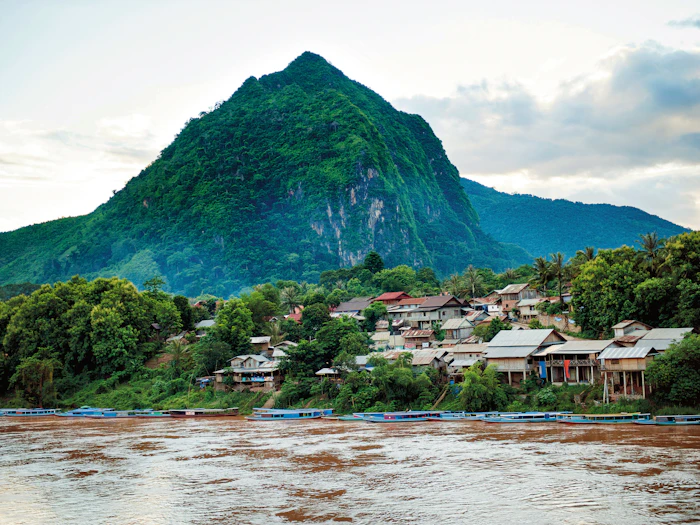
This eight-day itinerary takes students from Luang Prabang into the Nam Ou River valley to study the geography, waterways, and communities of northern Laos. The route includes Nong Khiaw, the 100 Waterfalls trail, Muang Ngoi, and Kuang Si Waterfall before returning to Luang Prabang.
Choose this programThe route connects Luang Prabang, Mount Phousi, Nong Khiaw, 100 Waterfalls, Muang Ngoi, Nam Ou River, and Kuang Si Waterfall.
- Luang Prabang2 nights
- Nong Khiaw3 nights
- Luang Prabang2 nights
Your eight-day itinerary
-
Day 1
Arrive in Luang Prabang
A flight into Luang Prabang and a rest afternoon set up the two-region river comparison the week is built around.
MorningA flight lands at Luang Prabang International Airport.AfternoonTransfer to the hotel and a rest period before the trip north begins.EveningDinner and a route briefing for the week's two-region river study.- Route
- Luang Prabang International Airport to the town center.
- Travel
- A private coach transfer from the airport.
- Overnight
- Program-approved hotel in Luang Prabang, shared rooms.
- Meals
- Dinner included; breakfast and lunch depend on the flight into Luang Prabang.
- Physical demand
- Low effort; a rest period only.
- Learning outcome
- Students preview the two river systems the week will compare, the Mekong at Luang Prabang and the Nam Ou at Nong Khiaw.
- Customization
- A late arrival moves the route briefing to the next morning.
-
Day 2
Mount Phousi and the River Confluence
A climb above the town reads the confluence that put a river city here, before the group heads to a karst valley three hours north to compare.
MorningA climb to the Mount Phousi viewpoint over the Mekong and Nam Khan confluence.AfternoonA boat-safety orientation and a walk along the Mekong waterfront ahead of the transfer north.EveningDinner and a map exercise plotting the week's route from Luang Prabang to Nong Khiaw.- Route
- Luang Prabang's Mount Phousi and the Mekong waterfront, ahead of the transfer to Nong Khiaw.
- Travel
- On foot from the hotel.
- Overnight
- Program-approved hotel in Luang Prabang, shared rooms.
- Meals
- Breakfast, lunch and dinner included.
- Physical demand
- Low to moderate effort; a stepped climb to the viewpoint.
- Learning outcome
- Students read the river confluence that placed a city here, before comparing it to a mountain river three hours north.
- Customization
- A shaded riverside route replaces the stepped climb for a student who needs it.
-
Day 3
To the Nam Ou Valley
A daylight drive trades the Mekong for a narrower, mountain-walled river, and the group's first look at Nong Khiaw sets up two full field days.
MorningA daylight road transfer north with rest stops through the mountains.AfternoonCheck-in at Nong Khiaw and an easy riverfront orientation walk.EveningDinner and a first look at the karst cliffs around the town.- Route
- Luang Prabang to Nong Khiaw.
- Travel
- A coach transfer north, with rest stops.
- Overnight
- Program-approved hotel in the Nong Khiaw area, shared rooms.
- Meals
- Breakfast, lunch and dinner included.
- Physical demand
- Low effort; a travel day.
- Learning outcome
- Students read a karst river landscape and compare it to the confluence they mapped in Luang Prabang.
- Customization
- Hotel rest replaces a viewpoint stop after a long drive.
-
Day 4
100 Waterfalls Field Day
A boat approach and a maintained forest trail lead to a multi-tier waterfall system, and the group logs forest cover the whole way in.
MorningA guided boat approach and a maintained trail to the 100 Waterfalls, in two small supervised groups.AfternoonA picnic and a return before dusk.EveningDinner and a comparison of forest cover along the catchment.- Route
- Nong Khiaw to the 100 Waterfalls trail and back.
- Travel
- A guided boat approach, then a maintained forest trail.
- Overnight
- Program-approved hotel in the Nong Khiaw area, shared rooms.
- Meals
- Breakfast, lunch and dinner included.
- Physical demand
- Moderate to high effort; a maintained but slippery forest trail.
- Learning outcome
- Students compare forest cover and water movement along one catchment.
- Customization
- A parallel easy riverside path with the same guide replaces the waterfall trail in rain.
-
Day 5
Nam Ou River Communities
A licensed slow boat and a village walk connect river transport, farming, and tourism income in one working community on the Nam Ou.
MorningA private licensed slow-boat trip to Muang Ngoi with fitted life jackets.AfternoonA guided walk through the settlement and its rice-field paths, then lunch and rest before the return.EveningDinner and a discussion of river transport, farming, and tourism income.- Route
- Nong Khiaw to Muang Ngoi and back, by river.
- Travel
- A private licensed boat.
- Overnight
- Program-approved hotel in the Nong Khiaw area, shared rooms.
- Meals
- Breakfast, lunch and dinner included.
- Physical demand
- Moderate effort; walking on village paths.
- Learning outcome
- Students relate river transport, farming, and tourism income in one river community.
- Customization
- A shorter, sheltered boat route replaces the full Muang Ngoi crossing in poor water conditions.
-
Day 6
Return to Luang Prabang
The drive south turns into a live comparison: a river-town market against the old-town market the group already knows.
MorningBreakfast and a daylight road return south.AfternoonA late lunch, rest, and supervised time in the market.EveningDinner and a comparison of the Nong Khiaw and Luang Prabang night markets.- Route
- Nong Khiaw to Luang Prabang.
- Travel
- A coach transfer south, with rest stops.
- Overnight
- Program-approved hotel in Luang Prabang, shared rooms.
- Meals
- Breakfast, lunch and dinner included.
- Physical demand
- Low effort; a travel day.
- Learning outcome
- Students compare Nong Khiaw's river market with Luang Prabang's own night market.
- Customization
- A transfer-only day replaces the market stop if the road is delayed.
-
Day 7
Kuang Si: A Third Watershed
A third river system, a shorter walk from the hotel this time, closes the week's watershed comparison with a stop at a wildlife rescue center.
MorningA transfer to Kuang Si Waterfall and the lower, maintained pools.AfternoonA visit to the Free the Bears rescue center beside the falls, then a relaxed return.EveningDinner and the week's closing river comparison, from the Mekong to the Nam Ou to Kuang Si.- Route
- Luang Prabang to Kuang Si Waterfall and back.
- Travel
- A coach transfer to the falls.
- Overnight
- Program-approved hotel in Luang Prabang, shared rooms.
- Meals
- Breakfast, lunch and dinner included.
- Physical demand
- Moderate effort; two to three kilometers on maintained waterfall paths.
- Learning outcome
- Students place a third watershed against the two they already mapped, and name what changes and what does not.
- Customization
- A dry viewpoint circuit replaces the lower pools in heavy rain.
-
Day 8
Depart Luang Prabang
A last breakfast, then the airport transfer closes a week spent reading three river systems from the ground up.
MorningBreakfast, packing, and check-out.AfternoonTransfer to Luang Prabang International Airport with a flight buffer.EveningThe flight home departs.- Route
- The Luang Prabang hotel to Luang Prabang International Airport.
- Travel
- A private transfer timed to the flight.
- Overnight
- No program night; the group is on its flight home.
- Meals
- Breakfast included; later meals depend on the flight home.
- Physical demand
- Low effort, mostly seated.
- Learning outcome
- Students submit a comparison of the three watersheds they studied across the week.
- Customization
- Breakfast and transfer timing shift to match an early flight.
 Laos · Luang Prabang · Wat Xieng Thong · Elephant Conservation Center · Kuang Si Waterfall
7 days · From $2,440
Laos · Luang Prabang · Wat Xieng Thong · Elephant Conservation Center · Kuang Si Waterfall
7 days · From $2,440
Elephant Conservation and Luang Prabang
Students examine Lao culture and wildlife conservation during seven days divided between Luang Prabang and the Elephant Conservation Center. Guided forest activities and observation-based elephant fieldwork complement visits to Wat Xieng Thong, the Traditional Arts and Ethnology Center, and Kuang Si Waterfall.
Choose this programThe route connects Luang Prabang, Wat Xieng Thong, Traditional Arts and Ethnology Center, Elephant Conservation Center, and Kuang Si Waterfall.
- Luang Prabang2 nights
- Elephant Conservation Center2 nights
- Luang Prabang2 nights
Your seven-day itinerary
-
Day 1
Arrive in Luang Prabang
An airport welcome and a settling-in evening open a week built around two days of observation-based fieldwork at a working conservation center.
MorningArrival at Luang Prabang International Airport, with an airport welcome tied to the flight schedule.AfternoonA transfer into town and a settling-in period ahead of the week's conservation fieldwork.EveningDinner and an orientation to the Elephant Conservation Center visit ahead.- Route
- Luang Prabang International Airport to the town center, ahead of the week's stay at the Elephant Conservation Center.
- Travel
- A private coach transfer from the airport.
- Overnight
- Program-approved hotel in Luang Prabang, shared rooms.
- Meals
- Dinner included; breakfast and lunch depend on the flight into Luang Prabang.
- Physical demand
- Low effort; a settling-in day.
- Learning outcome
- Students preview the observation-based fieldwork model the Elephant Conservation Center visit will use.
- Customization
- A late arrival moves the orientation to the next morning.
-
Day 2
Living Heritage Before the Field
An old-town walk and a museum stop root the week's conservation work in Lao cultural history before the group leaves town.
MorningA guided walk through Wat Xieng Thong and the old town.AfternoonInterpretation at the Traditional Arts and Ethnology Center, connecting Lao cultural history to the conservation work ahead.EveningDinner and a briefing on the Elephant Conservation Center's veterinary and nursery program.- Route
- Luang Prabang's old town, including Wat Xieng Thong, and the Traditional Arts and Ethnology Center, ahead of the transfer to the Elephant Conservation Center.
- Travel
- A short coach transfer, then on foot through the old town.
- Overnight
- Program-approved hotel in Luang Prabang, shared rooms.
- Meals
- Breakfast, lunch and dinner included.
- Physical demand
- Low to moderate effort; three to four kilometers on foot.
- Learning outcome
- Students connect Lao cultural history to the conservation program they will observe.
- Customization
- A shorter indoor circuit through the Center replaces the outdoor walk in heavy rain.
-
Day 3
Into the Conservation Landscape
A road-and-lake transfer reaches the Elephant Conservation Center, where a staff introduction sets the rule for the two days ahead: observe, do not intervene.
MorningA transfer to the Elephant Conservation Center in Xayaboury province, by road and a lake crossing.AfternoonA staff introduction and a guided forest walk with protected-distance observation of the resident herd.EveningDinner at the center and a discussion of what conservation care looks like day to day.- Route
- Luang Prabang to the Elephant Conservation Center in Xayaboury province.
- Travel
- A coach transfer, then a boat crossing to reach the center.
- Overnight
- Program-approved accommodation at the Elephant Conservation Center, shared rooms.
- Meals
- Breakfast, lunch and dinner included.
- Physical demand
- Moderate effort; forest paths at the center.
- Learning outcome
- Students distinguish conservation-based observation from performing-animal tourism before they see either.
- Customization
- A shorter guided center circuit replaces the full forest walk for a student who needs it.
-
Day 4
Observe Elephant Behavior
Small groups watch the herd from a protected distance, with no riding, bathing, or feeding by students, then hear directly from the veterinary and nursery team.
MorningSmall-group observation of elephant social behavior with center staff, from a protected distance. No student riding, bathing, or feeding.AfternoonContinued observation and an interpretation session with veterinary and nursery staff on their methods and current cases.EveningDinner at the center and a student debrief on what was and was not observed.- Route
- Guided paths within the Elephant Conservation Center.
- Travel
- On foot; no intercity travel today.
- Overnight
- Program-approved accommodation at the Elephant Conservation Center, shared rooms.
- Meals
- Breakfast, lunch and dinner included.
- Physical demand
- Moderate effort; variable forest trails.
- Learning outcome
- Students recognize elephant social behavior without intervening, and describe the difference between observation and interaction.
- Customization
- A seated interpretation session at the visitor center replaces the trail walk for a student who needs it.
-
Day 5
Conservation Choices and the Return
A closing conversation with veterinary staff on habitat and welfare management sends the group back toward Luang Prabang with a real question to argue.
MorningA final observation session and a closing conversation with veterinary staff on habitat and welfare management.AfternoonThe return transfer to Luang Prabang.EveningDinner and a group discussion on what the center's model would need to scale.- Route
- The Elephant Conservation Center back to Luang Prabang.
- Travel
- A boat crossing, then a coach transfer.
- Overnight
- Program-approved hotel in Luang Prabang, shared rooms.
- Meals
- Breakfast, lunch and dinner included.
- Physical demand
- Low to moderate effort.
- Learning outcome
- Students explain how habitat and long-term welfare management shape a conservation center's choices.
- Customization
- An earlier transfer replaces the closing session if road or lake conditions require it.
-
Day 6
Kuang Si and a Second Conservation Model
A second, smaller conservation site gives the group a rescue model to weigh against the observation-based center they spent two days with.
MorningA transfer to Kuang Si Waterfall and the lower, maintained pools.AfternoonA visit to the Free the Bears rescue center beside the falls, comparing its rescue model to the observation-based center visited earlier in the week.EveningDinner and the week's closing conservation discussion.- Route
- Luang Prabang to Kuang Si Waterfall and back.
- Travel
- A coach transfer to the falls.
- Overnight
- Program-approved hotel in Luang Prabang, shared rooms.
- Meals
- Breakfast, lunch and dinner included.
- Physical demand
- Moderate effort; two to three kilometers on maintained waterfall paths.
- Learning outcome
- Students compare a rescue-center model against the observation-based center they spent two days with.
- Customization
- A dry viewpoint circuit replaces the lower pools in heavy rain.
-
Day 7
Depart Luang Prabang
A last breakfast in town, then the airport transfer closes a week of field notes on two different conservation models.
MorningBreakfast, packing, and check-out.AfternoonTransfer to Luang Prabang International Airport with a flight buffer.EveningThe flight home departs.- Route
- The Luang Prabang hotel to Luang Prabang International Airport.
- Travel
- A private transfer timed to the flight.
- Overnight
- No program night; the group is on its flight home.
- Meals
- Breakfast included; later meals depend on the flight home.
- Physical demand
- Low effort, mostly seated.
- Learning outcome
- Students submit the observation notes they kept across two days at the conservation center.
- Customization
- Breakfast and transfer timing shift to match an early flight.
What applies across every itinerary
- Groups and teachers
- Groups start at ten students; smaller groups are considered on a case-by-case basis. One teacher's Program Tuition is free for every eight paying students.
- Rooming
- Students share gender-separated rooms, each with their own bed. Teachers get private rooms.
- Price
- Program Tuition doesn't cover flights to and from the program, travel insurance, medical insurance, or personal spending money.
- Flights and documents
- Groups book international flights themselves or ask Rustic Pathways to arrange them. Families arrange passports and any required entry authorizations with guidance from Rustic Pathways.
- Supervision
- Program Leaders lead scheduled activities, stay on site, and are available overnight. The approved itinerary specifies any free time, and Program Leaders are present during it.
- Effort
- Low is a travel day, mostly seated. Moderate is a full day on foot on forest trails, waterfall paths, or old-town paving.
- Flexibility
- Fixed days cannot move independently, linked days move only with connected activity or transport reservations, and adjustable days can change without restructuring the entire program.
How much does a school trip to Laos cost?
A school trip to Laos costs $2,130 to $2,440 per student for 7 to 8 days, excluding international airfare. That is approximately $298 to $349 per day across these three routes.
Each trip is quoted for your school’s group and dates. Tuition includes the travel, staffing and teacher places listed below.
$2,130 to $2,440
per student across the three itineraries, excluding international airfare.
7 to 8 days
program length across the three itineraries.
10+ students
usual minimum group size for a private Laos trip.
| Included | What it covers |
|---|---|
| Travel | Accommodation for every program night, all meals and drinking water, airport transfers, in-country coach and boat transport, scheduled activities, guides, and entrance fees. |
| Staff and support | At least two trained Program Leaders, including both a male and a female leader, pre-departure planning, and school documentation. Enrolled families receive a 24/7 emergency number for use during programs and travel days. |
| Community donations | Required by a service project, paid by Rustic Pathways and never collected from students. |
| Chaperones | One complimentary Program Tuition place per eight paying students. Chaperone airfare, travel insurance and medical insurance are separate. |
Not included: International airfare, travel insurance, medical insurance, personal spending, passport or visa fees, and vaccinations.
| Effect | Factor |
|---|---|
| raises | Peak and holiday weeks in the dates you choose |
| raises | Upgraded lodging |
| raises | Extra chaperones beyond the complimentary place |
| lowers | More students in the group means fixed costs split more ways. |
| raises | Shorter trips can cost more per day because fixed costs cover fewer days; the route and activities also affect the price. |
Payment and cancellation
Installment plans are available. Schools pay as a group, or families pay monthly under the current enrollment terms.
What do students learn on a Laos school trip?
Laos school trips connect food production and craft, river geography, and elephant conservation with field activities.
Food systems and enterprise
Trace buffalo dairy production, plant-dye textiles and rice farming to see how tourism supports local producers.
Environmental science and geography
Compare the Mekong and Nam Ou rivers and a waterfall catchment to understand how watersheds shape local communities.
Biology and conservation
Observe elephants from a protected distance at the Elephant Conservation Center and compare its work with wildlife rescue at Kuang Si.

What makes Rustic Pathways educational trips different?
A Rustic Pathways school trip is one private group on your school's own dates, one bed per student, and an itinerary built to your curriculum.
- 01No mixed groups. Just your school
- 02One student, one bed
- 03Your school picks the dates
- 04Monthly payment plans available
- 05No tipping; Rustic Pathways Program Tuition includes community donations
- 06Aligned to your curriculum
How safety is managed on a school trip to Laos
Program Leaders manage local operations and safety procedures alongside school chaperones, while your school manages student conduct and communication policies. Across 13 years of published incident data from every Rustic Pathways program worldwide, 87% of reports were GREEN, the minor tier where the group stays intact.
What the team plans for
Luang Prabang's old town and temple areas
Group movement through a UNESCO old town, active temples, markets, and Mekong riverfront.
The Nam Ou valley and Kuang Si
Guided forest and waterfall trails, with a licensed river-boat crossing between Nong Khiaw and Muang Ngoi.
The Elephant Conservation Center
Guided forest paths at a working conservation center, with protected-distance observation and no student contact with the elephants.
Controls built into every trip
Written risk plan. A score above 5 requires new controls, reassessment or cancellation.
Two-Deep Leadership. A single staff member is never alone with students, and at least two trained Program Leaders, including both a male and a female leader, support each School Group Travel trip.
Assessed activity vendors. Licensed river-boat operators, guided forest-trail operators, and the Elephant Conservation Center's own visitor protocols are reviewed before use, every one to two years, and on site when high risk.
Medical readiness. WFR coverage for remote programs and Dr. William R. Smith, who has led medical planning as Medical Director since 2015.
What is the best time for school travel to Laos?
November through February is the recommended cool, dry window for all three Laos itineraries.
Luang Prabang: Food, Craft and Living Heritage
November to February
Plan outdoor workshops and Kuang Si for the cool, dry season, outside peak burning-season smoke and wet-season flooding.
Northern Laos: Nam Ou Valleys and Village Landscapes
November to February
The 100 Waterfalls walk requires cleared, maintained guided trails; Nam Ou crossings depend on river conditions.
Elephant Conservation and Luang Prabang
November to February
The cool, dry season suits two days on guided forest paths at the Elephant Conservation Center.
Is Rustic Pathways the right partner for your school trip to Laos?
Private Laos school trips follow your dates and curriculum, with your teachers and classmates.
Groups never merge with another school. Individual students can join fixed-departure Laos programs instead.
A strong fit
- You want one private school group on your dates, with your teachers.
- You can travel for 7 to 8 program days, plus international flights.
- You have 10 or more students.
- You want to read the day-by-day itinerary before committing.
Talk with us first
- A student has significant mobility, medical, sensory, mental-health, dietary, or religious support needs.
- You have fewer than 10 students.
- You want the Elephant Conservation Center or Nam Ou valley days. Every traveler needs fitness for guided forest paths, lake or river crossings and maintained waterfall trails.
Probably not a fit
- You want an open-enrollment Laos program for an individual student.
- You want your group merged with another school.
Support planning starts early
Raise individual needs before booking so Rustic Pathways can assess them and adapt the route and support plan where feasible.

Have a question before you ask for a proposal?
Keegan Kennedy answers Laos school-trip questions with the school travel team.
Send your group size, dates, trip length, and what you want students to learn. I’ll reply within 1 business day and send you options within 48 hours, and no sales call unless you ask for one.
Start with your travel window
Start your Laos trip proposal with your travel dates, group size, and learning goals. Receive a reply within 1 business day and customized trip options within 48 hours.
Or reach a person directly: +1 440-975-9691 or groups@rusticpathways.com
Need approval or funding first?
Certificate of insurance, risk management plans, and fundraising templates for families, on request.

Destinations related to Laos
Browse all school trip destinations- Rustic Pathways has operated student travel since 1983. Recent industry recognition:
- 2026 GoAbroad Innovation AwardsInnovation in Adventure-Based Programming · Global Adventure Learning Model
- 2025 International Travel AwardsBest Group Tour Operator
- 2024 Skift IDEA AwardsIndustry Innovators – Tour Operators
- 4x WYSETC Best Youth Tour Operator2015, 2017, 2018, 2019
- BBB A+ RatingBetter Business Bureau profile
- NESA Affiliate OrganizationNear East South Asia Council of Overseas Schools
- 2025 World Travel AwardsUnited States’ Leading Tour Operator