

- Program
- Thai Elephant Conservation Project, Thailand
- Traveled
- 2023
- Hometown
- Jhumri Telaiya, India
This alumni profile shares Apurva Anand’s experience on Rustic Pathways’ Thai Elephant Conservation Project in Thailand in summer 2023, before his senior year of high school. Apurva, from Jhumri Telaiya, India, traveled internationally on his own for the first time on a Rustic Pathways Foundation scholarship.
He recalls his Thai program leader Chet, cooking pad Thai, making paper from elephant dung, meeting a tusker and painting a ceramic elephant at Elephant Parade, which raises funds for elephant care.
In the Indian community where Apurva Anand lives, it’s pretty uncommon for residents to travel abroad. He says his family and friends in Jhumri Telaiya, India, were surprised to hear he was going to Thailand on a travel program designed for high schoolers.
Apurva was able to go on the Thai Elephant Conservation Project with the help of a travel scholarship from the Rustic Pathways Foundation.
He heard about the opportunity through an Instagram friend. When he won an award, his parents were hesitant to give him permission to travel.
“Initially they were reluctant to let me go because I was traveling alone for the first time to a new country,” Apurva said.
“After I showed them the videos and everything, they got really excited.”

The plane rides to Thailand were relatively short for Apurva. He was only in the air for a total of about three hours.
Still he had some unexpected moments in store once he arrived.
Apurva’s First Trip Abroad: Lessons in Thai Culture
Apurva says he expected certain aspects of Thai culture to be similar to what he saw at home. But he found there were a number of differences, including the cuisine that was less spicy.
What stood out to him the most, though, was how much the country lives up to its nickname – The Land of Smiles.
“They were always smiling, and they were really welcoming to you all the time,” Apurva said.
“I didn’t expect them to be that nice. They were really accommodating with anything you needed.”
Apurva particularly found this to be the case with one of the Thai program leaders – Veerayut Suphadee, who goes by the nickname Chet. Apurva says Chet immediately made him feel at home.
“He was always there to help us with everything throughout the trip. I really learned through him how kind a person can be – how nice Thai people are,” Apurva said.
Once he was comfortable, Apurva was able to enjoy all the program’s activities.
After resting the first night, the students learned how to cook dishes like pad Thai, which Apurva really liked. Then they headed off to an elephant sanctuary.
Apurva says he lives near an elephant sanctuary in northeastern India, but that center does not offer opportunities to learn about the animals. So he treasured the chance to learn more about these amazing creatures.
Elephant Conservation in Action Near Chiang Mai
The students in the elephant program get hands-on lessons about taking care of the animals. They also see how the caretakers called mahouts live, and they’re taught why the elephant is sacred in Thailand.
Apurva says they started by learning why the elephant is a national symbol and taking part in a ceremony for the god of the elephants.
“They were so much like kids. It was really fun,” Apurva said.
The students also worked on food planting projects, saw how the staff takes care of sick animals, and met an elephant with long ivory tusks.

Tusker elephants need more protection from poachers and may look intimidating, but Apurva found the one they met really enjoyed his visitors.
“He was the most playful of all the elephants that we met,” Apurva said.
Apurva also found it interesting how the staff used dung to create paper. The students were given the opportunity to see how it’s done.
“We were given elephant dung, which had been cleaned by some chemical. We put that into water and then a net. After it dried, it became a paper – the same paper used for the certificates we were given,” Apurva said.

The most memorable lessons though centered on the importance of animal conservation. Apurva was really inspired by the students’ visit to the Elephant Parade House where they painted ceramic elephants.
They were told the story of the organization’s founding.
It was started by a father and son team in 2006 after they met a baby elephant named Mosha during a trip to Thailand. Mosha lost part of her leg after stepping on a landmine.
Elephant Parade was launched to provide funds to places like the Asian Elephant Hospital that took care of Mosha. Apurva says he hopes to do something similar in the future.

“I really saw first hand how these animals are being threatened, and what we can actually do to serve them. I would really like to do something for wildlife – something for a greater purpose,” Apurva said.
What Apurva Took Home From the Thai Elephant Conservation Project
Before Apurva left for Thailand, he was already a leader in his school.
He’s the president of the debate club and the head boy of his school’s student government. He also likes to sketch and plays an Indian instrument called the tabla, which is a pair of hand drums.
The Thailand trip, though, has fueled his desire to do even more.
He’s hoping to go to college for economics and maybe launch a nonprofit organization some day. His parents could see how much the Thailand program inspired Apurva after he came home from his journey.
“When I came back and showed them pictures, they were happier than me,” Apurva said.
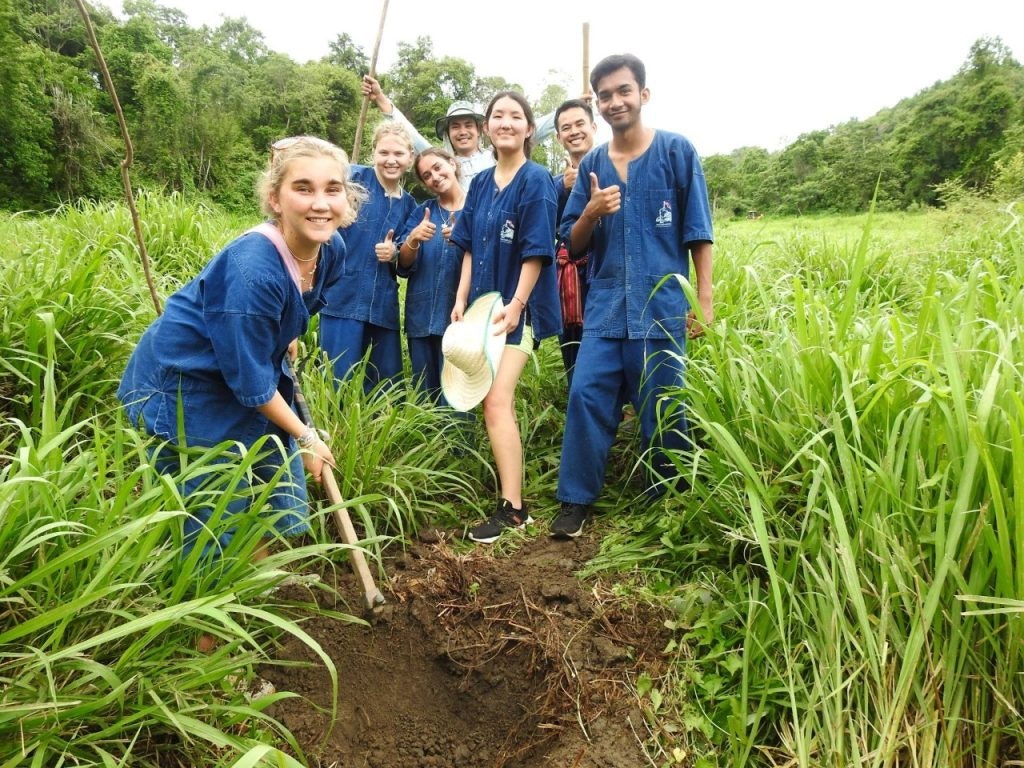
Shortly after his return home, Apurva had to go back to school for his senior year.
He did pause from his studies to complete one important task – writing a heartfelt letter of thanks to the scholarship donors. In part it read:
“Your investment in my education and personal growth has empowered me to become an advocate for wildlife conservation, armed with a newfound sense of purpose and determination… Thank you for believing in me.”
Apurva credits the trip with giving his plans for economics studies and a future nonprofit a stronger sense of purpose. His memories concern the 2023 session.
The program is now called Thailand: Thai Elephant Conservation Project. It runs 12 days for students ages 14–18 near Chiang Mai and includes 20 service hours.
See the program page for the current itinerary, dates and conservation activities.
