


Summer camp activities are games, crafts, challenges, and group blocks counselors use to keep kids moving, creating, cooperating, or winding down. The right choice usually comes down to four constraints: time, weather, prep, and energy level.
Start with the constraint that cannot change. If rain has moved everyone indoors, start with weather. If lunch starts in 20 minutes, start with time. If supplies are limited, start with prep. If the group needs to move or settle down, start with energy. Then use the planner below to narrow the choice.
Summer Camp Activity Planner
Scan across the columns to narrow the choice.
| Activity | Best for | Time | Weather | Prep | Energy |
|---|---|---|---|---|---|
| Free Play Time | A break from structured programming | 20–60 min | Any | None | Low* |
| Campfire Storytelling | A group wind-down | 20–45 min | Rain-safe with indoor space | Low | Low |
| Camp Newspaper Creation | A rainy-day creative project | 30–60 min | Rain-safe | Low | Low |
| Nature Walks | A quiet outdoor reset | 15–30 min | Dry | Low | Low |
| Camp Memory Wall Project | Reflection or final-day programming | 20–45 min | Rain-safe | Low | Low |
| Making Bird Feeders | A nature-based craft | 20–30 min | Rain-safe | Medium | Low |
| Crafting Friendship Bracelets | A calm social activity | 30–60 min | Rain-safe | Medium | Low |
| Creative Arts Classes | A calm afternoon block | 30–60 min | Rain-safe | Medium | Low |
| Tie-Dying | A take-home camp project | 45–90 min | Dry or covered | High | Low |
| Cooking Classes | Hands-on learning | 45–90 min | Rain-safe with indoor space | High | Low |
| Scavenger Hunt | Exploration, clues, and teamwork | 20–40 min | Any with adapted clues | Low | Medium |
| Life-Sized Board Games | A group game when outdoor plans fail | 20–40 min | Rain-safe with indoor space | Medium | Medium |
| Life Skills Challenges | Learning through competition | 30–60 min | Rain-safe with indoor space | Medium | Medium |
| Camp Talent Showcase | Confidence and group celebration | 45–90 min | Rain-safe with indoor space | Medium | Medium |
| Themed Camp Costume Days | A camp-wide theme | All day | Any | Medium | Medium |
| Building with Recycled Materials | Open-ended creativity and teamwork | 45–90 min | Rain-safe with indoor space | Medium | Medium |
| Field Trip Adventures | A change of scenery | 1+ hr | Depends on trip | High | Medium |
| Capture the Flag | Large-group competition | 15–30 min | Dry | Low | High |
| Hula Hoop Games | A quick movement block | 10–30 min | Rain-safe with indoor space | Low | High |
| Night Games Under the Stars | An evening energy boost | 15–30 min | Dry | Low | High |
| Balloon Pop Relay Races | A short competitive game | 10–20 min | Dry or covered | Low | High |
| Obstacle Course | A major movement block | 20–45 min | Rain-safe with indoor space | Medium | High |
| Water Balloon Games | A hot-day team game | 10–20 min | Hot and dry | Medium | High |
| Ninja Warrior Course | A large physical challenge | 30–60 min | Dry or gym | High | High |
Prep: Low means grab-and-go or less than 10 minutes of setup. Medium means roughly 10–20 minutes of setup. High means advance preparation, shopping, reservations, or significant setup.
Weather: Rain-safe means the activity works indoors without requiring a large dedicated space. Rain-safe with indoor space means a classroom, cabin, gym, pavilion, or similar usable area is needed.
*Free Play Time: Free play sits with low-energy activities because its role in the schedule is recovery from structured programming. Individual campers can still choose active play.
How to Sequence Activities Through the Day
A camp day works better when the pace changes. Rustic Pathways calls its program-design approach the Broccoli-to-Ice-Cream Ratio: balance experiences that ask students to stretch, cooperate, learn, or persevere with experiences that are primarily fun.
High energy → low energy → medium energy → high energy → wind-down
Keep one rain-safe, low-prep activity available as a backup. Weather changes, schedules slip, and a group ready for Capture the Flag in the morning may need Campfire Storytelling later in the day.
Low-Energy Camp Activities
Low-energy camp activities fit quieter blocks, recovery after physical games, rainy periods, and the end of the day. Within this group, the activities progress from almost no preparation to larger craft and cooking projects.
Free Play Time
Free play gives campers a break from counselor-led programming and allows each child to choose how to use the time. Some campers may play a game with friends, while others draw, read, talk, or rest.
How to run it
- Time: 20–60 minutes
- Group size: Any camp group
- Supplies: Optional balls, cards, books, art supplies, building materials, or outdoor equipment
- Best for ages: 6–12
- Setup tip: Define the available spaces and choices before free play begins. Keep off-limits areas clear.
Variations
- Quiet free play: Offer books, drawing, puzzles, cards, and simple crafts.
- Outdoor free play: Open a supervised field or play area with balls, hoops, and other equipment.
- Choice stations: Set up three or four options for campers who have trouble deciding what to do.
Safety note
Free play still requires active supervision. Define physical boundaries, keep staff positioned where all spaces are visible, and set clear rules for equipment and rough play.
Campfire Storytelling
Campfire storytelling gives campers a structured way to slow down, listen, laugh, and contribute to the group. Stories can be spooky, funny, imaginative, or based on favorite camp moments.
How to run it
- Time: 20–45 minutes
- Group size: 8–30
- Supplies: Flashlight or lantern, story starters optional, s’mores supplies optional
- Best for ages: 6–12
- Setup tip: Start with one counselor story to establish the tone and length. For younger campers, 60–90 seconds per story is plenty.
Variations
- Make it easier: Use prompts such as “A strange sound…”, “A secret map…”, or “A funny animal…”
- Make it harder: Build one group story with each camper adding a sentence.
- Rainy-day version: Hold a flashlight storytelling circle indoors.
Safety note
For a real campfire, establish a clear fire boundary and assign separate staff roles for the fire and the group. Keep scary material appropriate for the youngest campers in the circle.

Camp Newspaper Creation
A camp newspaper gives kids a reason to write, interview, draw, photograph, and collaborate while documenting what happened at camp.
How to run it
- Time: 30–60 minutes, or two shorter sessions
- Group size: 6–30
- Supplies: Paper, markers, clipboards optional, tape, camera or phone optional, sample section list
- Best for ages: 7–12
- Setup tip: Start with four to six newspaper sections so campers are not staring at a blank page.
Variations
- Make it easier: Use a template with a headline, three sentences, and one drawing.
- Make it harder: Add interviews, a fact-checking step, and a final editing pass.
- Rainy-day version: Add cartoons, puzzles, riddles, and a camp advice column.
Safety note
Set rules for respectful writing. Do not publish private information, last names, phone numbers, addresses, or other identifying details.
Nature Walks
Nature walks slow the pace and give campers a specific reason to notice the environment. A nature walk can work on a wooded trail, around a school campus, beside a playground, or along the edge of camp.
How to run it
- Time: 15–30 minutes
- Group size: 6–30
- Supplies: Optional clipboards, sketch paper, magnifying glasses, observation checklist
- Best for ages: 6–12
- Setup tip: Give the group one small mission, such as finding three textures, identifying three sounds, or spotting three signs of wildlife.
Variations
- Make it easier: Run a guided sensory walk focused on things campers can see, hear, smell, or feel safely.
- Make it harder: Add sketching, journaling, or basic plant and bird identification.
- Small-space version: Use a school garden, playground edge, courtyard, or camp perimeter.
Safety note
Walk the route in advance. Keep campers together, avoid unknown plants and animals, and define rules for roads, water, steep ground, and other boundaries before starting.
Camp Memory Wall Project
A camp memory wall gives campers a shared place to record favorite moments, new friendships, accomplishments, drawings, photos, and inside jokes from the session.
How to run it
- Time: 20–45 minutes
- Group size: 6–30
- Supplies: Large paper or bulletin-board space, index cards, markers, tape, printed photos optional
- Best for ages: 6–12
- Setup tip: Create several prompts such as “I learned…”, “I laughed when…”, “I helped…”, and “My favorite moment…”
Variations
- Make it easier: Let campers draw instead of write.
- Make it harder: Ask campers to add a short caption explaining why a moment mattered.
- Daily version: Add one memory at the end of every camp day.
Safety note
Keep entries positive and respectful. Do not post private information or photos that should not be displayed publicly.
Making Bird Feeders
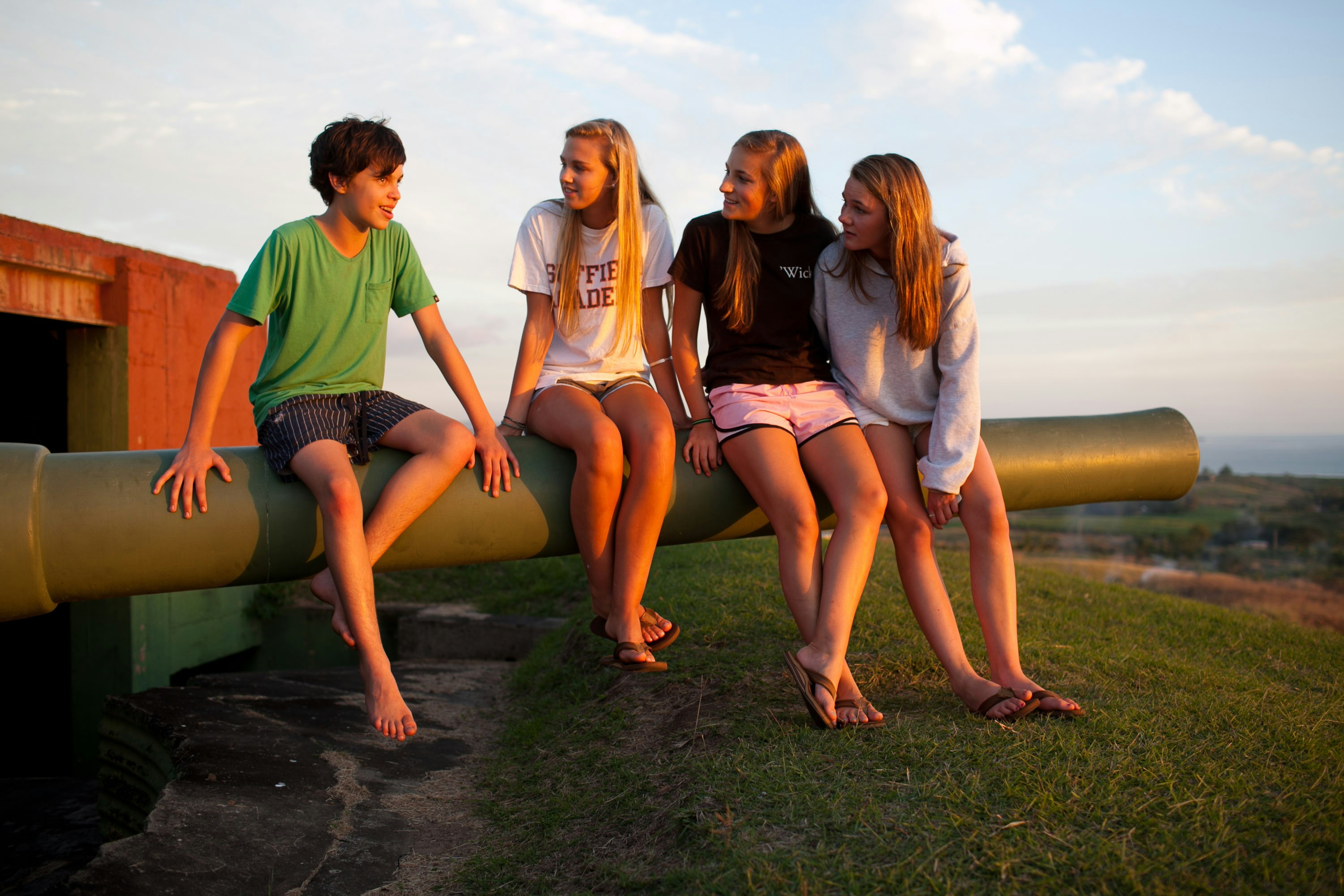
Making bird feeders combines a simple craft with observation of the natural environment. Campers can hang feeders around camp or take them home.
How to run it
- Time: 20–30 minutes
- Group size: 6–25
- Supplies: Toilet paper rolls or pinecones, string, birdseed, sunflower butter or another allergy-safe spread
- Best for ages: 6–10
- Setup tip: Check food-allergy rules before choosing materials.
Variations
- Make it easier: Pre-tie the string and pre-portion the seed.
- Make it harder: Add a bird-identification walk after the feeders are hung.
- Rainy-day version: Build the feeders indoors and hang them later.
Safety note
Check allergies before using seed or spreads, wash hands after the activity, and follow local guidance on wildlife feeding.
Crafting Friendship Bracelets
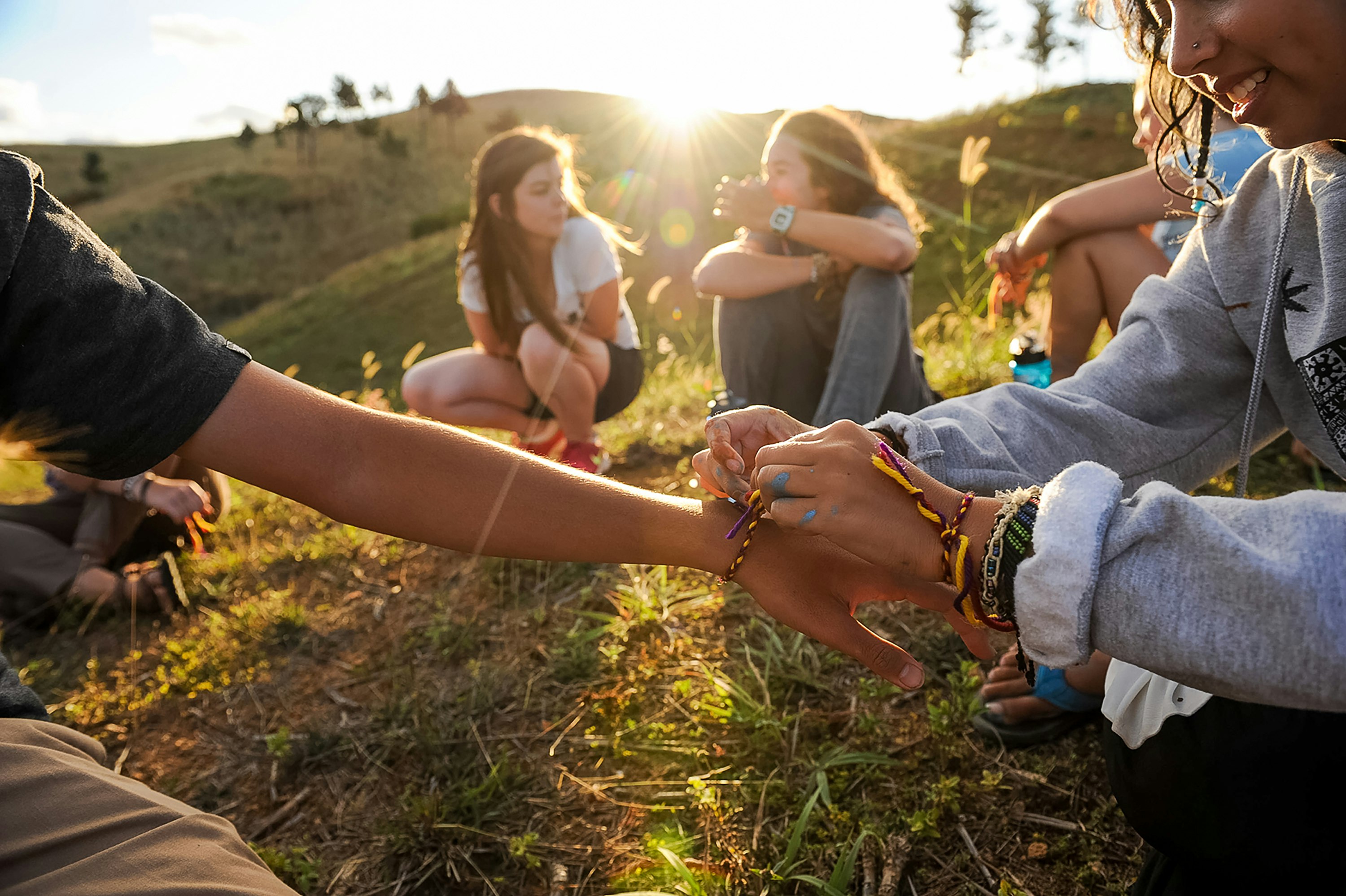
Friendship bracelets give campers a quiet social activity with a finished object to keep or give away. Younger campers can work with simple braids while older campers try more complex patterns.
How to run it
- Time: 30–60 minutes
- Group size: 6–25
- Supplies: Embroidery floss or yarn, scissors, tape, clipboards or cardboard optional
- Best for ages: 7–12; younger campers may need help starting knots
- Setup tip: Pre-cut string into usable lengths and prepare a few finished examples.
Variations
- Make it easier: Use three-strand braids.
- Make it harder: Introduce diagonal stripes, chevrons, or repeating color patterns.
- Exchange version: Draw names and make a bracelet for another camper.
Safety note
Use age-appropriate scissors and keep long cords away from necks and active play areas.
Creative Arts Classes
Creative arts give campers a low-energy block for drawing, painting, collage, sculpture, and other visual projects.
How to run it
- Time: 30–60 minutes
- Group size: 6–30
- Supplies: Paper, markers, crayons, paint, brushes, glue, recycled materials, smocks as needed
- Best for ages: 6–12
- Setup tip: Limit the first round to a manageable set of materials and place supplies in shared stations.
Variations
- Make it easier: Give campers one medium and one simple prompt.
- Make it harder: Add a design constraint, such as using only three colors or building from recycled materials.
- Collaborative version: Create one large mural or group artwork.
Safety note
Use washable, non-toxic materials. Supervise scissors and adhesives, clean spills promptly, and check craft materials for age restrictions.

Tie-Dying
Tie-dying lets campers create a wearable project by folding, twisting, binding, and coloring fabric.
How to run it
- Time: 45–90 minutes, plus drying or rinsing time
- Group size: 6–24
- Supplies: White cotton shirts or bandanas, fabric dye, rubber bands, gloves, table coverings, plastic bags
- Best for ages: 8–12; younger campers can participate with more staff help
- Setup tip: Pre-label every garment and prepare dye stations before campers arrive.
Variations
- Make it easier: Use one or two colors and simple bunching or stripe patterns.
- Make it harder: Try spiral, bullseye, accordion, or multi-color designs.
- Smaller project: Tie-dye bandanas or socks instead of shirts.
Safety note
Use gloves and follow all dye-package instructions. Protect eyes, clothing, tables, and floors, and keep dye away from food-preparation areas.
Cooking Classes
Cooking gives campers a practical project with a clear result. Recipes can range from sandwiches and snacks to simple baked dishes or supervised campfire food.
How to run it
- Time: 45–90 minutes
- Group size: 6–24, divided into small stations
- Supplies: Recipe ingredients, bowls, measuring tools, utensils, plates, cleaning supplies
- Best for ages: 7–12
- Setup tip: Review allergies first, choose an age-appropriate recipe, and pre-measure difficult ingredients when necessary.
Variations
- Make it easier: Choose a no-cook recipe such as wraps, fruit skewers, or trail mix.
- Make it harder: Give teams the same ingredients and let each team create a variation.
- Campfire version: Prepare foil packets, simple breads, or other recipes designed for supervised outdoor cooking.
Safety note
Review food allergies and dietary restrictions before the activity. Require handwashing, supervise knives and heat sources closely, and keep raw and cooked foods separated.

Medium-Energy Camp Activities
Once the group has reset, medium-energy activities add more collaboration, strategy, problem-solving, or movement without requiring nonstop physical exertion.
Scavenger Hunt
A scavenger hunt sends campers searching for objects, clues, observations, or answers inside a defined area. The same activity can stay simple for younger campers or become a puzzle challenge for older groups.
How to run it
- Time: 20–40 minutes
- Group size: 6–40, usually in small teams
- Supplies: Printed lists or clue cards, pencils, clipboards optional
- Best for ages: 6–12
- Setup tip: Define the search boundaries and adjust clue difficulty before splitting campers into teams.
Variations
- Nature version: Find leaves, textures, colors, animal signs, or natural objects.
- Puzzle version: Replace objects with riddles and clues.
- Rainy-day version: Hide clues around a classroom, cabin, or gym.
Safety note
Set clear boundaries and a buddy rule. Do not ask campers to touch unknown plants, animals, tools, chemicals, or objects outside the designated activity area.

Life-Sized Board Games
Life-sized board games turn familiar games such as chess, checkers, tic-tac-toe, or Connect Four into full-body play. Campers become the pieces, combining movement with strategy.
How to run it
- Time: 20–40 minutes
- Group size: 10–40
- Supplies: Chalk or tape, two sets of team markers such as bandanas or cones, simple rule sheet
- Best for ages: 7–12
- Setup tip: Mark the board, explain the rules, and run one demonstration turn before starting.
Variations
- Make it easier: Use tic-tac-toe or human Connect Four.
- Make it harder: Add puzzle squares that require a riddle or challenge before a player can hold the space.
- Rainy-day version: Tape the grid onto a gym or classroom floor.
Safety note
Mark clear boundaries, keep movement to walking rather than running, and check that tape or other markers do not create slipping or tripping hazards.
Life Skills Challenges
Life Skills Challenges turn practical tasks into short competitions or team stations. The focus can include organization, communication, planning, simple budgeting, packing, problem-solving, or everyday independence.
How to run it
- Time: 30–60 minutes
- Group size: 6–30
- Supplies: Depends on the stations; common items may include backpacks, clothing, maps, play money, cards, paper, and household objects
- Best for ages: 8–12; simplify tasks for younger campers
- Setup tip: Build three to five stations with one clear skill and one clear objective at each.
Variations
- Packing challenge: Pack a bag correctly from a mixed pile of useful and unnecessary items.
- Budget challenge: Plan a simple snack or activity using play money.
- Communication challenge: One camper describes a picture or structure while another recreates it.
Safety note
Use only age-appropriate tasks. Avoid unsupervised cooking, knives, tools, medication handling, road-crossing practice, or other activities with real-world safety consequences.
Camp Talent Showcase
A camp talent showcase gives campers a structured way to perform, demonstrate, display, or explain something the camper enjoys.
How to run it
- Time: 45–90 minutes
- Group size: 8–40
- Supplies: Performance space, simple sound system optional, sign-up sheet, props as needed
- Best for ages: 6–12
- Setup tip: Keep acts short and make participation optional. Include non-performance options such as displaying artwork or demonstrating a skill.
Variations
- Partner version: Let campers perform in pairs.
- Cabin version: Each cabin or group prepares one act.
- Gallery version: Display art, inventions, collections, or projects alongside performances.
Safety note
Do not force reluctant campers to perform. Review props, music, physical tricks, and performance content before the show.
Themed Camp Costume Days
A themed costume day creates a shared idea that can shape games, crafts, meals, music, and decorations across an entire day.
How to run it
- Time: All day
- Group size: Whole camp or individual groups
- Supplies: Optional costumes, decorations, craft supplies, signs, themed game materials
- Best for ages: 6–12
- Setup tip: Announce the theme in advance and make participation possible without requiring families to buy anything.
Variations
- Adventure Day: Explorers, maps, scavenger hunts, and outdoor challenges.
- Space Day: Planets, rockets, science activities, and alien games.
- DIY version: Give campers simple materials to create costume pieces at camp.
Safety note
Avoid masks that block vision, trailing fabric, realistic weapons, or costumes unsuitable for heat and physical activity. Keep prizes focused on creativity or participation rather than expensive costumes.
Building with Recycled Materials
Building with recycled materials challenges campers to turn clean discarded objects into structures, inventions, sculptures, or team projects.
How to run it
- Time: 45–90 minutes
- Group size: 6–30
- Supplies: Cardboard, paper tubes, clean containers, cups, string, tape, paper, craft sticks, scissors
- Best for ages: 7–12
- Setup tip: Sort materials before the activity and give campers a clear design challenge.
Variations
- Tower challenge: Build the tallest freestanding structure.
- Vehicle challenge: Build something that rolls or carries a small object.
- Community challenge: Build a model neighborhood or camp.
Safety note
Inspect every material before use. Remove sharp metal, glass, staples, splinters, dirty containers, chemical packaging, and anything with unsafe residue.
Field Trip Adventures
Field trips take campers outside the usual camp environment for a museum, zoo, park, cultural site, nature area, community destination, or other planned experience.
How to run it
- Time: 1 hour to a full day
- Group size: Depends on the site, transportation, and staffing plan
- Supplies: Attendance roster, emergency contacts, water, required medications, tickets or reservations, first-aid supplies
- Best for ages: 6–12
- Setup tip: Confirm permissions, transportation, destination rules, bathrooms, meeting points, and emergency procedures before departure.
Variations
- Walking field trip: Visit a nearby library, park, market, or community site.
- Observation mission: Give small groups a list of things to find or questions to answer.
- Follow-up project: Build a quiz, poster, newspaper story, or presentation after returning.
Safety note
Use repeated headcounts, buddy groups, clear meeting points, and active supervision. Transportation, medication, swimming, road crossing, and venue-specific risks require the camp’s established safety procedures.
High-Energy Camp Activities
When the group has space to move and enough energy for a bigger challenge, high-energy activities add movement, competition, or physical challenge. Use them when the weather, space, and supervision support active play.
Capture the Flag
Capture the Flag is a team game where each side protects a flag while trying to capture the opposing team’s flag.
How to run it
- Time: 15–30 minutes per round
- Group size: 12–50
- Supplies: Two flags or bandanas, boundary cones, wristbands or pinnies optional
- Best for ages: 7–12
- Setup tip: Create a clear midline, visible flag zones, boundaries, and a jail or restart area.
Variations
- Make it easier: Use a smaller field and more safe zones.
- Make it harder: Give each team multiple flags.
- Low-contact version: Use two-finger tags with no grabbing, blocking, or tackling.
Safety note
Walk the field for holes and obstacles before play. Require safe tagging, prohibit tackling, and station staff near the midline and flag zones.
Hula Hoop Games
Hula hoops can support short contests, movement stations, relays, tricks, and team challenges without a complicated setup.
How to run it
- Time: 10–30 minutes
- Group size: 6–30
- Supplies: Hula hoops, ideally one hoop for every one or two campers
- Best for ages: 6–12
- Setup tip: Give each camper enough personal space before introducing tricks or competitions.
Variations
- Trick station: Practice waist hooping, hand spins, lasso moves, passes, and controlled tosses.
- Relay version: Carry, roll, or move through a hoop as part of a team relay.
- Pass-the-hoop: Hold hands in a circle and move the hoop around the group without breaking the chain.
Safety note
Space campers apart before hooping or tossing. Keep hoops away from faces and necks, and avoid high throws in crowded areas.
Night Games Under the Stars
Night games such as flashlight tag and simple hide-and-seek variants make darkness part of the activity while keeping campers inside a tightly defined area.
How to run it
- Time: 15–30 minutes
- Group size: 10–30
- Supplies: Flashlights, glow sticks, cones, or visible boundary markers
- Best for ages: 8–12
- Setup tip: Make the play area smaller than a daytime game area and walk the entire space before dark.
Variations
- Flashlight tag: The tagger identifies players with a flashlight beam.
- Glow-stick capture: Teams retrieve visible glow sticks from a central area.
- Night scavenger hunt: Search for reflective markers or clues in a controlled area.
Safety note
Use only a familiar, low-risk area. Mark boundaries clearly, remove trip hazards, and station adults at the edges of play.
Balloon Pop Relay Races
Balloon Pop Relay Races put teams into short races where each camper completes a lane, pops a balloon using the approved method, and tags the next teammate.
How to run it
- Time: 10–20 minutes
- Group size: 8–40
- Supplies: Balloons, extras, cones, chair or marker for each lane, cleanup bag
- Best for ages: 7–12
- Setup tip: Inflate balloons to a consistent size and demonstrate the popping method before racing.
Variations
- Make it easier: Shorten the lanes and reduce the number of balloons.
- Make it harder: Add a small task after each pop, such as five hops or a silly walk.
- Low-noise version: Keep a balloon in the air through the relay instead of popping it.
Safety note
Check for latex allergies and use latex-free balloons when required. Keep balloons away from faces and eyes, then remove broken balloon pieces immediately.
Obstacle Course
Obstacle courses combine agility, coordination, balance, and perseverance through a sequence of physical stations.
How to run it
- Time: 20–45 minutes
- Group size: 8–40, using heats for larger groups
- Supplies: Cones, hula hoops, jump ropes, chalk, buckets, pool noodles optional
- Best for ages: 6–12
- Setup tip: Complete a safety walk-through first and demonstrate every station.
Variations
- Make it easier: Use fewer stations, wider spacing, more time, and simpler rules.
- Make it harder: Add memory tasks or two-person teamwork stations.
- Rainy-day version: Create a mini-course with tape lines, balloon carries, crab walks, and other indoor-safe movements.
Safety note
Keep surfaces dry, avoid head-level obstacles, and staff the stations with the greatest fall or collision risk. Let campers skip or repeat difficult stations without pressure.
Water Balloon Games
Water balloon games combine a hot-weather cooldown with short team games. A structured dodgeball format keeps the activity organized, while a free-play variation creates a looser water fight.
How to run it
- Time: 10–20 minutes per round
- Group size: 10–40
- Supplies: Water balloons, buckets or tubs, boundary cones, towels optional
- Best for ages: 7–12
- Setup tip: Place balloon buckets behind each team’s line so campers reset away from the center of play.
Variations
- Dodgeball version: Teams throw underhand and try to tag opposing players below the shoulders.
- Free-play version: Remove scoring and use a clearly bounded water-fight area.
- No-balloon version: Replace balloons with wet sponges.
Safety note
No head throws. Demonstrate underhand throwing, check for latex allergies, keep water away from hard slippery surfaces, and collect balloon pieces immediately after play.
Ninja Warrior Course
A Ninja Warrior Course combines several physical obstacles into one larger challenge built around agility, balance, strength, and endurance.
How to run it
- Time: 30–60 minutes
- Group size: 8–30, using heats or stations
- Supplies: Cones, hoops, mats, low balance elements, ropes, pool noodles, buckets, crawl obstacles
- Best for ages: 8–12; simplify stations for younger campers
- Setup tip: Build the course low to the ground, walk every station, and demonstrate the safe movement before timing anyone.
Variations
- Make it easier: Remove timed scoring and let campers complete stations one at a time.
- Make it harder: Add a longer sequence or a memory task between physical stations.
- Indoor version: Build a low-impact gym course with mats, tape lines, crawls, hops, and carries.
Safety note
Avoid high climbing elements and improvised equipment that can tip or collapse. Use mats where falls are possible, keep landing zones clear, and station adults at higher-risk obstacles.
After a high-energy block, use the FAQ below to adjust the activity mix for younger campers, mixed ages, bad weather, or a tighter schedule.
Frequently Asked Questions
What are good summer camp activities for kids ages 6–8?
Good summer camp activities for ages 6–8 have simple rules, short rounds, and a high chance of success. Scavenger hunts, obstacle courses, nature walks, crafts, storytelling, and relay games can all be adjusted for younger campers.
What are easy summer camp activities for rainy days?
Rainy-day camp activities include Camp Newspaper Creation, Crafting Friendship Bracelets, Creative Arts Classes, Camp Memory Wall Project, Campfire Storytelling, and Life-Sized Board Games when sufficient indoor space is available. The planner identifies which activities are rain-safe and which require a larger indoor space.
How do you keep camp activities fun for mixed ages?
Mixed-age camp activities work better with one basic rule set and multiple difficulty levels. Younger campers can use simpler rules while older campers take harder variations or roles such as clue writer, timekeeper, team captain, or referee.
How many activities should a camp plan each day?
A camp day can combine several structured blocks with meals, transitions, free play, and rest. Change the energy level across the day rather than stacking several high-energy games together, and keep one rain-safe, low-prep activity available as a backup.
How do you choose a summer camp activity quickly?
Start with the constraint that cannot change. Check weather first when outdoor space is unavailable, time first when the schedule is tight, prep first when supplies are limited, and energy first when the group needs either movement or a reset.
What should families look for beyond the activity list?
Families comparing supervised summer programs should also understand staffing, medical support, emergency procedures, and how student independence is managed. Rustic Pathways publishes its safety approach and student support information for families who want to compare those systems.
When Campers Are Ready for Something Bigger
Local camp activities can build teamwork, independence, creativity, and confidence. Older students may eventually want to apply those same skills in a larger setting through travel, cultural immersion, service, adventure, or other structured experiences away from home.
Families exploring that next step can compare types of summer programs for teens.


