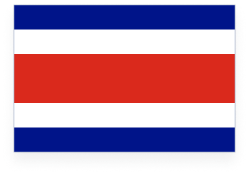
1. Costa Rica is a peaceful and peace-loving nation
Located in Central America, between Nicaragua and Panama, Costa Rica has a Pacific coast and a Caribbean coast. Costa Rica was so named by the explorer Christopher Columbus, who saw native Costa Ricans wearing gold jewelry and was convinced the land was a “rich coast.”
The Costa Rican government includes no standing army. Costa Rica is one of only five countries in the world to have no military force, the others being Iceland, Mauritius, Panama and Vanuatu. After the country’s civil war ended, the President abolished the military on 1 December 1948.
Costa Rica had already abolished the death penalty in 1877. In 1882, it enshrined this in its Constitution, which states, “Human lives are inalienable.”
2. Costa Rica is a stable democracy
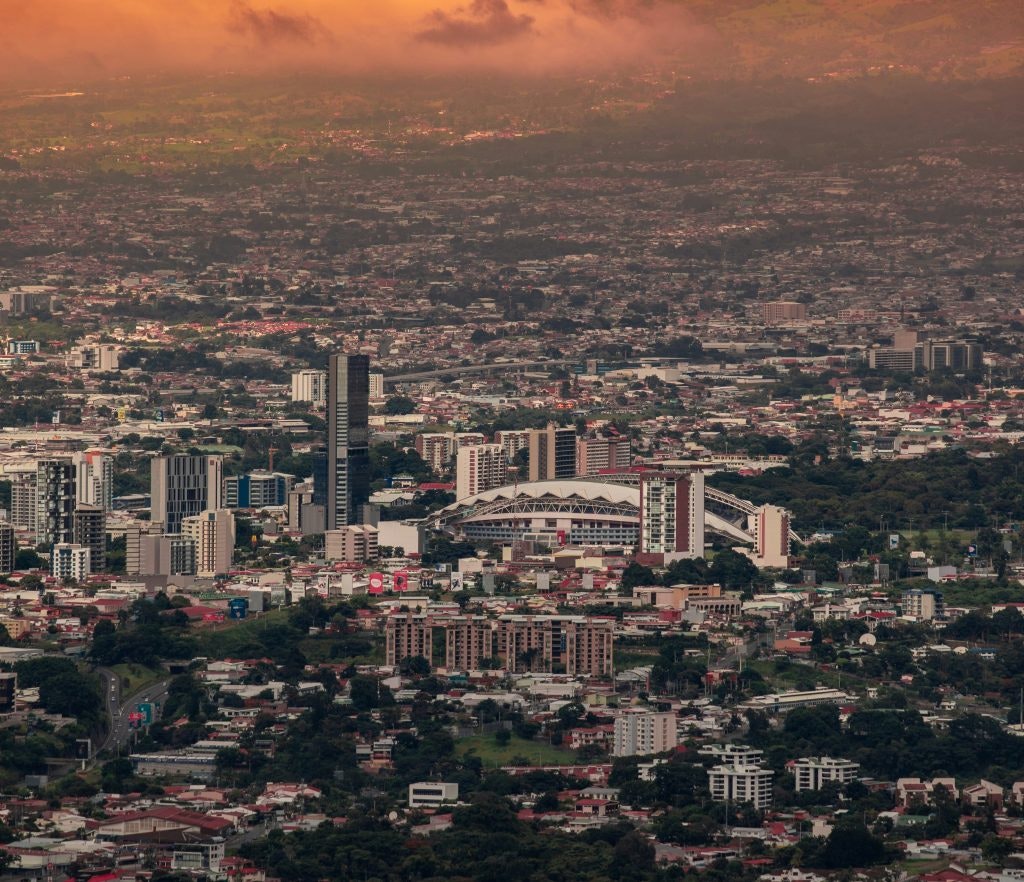
San Jose, Costa Rica
Costa Rica’s government and political stability have earned it the nickname “The Switzerland of Central America.” Costa Rica ranks third in Latin America and the Caribbean for press freedom. Costa Ricans are required to actively participate in the democratic process. However, the country does not enforce this requirement. (In case you were wondering, Brazil is a country that does enforce its voting requirement.) So, the average voter turnout for a presidential election in recent years has been in the high 60s.
Costa Rica is also one of the few countries in the world which has had a female president, having elected Laura Chinchilla to serve between 2010 and 2014.
Most Costa Ricans live in a small area called the Central Valley, which includes the capital city of San Jose. Of the country’s population of just over 5 million, more than 2 million live in the Central Valley, despite it accounting for just 4% of Costa Rica’s total land area. Almost all Costa Ricans are literate, a likely result of its universal public education dating back to the late 19th century.
3. Costa Rica is packed with diverse wildlife
And we do mean packed! Costa Rica is home to 5% of the world’s biodiversity, despite covering only 0.03% of the Earth’s surface.
With 12 ecological zones and over 100 national parks, reserves, refuges and protected lands, Costa Rica is dedicated to protecting and preserving its ecological diversity. Over 25% of Costa Rica’s land is dedicated to national parks and protected areas. These areas are strategically laid out. Costa Rica’s unique biological corridor system connects protected areas to promote wildlife movement across the country. Some standout reserves and refuges in Costa Rica include:
- Monteverde Cloud Forest Reserve – known for its rich biodiversity and countless species of plants, insects and mammals. The first eco-lodge in Costa Rica was established here in the 1970s.
- Ostional Wildlife Refuge – protects millions of turtles that nest there.
- Manuel Antonio National Park – one of the most visited national parks in Costa Rica.
Many species of animal call Costa Rica home – some their only home. These include:
- sea turtles, which have several vital nesting sites located on Costa Rica’s Pacific and Caribbean coasts.
- hummingbirds, of which more than 50 species live in Costa Rica. Overall, more than 900 species of bird have been documented in Costa Rica.
- the clay-colored thrush (Turdus grayi), known locally as the yigüirro, which is the national bird of Costa Rica.