

The best trips for teens match a student’s age, interests, travel experience, and readiness with a destination that offers active learning, structured independence, and meaningful cultural immersion. This guide ranks destinations specifically for supervised teen group programs and structured service, adventure, or cultural itineraries, and treats general family vacations as a separate comparison.
Rustic Pathways at a glance: Most programs ages 14–18; select middle-school programs ages 12–14 · From $1,995 · 4.37:1 median student-to-staff ratio · 7:1 maximum · Founded 1983 · 155,829 alumni overall · Safety reporting covers 55,702 travelers; 87.6% of incidents logged from 2014 through 2025 were GREEN (minor)
The comparison below ranks 14 distinct destinations. First-time fit and entry value decide the top two positions.
From ranks 3–8, depth, variety, and standout value carry the most weight. Ranks 9–14 balance specialized appeal, duration, age fit, and tuition value.
Availability appears as booking context only and carries no weight in the score.

What Types of Vacations Work for Teenagers?
Teenagers tend to engage most with trips built around active participation instead of passive sightseeing. Five formats cover most needs:
Adventure travel: Surfing, rafting, glacier hiking, jungle trekking, and wildlife exploration. Costa Rica, Iceland, Fiji, and the U.S. national parks are the strongest matches.
Cultural immersion: Local food, traditional arts, language practice, markets, and daily interaction with residents. Japan, South Korea, Thailand, and Morocco stand out.
Service and conservation: Community-led projects, habitat restoration, and fieldwork. Peru, the Dominican Republic, Fiji, the Galápagos, Morocco, and Greece pair a destination experience with hands-on contribution.
Multi-country exploration: Cross-border itineraries that ask students to adapt to new languages, transport systems, and cultural norms. Italy + Greece, Portugal + Spain, and the Nordic countries suit teens ready for a faster pace.
Domestic outdoor travel: U.S. national parks offer a lower-barrier way to test a teen’s readiness for group travel before a longer international program.
Many trips combine formats. The best choice is the one whose daily activities match the student’s interests and comfort level.
What happens each day matters more than the headline destination.
Quick Comparison: 14 Teen Vacation Destinations Ranked
| Destination | Best For | Ages / Duration | Program Tuition | Program and 2027 Availability |
|---|---|---|---|---|
| 1. Costa Rica | First international trip; adventure + service | 12–18 · 8 days | From $2,495 | Pura Vida Service · Enrolling now · Middle school dates coming soon |
| 2. Japan | Pop culture + traditional culture | 12–18 · 8 days | From $3,295 | Tokyo Fusion (Middle School) · Enrolling now · Countryside Farms & Samurai Villages · Dates coming soon |
| 3. Thailand | Deep cultural immersion; service + adventure | 14–18 · 12–23 days | From $3,995 | Thai Elephant Conservation, Thailand Adventurer, Come With Nothing · Enrolling now |
| 4. Peru | Andean culture, service, and physical challenge | 14–18 · 12 days | $4,195 | Sacred Valley Service · Enrolling now |
| 5. Dominican Republic | Short, lower-cost service trip | 14–18 · 8 days | $1,995 | Beachside Service · Enrolling now |
| 6. Fiji | Island life, service, and marine interests | 14–18 · 16 days | $3,995 | Sun, Sand, and Island Service · Enrolling now |
| 7. South Korea | City immersion, food, design, and contemporary culture | 14–18 · 6–8 days | From $1,999 | K-Everything · Spring break, April 4–9 · Seoul Searching · Available within Japan & Korea: Tokyo to Seoul |
| 8. Galápagos Islands (Ecuador) | Ecology, wildlife, and conservation fieldwork | 14–18 · 13 days | $5,495 | Wild Galápagos Eco-Service · Available for private groups |
| 9. Italy + Greece | History, Mediterranean culture, and turtle conservation | 14–18 · 16 days | $6,890 | Cultural Immersion and Turtles · 2027 dates coming soon |
| 10. Morocco | Amazigh culture, village service, and cultural contrast | 14–18 · 9 days | $3,395 | Souks & High Atlas Service · Enrolling now |
| 11. Portugal + Spain | Surf, food, and Iberian city culture | 14–18 · 15 days | $6,790 | Surf, Culture & Culinary Traditions · 2027 dates coming soon |
| 12. Nordic Countries | Outdoor exploration across Denmark, Sweden, and Norway | 14–18 · 10 days | $3,995 | Nordic Summer Adventure · Available for private groups |
| 13. Iceland | Geology, climate learning, and outdoor challenge | Varies by group · 7 days | $5,400 | Climate, Conservation & Adventure · Available for school groups, year-round |
| 14. U.S. National Parks | Domestic outdoor readiness test | 13–16 · 8 days | $3,095 | Grand Canyon Service · Available for private groups |
Tuition and dates verified August 2026. Private group and school group programs travel on custom dates rather than open-enrollment departures.
Tuition excludes international airfare and the enrollment fee. Confirm dates, tuition, eligibility, and inclusions before enrolling.
Where Should You Take a Teenager on Vacation?
Costa Rica is the strongest all-around choice for a first supervised trip because it combines short sessions, age-specific options, outdoor adventure, and service. Japan is the strongest choice for teens motivated by culture and cities, while Thailand and Peru are better fits for students ready for longer, more immersive travel.
The numbered guides below explain why each destination holds its position.
1. Costa Rica: Best Overall for a First International Trip

Costa Rica gives first-time travelers several high-interest experiences within a short itinerary: rainforest wildlife, rafting or surfing, conservation, and community service. Dedicated middle-school and high-school sessions also prevent the broad 12–18 age range from turning into a one-size-fits-all group.
Rustic Pathways has operated here since 2003, led by lifelong Costa Rican Ricardo Romero, who has more than 20 years of conservation and community-program experience.
Why it ranks #1: No other destination combines this age range, one-week structure, activity variety, and entry price as well for a first supervised international trip.
Explore Costa Rica teen travel programs.
2. Japan: Best for Pop Culture and Traditional Culture

Japan works especially well when a teen’s existing interests provide an entry point. Tokyo’s anime, gaming, fashion, and food culture create immediate relevance, while temples, traditional arts, rural communities, and historic towns deepen the trip beyond its pop-culture appeal.
Japan operations are managed by Director of Admissions Scott Ingram, who holds a master’s degree from Waseda University in Tokyo, lived in Japan for more than six years, and personally leads programs there.
Why it ranks #2: Japan is the strongest culture-and-city choice for a first trip and has age-specific options, but its higher entry tuition keeps it behind Costa Rica on first-time value.
Explore Japan teen travel programs.
3. Thailand: Best for Deep Cultural Immersion

Thailand offers the widest range of trip intensity in this ranking. Students can choose a conservation-focused itinerary, a broad adventure program, or the 23-day Come With Nothing expedition in northern communities.
Southeast Asia Regional Manager Keegan Kennedy has lived in Thailand for more than a decade and speaks Thai and Lao.
Why it ranks #3: Thailand leads the depth-and-variety band, but its longer programs and greater adaptation demands make it less universal than Costa Rica or Japan.
Explore Thailand teen travel programs.
4. Peru: Best for Service and Adventure in the Andes

Peru pairs community-led service and village life in the Sacred Valley with Inca history, Cusco, and Machu Picchu. Altitude and a longer itinerary make physical and emotional readiness more important than they are for the top three choices.
Rustic Pathways has operated in Peru since 2008 under Cusco-based director Alex Ball, who has lived in Peru for 39 years and founded the Sacred Valley Project.
Why it ranks #4: Peru offers more service and cultural depth than the top two, but altitude, homestay conditions, and physical demands narrow its fit compared with Thailand.
Explore Peru teen travel programs.
5. Dominican Republic: Best Short, Lower-Cost Service Trip

The Dominican Republic is the most accessible choice for families prioritizing a short duration and lower program tuition. Beachside Service combines public-health-oriented community work with snorkeling, surfing, and cultural exploration, giving first-time travelers a clear purpose without a multi-week commitment.
Programs are led by Manuel Del Villar, who was born and raised in the Dominican Republic and brings public-health program experience.
Why it ranks #5: Its $1,995 tuition and eight-day format are the standout value in the top eight, offsetting less immersion than the longer Thailand, Peru, or Fiji programs.
Explore Dominican Republic teen travel programs.
6. Fiji: Best for Island Service and Marine Interests
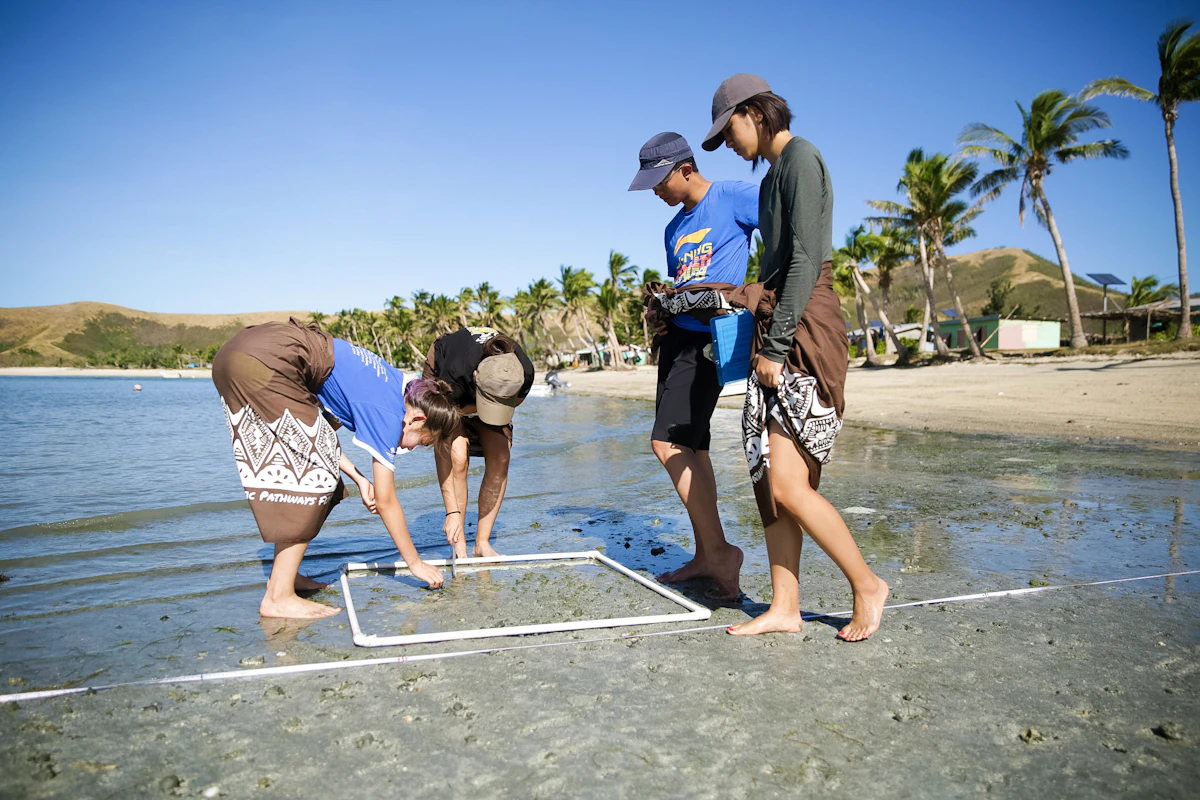
Fiji combines island living, community service, and time in coastal environments. The 16-day format allows for more immersion than a one-week beach trip, while the remote setting asks students to be comfortable with group living and a meaningful break from their normal routines.
Rustic Pathways has operated here since 1995 using permanent local staff, long-standing village partnerships, and its South Pacific Eco-Lodge Base at Momi Bay.
Why it ranks #6: Fiji delivers unusually strong immersion and value for 16 days, but remote village camping and rustic facilities make it a narrower fit than the Dominican Republic.
Explore Fiji teen travel programs.
7. South Korea: Best for Contemporary City Immersion

Seoul-focused programs center Korean food, markets, design, music, and city life, making South Korea a strong choice for teens drawn to contemporary urban culture. Rustic Pathways has maintained a Seoul regional office since 2023, and program leader Chang Mo Ahn has lived in the city since 2019 and speaks Korean.
Two formats exist: the six-day K-Everything spring-break session, and the eight-day Seoul Searching itinerary, whose content currently runs inside the 15-day Japan & Korea: Tokyo to Seoul program.
Why it ranks #7: The six-day, $1,999 K-Everything option earns a top-eight position on standout value and first-timer accessibility, while its shorter format offers less depth than Fiji.
Explore South Korea teen travel programs.
8. Galápagos Islands: Best for Ecology and Wildlife Fieldwork

The Galápagos turns conservation into a living laboratory. Wildlife monitoring, habitat work, and guided exploration make it the strongest academic match for students interested in marine biology, ecology, wildlife management, or environmental policy.
The itinerary pairs community-led conservation and homestays in Yunguilla with licensed local guides in the Galápagos.
Why it ranks #8: Its academic depth is exceptional, but the specialist science focus and $5,495 tuition make it less broadly appealing than the value-led choices immediately above it.
Explore Ecuador and Galápagos teen travel programs.
9. Italy and Greece: Best for History and Turtle Conservation

This two-country itinerary balances Northern Italian cities and Mediterranean food culture with sea turtle conservation in Greece. It fits students who want recognizable European landmarks but also want their trip structured around more than sightseeing.
In Kefalonia, students work alongside Wildlife Sense marine biologists; since 2018, Rustic Pathways groups have helped protect more than 340 loggerhead nests.
Why it ranks #9: It leads the specialist band by combining two-country cultural breadth with real conservation fieldwork, though its 16-day length and $6,890 tuition limit its universal appeal.
Explore Greece student travel programs.
10. Morocco: Best for North African Cultural Contrast
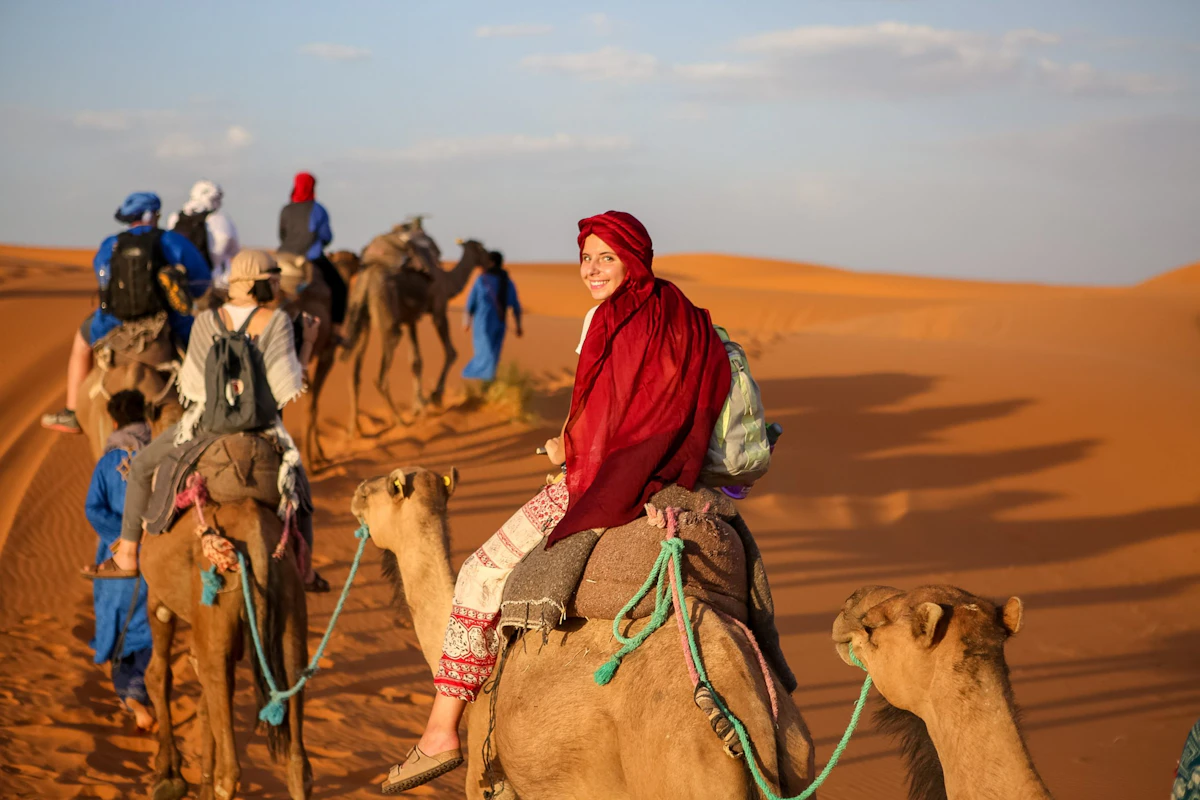
Morocco combines Marrakech’s medina and artisan traditions with village-based service in the High Atlas Mountains. The cultural and environmental contrast is the point: students move between urban and rural settings while learning from Amazigh hosts and local partners.
Morocco Country Director Chaima Ait Al Mekki was born and raised in Marrakech, has led programs since 2012, and speaks Darija, Arabic, French, and English.
Why it ranks #10: Morocco offers the list’s strongest North African contrast at a mid-range tuition, but village conditions, altitude, and cultural adaptation make it more specialized than Italy and Greece.
Explore Morocco teen travel programs.
11. Portugal and Spain: Best for Surf, Food, and Iberian Culture

Portugal and Spain pairs Atlantic surf and Lisbon-area exploration with Barcelona’s architecture, food, and neighborhood culture. Its pace and cross-border logistics suit a teen who wants both outdoor activity and a major European city experience.
The published itinerary names its local work: a Costa da Caparica beach cleanup, eco-snorkeling and microplastics study in Barcelona, and service at a local farm.
Why it ranks #11: It offers strong two-country variety, but the fast pace and $6,790 tuition make it a narrower value proposition than the destinations above it.
Explore the Portugal and Spain teen program.
12. Nordic Countries: Best for Multi-Country Outdoor Exploration

The Nordic itinerary crosses Denmark, Sweden, and Norway through biking, kayaking, hiking, and shared outdoor routines. It is a better fit for teens who prefer movement, cooler weather, and nature-based group bonding to a hotel-centered city tour.
The itinerary uses an overnight Sweden-to-Norway train and student-cooked camp meals instead of short regional flights and constant hotel changes.
Why it ranks #12: The low-flight, outdoor format is distinctive, but daily physical activity and three-country logistics make it less broadly suitable than the Mediterranean and Morocco options.
Explore the Nordic teen travel program.
13. Iceland: Best for Geology and Climate Learning

Iceland’s glaciers, geothermal features, waterfalls, and volcanic landscapes make it a strong outdoor classroom. The program connects climate study with visits to geothermal infrastructure, family-run farms, and local conservation projects.
This is a teacher-led school-group program rather than an individual open-enrollment departure.
Why it ranks #13: Its seven-day focus is more specialized and its program tuition is higher than the broader cultural-immersion choices above it.
Explore Iceland school group programs.
14. U.S. National Parks: Best Domestic Readiness Test

A national park trip can reveal how a teenager handles group routines, outdoor challenge, unfamiliar sleeping arrangements, and time away from home without adding international logistics. The matched Grand Canyon itinerary works with the Flagstaff Family Food Center and Food Bank before students explore the South Rim, Sedona, and Sunset Crater.
Why it ranks #14: “U.S. national parks” is a broad category and provides less cross-cultural immersion than the international choices above it, so it works best as a domestic readiness test rather than the page’s strongest destination trip.
Explore the Grand Canyon Service program.
Which Destinations Work Best by Age?
Age narrows the options, but readiness should make the final decision. Separate middle-school sessions offer more structure, while longer and multi-country programs require more stamina, flexibility, and self-management.
| Age Group | Strong Starting Points | Typical Duration | What to Prioritize |
|---|---|---|---|
| 12–14 | Costa Rica, Japan, selected U.S. programs | About 1 week | Age-specific groups, predictable routines, staff-led activities |
| 15–16 | Thailand, Peru, Dominican Republic, Fiji, South Korea, Morocco | 6–23 days | Cultural immersion, service, physical challenge, graduated independence |
| 17–18 | Galápagos, Italy + Greece, Portugal + Spain, Nordic Countries | 10–16 days | Cross-border logistics, deeper immersion, stronger self-management |
Ages 12 to 14: Build a Foundation
Younger teens generally benefit from shorter programs, age-specific cohorts, clear daily routines, and destinations connected to interests they already have. Peer interaction within small groups helps students form close social connections.
Browse programs designed for students ages 12 to 14.
Ages 15 to 16: Expand the Challenge
Mid-adolescence opens more options for longer trips, service, cultural adaptation, and physical challenges such as altitude in Peru or extended rural stays in Thailand. The right program increases independence gradually instead of assuming every 16-year-old wants the same level of freedom.
Ages 17 to 18: Practice Pre-Adult Independence
Older teens may be ready for multi-country logistics, longer durations, demanding conservation work, and more responsibility within the group. Prior travel experience matters: a first-time 17-year-old may still be better matched with Costa Rica or the Dominican Republic than a fast-paced European itinerary.
How Do You Plan a Memorable Trip for a 16-Year-Old?
Start with the teen’s own motivation, then compare the actual daily itinerary, physical demands, accommodations, group age range, and amount of structured versus independent time. A first-time traveler may do best with an eight-day Costa Rica or Dominican Republic program; a teen who has already traveled independently may prefer Peru, Thailand, or a multi-country European trip.
Involve the student in choosing the destination, reviewing the itinerary, and preparing for the parts likely to feel unfamiliar. Readiness is easier to judge through those concrete conversations than through age alone.
When comparing providers, families should evaluate supervision, safety systems, staff qualifications, and program fit. See Rustic Pathways’ published safety data and teen travel program guide for those separate comparisons.
FAQ: Choosing a Teen Vacation Destination
Where is the best place to vacation with teenagers?
Costa Rica is the best all-around first choice because it combines short, age-specific programs with wildlife, adventure, and service. Japan is strongest for culture-driven travelers, Thailand for deeper immersion, and Peru for students ready to combine service with physical challenge.
What is the best age for teenagers to travel independently?
Many students are ready for supervised group travel by ages 14 or 15, while select age-specific programs begin at 12. The better test is whether the teen can follow routines, manage belongings, ask adults for help, cope with changes, and spend time away from home.
Can teenagers travel internationally without parents?
Yes. Teens commonly travel without a parent as part of supervised group programs.
Required consent forms, entry documents, and airline procedures vary by destination, nationality, and itinerary, so families should confirm current requirements before booking flights.
How do I know if my child is ready for international travel?
Readiness indicators include handling responsibilities without constant reminders, communicating needs to adults, showing curiosity about other cultures, adapting when plans change, and expressing a genuine desire to go. A shorter domestic or one-week international program can serve as a useful first test.
