

Quick Comparison: 7 Alternatives at a Glance
| Alternative | Best For | Primary Outcome | Cost | Duration |
|---|---|---|---|---|
| Teen travel programs | Independence + global perspective | Cultural competence | $1,995–$13,680 | 1–4 weeks |
| Summer employment | Money + work experience | Financial literacy | Earns income | 8–12 weeks |
| Volunteering | College apps + community | Service hours | Free–$500 | Flexible |
| Academic programs | College preview | College credit | $2,000–$10,000 | 2–6 weeks |
| Business/nonprofit | Entrepreneurship | Initiative | Variable | Ongoing |
| Skill camps | Deep expertise | Specialized skills | $500–$5,000 | 1–4 weeks |
| Wilderness programs | Challenge + resilience | Grit | $3,000–$10,000 | 2–8 weeks |
How Rustic Pathways Evaluated These Alternatives
This evaluation draws on four decades of observing what works for teens aged 14–18.
Rustic Pathways assessed each alternative on five criteria:
- Independence development: Does the experience require teens to solve problems without parents?
- Skill transfer: Do outcomes extend beyond summer into academics, college applications, or career readiness?
- Age appropriateness: Is the program designed for teens, not adapted from younger-kid programming?
- Measurable growth: Do families see documented outcomes, not just participation?
- Accessibility: Does the option work across different family budgets and schedules?
Based on these five criteria, teen travel programs scored highest on independence and skill transfer. Employment scored highest on accessibility. Each alternative excels in different dimensions. The best choice depends on what your family values most.
The following sections break down each alternative by what it offers, who it serves best, and how it compares to traditional camp.
What Are Teen Travel Programs?

Teen travel programs are international summer experiences where participants navigate airports, communicate across language barriers, and solve problems without parents nearby. Unlike local programs at parks or community centers, travel programs immerse teens in new cultures for one to four weeks.
Travel programs use trained adult leaders rather than camp counselors. Programs typically run one to four weeks, with tuition ranging from $1,995 to $13,680 depending on duration and destination. Teens return home with new friends from around the world and skills that extend well beyond the summer months.
These programs work best for teens who want to explore new things, build independence, and step outside their comfort zone. Parents often find that their daughter or son returns from travel programs with a stronger sense of confidence than any local activity provides.
For teens who need income alongside growth, summer employment offers a different path.
Why Choose Summer Employment?
Summer employment is paid work that builds financial literacy, professional skills, and resume credentials simultaneously. For many family budgets, a teen who earns income during free time provides real value.
Most high schoolers work during summer. According to Gallup, 32% of teens hold summer jobs. This makes employment the most common structured activity for this age group.
Part-time jobs teach universal workplace skills. A 16-year-old lifeguard responsible for 40 swimmers learns accountability faster than any classroom teaches. Retail and food service build customer communication and time management under pressure.
Internships prioritize career exploration over income. The tradeoff is clear: a paid job builds savings while an unpaid internship builds a résumé line. Both have value, but families should plan intentionally rather than defaulting to whichever opportunity appears first.
The fun part of summer jobs? Teens gain real-world experience while the whole family benefits from their growing independence. Parents looking to keep kids busy while building real skills often find employment the most practical option.
Beyond earning money, many teens seek purpose through giving back to their community.
How Does Volunteering Build College Applications?

Volunteering is unpaid work that builds empathy, civic engagement, and documented service hours for college applications. It transforms free time into meaningful contribution.
Local opportunities through community organizations include food banks, animal shelters, hospitals, environmental cleanups at local parks, and tutoring programs at the local library. Museums, historical sites, and art galleries also welcome teen volunteers looking to explore different interests.
Local volunteering offers flexibility and fits any family budget, but organizing falls entirely on parents. Organized international service trips with verified hours and mentorship provide structure that local options lack.
Ideas for getting started: visit local nonprofit websites, check community boards at the library, or ask school counselors about volunteer partnerships. Many teens find that service work helps them discover what they care about—valuable insight when planning for college.
For teens focused on academic credentials, summer academic programs offer college-level rigor.
What Do Summer Academic Programs Offer?
Summer academic programs are educational experiences where high schoolers explore subjects beyond their regular school year curriculum, earn college credit, or preview campus life. Most take place on college campuses during summer months.
Pre-college programs cost $3,000 to $10,000. They prioritize the dorm experience, faculty access, and meeting motivated peers from around the world. Teens spend mornings in class and afternoons exploring with new friends.
Community college courses cost less and fit a tighter family budget. They offer transferable credit but lack the immersive residential component. Local organizations and recreation departments sometimes offer similar academic enrichment.
Academic programs work best for teens who find learning fun and want a preview of college independence. The comparison of pre-college vs. experiential programs helps parents weigh these tradeoffs.
Some teens prefer building something of their own over following a structured program.
How Do Teens Start a Small Business or Nonprofit?
Starting a small business or nonprofit builds initiative, problem-solving, and real-world skills through self-directed work. This alternative transforms summer free time into a portfolio-building opportunity.
Business ideas include lawn care in the neighborhood, tutoring younger kids, babysitting, and pet sitting. These efforts gain value through professional branding or scaled operations. A teen who spends summer months building a real business develops entrepreneurial skills that structured programs rarely teach.
Nonprofit options let teens address problems they care about in their community. Examples include book drives, tutoring programs, and donation coordination. Local organizations often welcome teen-led initiatives.
The difference between a summer project and a meaningful experience is documentation. Admissions officers evaluate outcomes, not intentions. Teens who set goals, track progress, and document results build portfolios that demonstrate leadership. Parents help most by providing opportunities to plan and execute independently.
For teens with clear interests in a specific discipline, specialized skill camps offer intensive training.
What Makes Specialized Skill Camps Different?

Specialized skill camps are intensive programs focused on expertise in one area: coding, music, theater, sports, swimming, arts, or science experiments.
Traditional summer camps prioritize breadth across many activities: crafts in the morning, swimming in the afternoon, sports before meals. Skill camps prioritize depth in a single discipline.
A serious basketball player benefits more from one week with college coaches than a camp where sports is one of fifteen activities. A teen interested in game design learns more at a coding bootcamp than at a camp with occasional tech hours. Kids passionate about science gain more from dedicated programs than general exploration.
Skill camps are fun for teens who already know what they love. The comparison of skill camps vs. travel experiences shows how these programs differ. Recreation departments and local organizations also offer skill-focused programs at lower price points.
For teens who want physical challenge over skill development, wilderness programs offer a different kind of growth.
Why Do Wilderness Programs Build Resilience?
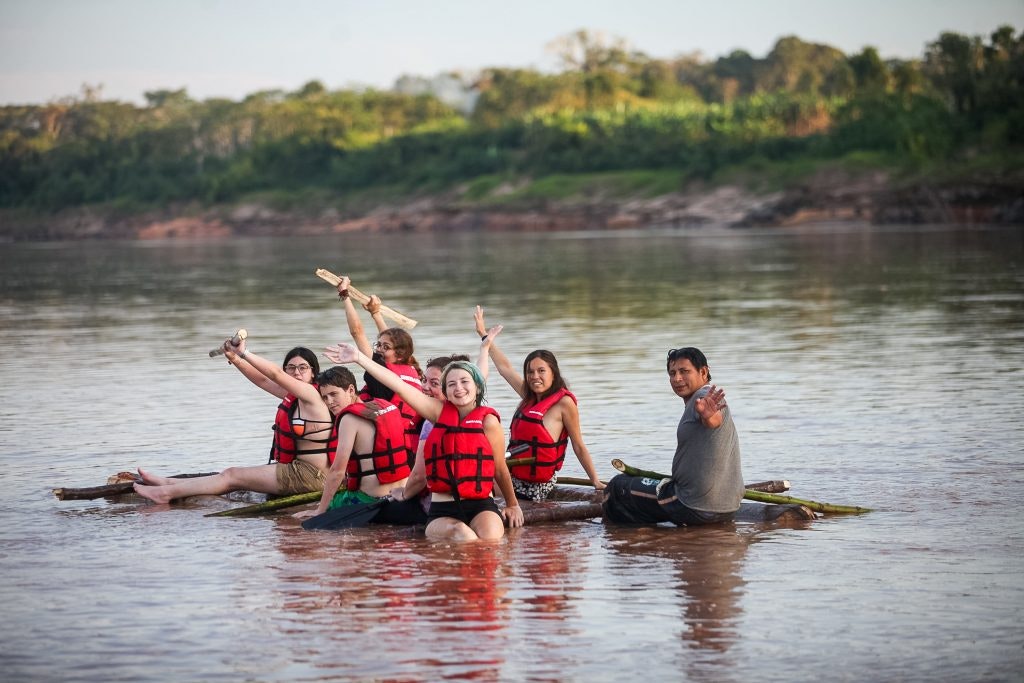
Wilderness programs are outdoor experiences that build resilience, self-reliance, and connection to nature. Activities include hiking, camping, and multi-day expeditions in the great outdoors.
Organizations like Outward Bound pioneered this model. Participants carry their own gear, navigate by map, and work as a team to reach objectives. These programs take teens far from the backyard and neighborhood into genuine wilderness.
Real challenges with real stakes appeal to teens. Summiting a mountain requires physical effort, mental discipline, and teamwork. Unlike spending summer at home with video games, the accomplishment is tangible and earned. Teens return with a sense of what they can achieve and often stay connected with new friends year-round.
Wilderness programs work best for teens who find fun in physical challenge and want to explore their limits.
With seven options to consider, the following tables help match teens to the right alternative.
How to Choose the Right Summer Alternative
Find Your Fit: Answer 5 questions to discover which summer experience matches your teen. Start the Quiz →
By Age Group
| Ages 12–14 | Ages 15–16 | Ages 17–18 |
|---|---|---|
| Teen travel (structured) | Teen travel (adventure) | Gap year programs |
| Skill camps (local) | Summer employment | Internships |
| Day volunteering | Wilderness programs | Pre-college courses |
| Academic enrichment | Service trips abroad | Business/nonprofit launch |
By Outcome
| Alternative | Best For | Primary Outcome |
|---|---|---|
| Teen travel | Independence + global perspective | Cultural competence |
| Employment | Money + work experience | Financial literacy |
| Volunteering | College apps + community | Service hours |
| Academic programs | College preview | College credit |
| Business/nonprofit | Entrepreneurship | Initiative |
| Skill camps | Deep expertise | Specialized skills |
| Wilderness | Challenge + resilience | Grit |
By Investment
| Alternative | Cost | Duration |
|---|---|---|
| Teen travel | $1,995–$13,680 | 1–4 weeks |
| Employment | Earns income | 8–12 weeks |
| Volunteering | Free–$500 | Flexible |
| Academic programs | $2,000–$10,000 | 2–6 weeks |
| Business/nonprofit | Variable | Ongoing |
| Skill camps | $500–$5,000 | 1–4 weeks |
| Wilderness | $3,000–$10,000 | 2–8 weeks |
By Independence Level
| Low Independence | Medium Independence | High Independence |
|---|---|---|
| Skill camps (local) | Academic programs | Teen travel abroad |
| Employment (neighborhood) | Wilderness | Service trips abroad |
| Volunteering (community) | Business/nonprofit | Gap programs |
By Structure Type
| Self-Directed | Guided | Fully Structured |
|---|---|---|
| Business/nonprofit | Employment | Teen travel |
| Local volunteering | Academic programs | Wilderness expeditions |
| Backyard projects | Skill camps | Service trips |
By Social Outcome
| Make New Friends | Work with Family | Independent Growth |
|---|---|---|
| Teen travel | Business/nonprofit | Employment |
| Academic programs | Local volunteering | Wilderness |
| Skill camps | Backyard projects | Internships |
By College Application Impact
| Alternative | Application Strength | What Admissions Officers See |
|---|---|---|
| Teen travel | High | Global perspective, independence, adaptability |
| Service trips | High | Documented hours, cross-cultural engagement |
| Business/nonprofit | Very High | Initiative, leadership, measurable outcomes |
| Pre-college programs | Medium | Academic readiness, college familiarity |
| Internships | High | Professional experience, career focus |
| Employment | Medium | Work ethic, responsibility, time management |
| Wilderness | Medium-High | Resilience, teamwork, physical challenge |
By First-Time Traveler Fit
| Best for First-Timers | Some Experience Helpful | Experienced Travelers |
|---|---|---|
| Structured teen travel (1 week) | Service trips abroad | Gap year programs |
| Local skill camps | Academic programs (residential) | Wilderness expeditions |
| Day volunteering | Domestic travel programs | Multi-country itineraries |
By Parent Involvement Required
| High Parent Involvement | Moderate Involvement | Low Involvement |
|---|---|---|
| Business/nonprofit (guidance needed) | Local employment (transportation) | Teen travel (fully managed) |
| Local volunteering (coordination) | Skill camps (drop-off/pick-up) | Wilderness programs |
| Backyard projects | Academic programs (selection help) | Service trips abroad |
Why Rustic Pathways for Teen Travel

If teen travel is the right fit for your family, Rustic Pathways offers programs across 38 countries with outcomes other providers don’t measure.
⭐ 4.8 Google · 4.9 Trustpilot · 92% parent satisfaction · 155,829 students since 1983
What sets Rustic Pathways apart:
- Supervision: Median students per staff member: 4.37:1. Maximum students per staff member: 7:1
- Measurable outcomes: Rustic Pathways tracks 10 Student Learning Outcomes. Nine of 10 show growth in participants, and 97.6% of students improve in at least one area.
- S·I·T Framework: Program Leaders follow Safety, Impact, and Transformation protocols rather than generic camp counselor training
- Research-backed approach: Rustic Pathways partners with Boston College’s Purpose Lab to study youth development. A 2024 peer-reviewed study (Lincoln et al., Adolescents) on Rustic Pathways’ Climate Leaders Fellowship found measurable gains in civic purpose, self-efficacy, and global awareness that persisted six months post-program.
What alumni report:
- 91% say the program enhanced their college applications
- 89% maintain friendships from their program years later
- 78% volunteer regularly as adults
- 89% study abroad in college (vs. 10% of typical U.S. undergraduates)
Service impact: Rustic Pathways students contributed 44,200 service hours in 2025 alone, with 1.3 million hours logged since 2013.
Teen Travel Programs: Honest Pros and Cons
| Pros | Cons |
|---|---|
| Safety in numbers + adult supervision + emergency protocols | High cost ($3,000–$10,000+) |
| Parents’ peace of mind vs. solo teen travel | Quality varies dramatically by company |
| Access to experiences impossible solo (adventure activities, remote locations) | Limited freedom / rigid schedules |
| Independence in a safe container (“training wheels”) | Roommate and personality clashes |
| Pre-vetted accommodations, transport, vendors | Homesickness |
| Meet peers outside their usual bubble | Compromises on itinerary |
| All logistics handled (no planning burden) | Hidden costs at some providers |
| Bonding and lasting friendships through shared challenges | Large group sizes reduce personal attention (at some providers) |
| Confidence from completing something hard | Strict cancellation policies |
| Cultural immersion with context and guidance | Limited parent communication during program |
Some cons are features, not bugs. Limited freedom teaches responsibility. Personality clashes build conflict resolution skills. Homesickness is part of growth.
Browse programs by destination and interest | Talk to a program advisor about your teen’s goals
