Henrike Nietzold is an international travel and cultural education specialist with expertise in cross-cultural adaptation and responsible travel. With a background spanning German and Korean environments, she provides authentic insights for young travelers. Holding degrees in Textile Studies and Business Administration (Carl von Ossietzky University) and an immersive semester at Inha University in South Korea, Henrike documents Korean culture as an Honorary Reporter for Korea’s Ministry of Culture, Sports, and Tourism on social media. A recognized expert in youth travel logistics, visas, and academic mobility, she offers practical guidance on intercultural adaptation. Fluent in German, English, Henrike bridges cultural gaps with accurate, localized travel insights.
We gathered 9 fun facts about Easter, from the connection between the Easter Bunny and Jesus Christ to the tradition of dyeing eggs and easter candy nobody can resist.
Easter was always a meaningful time for family and friends to come together while growing up in Germany. As a Christian holiday with three separate public days off — Good Friday, Easter Sunday and Easter Monday — the celebrations stretched over several days.
Key Takeaways
Easter’s name may come from the Anglo-Saxon Goddess Eostre, associated with spring and fertility.
The Easter Bunny tradition originated in Germany, where a hare was said to lay colorful eggs for well-behaved children.
Eggs have long symbolized new life and were adopted by early Christians to represent Jesus’s resurrection.
Easters date varies each year, determined by the first Sunday after the first full moon following the spring equinox.
Germans light Easter fires as a way to celebrate the end of winter and welcome the warmth and light of spring.
Mornings start with a big Easter breakfast featuring colorful eggs and freshly baked braided Easter bread. As a kid, the highlight was always the Easter egg hunt – not so much for the chocolate bunnies, but for the thrill of finding my sibling’s Easter baskets before they could. In the evenings, we gather around cozy Easter fires, sharing stories, dancing and catching up with friends.
These are my experiences, but living and traveling abroad opened my eyes to the many different ways Easter is celebrated around the world. I asked my coworkers to share their favorite Easter traditions:
Emma from the UK associates Easter with Cadbury Creme Eggs (see fun facts about Easter #2), best when crushed and eaten in pieces, along with Easter egg hunts where the Easter Bunny leaves green footprints.
Genny from Italy remembers Easter as a time for chocolate eggs filled with toys.
Quintin from the U.S. enjoyed coloring Easter eggs and participating in plastic egg hunts filled with candy or even money (since it’s too hot for chocolate eggs in Arizona).
Curious about more Easter facts? Read on to discover 9 interesting facts about Easter.
1. The Easter Bunny predates Christianity and comes from Germany
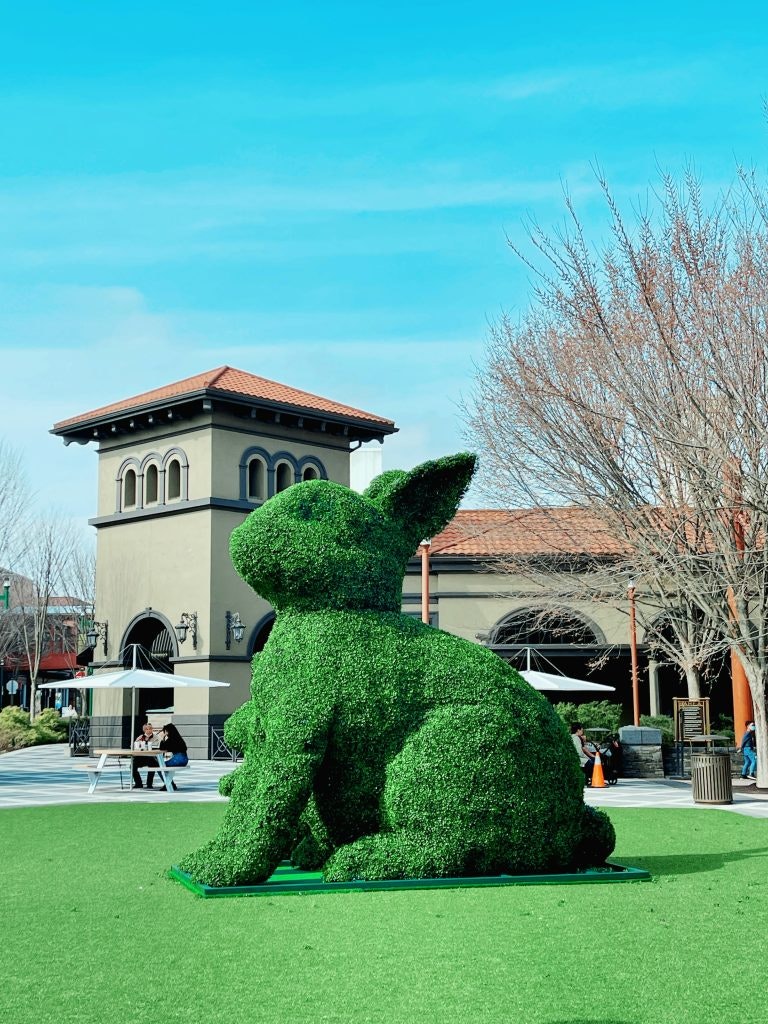
The Easter Bunny’s story dates back to pre-Christian Germany, where rabbits and eggs were symbols of fertility and new life, reflecting the themes of spring and resurrection.
The Easter Bunny represents fertility and renewal, symbolizing the rebirth associated with both spring and the Easter celebration.
When Christianity spread across Europe, these pagan traditions were adapted into the Easter celebration. The bunny, embodying fertility and renewal, enhances the Christian observance of Jesus’s resurrection. This fusion of traditions led to the legend of the Easter Bunny hiding brightly colored eggs for well-behaved children in woven treat containers.
Today, just like Santa Claus at Christmas, the Easter Bunny is central to Easter in countries like the United States, Germany and the UK. However, various cultures honor different animals during this festive time:
In Switzerland, Easter eggs are delivered by an Easter cuckoo.
When I traveled to Australia, I got to know that the Easter Bilby replaces the Easter Bunny to help raise awareness about endangered species.
Even in Germany, where the Easter Bunny is common, certain parts of Germany have traditions involving the Easter Fox or Rooster.
2. Cadbury produces about 1.2 million Creme Eggs daily
Cadbury is a British company that produces about 1.2 million Creme Eggs daily in the weeks leading up to Easter. These iconic Easter treats have a chocolate shell filled with sweet cream that resembles a soft-boiled egg, making them a favorite in the UK.
Creme Eggs are not only popular in the UK, but they are also a symbol of Easter in the U.S. due to commercials from the 1980s and ’90s.
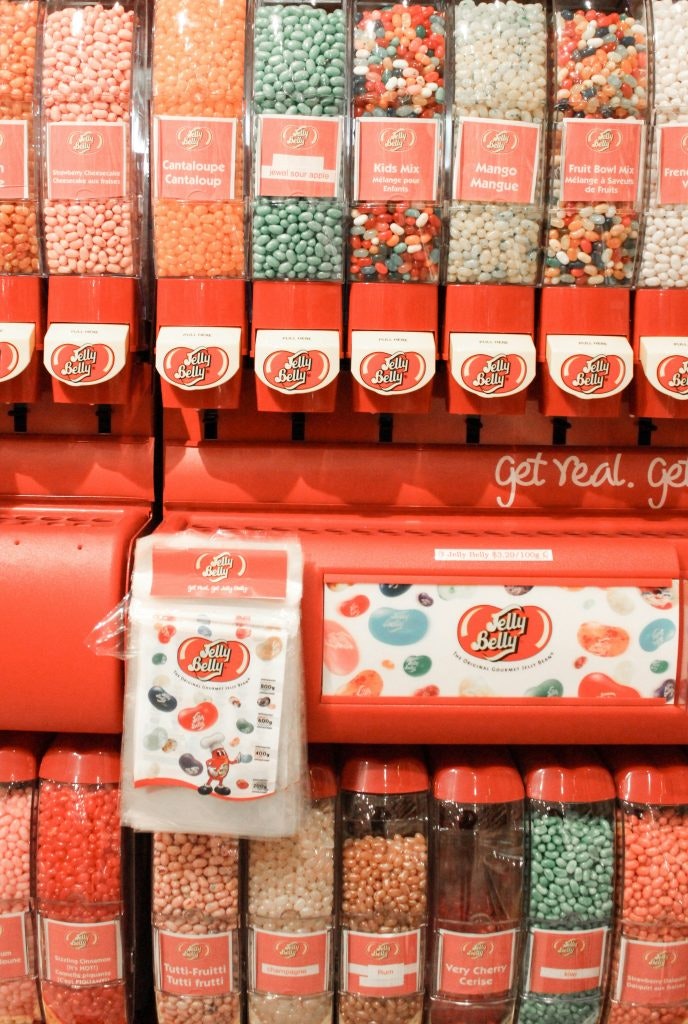
Jelly beans are an Easter favorite, adding color and fruity fun to egg hunts and baskets!
3. Easter candy doesn’t only come in chocolate eggs but also as jellybeans
While for some Easter candy is all about chocolate bunnies and eggs, Jellybeans are the most popular non-chocolate Easter treat. In the United States alone, over 16 billion are produced each year for Easter—enough to fill a plastic egg as tall as a nine-story building.
Though enjoyed year-round, jelly beans were first linked to Easter as a Easter snack in the early 20th century, due to their hard-boiled egg-like shape and affordable price. Coincidentally or not, National Jelly Bean Day falls just about a week and a half after Easter.
Extra Fact: Very cherry has been the top jellybean flavor since 2003.
4. Public dancing is prohibited on Good Friday in Germany
On Good Friday (Karfreitag in German) public dancing is prohibited in most states across Germany, as it is recognized as a “quiet day” with no public events permitted. Even Berlin turns into a dance-free zone. In some regions, violating this ban can lead to fines of up to 10,000 euros (approximately $11,106).
Good Friday offers a calm experience in Germany.
This event restriction on Good Friday is a sign of respect for a day that commemorates the suffering and death of Jesus Christ on the cross. While Good Friday marks the sixth day of Holy Week and the start of Easter weekend, I often found it challenging to choose a quiet night in over celebrating the start of the holidays with a night out.
5. Dutch Explorer encountered Easter Island on Easter Sunday
Easter Island was named by Dutch explorer Jacob Roggeveen, who first encountered the island on Easter Sunday April 5, 1722. Roggeveen named the island Paasch-Eyland which translates into “Easter Island” in Dutch. However, the indigenous people of the Chilean island, the Rapa Nui, refer to it as Rapa Nui.
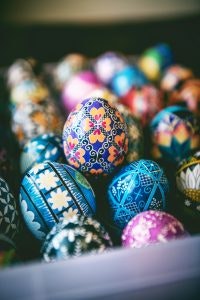
Beautiful Ukrainian traditions presented in pure art for Easter!
6. The practice of decorating eggs is a Ukrainian tradition
The practice of decorating eggs on Easter is a Ukrainian tradition, that has been practiced for generations to honor the gods of health and fertility. This traditional art form, known as Pysanka, involves designs created with wax and dyes. While it originated in Ukraine, the practice gained popularity in the U.S. and other countries due to Ukrainian immigrants who shared their cultural heritage.
7. 78% of consumers eat the ears of their chocolate bunny first
78% of consumers in America start with the ears of their chocolate bunny, while 17% begin with the feet and 5% with the tail, according to a 2022 survey by the National Confectioners Association.
8. The White House has Easter Egg Roll tradition
The White House Easter Egg Roll is a popular annual event that takes place on the White House South Lawn. Families can enjoy a variety of activities, including story time, games, live entertainment and the classic Easter Egg Roll. This tradition involves children rolling decorated eggs across the lawn with wooden spoons.
Here’s a look at the key events related to the White House Easter Egg Roll:
Year
Event Description
1878
The first annual White House Easter Egg Roll held on April 22 after President Rutherford B. Hayes opened the grounds.
1885
Children sought a personal audience with President Grover Cleveland, leading to customary egg roll receptions.
1889
President Benjamin Harrison introduced music to the event with the United States Marine Band.
1918
The Easter Egg Roll was canceled due to wartime restrictions on food consumption.
1929
The first radio broadcast of the Easter Egg Roll occurred on April 1 by station WRC in Washington, D.C.
1942–1948
The event was canceled for security reasons during World War II and food conservation efforts during post-war years.
1969
The tradition of an official White House Easter Bunny began with a staff member dressed in a bunny costume.
1981
President Ronald Reagan and First Lady Nancy Reagan hosted a hunt for wooden eggs, which became keepsakes.
1998
The Easter Egg Roll festivities were broadcast live on the internet for the first time.
2009
Online ticket sales have officially launched.
2020–2021
The Easter Egg Roll was canceled due to the Covid-19 pandemic.
9. Easter does not have a set date
Easter does not have a set date. It is celebrated on the first Sunday after the first full moon following the vernal equinox. As a result, Easter can be celebrated anywhere between March 22 and April 25. While the timing is consistent each year, countries in the Southern Hemisphere celebrate Easter in the fall. So, when visiting Australia in April, you can enjoy Easter festivities while the leaves turn brown.
Henrike Nietzold is an international travel and cultural education specialist with expertise in cross-cultural adaptation and responsible travel. With a background spanning German and Korean environments, she provides authentic insights for young travelers. Holding degrees in Textile Studies and Business Administration (Carl von Ossietzky University) and an immersive semester at Inha University in South Korea, Henrike documents Korean culture as an Honorary Reporter for Korea’s Ministry of Culture, Sports, and Tourism on social media. A recognized expert in youth travel logistics, visas, and academic mobility, she offers practical guidance on intercultural adaptation. Fluent in German, English, Henrike bridges cultural gaps with accurate, localized travel insights.