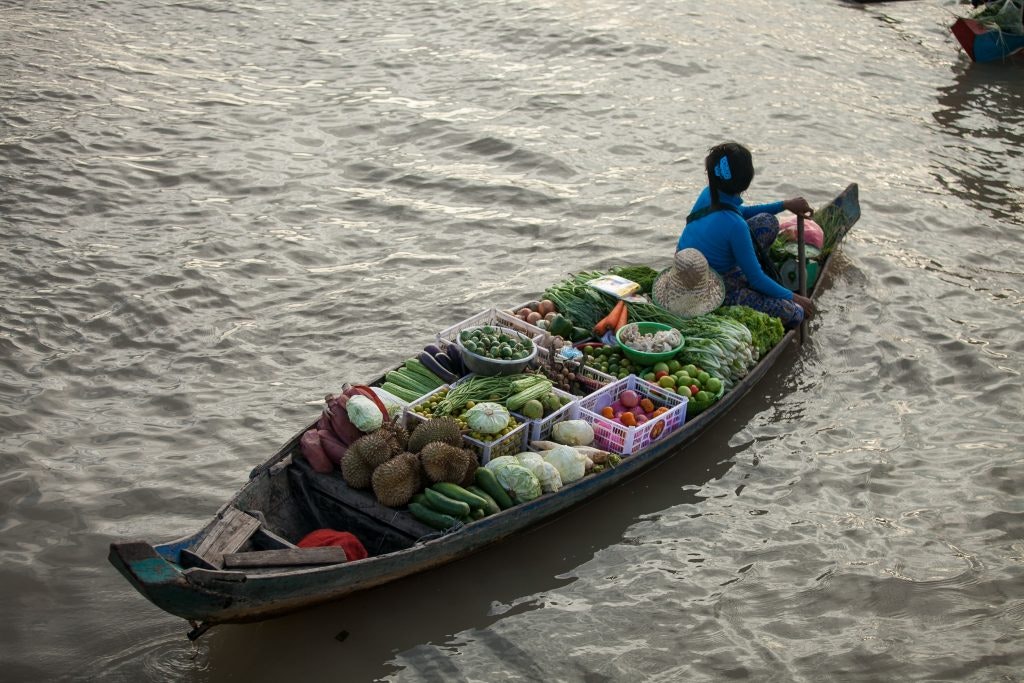
Cambodia was incredible. I loved the family-like bond that formed while traveling with others. Floating down the river and seeing villagers wave and greet us was a special experience.
It was even more impressive to see the floating houses of Cambodian locals, a unique way of life that I had never witnessed before. This was an incredible service trip I would do 10,000 times.
Teaching English to local children was both challenging and rewarding. They learned quickly, and it was fulfilling to see their progress.
Here are some key facts about Cambodia:
| Key Facts About Cambodia | Details |
|---|---|
| Population | 17,818,838 |
| Official Language | Khmer |
| Capital | Phnom Penh |
| Currency | Riel |
| Main Religion | Theravada Buddhism (~97%) |
| National Dish | Amok, a curry dish with fish and coconut milk |
I’d like to share some fun facts about Cambodia that I learned during my trip to Cambodia with Rustic Pathways.
14 Fun Facts About Cambodia
- Jayavarman II united the Khmer princes in 802 AD, founding the Khmer Empire.
- The Khmer Rouge regime ruled Cambodia from 1975 to 1979, leading to the deaths of 1.5 to 2 million people.
- Cambodia’s king is elected by a Royal Council of the Throne from among male descendants.
- Cambodia experiences a tropical climate with distinct wet and dry seasons.
- Tonle Sap Lake in Cambodia changes its flow direction twice a year.
- Cambodia has a young, predominantly Buddhist population with a literacy rate of 80%.
- Cambodians do not traditionally celebrate birthdays; many only recognize the lunar new year.
- Amok, a steam-cooked curry in banana leaves, is Cambodia’s national dish.
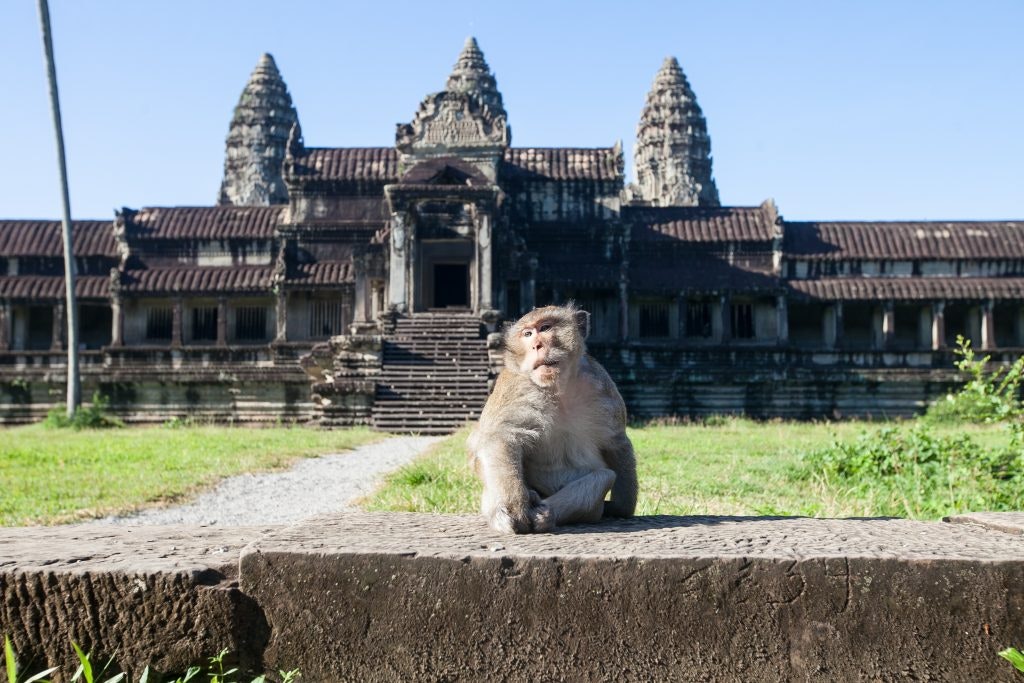
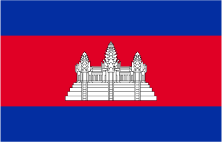
- There’s a building on the Cambodian flag! It’s Angkor Wat
- Half of Cambodia’s international tourists visit the historic Angkor Wat temple complex.
- Cambodia’s economy has grown at an average rate of 7% annually over the past decade.
- Ox cart racing is a popular traditional sport in Cambodia, especially during the Khmer New Year.
- Cambodia leads in voice message traffic on Facebook Messenger due to Khmer script’s complexity.
- The bamboo train (norry) in Battambang is a unique form of transportation made from leftover war scrap.
1. Jayavarman II united the Khmer princes in 802 AD to form the nation of Cambodia
In 802 AD, Jayavarman II united the Khmer princes and became the founder of the Khmer Empire, the predecessor to Cambodia.
2. The Khmer Rouge reigned Cambodia from 1975 to 1979. It was not good.
Cambodia’s history gets dark. The Khmer Republic was a US-backed military dictatorship aligned with US-backed South Vietnam that ruled in Cambodia from 1970 to 1975, following a coup that overthrew Norodom Sihanouk and abolished the monarchy.
The Khmer Republic fell in 1975 when the Khmer Rouge captured Phnom Penh. The Khmer Rouge briefly restored the Kingdom of Cambodia before renaming it Democratic Kampuchea in 1976.
Between 1975 and 1979, Cambodia was ruled by the Khmer Rouge regime and its leader Pol Pot. During this civil war period, between 1.5 and 2 million people were murdered – many of whom died in the Killing Fields. This mass decimation of the Cambodian population left a lasting mark on the country.
The ruling Cambodian People’s Party (CPP) has ruled Cambodia since 1979. Founded in 1951 as the Kampuchean People’s Revolutionary Party (KPRP), it allied with Vietnam and the Soviet Union during the Cold War against Pol Pot’s pro-Chinese Communist Party. After toppling the Khmer Rouge, it became the ruling party of the People’s Republic of Kampuchea, later renamed the State of Cambodia.
3. Cambodia elects its king. Sort of.
The Cambodian government is a constitutional monarchy, with King Norodom Sihamoni as the current head of state. The Royal Council of the Throne is a nine-member council in Cambodia responsible for selecting the Cambodian monarch. The Council elects the king for life from among male descendants of the King. Voting is conducted through a secret ballot among the nine members.
The Cambodian parliament consists of two houses: the National Assembly and the Senate. Cambodia has a multi-party political system, though the ruling Cambodian People’s Party (CPP) has held power for years. The current Prime Minister of Cambodia is Hun Manet. The previous prime minister Hun Sen served as Prime Minister of Cambodia from 1985 to 2023. Hun Sen remains in the Cambodian government as Senate President.
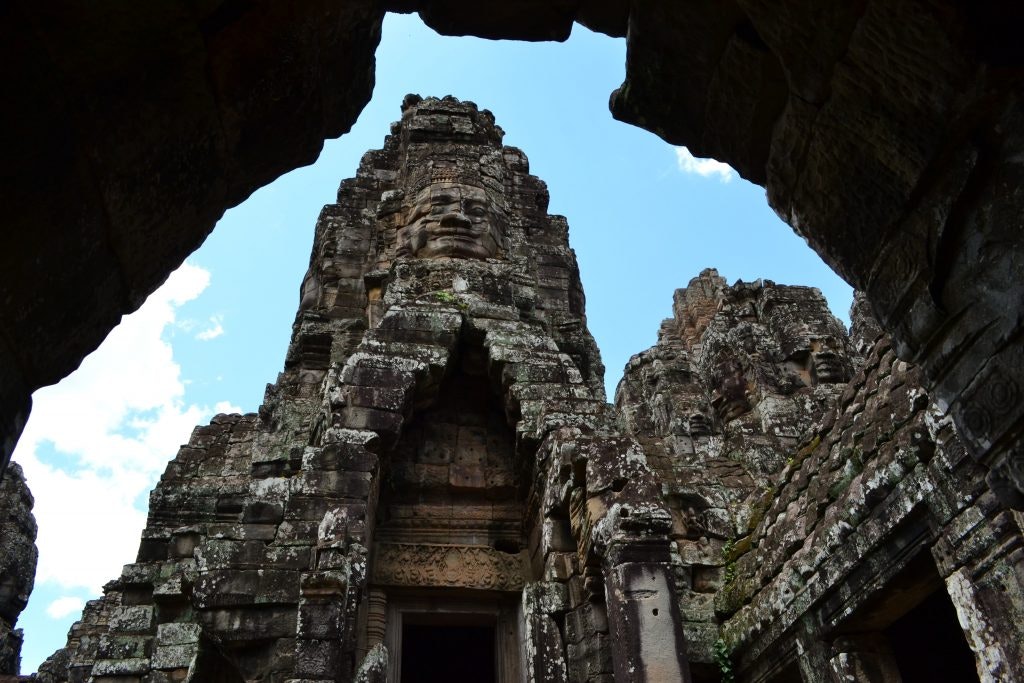
The Bayon temple was built in the late 12th century as the state temple of King Jayavarman VII
4. Heat is the climate of Cambodia
Cambodia’s climate is hot and tropical, with a wet season from May to October and a dry season from November to April.

The tropical weather comes with year around fresh produce. Here is an array of fruits, veggies, grains, and nuts at the market in Battambang.
5. Cambodia has a river that changes directions
Cambodia is home to Southeast Asia’s largest freshwater lake, Tonle Sap Lake. The lake’s size changes from season to season, ranging from an area of 965 mi² to 6,178 mi² (2,500km² to 16,000km²). The flow of the Tonle Sap River changes direction twice a year.
The Mekong River flows through Cambodia and is a vital source of water and transportation. In fact, the Cambodian traditional house is typically made of wood and raised on stilts to protect against flooding. The Irrawaddy dolphin, an endangered species, can be found in the Mekong River in Cambodia.
The Cardamom Mountains in Southwestern Cambodia are a biodiversity hotspot, with many rare and endangered species.

Students on a private boat during the Come With Nothing, the Mekong Expedition.
6. Cambodia’s population is young, literate and Buddhist
Cambodia has a population of over 16 million people. The official language of Cambodia is Khmer and Buddhism is the main religion, with 97% of the Cambodian population identifying as Buddhist. The capital city of Cambodia is Phnom Penh.
80% of Cambodian people are literate. The average life expectancy is approximately 69 years. Cambodia’s population is young; most of its people are under 20 years of age.
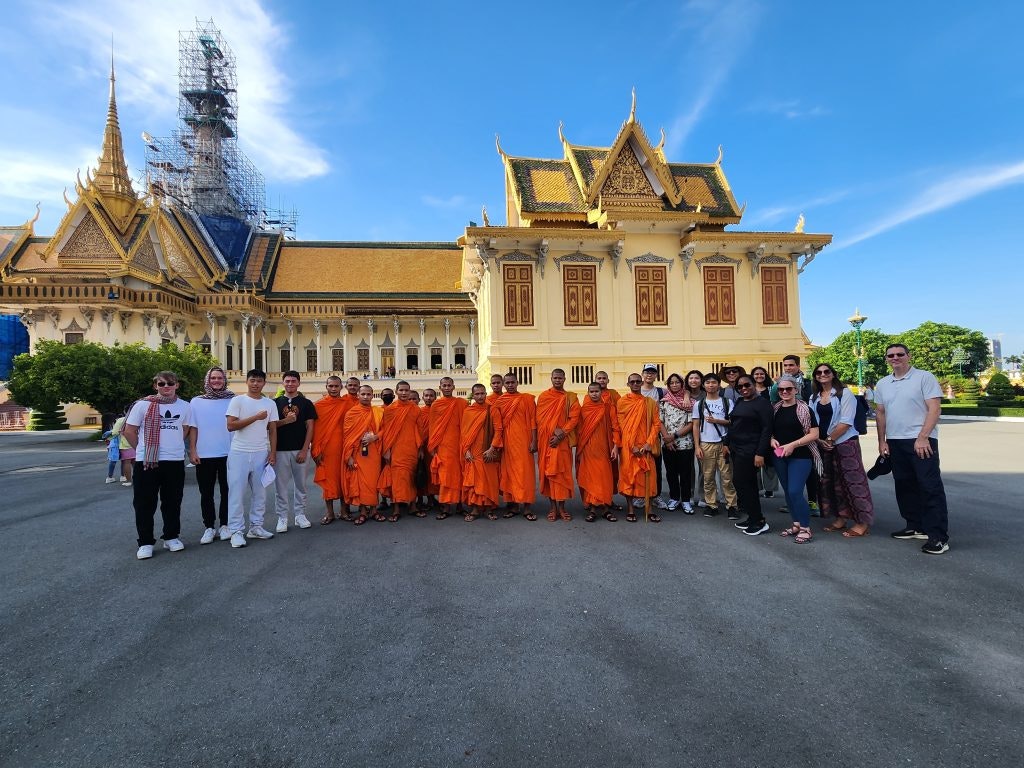
A school group visiting a Buddhist temple in Cambodia.
7. Don’t plan a birthday party in Cambodia. They don’t celebrate them.
Cambodians do not celebrate birthdays and many older people do not know their age. Most celebrate growing older along the cycle of the lunar new year.