


Kayla Anzalone is Director of Parent Experience & Portugal Operations at Rustic Pathways. She is the point of contact for families before, during, and after a student's program.
Kayla oversees Rustic Pathways programs in Portugal, including local partners, logistics, and student safety planning.
Kayla led Travel For All, a Rustic Pathways initiative to open educational travel to more students. She also launched the Global Perspectives Scholarship, which funds international programs for students who could not otherwise attend.
Kayla writes about the questions parents ask most: travel documents, health and safety preparation, packing, and what daily life on a program looks like. Her guidance draws on Rustic Pathways' experience running student programs since 1983 in 38 countries.
Kayla has traveled across the Americas, Europe, Asia, and the South Pacific.


Shayne Fitz-Coy is an operator-investor who buys companies and builds people. He is CEO of Rustic Pathways and Co-founder and Co-CEO of Sabot Family Companies, the long-term holding company he co-founded with Arar Han in 2016.
He teaches Introduction to Private Equity at Seoul National University and writes on education, travel and investing as the Teaching CEO.
He splits time between Palo Alto, California and Seoul, South Korea.
Learn more at shaynefitzcoy.com.
What is a teen travel transparency audit?
A Teen Travel Transparency Audit is a standardized evaluation framework that assesses whether teen travel companies publicly disclose key information on their websites before parents commit financially.
It uses a 25-point Yes/No checklist across four categories: company trust, supervision and safety, program structure, and cost transparency to measure public disclosure only, not operational quality or effectiveness.
Each criterion receives a binary score. For example, a company publishing a 10:1 student-to-staff ratio scores the same as one publishing 4:1; both meet the disclosure requirement by making the ratio publicly available.
The audit verifies published information availability, not its accuracy, performance, or outcomes.
Rustic Pathways developed the Teen Travel Transparency Audit to introduce consistent, quantifiable disclosure metrics into the teen travel comparison process.
Disclosure: Rustic Pathways developed this framework and applies the same criteria to its own programs. Full disclosure.
The 25 criteria align with four key decision areas parents evaluate when comparing programs before enrollment. It enables families to review safety protocols, staffing details, program structure, and refund policies without sales calls or deposits.
By standardizing disclosure measurement, the audit helps parents quickly identify companies that publish key details upfront versus those requiring direct inquiry.
Review Rustic Pathways' result on the same 25 pre-enrollment criteria →

Why does Rustic Pathways publish competitor transparency audits?
Parents comparing teen travel programs face an information asymmetry problem: companies use different terminology, bury key information in terms and conditions, or require enrollment before disclosing basic operational details.
A parent researching five programs might spend 10+ hours comparing staff ratios, refund policies, and safety partnerships across websites with inconsistent disclosure practices.
Rustic Pathways publishes these audits because standardized comparison frameworks reduce research burden for families. When parents can evaluate programs against identical criteria, decision quality improves.
Rustic Pathways applies the same 25 criteria to its own programs and publishes results alongside competitor audits.
Three safeguards ensure consistency across all reviews.
How does Rustic Pathways ensure audit fairness?
Rustic Pathways ensures review fairness by using the same 25-point checklist for every company, scoring each criterion as Yes or No with no interpretation.

Same 25 Criteria
Every Company

Binary Yes / No
No Gray Area

Linked Sources
Verify Yourself
- Same 25 criteria for every company: Rustic Pathways does not create custom checklists or exclude criteria where Rustic Pathways performs poorly. The framework predates any individual audit.
- Binary scoring eliminates subjectivity: Each criterion is Yes or No. No partial scores, quality judgments, or interpretive ratings.
- Source citations for every determination: Each Yes/No includes the source page. Readers can verify every claim by visiting the cited location on the company's website.
What are the 25 transparency criteria?
The teen travel company transparency audit is divided into four categories:
- Company Trust (4 criteria)
- Supervision and Safety (8 criteria)
- Program Structure (8 criteria)
- Cost Transparency (5 criteria)
Category 1: Company Trust
The first four criteria establish whether a company presents itself as a real, accountable organization with physical presence and named leadership.
Parents asking, "Is this a legitimate company?" need basic verification signals before evaluating program specifics.
See how Rustic Pathways performed on the transparency review →

1. Phone number published
- Definition:
- A working telephone number appears on the website without requiring form submission or account creation.
- Passes:
- Phone number visible in header, footer, or contact page.
- Fails:
- "Request a callback" form without a published number.
- Why it matters:
- A company unwilling to publish a phone number creates accessibility barriers for families with urgent questions.
2. Physical address published
- Definition:
- A street address, not a P.O. Box, appears on the website.
- Passes:
- Full street address with city, state, and ZIP/postal code.
- Fails:
- P.O. Box only. City and state without street address.
- Why it matters:
- Physical addresses verify that an operating business exists. Street addresses also indicate the applicable legal jurisdiction if disputes arise.
3. Ownership and leadership disclosed
- Definition:
- The website identifies the company's owner or operator by name.
- Passes:
- Founder name published. Leadership team page with named executives.
- Fails:
- Generic "our team" language without names.
- Why it matters:
- Accountability requires knowing who makes decisions. Named leadership creates personal responsibility for company operations.
4. Child safeguarding policy published
- Definition:
- A dedicated policy addressing child protection, abuse prevention, or safeguarding protocols appears on the website.
- Passes:
- Standalone child protection page. Safeguarding section within safety documentation.
- Fails:
- Generic safety language without child-specific protocols.
- Why it matters:
- A published safeguarding policy demonstrates the company has established prevention, detection, and response procedures for child protection.
Category 2: Supervision and Safety
The next eight criteria address staff qualifications, emergency preparedness, and safety infrastructure. These criteria generate the largest disclosure gaps across the teen travel industry.
Parents asking "Will my child be safe?" need specific operational details beyond marketing language.
Rustic Pathways publishes supervision ratios and emergency protocols on a dedicated safety page →
5. Student-to-staff ratio published
- Definition:
- The website states a specific numeric ratio of staff members to students.
- Passes:
- "4:1 ratio," "1 leader per 4 students," or "12 students with 3 instructors."
- Fails:
- "Small groups" without numbers. "Low ratios" without specifics.
- Why it matters:
- Supervision quality correlates directly with staff ratios. A 4:1 ratio means different supervision capacity than 10:1.
6. Staff qualifications published
- Definition:
- The website describes required certifications, training, or credentials for program staff.
- Passes:
- Specific certifications listed: CPR, First Aid, Wilderness First Responder (WFR), EMT.
- Fails:
- Vague language without qualification details. "Experienced staff," "expert leaders."
- Why it matters:
- A WFR certification (80 hours of wilderness medical training) differs from basic First Aid (8 hours). Parents cannot evaluate preparedness without certification specifics.
7. Background check policy published
- Definition:
- The website explicitly states that staff undergo criminal background checks.
- Passes:
- "All staff complete background checks" with frequency noted.
- Fails:
- "Thorough screening process" without specifying background checks.
- Why it matters:
- Background checks are a baseline requirement for child safety. The absence of explicit disclosure raises questions about hiring practices.
8. Emergency protocol published
- Definition:
- The website describes what happens during medical, natural disasters, or security emergencies.
- Passes:
- Emergency response overview. 24/7 emergency contact information.
- Fails:
- "Emergency procedures exist" without describing the response process.
- Why it matters:
- Parents need to understand the company's response capability before entrusting their child to the organization.
9. Safety/evacuation partner named
- Definition:
- The website identifies a third-party organization providing emergency medical evacuation and security support.
- Passes:
- International SOS, Global Rescue, or an equivalent organization is named.
- Fails:
- "Evacuation coverage included" without naming the provider.
- Why it matters:
- Medical evacuation from remote international locations requires specialized infrastructure. The provider's reputation and capabilities matter.
10. Medical screening requirements published
- Definition:
- The website outlines the required health documentation for participation.
- Passes:
- Health history form described. Physical exam requirements stated.
- Fails:
- "Health forms required" without describing content.
- Why it matters:
- Programs operating in remote areas need accurate health information to prepare for participant needs.
11. Vendor vetting described
- Definition:
- The website addresses how third-party activity providers are evaluated.
- Passes:
- Vendor selection criteria described. Safety audit process mentioned.
- Fails:
- No mention of third-party oversight.
- Why it matters:
- Many incidents occur during subcontracted activities (rafting, diving, climbing). Vendor oversight affects participant safety.
12. Incident/safety history disclosed
- Definition:
- The website acknowledges past safety incidents or provides a transparent operational history.
- Passes:
- Dedicated safety history section. Acknowledgment of past incidents with response descriptions.
- Fails:
- No mention of operational history.
- Why it matters:
- No company operates for decades without incidents. The absence of operational history limits parents' ability to assess long-term safety practices.
Category 3: Program Structure
The next eight criteria address daily operations, accommodations, and support systems that shape the participant experience.
Parents asking "What will my child's experience look like?" need logistical clarity before enrollment.

13. Group size published
- Definition:
- The website states the typical or maximum number of students per trip.
- Passes:
- "Groups of 12 students" or "Maximum 16 participants."
- Fails:
- "Small groups" without numbers.
- Why it matters:
- A "small group" might be 12 students at one company or 45 at another. Numbers eliminate ambiguity.
14. Combined groups policy stated
- Definition:
- The website addresses whether students from different schools travel together.
- Passes:
- "Groups from multiple schools may be combined" or "Your school travels as a private group."
- Fails:
- No mention of group composition practices.
- Why it matters:
- Group composition affects social dynamics and parent expectations.
15. Chaperoned flights offered/stated
- Definition:
- The website addresses whether staff accompany students during air travel.
- Passes:
- "Staff travel with groups on flights" or "Students fly unaccompanied; staff meet at destination."
- Fails:
- No mention of flight arrangements.
- Why it matters:
- International flights present supervision gaps. Families need to know when staff supervision begins and ends.
16. Parent communication frequency stated
- Definition:
- The website describes how often parents receive updates during programs.
- Passes:
- "Weekly email updates" or "Daily photo uploads."
- Fails:
- "Parents stay informed" without frequency.
- Why it matters:
- Two weeks without hearing from a child causes anxiety. Stated frequency sets expectations.
17. Learning difference support described
- Definition:
- The website addresses accommodations for students with ADHD, dyslexia, or autism spectrum conditions.
- Passes:
- Dedicated accessibility section. Statement on accommodation process.
- Fails:
- No mention of learning differences.
- Why it matters:
- Students with learning differences need to know whether programs can accommodate specific needs before applying.
18. Rooming policy stated
- Definition:
- The website describes accommodation arrangements, including roommate assignment and room types.
- Passes:
- "Students room in groups of 2-4" or "Gender-separated rooming."
- Fails:
- "Comfortable accommodations" without describing arrangements.
- Why it matters:
- Some programs require students to share beds. Rooming policies affect comfort and safety perceptions.
19. Dietary accommodation policy stated
- Definition:
- The website addresses how vegetarian, vegan, kosher, halal, or allergy requirements are handled.
- Passes:
- "Dietary restrictions accommodated" with process described.
- Fails:
- No mention of dietary needs.
- Why it matters:
- Families with dietary restrictions need confirmation before enrolling. Food allergies can be life-threatening.
20. Electronics/phone policy stated
- Definition:
- The website addresses Wi-Fi access and whether students may keep their phones.
- Passes:
- "Phones collected at program start" or "Wi-Fi available at accommodations."
- Fails:
- No mention of phone usage policy or Wi-Fi access.
- Why it matters:
- Parents want to know if they can reach a child during emergencies. Electronics policies affect communication expectations.
Category 4: Cost Transparency
The final five criteria address pricing, refunds, and consequences for cancellation or dismissal.
Parents asking "What am I actually paying for?" need financial transparency before committing thousands of dollars.

21. Pricing published
- Definition:
- Program tuition appears on the website without requiring sales contact.
- Passes:
- Dollar amounts listed per program.
- Fails:
- "Contact us for pricing."
- Why it matters:
- Hidden pricing forces families through sales processes before basic financial qualification. Published pricing respects families' time.
22. What's included/excluded published
- Definition:
- The website specifies what the program tuition covers.
- Passes:
- Itemized inclusions list. Exclusions listed.
- Fails:
- "All-inclusive experience" without itemization.
- Why it matters:
- A $5,000 program tuition means different things depending on whether flights, travel insurance, and visa fees are included.
23. Refund/cancellation policy published
- Definition:
- The website outlines the financial implications of canceling enrollment.
- Passes:
- Specific dates and percentages published.
- Fails:
- "See terms and conditions" without a summary.
- Why it matters:
- Families need to understand the consequences of withdrawals before committing deposits. Refund policies range from 100% to 0%, depending on timing.
24. Dismissal policy published
- Definition:
- The website describes what happens if a student is removed for behavioral reasons.
- Passes:
- Consequences stated: "Student sent home at family expense."
- Fails:
- No mention of dismissal procedures.
- Why it matters:
- Some companies charge $100/hour plus travel costs for dismissals. Financial exposure during dismissal can exceed $5,000.
25. Travel insurance policy stated
- Definition:
- The website addresses whether travel/medical insurance is included, required, or optional.
- Passes:
- "Travel insurance included" or "Families must purchase travel insurance."
- Fails:
- No mention of insurance requirements.
- Why it matters:
- Medical emergencies abroad can cost $50,000+. Insurance requirements affect total program cost and family liability.
How should parents use this audit?
The transparency audit answers one question: "Can I verify this information before committing money?"
A high score means more information is publicly available for verification.
Recommended use:
- List the companies on your shortlist.
- Check each company's public website against the 25 criteria above and mark each one Yes or No. If we have already audited a company, start from its audit on the Teen Travel Company Reviews page.
- Email each company about every No and ask for the answer in writing. If a company will not put an answer in writing, keep that criterion marked No.
- Compare the companies criterion by criterion, starting with the dealbreakers.
- Read participant reviews on GoOverseas or GoAbroad for what the criteria cannot show.
Treat criteria 4 (child safeguarding policy), 5 (student-to-staff ratio), 7 (background check policy) and 8 (emergency protocol) as dealbreakers. If a company cannot show these in writing after you ask, remove it from your shortlist. Weigh the other 21 as tradeoffs.
How does Rustic Pathways calculate transparency scores?
Each criterion scores 1 (Yes, published) or 0 (No, not published).
| Category | Criteria | Maximum Score |
|---|---|---|
| Company Trust | 4 | /4 |
| Supervision & Safety | 8 | /8 |
| Program Structure | 8 | /8 |
| Cost & Policies | 5 | /5 |
| Total | 25 | /25 |
A company scoring 18/25 has published 18 of the 25 transparency criteria. The 7 missing criteria are documented so parents know exactly what information cannot be verified without contacting the company.
How are third-party ratings collected?
Each transparency review displays third-party ratings from independent platforms where available.
Sources include Google Reviews, GoOverseas, GoAbroad, Trustpilot, and Better Business Bureau.
Ratings are copied directly from source platforms with access dates noted. Rustic Pathways does not editorialize third-party scores or weight ratings by platform.
Example: Completed transparency audit format
The following example demonstrates how the 25-point framework produces a completed audit. This example uses hypothetical data for illustration.
Company: Example Travel Co. | Audit Date: January 2026 | Methodology Version: v1.0
| # | Criterion | Score | Source |
|---|---|---|---|
| 1 | Phone number published | Yes | Footer, all pages |
| 2 | Physical address published | Yes | Contact page |
| 3 | Ownership disclosed | No | Not found |
| 4 | Child safeguarding policy | No | Not found |
| 5 | Student-to-staff ratio | Yes | FAQ, "Safety" section |
| 6 | Staff qualifications | No | "Trained staff" without specifics |
| 7 | Background check policy | Yes | Safety page |
| 8 | Emergency protocol | Yes | Safety page |
| 9 | Evacuation partner named | No | "Coverage included" without provider |
| 10 | Medical screening | Yes | Enrollment page |
| 11 | Vendor vetting described | Yes | Safety page |
| 12 | Incident/safety history disclosed | No | Not found |
| 13 | Group size published | Yes | FAQ, program information |
| 14 | Combined groups policy stated | No | Not found |
| 15 | Chaperoned flights offered/stated | Yes | FAQ, flights/travel logistics |
| 16 | Parent communication frequency stated | Yes | FAQ, communication updates |
| 17 | Learning difference support described | No | Not found |
| 18 | Rooming policy stated | Yes | FAQ, accommodations |
| 19 | Dietary accommodation policy stated | Yes | FAQ, dietary needs |
| 20 | Electronics/phone policy stated | No | Not found |
| 21 | Pricing published | Yes | Program pages |
| 22 | What's included/excluded published | Yes | Program pages, "What's included" |
| 23 | Refund/cancellation policy published | Yes | Terms & conditions |
| 24 | Dismissal policy published | No | Not found |
| 25 | Travel insurance policy stated | Yes | FAQ / enrollment information |
| Total | 16/25 |
Category breakdown:
- Company Trust = 2/4
- Supervision & Safety = 5/8
- Program Structure = 5/8
- Cost & Policies = 4/5
- Total = 16/25
Missing criteria: Ownership disclosure, child safeguarding policy, staff qualifications, evacuation partner, electronics policy, dismissal policy, combined groups policy, learning difference support, incident history.
View teen travel company transparency audits →
How does the teen travel industry score on transparency?
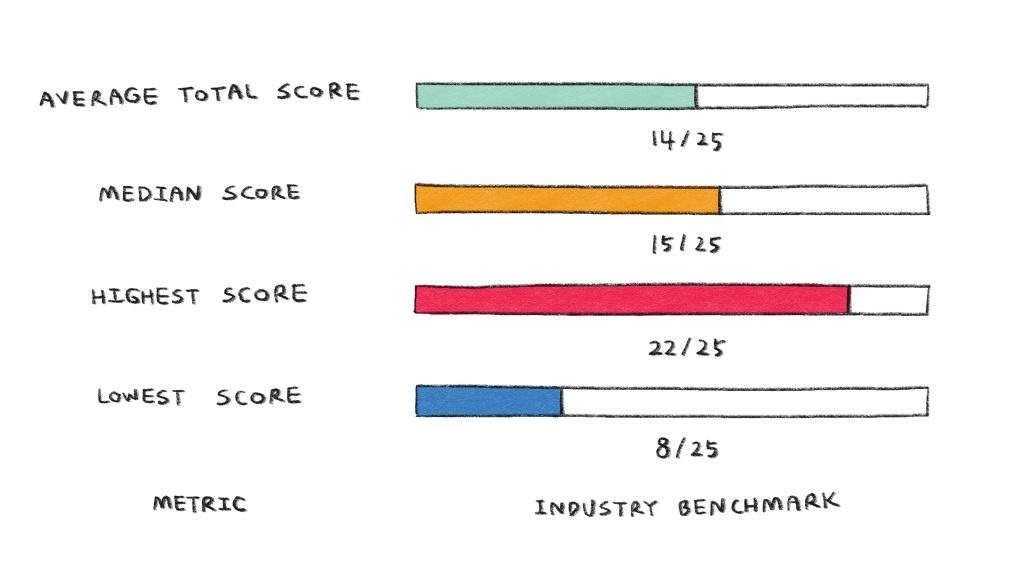
These benchmarks reflect disclosure patterns, not quality or safety outcomes.
Rustic Pathways has audited teen travel companies using this pre-enrollment disclosure standard. The audited companies represent a mix of large, mid-sized, and niche teen travel operators with international programs.
| Metric | Industry Benchmark |
|---|---|
| Average total score | 14/25 (56%) |
| Median score | 15/25 |
| Highest score | 22/25 |
| Lowest score | 8/25 |
| Category | Average Score | Most Common Gap |
|---|---|---|
| Company Trust | 3.2/4 (80%) | Child safeguarding policy |
| Supervision & Safety | 4.1/8 (51%) | Student-to-staff ratio |
| Program Structure | 4.8/8 (60%) | Electronics/phone policy |
| Cost & Policies | 3.4/5 (68%) | Dismissal policy |
Key findings:
- Supervision and safety criteria show the largest disclosure gaps across the industry. Fewer than one-third of audited companies publish student-to-staff ratios on public-facing pages.
- Companies score highest on basic trust signals (phone, address) and cost transparency (pricing). Companies score lowest on operational details that require internal policy documentation.
Compare teen travel transparency audits →
What does the transparency audit not evaluate?
This audit intentionally excludes four dimensions that require subjective judgment or outcome data.

Program Quality

Safety Outcomes

Value for Money

Recommendations
- Program quality: Transparency audits document disclosure, not educational outcomes.
- Safety outcomes: The audit documents whether safety information is available, not whether companies are operationally safe.
- Value for money: The audit documents whether pricing is transparent, not whether programs are worth the cost.
- Recommendations: Rustic Pathways does not recommend competitors. The audit provides comparison data; families make decisions.
Rustic Pathways' own record on criterion 12
Rustic Pathways publishes a 13-year incident record covering 4,139 incident reports across 57,079 traveler records from 2014 through 2026 year-to-date.
Of those reports, 87% were classified GREEN, meaning minor issues handled with first aid, rest, or over-the-counter care. Serious incidents are rare, with 9 RED life-threatening incidents in 13 years, about 1 in 6,342 traveler records.
The escalated-incident rate, which includes anything above GREEN, is 9.11 per 1,000 traveler records. Most escalations are precautionary, such as a parent call, medical consultation, or itinerary change, rather than hospitalization, evacuation, or program termination. Put another way, about 1 in 110 traveler records involves a clinic visit or a call home. The other 109 do not.
Rustic Pathways staffs a median of one staff member per 4.37 students (4.37:1), with no program exceeding 7 students per staff member (7:1). The full incident record is published and updated each year.
How does Rustic Pathways cite sources?
Each Yes/No determination includes an inline citation indicating the source of the information on the company's website.
For published criteria (Yes):
Student-to-staff ratio published: Yes (FAQ Page, "Group Size" section)
For unpublished criteria (No):
Student-to-staff ratio published: No (Not found on Safety page, FAQ, or Terms and Conditions)
Citation format: Page type in parentheses, section specified when applicable, multiple locations checked for "No" determinations.
What Rustic Pathways does not do: Hyperlink directly to competitor sites, cite gated content requiring login, or use undated web archives.
Verification standard: All sources accessed within 30 days of publication. Access date noted on each review page.
If a company updates its website, Rustic Pathways will update the review within 30 days of notification. Contact transparency@rusticpathways.com to report changes.
How does Rustic Pathways update this methodology?
The methodology version number (currently v1.0) tracks changes over time.
- Criteria are added, not removed. Existing criteria remain for historical comparison. New criteria are marked with version numbers.
- Version changes are documented. Each review page displays the methodology version used for that audit.
- Rustic Pathways applies changes to Rustic Pathways first. Before requiring competitors to meet new criteria, Rustic Pathways publishes the information on the Rustic Pathways website.
Disclosure
Rustic Pathways is a teen travel company operating programs for students ages 14 to 18 in 38 countries.
Rustic Pathways is a direct competitor to the companies evaluated in transparency audits. This methodology was developed by Rustic Pathways. The same 25 criteria are applied to Rustic Pathways programs without modification.
For questions about methodology or to report website changes: transparency@rusticpathways.com
Common questions about the transparency audit
What is the Rustic Pathways Transparency Audit?
The Rustic Pathways Transparency Audit is a 25-point binary framework that documents what teen travel companies publicly disclose to parents before enrollment. Each criterion receives a Yes (published) or No (not published) determination based on whether the information appears on the company's public website.
What keeps the audit consistent from company to company?
Three safeguards ensure consistency: same 25 criteria for every company, binary scoring that eliminates subjectivity, and source citations for every determination that readers can verify.
What is the average transparency score across audited companies?
Based on audited companies, the industry average is 14/25 (56%). Supervision and safety criteria show the largest disclosure gaps, with fewer than one-third of audited companies publishing student-to-staff ratios.
Does Rustic Pathways publish its safety record?
Yes. Rustic Pathways publishes a 13-year incident record covering 4,139 incident reports across 57,079 traveler records from 2014 through 2026 year-to-date, with 87% classified GREEN, or minor. Rustic Pathways recorded 9 life-threatening RED incidents, about 1 per 6,342 traveler records, and reports an escalated-incident rate of 9.11 per 1,000 traveler records. The record is updated each year.
