
A teen tour is a supervised, small-group travel program for students ages 14 to 18 ready to explore new cultures, build independence, and push beyond their comfort zone. Rustic Pathways offers the best summer teen tours across 38 countries, with Rustic Air group flight options, a verified 4.37:1 supervision ratio, and 43 years of expertise helping teens travel safely. Students gain personal growth, lifelong friendships, and a global mindset that lasts well beyond the trip.
★★★★★ 4.9/5: Based on reviews across Google, Trustpilot, GoOverseas, and GoAbroad
Students choose from themed trips, seasonal programs, regional collections, and country-specific itineraries across 38 countries in the Americas, Asia, Africa, Europe, and Oceania.
2026 Teen Tour Programs & Pricing
Rustic Pathways offers 27 current 2026 student travel offerings. All programs include accommodations, meals, activities, and 24/7 supervision at industry-leading staff ratios.
Price range: $1,995 to $13,680 | Duration: 6 to 30 days | Ages: 14 to 18
| Program | Days | Destination | 2026 Cost | Ages |
|---|---|---|---|---|
| Dominican Republic: Beachside Service | 8 | Dominican Republic | $1,995 | 14-18 |
| South Korea Teen Travel Program: K-Everything | 6 | South Korea | $1,999 | 14-18 |
| Costa Rica: Pura Vida Service | 8 | Costa Rica | $2,495 | 14-18 |
| Costa Rica: Pura Vida Service (Middle School) | 8 | Costa Rica | $2,495 | 12-14 |
| Belize: Caribbean Reefs & Mayan Culture | 8 | Belize | $2,795 | 14-18 |
| Belize: Caribbean Reefs & Mayan Culture (Spring Break) | 8 | Belize | $2,795 | 14-18 |
| Costa Rica: Turtle Conservation Program (College) | 8 | Costa Rica | $2,895 | 17-22 |
| Costa Rica: Turtle Conservation Project | 8 | Costa Rica | $2,895 | 14-18 |
| Japan: Homestay & Service Adventure | 8 | Japan | $3,295 | 14-18 |
| Hawaii: Surf, Snorkel, and Service | 8 | United States | $3,395 | 14-18 |
| Morocco: Souks & High Atlas Service | 9 | Morocco | $3,395 | 14-18 |
| Morocco: Souks & High Atlas Service (College) | 9 | Morocco | $3,395 | 17-22 |
| Northern Italy Adventure | 8 | Italy | $3,395 | 14-18 |
| Portugal: Lisbon & Surf Culture | 8 | Portugal | $3,395 | 14-18 |
| Spain: Tapas, Service & Sea | 8 | Spain | $3,395 | 14-18 |
| Costa Rica: Surf and Service | 8 | Costa Rica | $3,495 | 14-18 |
| Greece: Island Turtle Conservation | 9 | Greece | $3,495 | 14-18 |
| Japan: Tokyo Fusion (Middle School) | 8 | Japan | $3,495 | 12-14 |
| Fiji: Sun, Sand, and Island Service | 16 | Fiji | $3,995 | 14-18 |
| Thai Elephant Conservation Project | 12 | Thailand | $3,995 | 14-18 |
| Peru: Sacred Valley Service | 12 | Peru | $4,195 | 14-18 |
| Thailand Adventurer | 16 | Thailand | $5,495 | 14-18 |
| Japan & Korea: Tokyo to Seoul | 15 | Japan & Korea | $6,490 | 14-18 |
| Portugal & Spain: Surf, Culture & Culinary Traditions | 15 | Portugal & Spain | $6,790 | 14-18 |
| Italy & Greece: Cultural Immersion and Turtles | 16 | Italy & Greece | $6,890 | 14-18 |
| Come with Nothing: The Rustic Expedition | 23 | Thailand | $6,995 | 14-18 |
| European Adventure: Teen Tour Through Portugal, Spain, Italy & Greece | 30 | Portugal, Spain, Italy & Greece | $13,680 | 14-18 |
What’s Included: Accommodations, meals, in-country transportation, all activities, visa support, and 24/7 staff supervision. International airfare not included.
For families concerned about their teen flying internationally alone, Rustic Pathways offers chaperoned flight options.
Group Flight Options for Teen Tours
Rustic Air is Rustic Pathways’ chaperoned flight service, providing supervised travel from airport check-in to program arrival. Rustic Air staff accompany students through security, manage layovers, and ensure every teen arrives safely, even when traveling without parents for the first time.
How Rustic Air Works
Students meet Rustic Pathways staff at designated U.S. gateway airports. Staff members guide groups through check-in, security screening, and boarding. During layovers, students stay together under direct supervision. At the destination, in-country teams receive students at arrival gates. No unsupervised moments from departure to program start.
Rustic Air is available for select summer programs and can be arranged during enrollment.
Which Teen Tour Companies Offer Group Flights?
| Company | Group Flight Option | Supervision Details |
|---|---|---|
| Rustic Pathways | Rustic Air | Staff-chaperoned from check-in to arrival |
| Global Works | Yes | Chaperoned for all international programs |
| Travel For Teens | Limited | Varies by program |
| Rein Teen Tours | Limited | Available for select trips |
| Westcoast Connection | Limited | Varies by destination |
For families where a teen will fly alone to meet the group, Rustic Pathways provides detailed arrival coordination: flight recommendations, airport pickup instructions, and staff contact information for the destination.
Once travel logistics are settled, the next question is which program to choose.
Best Summer Teen Tours 2026
The best summer teen tours balance adventure with personal growth: structured enough for safety, flexible enough for transformation. Rustic Pathways ranks programs by student outcomes, parent satisfaction, and repeat enrollment rates.
Best for First-Time Travelers
Costa Rica: Pura Vida Service (8 days, $2,495): Rustic Pathways’ most popular first-time traveler program. Costa Rica offers accessible adventure (rainforests, wildlife, Pacific beaches), strong English infrastructure, and close U.S. proximity for parent peace of mind. 68% of middle school participants are first-time international travelers.
Dominican Republic: Beachside Service (8 days, $1,995): The most affordable entry point for teen travel. Caribbean culture, community service, and coastal exploration with shorter flight times from East Coast cities.
Best for Building Confidence
Peru: Sacred Valley Service (12 days, $4,195): High-altitude challenge meets Andean cultural immersion. Students hike to Machu Picchu, complete service projects in Cusco, and navigate environments that require resilience. The “stretch zone” design pushes teens beyond comfort while leaders provide constant support.
Thai Elephant Conservation Project (8 days, $3,995): Wildlife conservation work builds confidence through purpose. Students care for rescued elephants, navigate Thai markets in a foreign language, and experience Buddhist culture firsthand.
Best for Making Lifelong Friendships
Fiji: Sun, Sand, and Island Service (16 days, $3,995): Longer programs create stronger peer bonds. Village homestays, shared service work, and island time without distractions forge friendships that last. 89% of Rustic Pathways alumni maintain program friendships years later.
Japan & Korea: Tokyo to Seoul (15 days, $6,490): Multi-country itineraries bond students through shared navigation challenges. Figuring out Tokyo subways and Seoul street food together creates inside jokes and memories that define friendships.
Best for College Applications
Greece: Island Turtle Conservation (9 days, $3,495): Marine biology fieldwork creates concrete college essay material. Students conduct nesting surveys, collect research data, and contribute to published conservation efforts.
91% of Rustic Pathways alumni report their program enhanced college applications.
Program rankings matter, but so does the company behind them. Here’s how Rustic Pathways compares to other teen tour providers.
How Rustic Pathways Compares to Other Teen Tour Companies
Teen travel companies differ in supervision ratios, safety transparency, program design, and operational approach. Rustic Pathways publishes data that most competitors do not disclose.
Comparing Top Teen Tour Companies
| Company | Staff Ratio | Published Incident Data | Years Operating | Program Focus |
|---|---|---|---|---|
| Rustic Pathways | 4.37:1 verified | Yes (quarterly since 2015) | 43 years | Service, cultural immersion, adventure |
| Travel For Teens | ~6:1 (stated) | No | 35+ years | Adventure, exploration |
| Rein Teen Tours | ~8:1 (stated) | No | 35+ years | U.S. cross-country, Europe |
| Westcoast Connection | ~8:1 (stated) | No | 40+ years | Active tours, California, Europe |
| Global Works | 6:1 (18 students/3 leaders) | No | 30+ years | Service learning, language |
Note: Competitor ratios are based on publicly available marketing materials. “Stated” ratios may differ from verified operational data. Rustic Pathways’ 4.37:1 ratio is verified across 2025 program data, 83% better than ACA elementary standards.
Supervision & Safety Data
| Metric | Rustic Pathways | Industry Standard |
|---|---|---|
| Staff-to-Student Ratio | 4.37:1 verified (2025 median) | 8:1 to 10:1 typical |
| Published Incident Rates | Yes (quarterly reports since 2015) | Rarely disclosed |
| Full-Time Medical Director | Yes (Dr. William R. Smith, board-certified) | Unusual |
| Parent Notification Time | 27 minutes average | Not disclosed |
| Crisis Team Activation | 8 minutes average | Not disclosed |
What Parents Should Compare
Supervision ratio: Ask for VERIFIED ratios (actual program data), not PROMISED ratios (marketing materials). Rustic Pathways promises 7:1 and delivers 4.37:1.
Incident transparency: Does the company publish incident rates? Rustic Pathways reports 87.7% GREEN (minor: dehydration, scrapes), 11.1% YELLOW (moderate: stitches, clinic visits), 0.6% RED (serious: 1 incident affecting 1 of 2,238 students in 2025).
Medical oversight: Rustic Pathways has a full-time, board-certified Medical Director (Dr. William R. Smith). Most competitors do not employ dedicated medical professionals.
Local presence: Rustic Pathways employs 92% local staff year-round. Many competitors outsource to third-party vendors in-country.
Learn more about Rustic Pathways safety protocols
Numbers tell part of the story. Here’s what the data means for your family.
What Parents Need to Know Before Choosing a Teen Tour
Sending a teenager abroad without you is a trust decision. Most parents share the same concerns: safety, supervision, communication, and whether the experience will be worth the investment.
The Three Questions Every Parent Asks
1. Will my child be safe?
Rustic Pathways operates with a 4.37-to-1 student-to-leader ratio, verified across 2025 programs, not just promised. Leaders complete 80+ hours of training, hold CPR/First Aid certification (40% are Wilderness First Responders), and undergo Sterling background checks. Programs follow a Five-Point Presence-First Safety Protocol including three-tier vendor vetting, 26-point homestay assessments, and no-night-driving policies.
Three vendors were terminated in 2025 for minor safety infractions. Rustic Pathways publishes this data because parents deserve to know.
2. How will I stay informed?
Parents receive daily photo updates through a secure portal. During any incident, Rustic Pathways notifies parents within 27 minutes of stabilization, with updates every 3 hours until resolution. Parents can contact Country Directors directly via WhatsApp, the same people managing student programs on the ground.
3. Is this worth the investment?
According to a 2023 study: 91% of Rustic Pathways students said their program enhanced college applications, 67% pursued international careers, 78% volunteer regularly as adults, and 89% maintain program friendships years later. Rustic Pathways alumni have been accepted to all 8 Ivy League schools (2,292 tracked acceptances, 2023-2025), including Cornell (9), UPenn (9), Brown (7), Harvard (5), and 157 unique universities total.
What Makes a Teen Tour the Right Fit?
Not all teen tours are the same. The right program balances supervision, independence, and hands-on learning based on a student’s age, experience level, and goals.
First-Time Travelers
Shorter programs (8 to 10 days) with higher structure and consistent supervision work best for students who haven’t traveled internationally without parents. Rustic Pathways’ “First Friend Method” ensures shy or introverted students form meaningful peer connections within the first 48 hours. Leaders are trained to identify isolated students by Day 2 and create natural interaction opportunities.
Best first-time destinations: Costa Rica, Dominican Republic, Hawaii, Portugal
Experienced or Older Teens
Longer itineraries (15 to 23 days) for older teens offer deeper cultural immersion, leadership responsibilities, and progressive independence. Students rotate through daily roles like group leader, navigator, and budget manager, building skills through real stakes and natural consequences.
Best for experienced travelers: Japan, Peru Sacred Valley Service (12 days), multi-country programs
Interest-Driven Students
Programs focused on specific themes like adventure, language immersion, service, or medical exploration allow students to build skills aligned with their goals. All programs document outcomes that strengthen college applications.
Find the Right Teen Tour for Your Student
Browse by age group, program theme, season, or location.
Travel Themes
- Adventure programs with surfing, hiking, and wildlife encounters
- Cultural immersion programs with homestays and language exposure
- Language immersion programs for Spanish, Japanese, and Korean learners
- Volunteer and leadership programs with documented service hours
- Medical and public health programs for pre-health students
Seasonal Programs
Regional Collections
- Americas: Costa Rica, Peru, Dominican Republic, Belize, Ecuador
- Asia: Japan, South Korea, Thailand
- Africa: Morocco, Tanzania
- Europe: Italy, Greece, Portugal, Spain, Germany
- Oceania: Fiji, Australia
By Age
USA Teen Tours
USA teen tours offer domestic travel options for students not ready for international programs or families seeking shorter travel distances. Rustic Pathways operates U.S. programs in Hawaii and partners with vetted providers for mainland destinations.
Hawaii: Surf, Snorkel, and Service
8 days | $3,395 | Ages 14-18
Hawaii combines accessible adventure with cultural immersion, and no passport is required. Students learn to surf on Oahu’s North Shore, snorkel coral reefs, and complete conservation service projects. Hawaiian culture provides exposure to indigenous perspectives, sustainability practices, and island ecosystems.
Other USA Destinations
For students interested in mainland U.S. destinations like the Grand Canyon, California, Alaska, or Colorado, Rustic Pathways recommends researching programs from domestic-focused operators. When evaluating any teen tour company, ask about staff ratios, incident reporting, and supervision protocols.
Featured Teen Tour Types
Each program category builds specific outcomes measured through Rustic Pathways’ Student Learning Outcomes framework. 97.6% of students show measurable growth in at least one of 10 assessed areas.
Adventure Teen Tours
High-energy programs in Costa Rica, Peru, Thailand, Dominican Republic, and Hawaii. Activities include surfing, zip-lining, white-water rafting, and wildlife encounters, all led by certified guides with Rustic Pathways leaders present.
Outcome focus: Grit, resilience, confidence through completing challenging activities. Explore adventure programs for students who thrive outdoors.
Cultural Immersion Teen Tours
Cultural immersion on a teen tour means participating in daily life through homestays, language exposure, and local partnerships. Students learn with communities by cooking with host families, attending local schools, and joining cultural ceremonies to understand traditions, values, and social systems.
Rustic Pathways employs 92% local staff year-round. In Thailand, Program Leader Veerayut “Chet” Supadee has been with Rustic Pathways for over 20 years. In Mongolia, Country Director Anya Buyan-Erdene was born and raised there.
Outcome focus: Intercultural competence, empathy, shared humanity. Explore programs designed for deep local connection.
Language Immersion Teen Tours
Real-world language learning through daily practice: ordering food, navigating markets, conversing with host families. Programs available in Spanish (Costa Rica, Peru), Japanese (Japan), and Korean (South Korea).
Students aren’t in classrooms; they’re learning by doing. Explore language programs for students building fluency.
Volunteer and Leadership Teen Tours
Hands-on service through long-term community partnerships, not one-time visits. Rustic Pathways maintains 3-year minimum partnerships with all community organizations, contributing 1.3 million service hours since 2013 (44,200 hours in 2025 alone).
Rustic Pathways is certified to grant Presidential Volunteer Service Awards (PVSA) for documented volunteer hours.
Outcome focus: Independence, self-awareness, purpose. Explore service programs with meaningful community impact.
Medical and Public Health Teen Tours
Introductory health and wellness programs for students exploring medical careers. Shadowing, public health fieldwork, and first-responder training in supervised settings.
Outcome focus: Career clarity, practical skills, leadership. Explore programs for pre-med and pre-health students.
Top Teen Tour Destinations
Rustic Pathways operates in 38 countries with year-round local staff and multi-year community partnerships.
Costa Rica
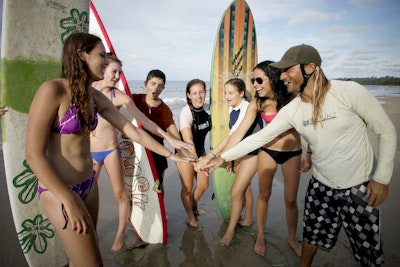
Adventure, wildlife, and rainforest ecosystems. Surf lessons, conservation projects, guided exploration led by Ricardo Romero, lifelong Costa Rican with 20+ years in conservation programs.
Programs for nature lovers and first-time international travelers
Japan

Cultural discovery across Tokyo, Kyoto, and rural villages. Language exposure, modern-traditional contrasts, and immersive city experiences led by Scott Ingram, fluent Japanese speaker with a Master’s in Japanese Studies.
Programs for students drawn to Japanese culture
Dominican Republic

Caribbean culture, community partnerships, coastal exploration. Programs led by Manuel Del Villar, born and raised in the DR with public health expertise.
Programs combining service and beach adventure
Peru
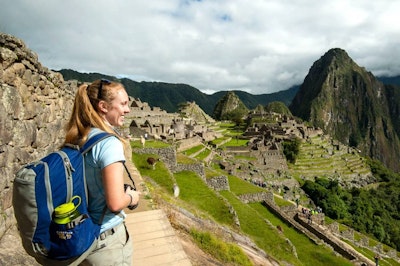
Andean culture, Machu Picchu, Sacred Valley immersion. Service projects with Alex Ball, Cusco-based, founder of Sacred Valley Project.
Programs for students seeking history and high-altitude challenge
Thailand

Temples, elephant conservation, outdoor exploration. Programs led by Chet Supadee, fluent in Thai and Lao, 18 years with Rustic Pathways.
Programs for students interested in wildlife and Buddhist culture
Fiji

Island culture, village homestays, marine conservation. 31 years of Rustic Pathways operations, the longest in any destination.
Programs for students seeking island immersion
Greece

Mediterranean culture, ancient history, sea turtle conservation. Programs launched 2024 with dedicated Rustic Pathways staff.
Programs combining archaeology and marine biology
Italy

Art, architecture, Northern Italian adventure. Venice, the Dolomites, Lake Garda. Led by Teryn Williams, 14+ years in Italy, married locally.
Programs for students drawn to history and food culture
View all 38 countries and destination-specific programs
Teen Tour Program Lengths
8 to 10 Day Programs: Best for first-time travelers, younger teens (12 to 14), and students testing international independence. Higher structure, consistent supervision, focused itinerary.
12 to 16 Day Programs: Deeper immersion, stronger peer bonds, progressive independence. Students rotate through leadership roles and complete substantial service projects.
17 to 23 Day Programs: Maximum transformation. Multi-country itineraries, advanced leadership opportunities, and experiences that become college essay material.
Rustic Pathways’ research shows sustained growth: 8 of 10 Student Learning Outcomes remain measurable 6 months post-program. Learning outcomes research.
Why Families Choose Rustic Pathways for Teen Tours
Published Safety Data (Competitors Don’t Share This)
Rustic Pathways is the only teen travel company that publishes quarterly incident reports. See full safety metrics in the comparison section above.
| Metric | Value |
|---|---|
| 2025 Incident Rate | 87.7% GREEN, 11.1% YELLOW, 0.6% RED |
| Medical Director | Full-time, board-certified emergency physician |
Verified Outcomes (Not Marketing Claims)
| Metric | Value |
|---|---|
| Total Alumni | 155,829 since 1983 |
| Parent Satisfaction | 92% approval rating |
| NPS Score | 80 (industry benchmark: ~30) |
| Service Hours Completed | 1.3 million since 2013 |
| Alumni Who Study Abroad in College | 89% (vs. 10% national average) |
| Alumni College Acceptances Tracked | 2,292 (2023-2025) |
Experience and Trust
★★★★★ 4.9/5: Google, Trustpilot, GoOverseas, GoAbroad
- 43 years of continuous operation (founded 1983 in Australia)
- 321+ school partners worldwide
- Only teen travel company with peer-reviewed research on student outcomes (Boston College partnership, published 2024)
How Teen Tours Build Confidence and Personal Growth
Personal growth on a teen tour means measurable change in how students see themselves and engage with the world. Rustic Pathways tracks 10 Student Learning Outcomes (SLOs) through pre- and post-program assessments, with third-party validation from Boston College’s Purpose Development research partnership.
Measured Outcomes
97.6% of students show measurable growth in at least one of 10 assessed areas. The highest gains occur in:
- Self-awareness: Students identify strengths, values, and areas for growth
- Independence: Navigating new environments builds confidence in decision-making
- Intercultural competence: Direct exposure to different cultures develops empathy and perspective
- Shared humanity: Service work alongside local communities creates lasting connection
8 of 10 SLOs remain measurable 6 months post-program, demonstrating growth that sustains beyond the trip itself.
How Transformation Happens
Rustic Pathways designs programs around the “stretch zone,” the space between comfort and panic where real growth occurs. Students face manageable challenges (navigating a foreign city, completing a service project, trying unfamiliar food) with leader support available but not automatic.
The First Friend Method ensures shy or introverted students form meaningful peer connections within 48 hours. Leaders identify isolated students by Day 2 and create natural interaction opportunities. One strong friendship can transform an entire program experience.
Parents consistently report the same themes: 33% mention independence and confidence growth, 15% cite cultural awareness, 15% note humility and gratitude, and 12% describe new openness to experiences.
View learning outcomes research
How Rustic Pathways Handles Homesickness and Behavioral Issues
Homesickness Support
Homesickness is normal and expected. Rustic Pathways staff are trained to normalize it as growth, not weakness. Leaders teach culture shock phases: honeymoon, frustration, adjustment, acceptance.
Coping strategies include staying busy, building relationships, and reframing discomfort. The First Friend Method ensures no student is left socially behind. If homesickness persists beyond the first few days or prevents participation, leaders escalate to parents and, if needed, the Student Success team.
Parent communication during programs: 1 to 2 designated family contact windows per week (varies by destination connectivity). Daily photo updates available through the parent portal.
Behavioral Policies
Zero tolerance for alcohol, drugs, violence, and theft. “In For the Night” curfew policy. Programs are device-aware but don’t confiscate phones. Rustic Pathways designs experiences so engaging that students choose to put phones down.
If a student struggles persistently with behavior or engagement, leaders contact parents directly, not after the program ends. Rules and expectations.
How Communication Works During a Teen Tour
Parents often worry about going days without updates. Rustic Pathways addresses this directly:
During Normal Operations:
- Daily photo updates via parent portal
- 1 to 2 scheduled family contact windows per week
- WhatsApp access to Country Directors
During Incidents:
- Parent notification within 27 minutes of stabilization
- Updates every 3 hours during active situations
- Direct access to Medical Director Dr. William R. Smith upon request
Parents can reach:
- 24/7 Emergency Hotline: +1-440-220-4565
- General Inquiries: rustic@rusticpathways.com
- Safety Team: safety@rusticpathways.com
What Parents and Students Say
★★★★★ 4.9/5: 500+ verified reviews
92% of parents report satisfaction. 65% heard about Rustic Pathways from friends or family, word-of-mouth from other parents who trusted the program with their own children.
Common themes from parent feedback:
- Independence and confidence growth (mentioned by 33% of parents)
- Cultural awareness and intercultural competence (15%)
- Humility and gratitude (15%)
- Openness to new experiences (12%)
Teen Tours for Students Traveling from Australia
Rustic Pathways was founded in Mornington, Victoria, Australia in 1983. Families in Australia can expect:
- Clear arrival coordination for long-haul flights
- Programs designed for international teen travelers (93% of Rustic Pathways students have previous international travel experience)
- Local staff in Asia-Pacific destinations (Fiji, Thailand, Japan, South Korea) with direct Australia connections
- Consistent supervision from airport to airport