
The Every-Leader Response Standard creates distributed safety by ensuring every subgroup retains response capability. This eliminates the delays caused by centralizing responsibility in one person. At Rustic Pathways, this Every-Leader Response Standard operates across 38 countries.
Every program leader knows the nearest clinic and can act without waiting for a safety director. Proximity determines response, not org chart.
Most teen travel programs assign one safety lead per trip as part of their student travel safety protocol. That person carries the med kit, files incident reports, and takes the 2 am calls. The approach works until that person is in the wrong place at the wrong time.
The Van 1 / Van 2 Problem
A group traveling split across two vehicles. A student on Van 1 needed first aid. The med kit was on Van 2 with the designated safety lead. Response was delayed while staff coordinated across vehicles.
This is a solvable problem. When every leader carries a kit, proximity determines response. It does not matter which van the safety lead chose.
Rustic Pathways calls this the Van 1 / Van 2 Problem. The company was designed around it.
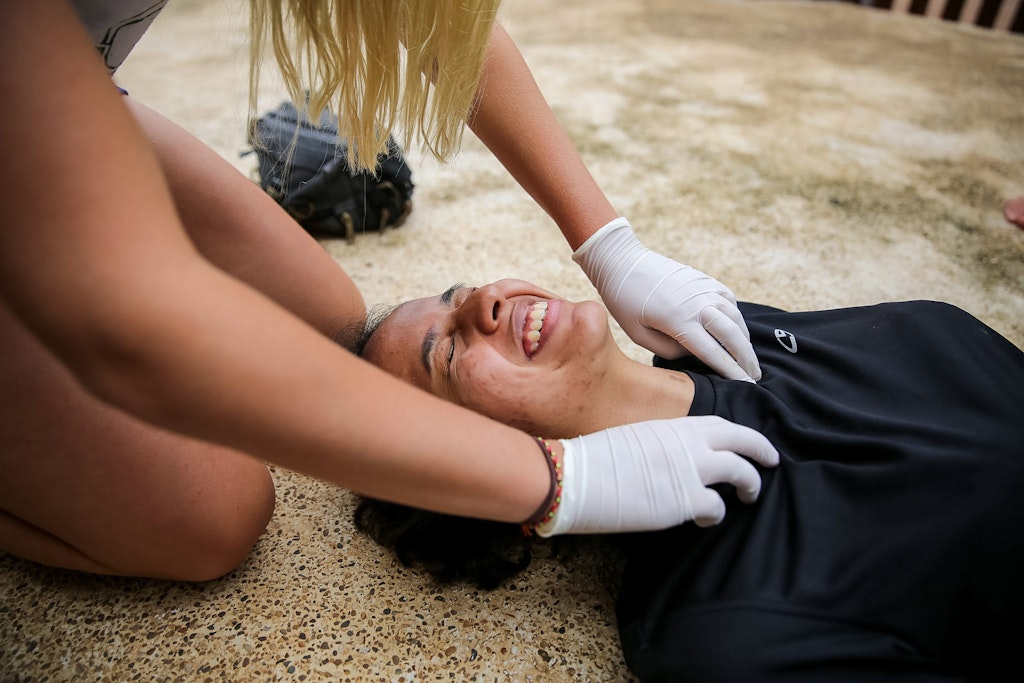
What Happens When the Safety Lead Is Fifty Meters Away
The standard industry model concentrates safety knowledge in one person. One head knows the protocols. One backpack holds the kit. One phone takes the emergency calls.
When that person is fifty meters away, or asleep, or handling a different issue, the system stalls. The other staff members wait. The student waits. Response time depends on how fast someone can physically relocate.
How Every-Leader Response Standard Works
Every-Leader Response Standard means three things are true for every Rustic Pathways program leader before day one.
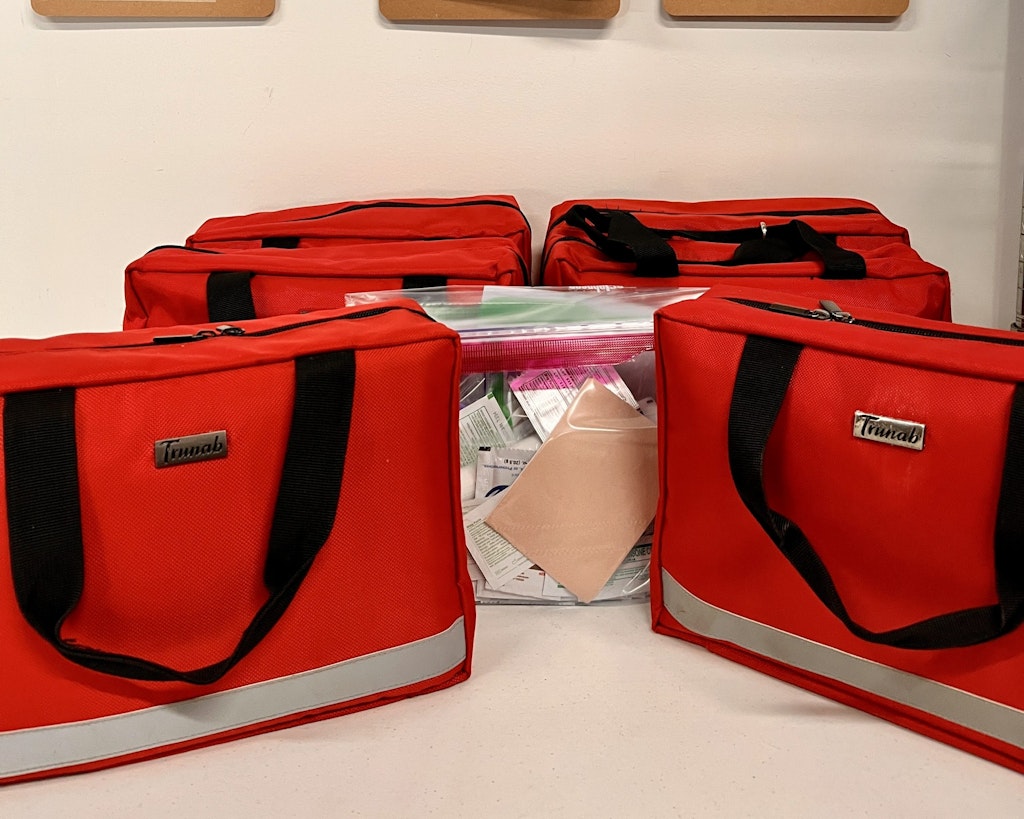
Every leader carries a kit. Not one kit per group. One kit per staff member. When a leader is present, equipment is present. Under a centralized model, first response waits for physical relocation of the safety lead. Under the Every-Leader Response Standard, first response begins immediately because the nearest leader is already equipped.
Every leader knows the nearest clinic. This is part of the pre-program briefing. Leaders do not search for medical facilities during an emergency. They already know.
Every leader is field-authorized. Authorization to act does not require escalation. The nearest trained leader responds. Paperwork follows.
Concentrating safety in one person creates a single point of failure. Rustic Pathways trains every leader to the same standard because emergencies do not check the org chart before happening.
The Three-Knows Standard
The Three-Knows Standard is Rustic Pathways’ requirement that every Program Leader know three things before a program begins: what they carry, where they go, and how they report. Every leader knows the contents and location of their emergency kit, the route to the nearest appropriate medical facility, and the incident-documentation procedure.
| Requirement | Why It Matters |
|---|---|
| Personal med kit contents and location | No delay locating equipment |
| Nearest medical facility with directions | Pre-researched, not searched during crisis |
| Incident documentation protocol | Any leader can file, not just safety lead |
This is redundancy by design. When one leader is occupied, another responds. When one van is separated, the other van has full capability.
The Who-Responds Test
Here is one question to ask any travel program:
If a student twists an ankle at 3 pm and your safety lead is handling a different situation, who responds?
If the answer is “wait for the safety lead,” that is a centralized model. One person, one kit, one point of failure.
If the answer is “the nearest trained leader with a kit,” that is the Every-Leader Response Standard at work.
One Question to Evaluate Any Travel Program
Parents evaluating teen travel programs often ask about certifications, ratios, and emergency protocols. These questions matter. The Who-Responds Test adds one more layer.
Certifications confirm that someone is trained. The Who-Responds Test confirms that training is distributed. A program can have excellent credentials concentrated in one person. That concentration is the vulnerability. For more questions to ask before booking, see questions to ask before booking a teen travel program.
What Every Leader Carries
Every Rustic Pathways program leader carries personal emergency equipment. This is not optional gear. It is standard issue.
| Item | Contents | Purpose |
|---|---|---|
| Personal med kit | Adhesive bandages, gauze pads, medical tape, antiseptic wipes, nitrile gloves, triangular bandage, tweezers, scissors | First response without waiting for group kit |
| Local emergency contacts | Laminated card with hospital, clinic, embassy, and local emergency numbers | No lookup delay |
| Nearest clinic location | Printed directions and GPS coordinates for nearest medical facility | Pre-researched before program start |
| Incident documentation | Waterproof incident report forms, pen | Any leader can file |
| Communication device | Charged mobile phone with local SIM and program emergency line saved | Coordination without physical relocation |
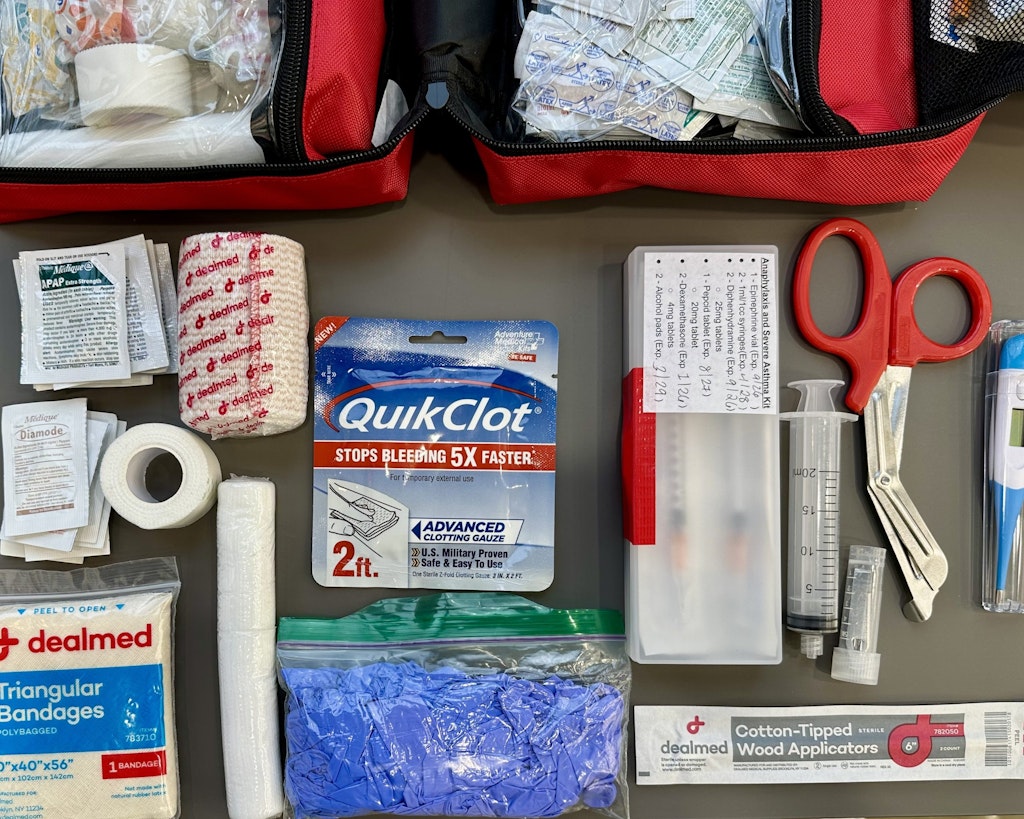
The Kit-Per-Leader standard means equipment is always within arm’s reach of a trained responder. The question is never “where is the kit?” The question is “what does this situation need?”
Learn more about how Rustic Pathways trains and certifies program leaders.
Why Presence-First Safety Requires Distributed Equipment
The Kit-Per-Leader standard is one component of the broader Presence-First Safety Protocol at Rustic Pathways.
Presence-First Safety operates on a core principle: the people closest to students should have the most training, the most authority, and the most resources. This inverts the typical corporate structure where seniority means distance from the field.
At Rustic Pathways, program leaders are 100% CPR/First Aid certified or higher. Rustic Pathways maintains a median of one staff member per 4.37 students (4.37:1), with no program exceeding 7 students per staff member (7:1). In the event of an incident, parents are notified within 27 minutes of stabilization. Ongoing updates are provided until the situation is resolved.
Every-Leader Response Standard fits this framework. It puts capability where students are, not where administrators sit.
The Van 1/Van 2 Problem is solved when both vans have full response capability. That requires more than policy. It requires equipping and authorizing every leader to act.
For answers to common safety questions, visit the safety FAQ.