Yuri Kim is a global education and cross-cultural travel specialist with expertise in student mobility, risk management and digital engagement. Of Norwegian Korean heritage, Yuri has lived in multiple countries, offering an authentic multicultural perspective on youth travel. Yuri holds degrees in Communication and Technology/Society from the University of Agder, has developed student programs, managed travel logistics, and advised on safety and adaptation strategies. Her work includes roles in international education, public health, and digital marketing. Fluent in five languages and having visited 15+ countries, Yuri provides trusted guidance on student travel safety, education logistics, and cultural immersion, contributing to travel advisories and intercultural training programs.
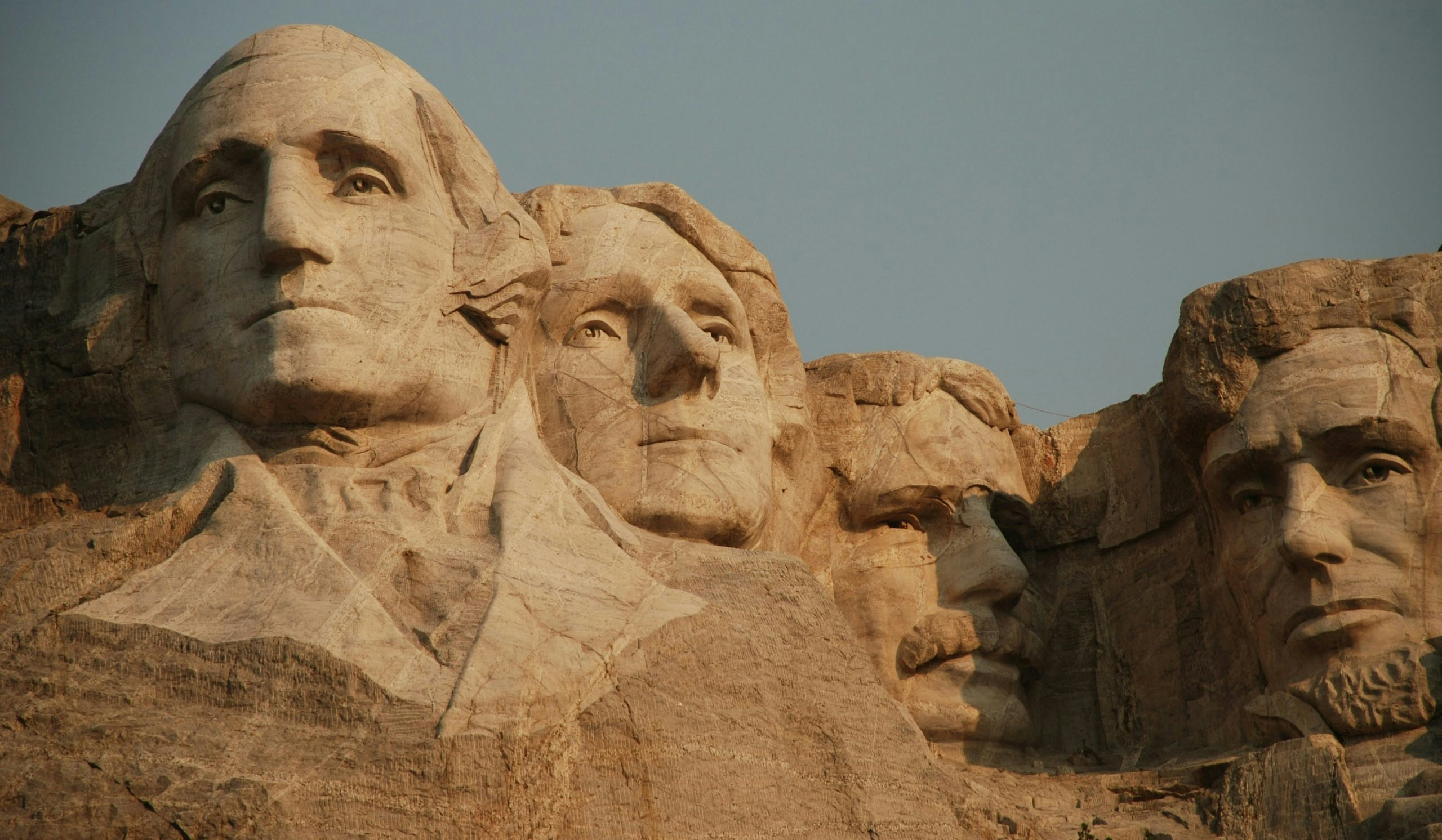
Since 1933, the National Park Service has been responsible for the care and management of Mount Rushmore. The memorial is located in the Black Hills region of South Dakota and features the carved faces of four U.S. presidents: George Washington, Thomas Jefferson, Theodore Roosevelt, and Abraham Lincoln.
Each year, around two million people visit the site to learn about its history, view the sculpture, and explore the surrounding area. Mount Rushmore has become a well-known symbol in the United States and a top destination for teen tours in the USA.
Key Facts About Mount Rushmore
Details
Historical Origins
The idea for Mount Rushmore was proposed in 1923 by a South Dakota historian to boost tourism.
Symbolism
The four presidents represent four key periods in U.S. history: founding, expansion, preservation, and development.
Construction
The monument took 14 years to complete using dynamite, and the initial plan included carving the Presidents from head to waist.
Controversy
Mount Rushmore is located in the Black Hills, sacred to the Sioux Nation, and has been a site of protest.
Area
Roughly 500 feet wide (152 meters) and 60 feet tall (18 meters) per head
Tourism
2 to 2.5 million visitors annually
In this article, we’ll cover 9 facts about Mount Rushmore.
1. A South Dakota historian came up with the idea for the Mount Rushmore National Memorial
In 1923, historian Doane Robinson proposed a massive sculpture in the Black Hills to boost tourism. Initially planned to feature figures like Buffalo Bill and Indian chiefs, the project shifted to honor U.S. presidents.
President Calvin Coolidge helped secure federal funding during tough economic times. Carving began in 1927 and finished in 1941, after sculptor Gutzon Borglum died; his son Lincoln Borglum completed the work.
Mount Rushmore under construction, date unknown.
2. Mount Rushmore represents four periods of American history
The four presidents on Mount Rushmore—George Washington, Thomas Jefferson, Theodore Roosevelt, and Abraham Lincoln—represent four periods in American history: the founding, expansion, preservation and development of the United States.
3. Jefferson’s face was moved because of rock instability
Thomas Jefferson’s face was initially carved to the left of George Washington but due to unstable rock, the partially completed carving was removed. Jefferson was re-sculpted on Washington’s right.
4. The project used dynamite to carve granite and took 14 years to complete but none of the 400 workers lost their lives
Most of the carving to shape the granite face of the mountain was done by miners with dynamite.
5. The Presidents were supposed to be shown from head to waist
The original plan was to carve the presidents from head to waist. However, budget shortfalls and time constraints narrowed the scope of work.
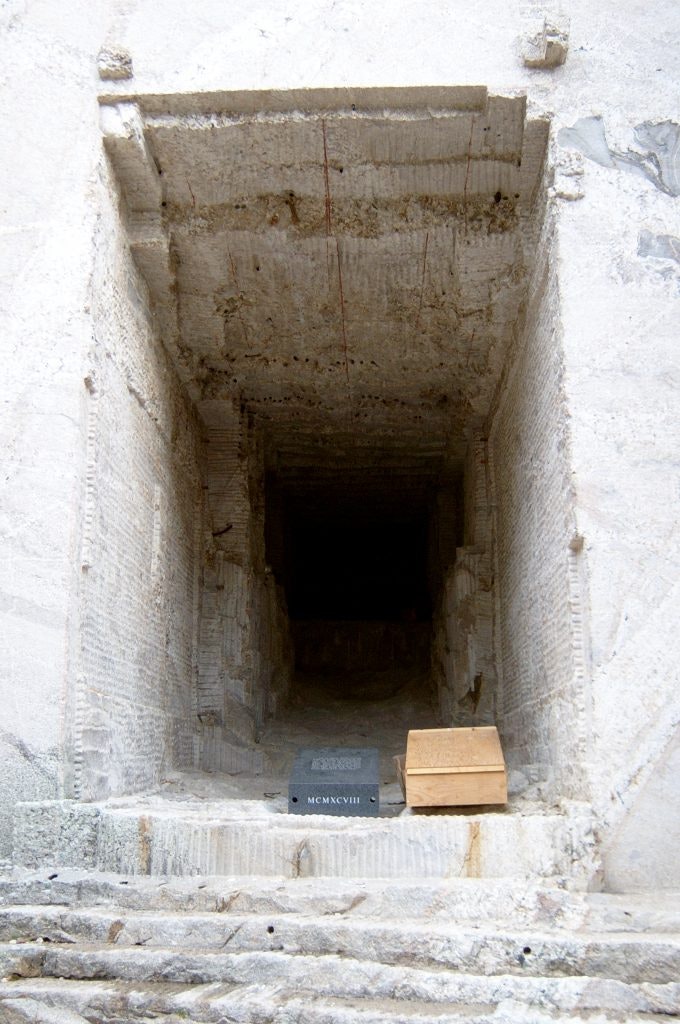
6. The Hall of Records is hidden behind Lincoln’s head
The Hall of Records is a secret room with a titanium vault located behind Abraham Lincoln’s head. It stores important historical documents from U.S. history.
The unfinished hall of records behind Abraham Lincoln’s head, just as Gutzon Borglum left it.
7. The best views come from the President’s Trail
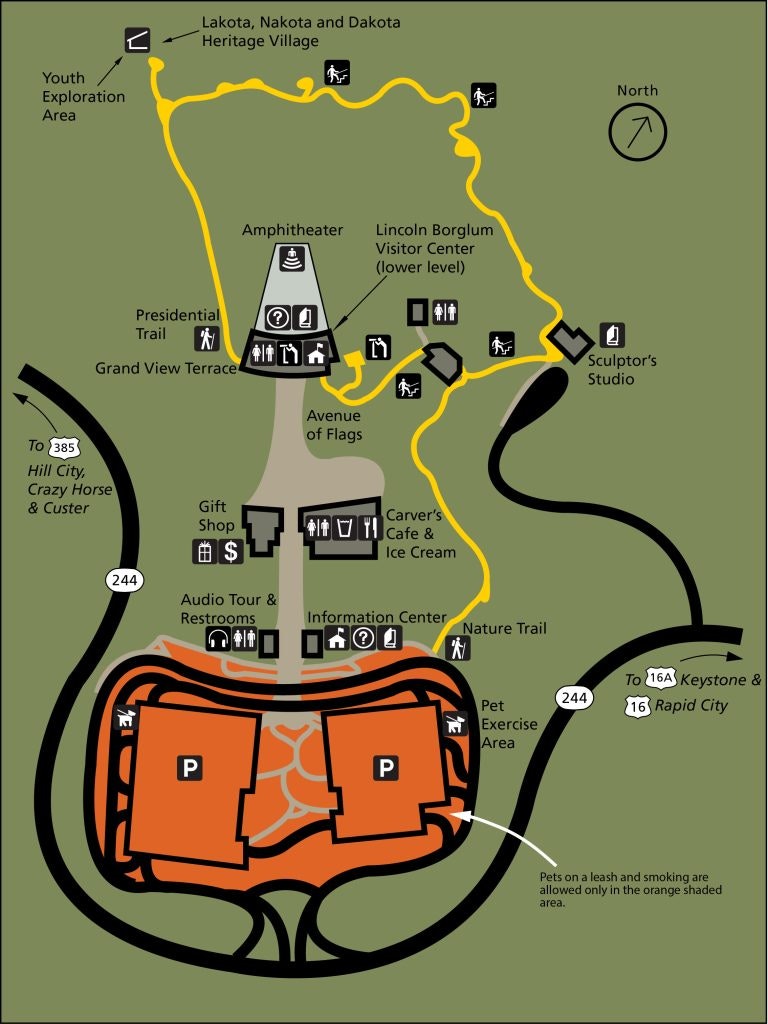
Most visitors stop at the Grand View Terrace, but the President’s Trail has better views. The trail loops around the base of the mountain and gives you opportunities to spot local wildlife like Rocky Mountain goats or mule deer.
Most recent detailed Mount Rushmore map, zooming in on the monument and showing the buildings and facilities as well as the loop trail that takes you right to the base of the presidents.
8. The Black Hills are sacred to the Sioux Nation and a protest site
Mount Rushmore Memorial is located in the Black Hills, a region sacred to the Sioux Nation. The U.S. government seized this land from Native American tribes in violation of the Fort Laramie Treaty of 1868.
Mount Rushmore has been a focal point for protests, particularly in the 1970s American Indian Movement, as it symbolizes broken treaties and the monument’s representation of U.S. history from a colonizer’s perspective.
9. The Crazy Horse Memorial was created in response to Mount Rushmore
In 1948, the Lakota Sioux began carving the Crazy Horse Memorial in the Black Hills as a response to Mount Rushmore. Crazy Horse is remembered for defending his people’s land and way of life against U.S. encroachment.
The unfinished memorial honors the Oglala Lakota leader, depicting him on horseback pointing to his tribal land.
When completed, the sculpture will be one of the largest in the world. The face of Crazy Horse was finished in 1998; it is 87 feet tall, much larger than the 60-foot-high presidential heads on Mount Rushmore.
Crazy Horse Memorial
Address: 12151 Avenue Of The Chiefs, Crazy Horse, SD 57730
Hours: Vary Seasonally
Take a look at the massive, yet unfinished, sculpture in this video
FAQ About Mount Rushmore
Is there a fifth face on Mount Rushmore?
There is no fifth face on Mount Rushmore. However, many visitors and historians refer to Ben Black Elk, a Lakota Sioux elder, as the unofficial “fifth face.”
Benjamin Black Elk was an Oglala Lakota actor, American Indian advocate and educator. Ben Black Elk testified to Congress on indigenous affairs and greeted visitors at the monument for 27 years, starting in the 1940s. He posed for up to 5,000 photographs with tourists daily.
Will there be a fifth face added to Mount Rushmore?
The National Park Service stated that there are no plans to add a fifth face to Mount Rushmore. Despite proposals, no changes have been made due to structural and historical constraints.
Over the years, several figures, including Susan B. Anthony, John F. Kennedy, Franklin D. Roosevelt, Ronald Reagan, Barack Obama, and Donald Trump have been proposed as potential additions.
Yuri Kim is a global education and cross-cultural travel specialist with expertise in student mobility, risk management and digital engagement. Of Norwegian Korean heritage, Yuri has lived in multiple countries, offering an authentic multicultural perspective on youth travel. Yuri holds degrees in Communication and Technology/Society from the University of Agder, has developed student programs, managed travel logistics, and advised on safety and adaptation strategies. Her work includes roles in international education, public health, and digital marketing. Fluent in five languages and having visited 15+ countries, Yuri provides trusted guidance on student travel safety, education logistics, and cultural immersion, contributing to travel advisories and intercultural training programs.