


Route: Tokyo, Kanazawa by bullet train, back to Narita, then a flight to Seoul
How is safety managed, and where do students stay?
Rustic Pathways prioritizes student safety with a written risk management plan for every program. Students stay in gender-separated rooms in hostels and private guesthouses.
Supervision and safety
- Supervision Median 4.37:1 student-to-staff ratio across 2025 and 2026 Student Travel groups. No program exceeds 7:1.
- Emergencies A 24/7 emergency line for families, with an average parent-notification time of 27 minutes.
- Updates Families get daily photo updates, WhatsApp access to the in-country Country Director, and a call from Rustic Pathways after the trip.
- Medical Dr. William R. Smith, board-certified emergency physician, supports leaders and families.
- Hospitals St. Luke’s (Tokyo), Kanazawa Municipal Hospital (Kanazawa) and Yonsei Severance (Seoul) are the primary hospitals.
- Program Leaders 80+ hours of leader training, Sterling background checks, and CPR and First Aid certification.
Where they stay
Students on Tokyo to Seoul stay in gender-separated rooms in hostels and private guesthouses. Program Leaders are housed on site and available every night, and roommate requests are accepted.


Who leads it, and who went in 2026?
Trained, background-checked Program Leaders run every session. In 2026, 45 students from 7 different countries traveled to Japan and South Korea with Rustic Pathways.
Who runs it

Scott Ingram
Director of Admissions
Scott manages operations in Japan and South Korea and has been with Rustic Pathways since 2018.
Your Program Leader
“A student left a bag of souvenirs at DDP (Dongdaemun Design Plaza). Fifty minutes later it was sitting in the same spot. I sent the photo to the group chat. That’s Seoul.”
 Chang Mo Ahn, Program Leader
Chang Mo Ahn, a Seoul-based Program Leader, led all three summer 2026 sessions of Tokyo to Seoul. Chang Mo lives in Seoul and is fluent in Korean.
- First surprise There are no trash cans on Seoul’s streets.
- Hardest part The subway with 15 teens. Groups of 5, one staff member each.
- Best ad-lib A sunset walk along Cheonggyecheon to watch street buskers.
The 2027 Program Leaders are confirmed closer to departure.
The 2026 group
45 students traveled on Tokyo to Seoul in 2026, across three sold-out sessions of 15. They came from 7 countries. At travel start, 2 were 13, 6 were 14, 14 were 15, 13 were 16, 7 were 17 and 3 were 18. The two 13-year-olds joined after individual review because they turned 14 during the program year.
In Rustic Pathways’ summer 2026 post-program surveys (18 parent and student responses), 89% gave 9 or 10 out of 10 for recommending Rustic Pathways, and 94% rated safety 5 or 6 out of 6.
“He gained so much cultural perspective, confidence, and a group of wonderful friends with whom he met for the first time on this adventure.”

Rustic Pathways’ summer 2026 post-program surveys: 18 parent and student responses across three sessions. 94% rated overall satisfaction 5 or 6 out of 6.
Students in their own words
Students describe what Japan and Korea opened up for them.

“I’m so happy that I was able to get to explore Japan and Korea since both countries are completely different than home in the US.”

“Once in a lifetime experience 100% recommend to anyone that likes to have fun.”
Student takeovers
After the program, students take over the Rustic Pathways Instagram with their own photos and stories.
-
“Hi I’m Trevor, this trip has been one of the best times of my life so far, the extraordinary people I met inside and even outside of the group, will always stay in my heart and never ending memories.
It was amazing getting to explore Asia for the first time visiting one country that’s extremely famous and exploring another that I didn’t have much knowledge in.
I can’t thank the Program Leaders enough for giving me this experience of a lifetime, I’ve never cried at an airport leaving a destination 🥀. As well as the friends I made on the trip, and I can’t wait to see everyone again.”
Trevor W.
-
“Hey! My name’s Dakohta, and I traveled to Japan and South Korea with Rustic Pathways this summer.
I remember being so nervous and homesick at first, but after the first few days of the trip, it was nothing short of fantastic.
Those two weeks were some of the best days of my life. From incredible cuisine to astonishing culture and advanced technology, these two countries offered it all.
But it wasn’t just the sightseeing that made this trip so memorable, it was also the people. Everyone was so friendly and welcoming, and I can confidently say that I made new friends and built relationships that I will remember forever.
I was beyond nervous to start this journey, but in the end, leaving these countries and these people was by far the hardest part.
If I could give everyone a shoutout, I definitely would. But just to shorten it, I would like to thank … and program leader Chang (the G.O.A.T.) for making this trip so memorable.”
Dakohta A.
-
“10/10 trip. Got to meet a lot of great people and learned more about Japanese and Korean culture and history. We did the most fun activities and even pushed cars that were stuck in the sand.
Huge shoutout to all the Program Leaders, Scott, Chet , Caitlin and Chang were friendly and helped guide us through the trip. They weren’t just great leaders, but great people too.
This trip helped me broaden my horizons and made me step out of my comfort zone. Overall, I had a great time and I honestly would not have chosen to do anything else over those 2 weeks.”
Kerem O.
Before you enroll: what parents ask
Most asked
What is the student-to-staff ratio?
Rustic Pathways programs maintain a median of one staff member per 4.37 students (4.37:1), with no program exceeding 7 students per staff member (7:1). All Program Leaders are CPR and First Aid certified, and every program includes at least one leader with 3 or more years of field experience.
How can I stay in touch with my child?
Tokyo and Seoul share one time zone, 13 hours ahead of New York in summer.
- After the final scheduled activity of the day, students have their phones.
- Non-emergency concerns: message the Country Director on WhatsApp using the details provided before departure.
- Routine help: call +1 440-975-9691, Monday to Friday, 9 a.m. to 6 p.m. ET.
- Emergencies: use the 24/7 number in your pre-departure materials.
If a student has an urgent, medical, or significant personal need during activities, a Program Leader helps them contact home.
Parents receive daily photo updates by email. Rustic Pathways’ average parent-notification time in an emergency is 27 minutes.
Do students come alone or with friends?
Most students join on their own, and some join with friends or siblings. Roommate requests are accepted during enrollment for students coming together. Program Leaders run icebreakers on day one, and friendships form quickly.
What is the cancellation policy?
Cancellations within 24 hours of enrollment receive a refund of all amounts paid to Rustic Pathways.
Cancellations before midnight ET on March 31, 2027, receive a full refund of the program tuition. The enrollment fee and any airfare already booked become non-refundable.
For cancellations after March 31, 2027, see the enrollment terms.
If your family experiences a serious, documented emergency, contact us. We review these situations on a case-by-case basis.
Flights
How do flights work?
Students can fly to Tokyo on the chaperoned group flight from Los Angeles, or book their own flights.
Book carefully: fly into Narita (NRT), not Haneda (HND), and home from Incheon (ICN). The optional chaperoned group flight service costs $450, excluding airline tickets. A Rustic Pathways staff member accompanies students from Los Angeles (LAX) to Japan and from Incheon (ICN) back to Los Angeles.
Who books each flight?
Whichever option you choose, Rustic Pathways staff meet every student at Narita airport on the arrival date and see them off on the departure date.
Option 1: the chaperoned group flight
Cost: Chaperoned group flight fee, plus airfare.
- A Rustic Pathways chaperone meets students at Los Angeles (LAX) and flies with the group to Narita (NRT), and home from Incheon (ICN) to Los Angeles (LAX) on the departure date.
- Getting to and from Los Angeles (LAX): Rustic Pathways can book the connecting flights between your home airport and Los Angeles (LAX), or your family can. Students fly that leg on their own, with an airline unaccompanied-minor service if the airline requires one.
- Every student on the group flight pays the chaperoned group flight fee, even if your family books the connecting flights.
Option 2: independent flights with support
Cost: Flight Support Fee, plus airfare.
- You choose the flights and Rustic Pathways books them, into Narita (NRT) and home from Incheon (ICN).
- Students fly on their own, and you get 24/7 travel support if plans change.
Option 3: book your own flights
Cost: No Rustic Pathways fee, just airfare (for students not on the group flight).
- Your family books and manages the flights, into Narita (NRT) and home from Incheon (ICN).
- Students fly on their own. Changes and rebooking are between your family and the airline.
Arrival and departure windows
Students who are not on the group flight land within the arrival window and leave within the departure window, about four hours each. Your Personal Travel Advisor shares the exact times before you book. Flights outside the windows carry an additional fee.
Flights during the program
- Narita (NRT) to Incheon (ICN): included in tuition, and staff fly with the group.
What are the arrival and departure dates for students flying independently?
Independent travelers must arrive at Narita (NRT) and depart from Incheon (ICN) on these dates. Airport transfers outside the windows carry an out-of-window fee, and flight times can change, so confirm with your Personal Travel Advisor.
| Session dates | Arrive at Narita (NRT) | Leave from Incheon (ICN) |
|---|---|---|
| Jun 17 – Jun 30, 2027 | June 18 | June 30 |
| Jun 24 – Jul 7, 2027 | June 25 | July 7 |
| Jul 8 – Jul 21, 2027 | July 9 | July 21 |
Why the dates look off
Going out, you lose a day: crossing the International Date Line means a flight leaving the U.S. lands in Japan the next calendar day. Coming home, you get it back: a flight leaving Seoul lands in Los Angeles on the same calendar day.
Three things to get right before you book
- Fly into Narita (NRT), not Haneda (HND). Rustic Pathways staff meet students at Narita only. Double-check the airport code before you pay.
- Stay within the arrival and departure dates and times. Your Personal Travel Advisor shares the exact windows. Flights outside them carry an additional fee.
- Book the flight home from Incheon (ICN). The program begins in Japan and ends in South Korea.
Where does the program start and end?
It starts at Narita (NRT) near Tokyo and ends at Incheon (ICN) near Seoul. The flight from Narita to Incheon partway through is included.
Do U.S. citizens need a visa for Japan and South Korea?
U.S. citizens need no visa for Japan or South Korea. Travelers 17 and younger don’t need a K-ETA for Korea. Students who are 18 at entry in 2027 do, unless Korea extends the exemption. It costs about $7 and takes around 72 hours. Contact us about other passports.
Safety & wellbeing
Are rooms gender-separated?
Yes. Students stay in gender-separated rooms and use gender-separated bathrooms. Program Leaders stay on site and conduct room checks each night at lights out.
How are medical emergencies handled?
All Program Leaders are CPR and First Aid certified and carry First Aid kits at all times. Local teams keep clinic lists, and St. Luke’s International Hospital in Tokyo, Kanazawa Municipal Hospital in Kanazawa and Yonsei Severance Hospital in Seoul are the primary hospitals.
How is my child supervised during the program?
Rustic Pathways Program Leaders supervise students from the moment staff meet them at Tokyo Narita airport until they depart for their flight home.
- A median student-to-staff ratio of 1 staff member for every 4.37 students, never exceeding 7:1.
- Program Leaders are housed on site and available overnight.
- Two-Deep Leadership: No staff member is ever alone one-on-one with a student.
- Each student has a personal check-in with a Program Leader within 24 hours of arrival.
- Families receive a Safe Arrival email within 12 hours of arrival in Japan.
Will my child have any unsupervised time?
Students get independent free time in places like Shibuya, Omicho Market, Myeongdong, Hongdae, and Seongsu.
Students must stay in groups of at least three, and Program Leaders set boundaries and a meeting place and time. A staff member stays at the meeting point at all times while others patrol and monitor the area.
Everything else is structured activities.
At night, students stay in their rooms with their roommates. Program Leaders are housed on site and conduct nightly room checks.
What is the phone and smart device policy?
Rustic Pathways follows the Trip Before Scroll policy. Staff store phones and devices securely during daytime programming and hand them back after the final scheduled activity. Students keep devices overnight, subject to quiet hours and lights-out, and on travel days. Medical and accessibility exceptions apply. Read the device policy. Public Wi-Fi is widely available in Japan and South Korea, and every accommodation has Wi-Fi.
Does Rustic Pathways support neurodiverse students?
Rustic Pathways welcomes all students and works with families to provide appropriate support. Learn about Rustic Pathways’ inclusion policy.
Cost & enrollment
What is the enrollment fee?
The enrollment fee is a one-time fee, separate from tuition, covering enrollment, pre-departure advising, and trip planning. It begins at $100 and increases closer to the departure date. The enrollment fee is refundable for cancellations within 24 hours.
What insurance do we need?
Medical insurance with coverage in Japan and South Korea is required for every traveler. Travel insurance, which covers trip cancellation and flight disruption, is strongly recommended but not required. Families purchase both separately, and neither is included in program tuition.
Does Rustic Pathways offer payment plans?
Yes. Rustic Pathways offers a 4-Pay payment plan that splits program tuition into four payments over six weeks. This plan is only available for enrollments more than 90 days before departure and only for U.S. bank accounts.
Need-based financial aid and merit scholarships are also available. Explore scholarships and financial aid.
How much spending money does my child need?
$150 to $200 per week is recommended for shopping, snacks, or souvenirs. Meals, scheduled activities, and gratuities are included in program tuition.
The group
What is the group size and age range?
Each session is limited to 15 students, ages 14 to 18. In 2026 most were 15 or 16. Two 13-year-olds joined after individual review because they turned 14 during the program year.
What is the ratio of girls to boys?
The ratio of girls to boys varies from year to year and session to session, but usually comes close to an even split. In 2026, 29 of this program’s 45 participants were male, and 16 were female.
Can non-U.S. students join this program?
Yes. Non-U.S. students can join this program. In 2026, students from 7 different countries joined. International students fly to Narita to arrive within the designated arrival window for their session.
Rustic Pathways staff meet them at the airport and ensure safe departure within the designated window at the end of the program.
Visa requirements depend on the passport, so ask an advisor.
Day to day
What service work will students do?
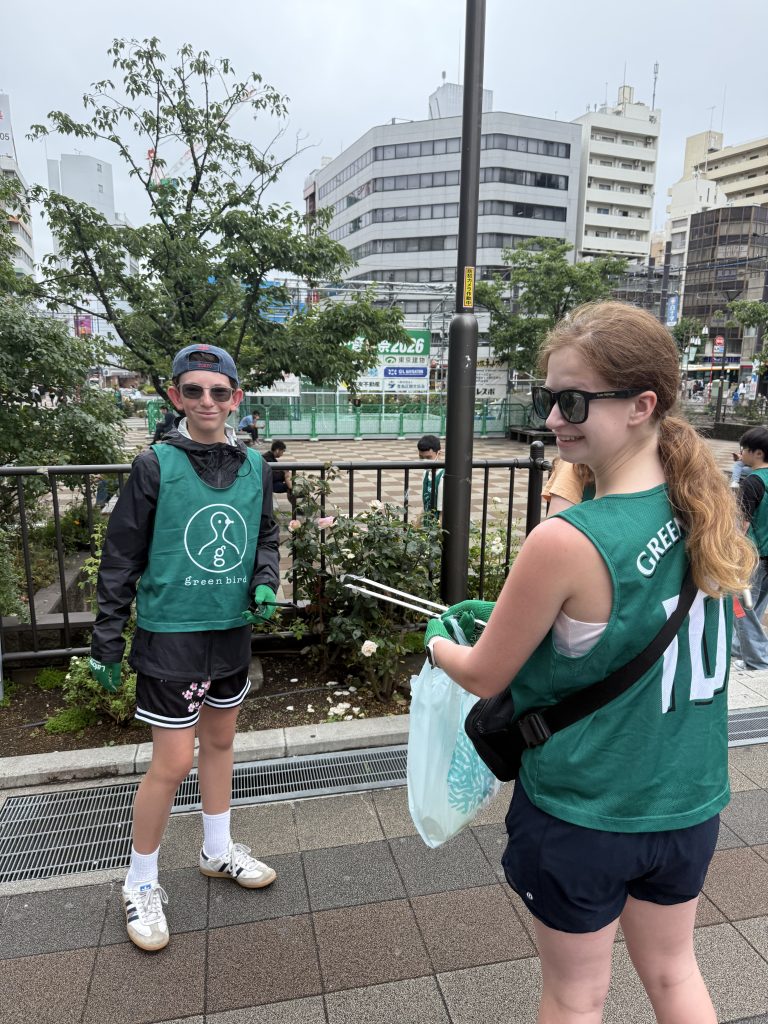
Students complete 8 service hours. In Tokyo, they join neighborhood cleanups with Greenbird, a local nonprofit. In Seoul, students design and lead an English reading and conversation class at a local library for elementary school children.
How physically demanding is the program?
Moderate. There are no specific physical requirements, but a moderate degree of fitness helps. Students walk 10,000–15,000 steps on most days, often in heat over 86°F (30°C) with high humidity.
Can dietary needs and allergies be accommodated on program?
Yes. Vegetarian, vegan, pescatarian, gluten-free, dairy-free, and other diets, plus common food allergies can be accommodated. Dietary needs and allergy information are collected after enrollment and shared with meal providers and project partners in advance.
Does my child need to speak Japanese or Korean?
No. English is widely spoken in tourist areas, and local leaders help with language barriers.
Can the itinerary change?
Yes. The itinerary may change due to weather, safety concerns, transportation issues, or site availability. Program Leaders may adjust activities and schedules to keep students safe and ensure a positive program experience.
Ready, or one question first?
$6,590 at checkout ($6,490 Program Tuition + $100 enrollment fee), about $471 a day with lodging, three meals a day and the Tokyo to Seoul flight included. Full refund within 24 hours.
What happens after you enroll
- You have 24 hours to change your mind for a full refund, including the enrollment fee.
- Fill in the traveler details form. That opens your MyRustic family portal, with your payment schedule, forms to complete, the full itinerary and the packing list.
- Before departure, MyRustic adds the flight itineraries and the Wheels Up packet: arrival instructions, contacts and the program emergency number.
- During the program, you get daily photo updates. After it, Rustic Pathways calls every family.
Rather talk first? Call Scott Ingram at +1 (440) 975-9691, schedule a call, or ask an advisor.
Deciding together? Send this trip to your parent · Send it to your teen · Copy link


