Japan · Summer 2027
Teen travel programs to Japan
Rustic Pathways runs three teen travel programs in Japan: a countryside farm stay near Kakunodate, Tokyo and Kanazawa on the way to Seoul, and a Tokyo program for middle school students.
- 3 programs
- 8 or 14 days
- Ages 14–18
- From $3,295 Program Tuition


From $3,295 Program Tuition3 programs · Ages 14–18 · 5 departures
See the programs- Operating in Japan
- Since 2024
- Local language
- Japanese
- Travel time from New York
- 13 hr 50 min nonstop
- Getting there
- Optional chaperoned group flight from Los Angeles
Three Japan programs for summer 2027
Rustic Pathways offers three Japan teen travel programs for summer 2027, ranging from 8 to 14 days, including a dedicated middle school program for ages 12–14.
Rustic Pathways has run teen travel programs in Japan since 2024. The summer lineup is Countryside Farms & Samurai Villages, Tokyo to Seoul, and Tokyo Fusion (Middle School).
Scott Ingram manages the Japan program, speaks fluent Japanese, and has spent more than 9 years in Japan. Program Leaders are housed on site and available overnight on every program night.
Across Student Travel groups, the median is one staff member per 4.37 students, and no program exceeds 7 students per staff member.
Program Tuition excludes flights to and from the program and the enrollment fee. It also excludes the required medical insurance with coverage in Japan and the strongly recommended travel insurance.


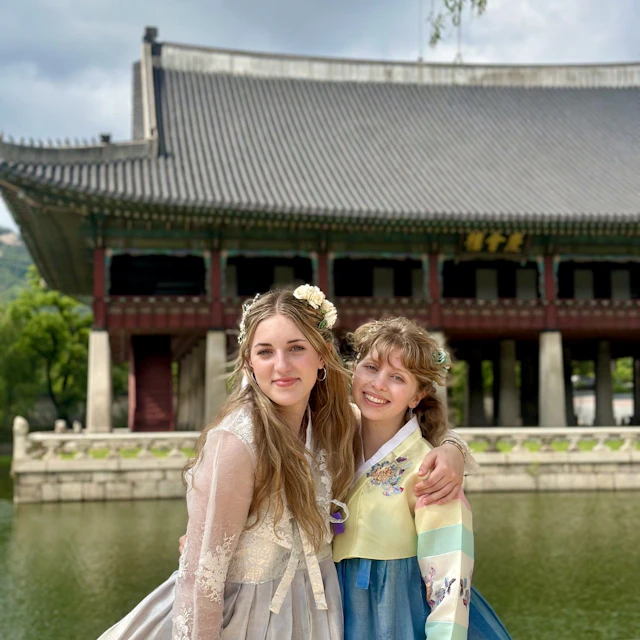


Compare the Japan programs
The three Japan programs vary by length, Program Tuition, where students stay and what they do.
Show program
| Countryside Farms & Samurai Villages$3,295 | Tokyo to Seoul$6,490 | Tokyo Fusion (Middle School)$3,495 | |
|---|---|---|---|
| Choose this if… | Your teen wants to live with a farm family and work the land. | Your teen wants Tokyo, Kanazawa and Seoul in one program. | Your teen is a middle school student, ages 12 to 14, who wants Tokyo and Kanazawa. |
| Length | 8 days | 14 days | 8 days |
| Program Tuition | $3,295 | $6,490 | $3,495 |
| Where students stay | Farm homestays in Kakunodate, Akita Prefecture, in same-gender groups | Hostels and guesthouses, with no homestay | Hostels and guesthouses across Tokyo and Kanazawa (6 nights) |
| Service or learning | 10 service hours: two mornings of farm work and community service | 8 service hours across Tokyo and Seoul: a neighborhood cleanup with the NGO Greenbird and an English reading class at a Seoul library | Up to 3 service hours: a community cleanup in Shimokitazawa |
| Adventure | Kayaking on Lake Tazawa, bullet train to Akita, a samurai town, kabazaiku workshop | Taiko, kendo, taekwondo, K-pop dance class, bullet train to Kanazawa | Mt. Takao hike, kendo lesson, bullet train to Kanazawa, karaoke night |
| See dates→ | See dates→ | See dates→ |
Prices are in U.S. dollars. Program Tuition is not the total cost. Flights to and from the program, the enrollment fee, medical insurance (required), travel insurance (optional) and personal expenses are separate.


Which Japan program fits your teen?
Match your teen’s interest and age to a program, then check the dates below.
Choose in Japan…
- For a farm homestay and samurai towns, ages 14–18: Countryside Farms & Samurai Villages.
- For Tokyo and Kanazawa, then Seoul, ages 14–18: Tokyo to Seoul, where students explore Tokyo and Kanazawa before flying to Seoul for the second week.
- For a middle school student, ages 12 to 14, in Tokyo and Kanazawa: Tokyo Fusion.
What Japan Program Tuition includes
Japan Program Tuition ranges from $3,295 to $6,490 for 8 or 14 days, including accommodations, scheduled meals, ground transportation, airport transfers within designated windows, and planned activities.
Included
- Accommodation for every program night
- Breakfast, lunch, and dinner, from the first meal after airport pickup through the last meal before airport drop-off
- Airport transfers within the published arrival and departure windows
- Ground transportation during the program
- The Tokyo to Seoul flight on the Tokyo to Seoul program
- All scheduled activities, excursions and entrance fees listed in the program itinerary
- Gratuities and donations, so students never need to bring money to give away
- Program Leaders housed on site and available overnight
- 24/7 emergency support line for families
Not included
- Flights to and from the program, including the optional chaperoned group flight
- A one-time enrollment fee, starting at $100 when you enroll early and rising closer to departure
- Medical insurance with coverage in Japan, plus South Korea on Tokyo to Seoul (required)
- Travel insurance (optional, and strongly recommended)
- Personal expenses, such as spending money, laundry and phone data
Summer 2027 teen travel departure dates by program
Rustic Pathways’ three Japan programs depart between June 17 and July 15, 2027 (5 departures). Compare these dates program by program in the timeline below.
Calendar tip: Each bar runs from the day a program starts to the day it ends. Select one to view that departure.
Japan vs. Thailand, Indonesia and Peru
Japan differs from Thailand, Indonesia and Peru by offering three programs, from an 8-day farm homestay in Akita Prefecture to a 14-day program through Tokyo, Kanazawa and Seoul. Thailand offers elephant care, adventure and village service on programs lasting 12 to 23 days; Indonesia features Bali scuba at the lowest tuition; and Peru offers service in the Spanish-speaking Andes.
Japan vs.
| This pageJapan$3,295–$6,490 | Thailand$3,995–$6,995 | Indonesia$2,195 | Peru$4,195 | |
|---|---|---|---|---|
| Choose this if… | Your teen wants Tokyo, bullet trains and a choice of three programs. | Your teen wants elephants or a longer Southeast Asia adventure. | Your teen wants Bali scuba and culture at the lowest tuition. | Your teen wants hands-on service with host communities in the Andes. |
| Length | 8 or 14 days | 12 to 23 days | 10 days, incl. 3 travel days | 12 days, incl. 3 travel days |
| Program Tuition | $3,295–$6,490 | $3,995–$6,995 | $2,195 | $4,195 |
| Local language | Japanese | Thai | Indonesian | Spanish |
| Time difference in July1 | 13 hours ahead of U.S. Eastern | 11 hours ahead of U.S. Eastern | 12 hours ahead of U.S. Eastern | 1 hour behind U.S. Eastern |
| Travel time from New York2 | 13 hr 50 min nonstop | 20 hr 50 min, 1 stop | 22 hr 40 min, 1 stop | 7 hr 56 min nonstop to Lima, 11 hr 16 min to Cusco |
| Travel time from Los Angeles | 11 hr 15 min nonstop | 18 hr 20 min, 1 stop | 20 hr, 1 stop | 8 hr 35 min nonstop to Lima, 15 hr 45 min to Cusco |
| Travel time from Miami | 17 hr 30 min, 1 stop | 26 hr 5 min, 2 stops | 24 hr 45 min, 1 stop | 5 hr 40 min nonstop to Lima, 8 hr 45 min to Cusco |
| Travel time from London | 15 hr 45 min, 1 stop | 16 hr 45 min, 2 stops | 16 hr 40 min, 1 stop | 19 hr 35 min, 2 stops |
| Travel time from Hong Kong | 4 hr 5 min nonstop | 2 hr 50 min nonstop | 5 hr nonstop | 29 hr 10 min, 2 stops |
| Getting there | Passport. Optional chaperoned group flight from Los Angeles. | Passport. Optional chaperoned group flight from Los Angeles. | Passport. Students fly into Denpasar. | Passport. Optional chaperoned group flight from Miami to Cusco, via Lima. |
| Land vs. water | Tokyo, Kanazawa and Akita farm country, by program. | Northern villages and elephants, plus Bangkok and Krabi, by program. | Bali: scuba, culture and adventure. | Sacred Valley service in the Andes. |
| Service | Farm work and neighborhood cleanups, 3 to 10 hours | Elephant care, village projects or reforestation, 8 to 60 hours | No service hours; village stay and cultural learning | Community service, 20 hours |
| 2027 departures | 5 across three programs | 6 across three programs | 2: Jun 28, Jul 5 | 1: Jul 6 |
| See the Japan programs↑ | View Thailand programs→ | View Indonesia programs→ | View Peru programs→ |
Prices are in U.S. dollars. Program Tuition is not the total cost. Flights to and from the program, the enrollment fee, medical insurance (required), travel insurance (optional) and personal expenses are separate.
The Japan column covers its three programs: two run 8 days, and Tokyo to Seoul runs 14 days. On Tokyo to Seoul, students explore Tokyo and Kanazawa before flying to Seoul for the second week.
Is teen travel to Japan safe?
Yes, teen travel to Japan is safe on a supervised Rustic Pathways program. The U.S. State Department rates Japan Level 1, the lowest of its four advisory levels,3 and the programs run in June and July, ahead of Japan’s August and September typhoon peak.4
Rustic Pathways has run programs in Japan since 2024, with Program Leaders housed on site and available overnight and a 24/7 emergency support line.


Why book Japan with Rustic Pathways
Booking with Rustic Pathways brings a chaperoned flight option, the MyRustic portal and an advisor you can call.


In Japan since 2024
Rustic Pathways has run programs in Japan since 2024. Summer 2027 offers a farm homestay in Kakunodate, a Tokyo and Kanazawa program for ages 12–14, and Tokyo to Seoul, where students explore Tokyo and Kanazawa before flying to Seoul for the second week. Rustic Pathways has operated student travel since 1983.


Chaperoned group flights
U.S. students can join an optional chaperoned group flight from Los Angeles to Japan on all three programs. Neither the chaperoned group flight nor independent flights are included in Program Tuition.


MyRustic portal
MyRustic (myrustictrip.com) is Rustic Pathways’ free, web-based parent and student portal. It holds enrollment forms, billing, the full itinerary, travel logistics and a moderated daily photo feed.


A travel advisor to call
Scott Ingram, Director of Admissions, and Emily Green, Admissions Counselor, answer Japan questions before you enroll. Call +1 440-975-9691 or schedule a call.
Japan in their words: student takeovers
After the program, students take over the Rustic Pathways Instagram with their own photos and stories. Here are two from Japan programs in summer 2025 and 2026.
“This trip helped me broaden my horizons and made me step out of my comfort zone.” Kerem O., on Instagram
“10/10 trip. Got to meet a lot of great people and learned more about Japanese and Korean culture and history. We did the most fun activities and even pushed cars that were stuck in the sand.
Huge shoutout to all the Program Leaders, Scott, Chet, Caitlin and Chang were friendly and helped guide us through the trip. They weren’t just great leaders, but great people too.
This trip helped me broaden my horizons and made me step out of my comfort zone. Overall, I had a great time and I honestly would not have chosen to do anything else over those 2 weeks.”
Kerem O., Tokyo to Seoul, summer 2026
“My favorite part was seeing Mount Fuji! We got so lucky and were able to see the beautiful mountain while enjoying ice cream from the flower fields.” Savannah C., on Instagram
“Hi! My name is Savannah! I recently went on the Tokyo Fusion trip this past summer with Rustic Pathways and had so much fun!
During the whole trip we explored different spots in and around Tokyo as well as eating a bunch of yummy food... especially the ramen! 🍜 While exploring as much as we could, I met new people who I will never forget.
My favorite part was seeing Mount Fuji! We got so lucky and were able to see the beautiful mountain while enjoying ice cream from the flower fields. My friends and sister made this trip even better, who wouldn't want to see the world with their friends?!
Thank you Rustic for making a trip I will never forget! I can't believe I was in Japan only a few months ago living my dream! I hope to be back with ya’ll for another one! 🇯🇵🍣🍙”
Savannah C., Tokyo Fusion, summer 2025
Japan teen travel FAQ
How is Japan different from other countries for teen travel?
Japan differs from other countries for teen travel through its mix of modern cities, rural farming communities and traditional cultural experiences. Students explore Tokyo, discover regional traditions and, on Countryside Farms & Samurai Villages, stay with host families in Akita Prefecture.
Which Japan program is best for my teen?
Choose Countryside Farms & Samurai Villages for a farm homestay, Tokyo to Seoul for city culture across Japan and South Korea, or Tokyo Fusion for middle school students. Countryside Farms & Samurai Villages lasts 8 days for ages 14–18; Tokyo to Seoul lasts 14 days for ages 14–18; and Tokyo Fusion lasts 8 days for ages 12–14.
Is Tokyo to Seoul a Japan program?
Yes. On the 14-day Tokyo to Seoul, students explore Tokyo and Kanazawa before flying to Seoul for the second week. Program Tuition includes the Narita to Incheon flight. Students stay in hostels and guesthouses; the itinerary excludes Kyoto, Osaka and Mount Fuji.
What is the farm homestay like on Countryside Farms & Samurai Villages?
Students on Countryside Farms & Samurai Villages stay with farm families in Kakunodate, Akita Prefecture, in same-gender groups across five or six homes. Program Leaders stay in some homes. Students help on farms for two mornings, kayak on Lake Tazawa, learn to cook kiritanpo and complete 10 service hours. A Japanese lesson in Tokyo prepares them for the homestay.
Can Japan programs handle dietary needs and food allergies?
Yes, Japan programs make reasonable accommodations for dietary needs and food allergies when they can be delivered safely. Share requirements at enrollment so local meal providers can plan before departure.
What is the weather like during the rainy season in Japan?
The rainy season in Japan (tsuyu) overlaps with the June and July program departures. Based on 1991–2020 normals, it runs from about June 7 to July 19 around Tokyo, June 11 to July 23 near Kanazawa and June 15 to July 28 in Akita.5 Students should pack for rain.
What do students need to travel to Japan?
Students need a passport and medical insurance valid in Japan, plus South Korea on Tokyo to Seoul. U.S. citizens do not need a visa for these Japan programs; other nationalities may. Tokyo to Seoul also visits South Korea. Travelers 17 and younger at entry don’t need a K-ETA (Korea Electronic Travel Authorization). U.S. citizens 18 and older are exempt through December 31, 2026, so students who are 18 at entry in 2027 need a K-ETA unless Korea extends that exemption; check the official K-ETA site before departure. Review the CDC’s Japan travel health guidance.
U.S. students can choose optional chaperoned group flights from Los Angeles on all three programs.




Footnotes
- Time differences are for July, from the IANA time zone database. None of the four observes daylight saving time. ↩
- Fastest one-way flight, including layovers, on the days students fly in 2027 (Google Flights, October 2026). Not the chaperoned group flight. ↩
- Advisory levels as of October 2026. Check travel.state.gov for the current level before travel. ↩
- Typhoon approaches to Japan by month, 1991 to 2020 averages: the Japan Meteorological Agency. ↩
- Rainy-season (tsuyu) normals, 1991 to 2020: the Japan Meteorological Agency. ↩
Japan has 5 summer 2027 departures across three programs.
Compare the three programs